This article is taken from the December-January 2026 issue of The Critic. To get the full magazine why not subscribe? Get five issues for just £25.
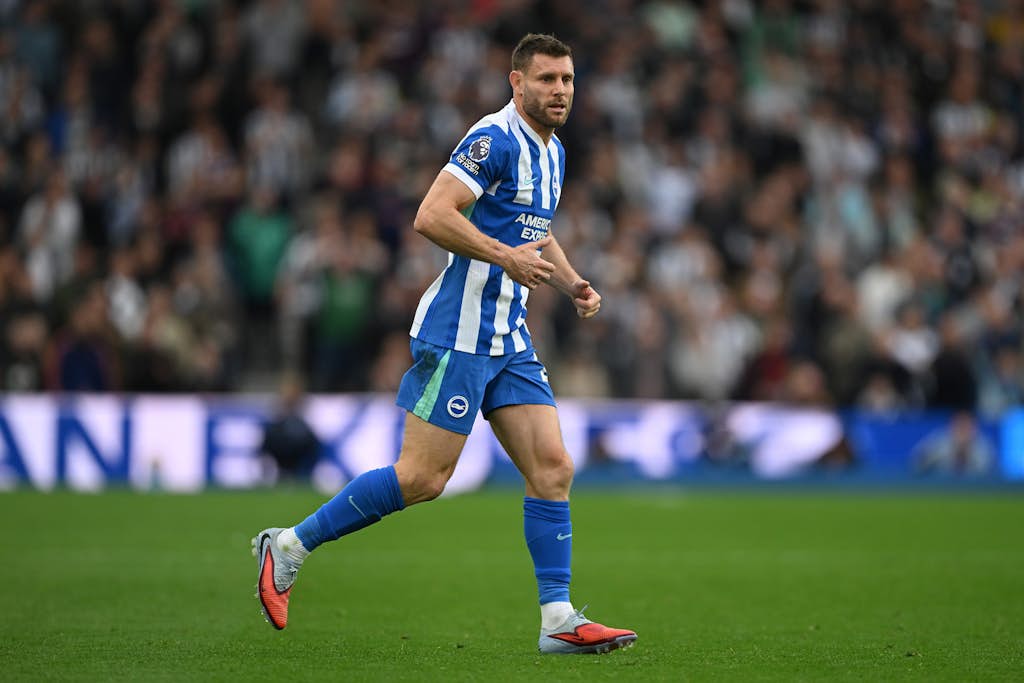
Sometime in the new year, form and fitness permitting, James Milner will break Gareth Barry’s record of 653 Premier League appearances, and no one will deserve the accolade more.
Statistics can obscure as much as they reveal, but even the briefest glance at Milner’s figures reveal the extent of his achievement. When he made his Premier League debut aged 16 for Leeds United in November 2002, Tony Blair was in Downing Street, Cole Palmer was six months old and Jude Bellingham’s mother was in her first trimester. Milner is both the second-youngest and second-oldest Premier League goalscorer, he’s played for managers born 60 years apart (Bobby Robson and Fabian Hürzeler), and he’ll turn 40 on 4 January.
Impressive as they are, these numbers are only a small part of Milner’s story. This is no relegation-zone journeyman, but someone who’s won three Premier Leagues, two F.A. Cups, a Champions League and 61 England caps. He’s represented Leeds, Newcastle United, Aston Villa, Manchester City, Liverpool and now Brighton & Hove Albion, and been deployed in more positions than the Kama Sutra. “Find me a more complete English player,” said Manuel Pellegrini, his manager at City. “There are players who are better technically, yes. Quicker players, yes. Players who head better, yes. But show me one who does all the things Milner does well. There isn’t one.”
All those things have been done for the team, not for Milner himself. “I prefer an assist to a goal,” he once said. “You don’t get the headlines but you’ve still contributed.” It’s fitting that his nine assists for Liverpool in their 2017–18 Champions League campaign is a tournament record. By the same token, he’s never been afraid to tell truth to power, as when he bawled out Virgil van Dijk over Jadon Sancho’s opener when Liverpool played Manchester United in August 2022.
His career has been underpinned by a fierce commitment to physical and mental resilience. His fitness tests at Liverpool were the stuff of myth: even in his mid-thirties, he bested men 15 years his junior in the bleep and lactate tests. He’s never touched alcohol, no mean feat when you consider the culture he started out in. “I lost count of the amount of times people said: ‘Oh, just have one,’ or ‘Can I be there when you have your first drink?’ Alcohol isn’t the best thing for you? Right, I won’t do that.”
He’s been loaned out, dropped, put on the bench, had to fight for his place. “It’s not like every manager’s said: ‘I’m having him as a player.’ You have to keep proving yourself again and again, and you know people are doubting you. My dad recognised early I liked proving people wrong. He’d say, ‘You won’t make it, you don’t work hard enough.’ He’d not say it in a horrible way but because he knew that I’d be like, ‘All right, we’ll see.’”
And see we have. Even as a teenager, Milner was wise beyond his years: watching, listening, picking up stuff from senior players about “being careful with the media, learning from other people’s mistakes and scandal, and learning that words can be spun in an interview out of a perfectly innocent comment, so that’s why I’ve always been defensive”.
For defensive, some would say dull. The Boring James Milner spoof Twitter account had already been around for three years before he joined the site, yet he was good-humoured enough not just to laugh at the parody but to outdo it by putting up posts so deliberately deadpan as to make the real and the fake almost indistinguishable. When asked how he’d celebrate Liverpool reaching the 2018 Champions League final, he replied, “I might stretch myself out for some Ribena,” before giving a fabulously detailed and amusing 400-word answer (including advice on optimal price saving) to a question about how many bottles of said Ribena would fit in the trophy.
There are two small caveats to his achievement. First, it covers only the Premier League era and, despite what Sky would have you believe, football didn’t begin in 1992. Milner will still have several players ahead of him from the old First Division days, including the highest-ranked outfielder (John Hollins, 714) and the number one in every way, Peter Shilton, with a scarcely-credible 848.
Second, few people, least of all, one suspects, Milner himself, would rank him quite up there alongside midfielders such as Paul Scholes, Steven Gerrard or Frank Lampard. Graeme Souness, his manager at Newcastle, said, “You’ll never win anything with a team of James Milners.” True, though by the same token you’ll never win anything with a team of Erling Haalands or Mohamed Salahs either.
More pertinent to say that you’ll never win anything without a James Milner driving everyone on: in the words of the Guardian’s Barney Ronay, “the kind of leader-by-default every organisation craves, asking nothing, screwing the joints into place, the Wookie in the engine-room, bolting this thing together on the hoof, banging the circuit boards”.
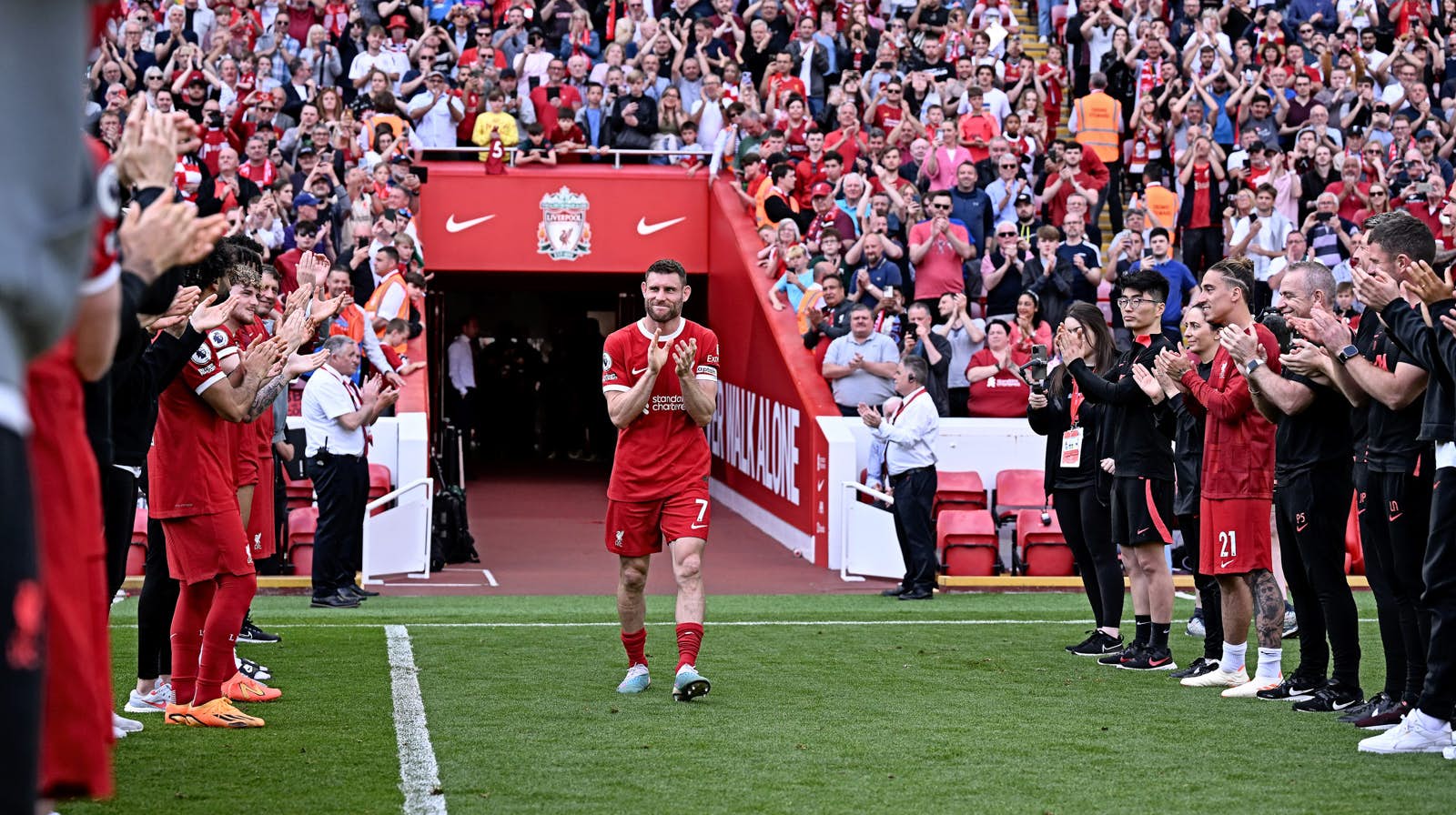
“Nothing we’ve achieved at Liverpool would have happened without James,” Jürgen Klopp said in 2022. “He’s set standards in a way not a lot of people can do.” And when asked to sum up his man in one word, Klopp didn’t hesitate. “Legend.”