Britons consume over two million tonnes of potatoes every year—and when you consider how versatile they are, it’s no surprise.
We have them fried, baked, mashed, chipped and everything in between, including liquified in soups.
But the humble tuber doesn’t always get the nutritional respect of the vegetables it gets dished up with, such as Brussel sprouts, carrots or beetroots.
In fact, despite being a staple in British cuisine since they were brought to these shores by Sir Francis Drake after voyaging to America in the 1580s, spuds have been tragically banished by people on low-carb diets, maligned nearly as much as bread.
Experts agree, however, that potatoes aren’t necessarily bad for the waistline and can prove a ‘naturally nutritious’ option.
‘Potatoes are naturally low in fat and provide fibre, potassium, vitamin C and vitamin B6,’ Rob Hobson, a registered nutritionist and author of Unprocess Your Life, says.
‘Eaten with the skin on, they’re one of the most filling ways to eat carbohydrates because they’re high in water and fibre for relatively few calories.
‘Where health tends to wobble is how they’re cooked and what’s added to them, rather than the potato itself.’
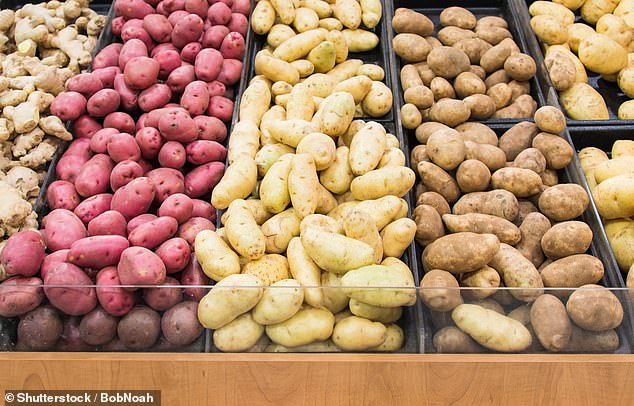
Britons consume more than two million tonnes of potatoes every year
A medium-sized russet potato, for example, contains around 17mg of phosphorous, beneficial for bone health and almost half the recommended NHS daily intake.
It also boasts more potassium, which helps regulate blood pressure, than a banana.
Specialist dietician Dr Nichola Ludlam-Raine, adds: ‘Potatoes themselves are not the problem — they’re naturally nutritious, affordable and filling.
‘It’s the processing, frying and heavy additions of fat and salt that tend to reduce their health credentials.
‘Boiling, baking, roasting and air-frying with modest amounts of oil are the healthiest approaches, especially when potatoes are paired with vegetables, fibre and a source of protein to create a balanced meal.’
According to the NHS, starchy carbs like potatoes should make up around a third of your daily food intake.
But all your carbohydrates shouldn’t come from the humble spud — as with anything, variety is important for a healthy diet.
The official daily guideline intake of carbs for women is 230g per day, while men should aim for 300g per day, around a third of the daily calorie requirement for both sexes respectively.
But what are the healthiest – and least – ways to eat them? The Daily Mail asked leading UK dieticians and nutritionists to rank classic cooking methods from best to worst.
1. Boiled potatoes
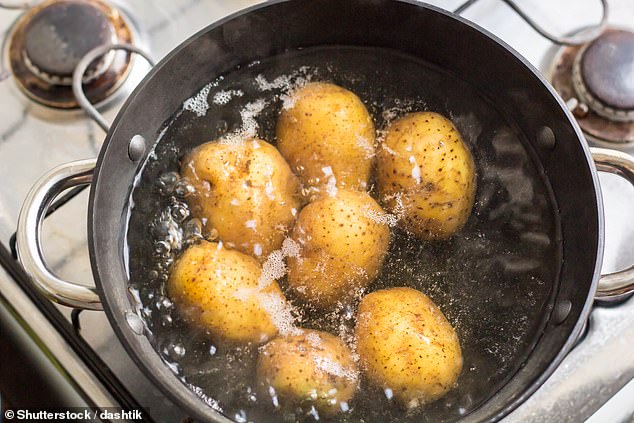
Boiling preserves the potato’s natural nutrients without adding extra fat
The potato that takes the crown as healthiest is unsurprising — boiled is best, the experts unanimously agree.
Boiling preserves the potato’s natural nutrients without adding extra fat.
‘They’re about as close as you can get to the potato in its natural state,’ Mr Hobson says.
‘They’re low in fat, relatively low in calories, and very filling for the amount of energy they provide.
‘They’re also a good source of potassium, vitamin C and fibre, especially if you keep the skin on.
‘When potatoes are boiled and then cooled — for example in a salad — some of the starch turns into resistant starch, which feeds gut bacteria and helps support steadier blood sugar levels.’
But experts also caution overboiling, which can leach nutrients like vitamin C and B6 into the water.
For the healthiest boiled potatoes, dress lightly with olive oil, vinegar, mustard or herbs rather than butter and swap mayonnaise for Greek yoghurt in potato salads.
2. Baked potatoes

Baked potatoes, too, provide a good hit of fibre and on their own are still low in fat
Jacket potatoes have been enjoying somewhat of a culinary revival, with videos of spuds groaning under ladlefuls of beans, fistfuls of cheese and dollops of glistening tuna mayo going repeatedly viral on social media.
But even without a pile on of classic toppings, eating a potato prepared in this way provides a good hit of fibre—and when eaten ‘naked’ are low in fat.
‘Baking retains fibre and micronutrients, and baked potatoes are very filling, which can support appetite control,’ Dr Ludlam-Raine says.
But we all know that a baked potato is really a vessel for toppings — and that’s where calories and fat can creep in.
‘The key is what you add on top,’ Dr Ludlam-Raine adds.
Go easy on butter and full-fat cheese and swap for a drizzle of olive oil, cottage cheese or lower-fat cream cheese.
Yoghurt-based toppings and leftover vegetables also help keep it balanced.
‘Large amounts of butter and cheese can quickly push up calories and saturated fat,’ she adds.
‘We as a family have baked potatoes at least once a week as they’re so versatile.’
3. Mashed potatoes
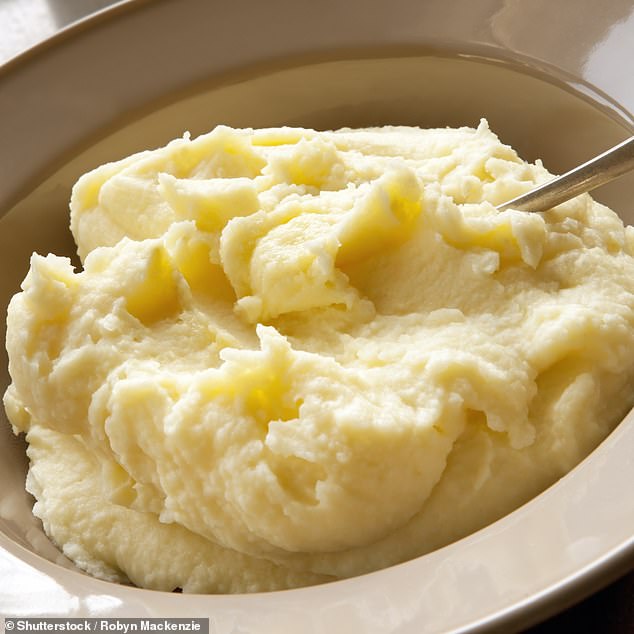
Traditional mash often relies heavily on butter or cream, which adds richness but also increases saturated fat
Opting for mash can be a healthy option — but it all depends on the small choices you make in the cooking process.
Traditional mash often relies heavily on butter or cream, which adds richness but also increases saturated fat.
Experts, instead, suggest using milk, either semi-skimmed or whole, which can still give a creamy texture without needing large amounts of added saturated fat.
A spoon of low-fat Greek yoghurt or cream cheese also works for creaminess, Mr Hobson says.
‘Keeping some or all of the skins on when mashing is another simple way to boost fibre content,’ Rhiannon Lambert, a registered nutritionist and author of The Fibre Formula, adds.
‘Adding vegetables such as leeks, spinach or cauliflower, or even beans or legumes into mash can also increase fibre and plant variety without changing the comfort factor people love.’
4. Roast potatoes
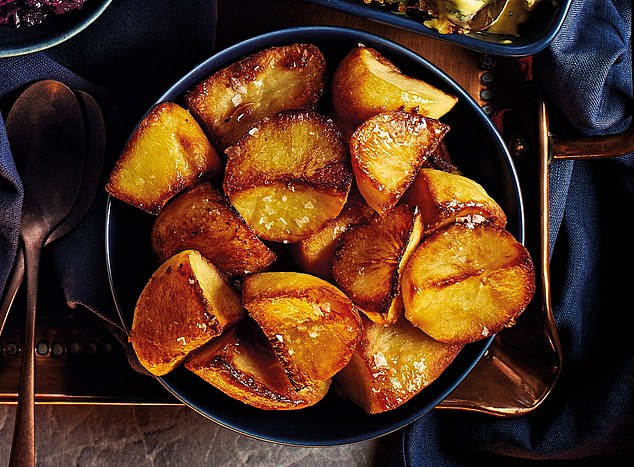
The healthiest way to cook a roastie involves parboiling first. This is because it creates a more ideal surface texture that ensures crispiness without drowning it in oil
Everyone loves a good roast potato—especially at Christmas—but despite their higher fat content, they do have a place in a balanced diet, experts say.
‘Choosing oils such as olive oil or cold-pressed rapeseed oil influences the overall nutritional profile of the meal positively,’ Ms Lambert says.
‘These contribute predominantly unsaturated fats, compared with more traditional roasting fats like goose fat or butter, which are higher in saturated fat.’
Studies have also repeatedly shown that replacing saturated fats with unsaturated fats are better for heart health.
The healthiest way to cook a roastie also involves parboiling first.
This is because it creates a more ideal surface texture that ensures crispiness without needing the potatoes to swim in excess oil.
‘You could use an air fryer too,’ Thalia Pellegrini, a registered nutritional therapist, says.
‘Parboil and then use an olive oil spray to coat before cooking as this would require the least olive oil, making it the healthiest option of all.’
5. Hasselback potatoes
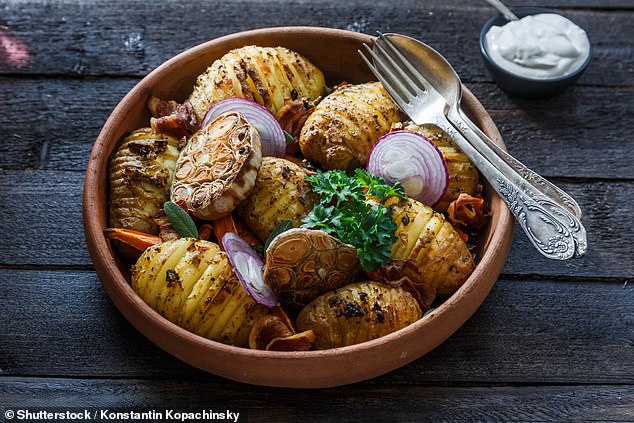
Fan-like slices promise more flavour
Hasselback potatoes are cut about halfway through, giving them thin, fan-like slices which make them extra tender and flavoursome.
Dr Ludlam-Raine says that as Hasselback potatoes are made from whole potatoes, they still provide fibre, potassium and vitamin C—but their cooking method nudges them down the ranks.
They are often brushed repeatedly with oil or butter while cooking, which increases their calorie and saturated fat content.
She says: They can be made healthier by using olive or rapeseed oil instead of butter, applying it lightly rather than generously, and relying on herbs, garlic and spices for flavour.
‘They’re best enjoyed occasionally rather than as an everyday side.’
Hanieh Vidmar, Nutritional Therapist & Naturopathic Chef told the Daily Mail that the cooking method overall can be problematic, as some oils become unstable when heated up.
She says: The repeated basting and high oil content make them far more calorie-dense than a simple roasted potato.
‘When done well, they look great at the table, but it also requires high heating constantly.
‘Repeatedly heating oil at very high temperatures isn’t ideal, even when using olive oil – it can cause oils to oxidise which reduces nutritional value.’
6. Crispy smashed potatoes
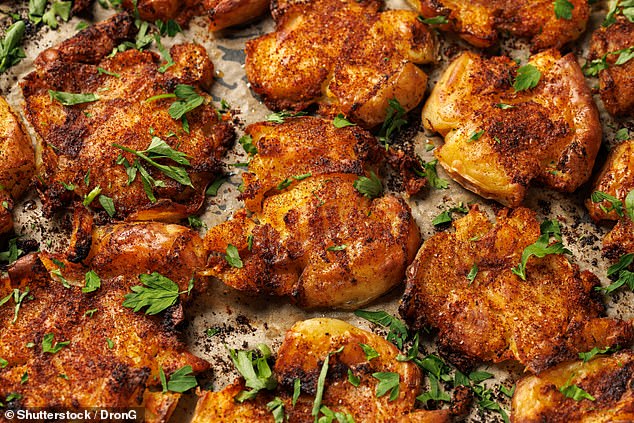
These potatoes are popular on social media
Preparation videos for crispy smashed potatoes clock up thousands of views on social media.
Who knew that the sight of a parboiled potato being squashed under a glass on to a baking tray could be so relaxing?
After drizzling with oil, salt and herbs and being baked in the oven, they come out transformed, crunchy bronze discs ready to be dunked in tzatziki or another dip of your choice.
Dr Ludlam-Raine says that because they are cooked in an oven or air fryer, this method can be less indulgent than some deep-fried options—but they quickly become grossly unhealthy if large amounts of oil are used to achieve the all important crispiness.
‘They’re generally a better option than chips, especially when baked or air-fried,’ she says.
‘Parboiling first, smashing lightly and using an olive oil spray can help keep fat levels lower while still delivering crunch.’
7. Chips (including oven chips)

Oven-baked or air-fried chips can be a better option than deep-fried, especially when made with minimal oil
Fried potatoes and chips tend to be less healthy because they absorb a lot of oil making them energy dense and easy to overconsume.
‘Oven chips are a step up, but their health value still depends on how they’re prepared and the type you buy,’ Mr Hobson says.
‘Thicker-cut chips baked with minimal oil and lower salt are a better choice, while heavily processed or highly flavoured versions quickly push them back into treat territory.’
Oven-baked or air-fried chips can be a better option than deep-fried, especially when made with minimal oil.
Equally, sweet potato chips are often believed to be a healthier alternative but they’re not automatically better than white potato chips.
Sweet potatoes provide beta-carotene — a vibrant red-orange plant pigment that the body converts into Vitamin A — but white potatoes often deliver more potassium, Mr Hobson adds.
Instead, it’s more about cooking method and portion size than the type of potato.
8. Hash browns
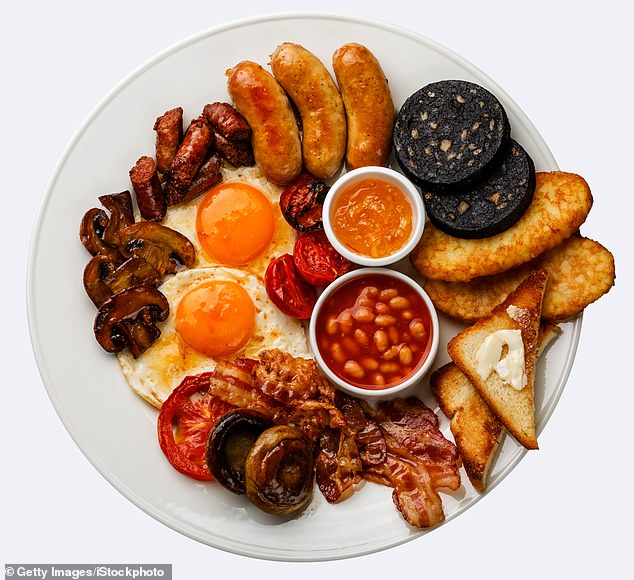
Shop-bought and takeaway hash browns are often deep-fried and higher in refined oils and salt, compared to other potato options
Sadly for fans of a full English breakfast, hash browns are one of the more unhealthy ways to eat potatoes.
Shop-bought and takeaway versions are often deep-fried, which makes them higher in refined oils, and tend to be very salty.
The experts are unanimous: treat them as an occasional breakfast item rather than a daily staple.
‘Making hash browns at home allows more control over both ingredients and cooking method,’ Ms Lambert adds.
‘Baking or air-frying with a small amount of oil reduces the overall fat content while still delivering that familiar texture.
‘And leaving the skins on the potatoes also retains the fibre.’
Adding onion or herbs for flavour instead of relying on salt can also boost the nutritional benefits of the hash brown, Mr Hobson says.
9. Dauphinoise potatoes
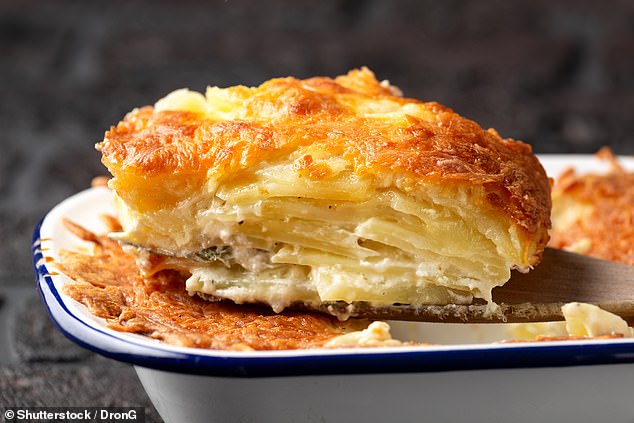
This classic French dish is packed with cheese and cream, making it a calorific choice
Traditionally made by baking sliced, cheese-topped potatoes in a sauce made of cream, milk and garlic, this classic French side dish is the epitome of sophistication… and indulgence.
Dr Ludlam-Raine says: ‘The other ingredients make them high in calories and saturated fat, and eating them regularly could contribute to excess energy intake and poorer heart health.’
But, she adds that there are healthy twists that can make the recipe less calorific, such as using a mix of milk and cream rather than all cream, adding vegetables like onions or leeks for fibre.
‘You can also reduce the amount of cheese, or choose a stronger cheese so less is needed,’ she says, adding: ‘This is classic comfort food and should be enjoyed as a treat.’
10. Thousand-layer potatoes
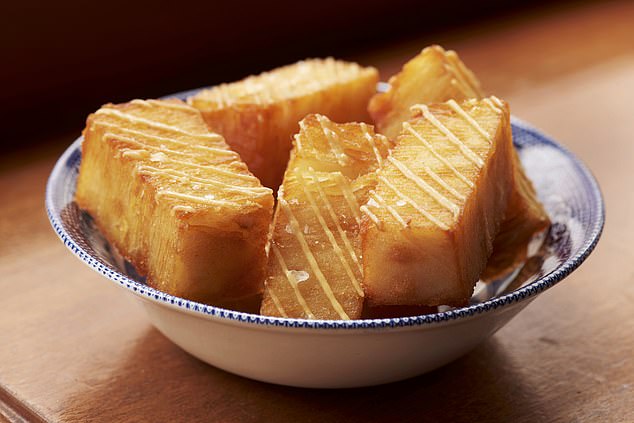
These potatoes are impressive, but should only be enjoyed on occasion
The sight of a knife scraping over the top of a glistening cuboid potato, knocking off carefully chopped sprigs of parsley and diamantes of salt has become commonplace on social media.
To make the posh twist on a hashbrown, you use a mandolin to thinly slice potatoes before stacking them with butter or oil between the layers, pressing them overnight, before slicing them into hearty chunks and frying them.
Dr Ludlam-Raine says that it’s these layers which go to make the (impressive) side dish so calorific—there is an increased level of fat absorption due to the large internal surface area of the potato slices, plus the additional external deep frying.
‘This pushes up saturated fat and salt levels,’ she says.
‘A lighter version can be made by using olive oil spray, adding herbs and garlic instead of cheese, and keeping portion sizes modest. They’re delicious but best eaten occasionally.’
11. Confit potatoes

Confit potatoes are cooked in fat over a long period of time
Another traditional French cooking method, confit sees food poached in oil or fat on a low temperature for a long period of time.
Dr Ludlam-Raine says that this is ‘one of the most indulgent ways to prepare potatoes.’
Because they are cooked submerged in fat, often butter, ghee, or duck fat, it makes them very calorie-dense and easy to overeat without adding much extra nutritional value.
‘A healthier alternative would be roasting or air-frying parboiled potatoes with a small amount of oil, or cooking them in stock with a little oil rather than fully confiting them,’ she says.
Ms Vidmar agrees that they are only to be enjoyed as an occasional treat, and told the Daily Mail that the cooking method overall can be problematic, as some oils become unstable when heated up.
‘The cooking method preserves the potato and avoids charring, but because they’re submerged in oil for long periods they become very calorie-dense and less filling,’ she says
Furthermore, while fat is vital for the body to function, she adds that ‘the prolonged heating reduces the nutritional quality of the oil itself.’