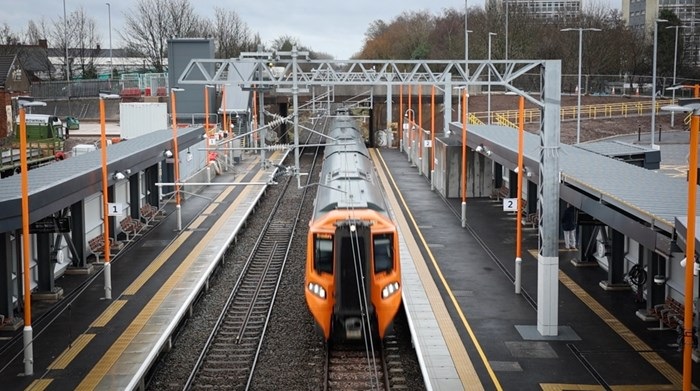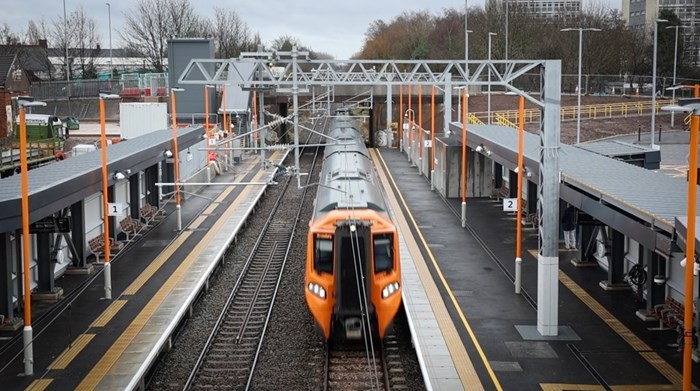
FIVE train stations in the UK left deserted for decades have undergone major renovation projects and will soon have new routes to a major city.
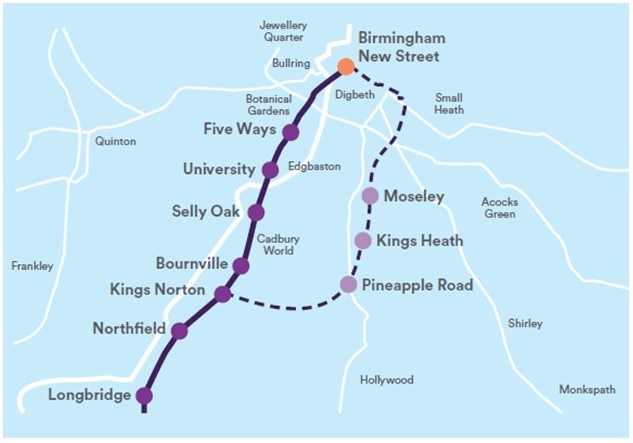
The five stations include three on the Camp Hill Line and two between Wolverhampton and Walsall.
All five of the stations will welcome new West Midlands Railway services in early 2026.
On the Camp Hill Line, £120million has been spent on three stations at Moseley Village, Kings Heath and Pineapple Road to reopen them.
Moseley Village, Kings Heath and Pineapple Road train stations all closed in 1941 during the Second World War and never reopened.
Ahead of services starting early next year, construction work at each of the stations has been completed.
Read more on travel inspo


Each station will have two platforms for six-carriage trains, bike parking, ticket machines, information screens and lifts.
There will also be pick up and drop off zones at Moseley Village and Pineapple Road stations.
This also means that the stations will gain services for the first time since World War II.
The services will call at each of the stations every 30 minutes, with destinations including Birmingham New Street and Kings Norton.
It is estimated that the reopened stations will cut journey times to Birmingham New Street by between nine and 31 minutes.
As for the two stations between Wolverhampton and Walsall – Darlaston and Willenhall – there will be train services for the first time since 1965 when the stations were both closed.
To begin with, there will be two services an hour between Wolverhampton and Birmingham.
A direct service to Walsall town centre, known as the ‘leather capital of the world’ due to its leatherworking history, is also being discussed with the Department for Transport and Walsall Council.
In total, the two stations have cost £85million to reopen.
Walsall Council hopes that the stations will better connect local residents to the wider region, as well as create more opportunities for people to travel, whether that be for holidays or for work.
Richard Parker, Mayor of the West Midlands, said: “For some communities, this is the first time in more than 80 years they’ve had their own train service.
“That changes everyday life. Getting to work, college or seeing family becomes simpler and quicker.
“It also means more people coming into town centres. More footfall for shops and cafés. More confidence for local businesses to invest and grow.
“This is what delivery looks like – backing places that have waited far too long for decent connections.”
In other train news, here’s the first look at the new Virgin Trains that will take Brits from UK to France, Belgium and Netherlands.
Plus, the low-cost train launching more routes between two popular UK cities – and tickets are £33.