Prime Minister’s Question Time in the Westminster House of Commons is the most raucous bear pit in any Western legislature. Viewers used to America’s relatively restrained exchanges in Congress often find it astonishing at first sight.
The prime minister has to face serried ranks of opposition politicians guffawing and jeering, sometimes jumping out of their seats and waving order papers. It is even worse for the leader of the opposition, who has only a few minutes to try to wrong-foot a prime minister who has behind him all the authority of government—that is, most MPs—and in front of him a voluminous fact file prepared by civil servants.
You might wonder whether this weekly half-hour of mayhem really matters. It does. Prime Minister’s Questions is the only session of Parliament that the vast majority of the voting public ever see. It dominates news bulletins every Wednesday. It also matters to journalists up in the press gallery, who sit in judgment like patricians and plebs in a Roman amphitheater.
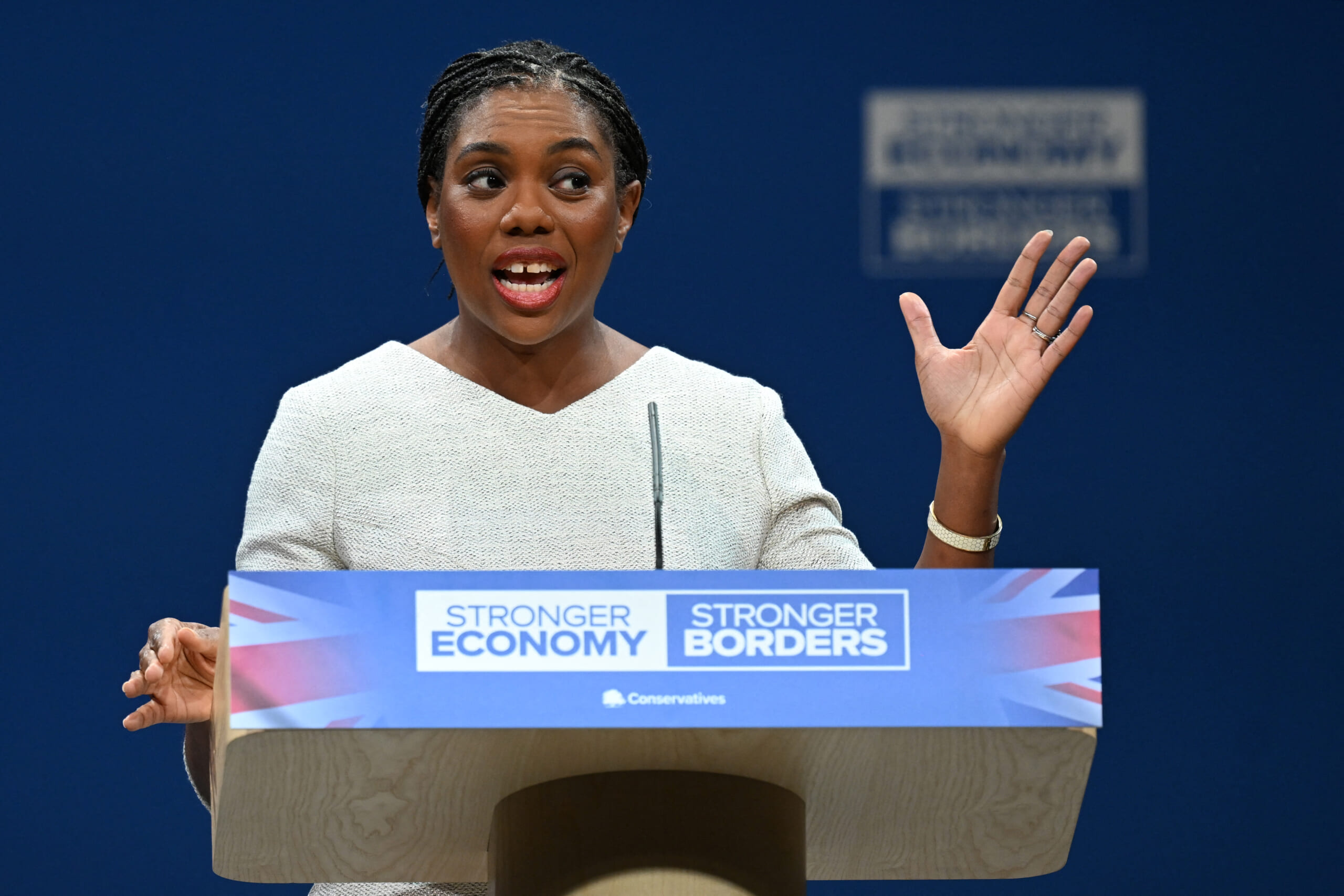
For most of this year, they have judged the Tory leader, Kemi Badenoch, to be a loser. Thumbs down. She can’t handle the pressure, they said; can’t think on her feet; allows Starmer to dominate week after week. That was until November 26, 2025, when everything changed.
Badenoch was giving her response to the budget speech from the chancellor, Rachel Reeves. Reeves had unwisely complained about “mansplaining” and misogyny by male critics of her management of the economy. Badenoch leaned into the dispatch box like a boxer at a weigh-in.
“Let me explain to the Chancellor, woman to woman,” she said. “People out there aren’t complaining because she’s female; they’re complaining because she is utterly incompetent.” The Labour benches were stunned into silence at this breach of the first rule of #MeToo that women must always be believed about sexism. Badenoch lectured a frozen-faced Rachel Reeves on modern feminism: that it means being treated equally, not “whinging and whining about mansplaining and misogyny.” The Tory benches went wild, crying, “More! More!” The rest of her performance fizzed with insult and righteous anger. It is well worth watching. A new Tory star has been born.
The fact that this was a black woman, brought up in Nigeria, telling it like it is made the episode all the more delicious. The Tories are always portrayed by liberal media and BBC comedians as racists.
Grim-faced political commentators scolded Badenoch for being “unkind” and “personal”—as if Labour politicians had not been unkind in their attacks on “Tory scum.” Keir Starmer once compared the former Tory prime minister Liz Truss to a rotting lettuce.
This single exchange may have been a turning point in British politics. Badenoch was speaking for the nation—or at any rate, the part of it that is fed up with having to kowtow to privileged women of the lanyard class who deflect justified criticism by complaining about microaggressions and misogyny.
In the weeks since, Badenoch has been transformed. She now dominates Prime Minister’s Questions in a way not seen since the days of Margaret Thatcher. The press are suddenly talking about her as a serious threat to the Reform leader, Nigel Farage, whose party is currently riding high in the opinion polls.
American readers may be forgiven for not realizing just how far and fast the British nationalist right has come in 2025. It is not exactly something the liberal media want to shout about. But Nigel Farage’s anti-woke, anti-immigration party, Reform UK, has taken the country by storm. It is leading Labour by a double-digit margin in every recent opinion poll.
Even the BBC is seriously thinking about what a Reform government might look like. Attempts by the press to portray Farage as a Nazi because of some racist banter he allegedly indulged in at school have not dented his party’s popularity. The British people are sick of immigration, sick of woke politics, and sick of holier-than-thou Labour politicians. Above all, they are fed up with inflation and paying some of the highest energy bills in the world just so Labour ministers can win brownie points at climate conferences. Reform has captured the mood of a society in change, rejecting the social-democratic “consensus” that has dominated UK politics since the 1990s.
The Conservatives have been on the back foot during this shift in British politics, not least because of the legacy of Boris Johnson. His liberal Tory administration after 2019 allowed net migration to reach nearly one million a year. He uncritically endorsed Net Zero and pumped subsidies into wind farms. As a Conservative prime minister he hiked taxes to their highest level since the 1950s.
The Tory experiment with social-democratic multiculturalism was a disaster. The traditional party of the right was routed in the July 2024 general election, losing 251 seats and leaving a ragged rump of 121 MPs in the House of Commons. But now, for the first time since the election, the Tories have got up off the floor and decided to take on both Starmer and Farage.
At weekly sessions of PMQs, Badenoch has lambasted the Labour government for breaking its promises on taxation and using public money to finance welfare queens on “Benefits Street” and hotels for illegal asylum seekers. Starmer said he would “smash the gangs” and halt the invasion of rubber boats, but the number of illegal migrants has only gone up, as Badenoch reminds him week in, week out.
The prime minister has just launched a campaign to combat misogyny among British boys. This while failing to deliver the promised national inquiry into the horrendous subcontinental grooming gang scandal. Badenoch says that instead of blaming young men, he should “stop people from cultures that don’t respect women coming into our country.” No other politician has dared to say that—not even Nigel Farage. Badenoch can go where other conservative politicians fear to tread in the minefield of racial politics.
The Conservatives are now inching back up the opinion polls. But it may take a while, so great is Reform’s lead. Nigel Farage is, by common agreement, a consummate populist politician, able to connect with ordinary people in a way no other recent politician has managed. He speaks directly to the growing number of Britons who say they “want their country back”—who believe their culture and society have been changed by mass migration policies they never voted for.
Subscribe Today
Get daily emails in your inbox
But there is a sense of optimism on the Tory benches for the first time in many months. Conservatives are reminding themselves that they have been one of the most electorally successful political parties in any Western democracy. They have an authority and history that Reform lacks. Even one of Reform’s MPs, Danny Kruger, says his party is “a bit of a pirate ship with an ill-disciplined crew and a buccaneering captain.”
The Tories are also still the main opposition in Parliament, which gives Badenoch a weekly platform at Prime Minister’s Questions to strut her abrasive stuff. Reform has only a handful of MPs, so recent has been its meteoric rise.
The broader nationalist right in Britain, which has been growing in confidence owing to the catastrophic decline in popularity of the Starmer government, is now worrying that its vote might be divided, allowing Labour back in. 2026 will be all about trying to unite these two forces for change. Even Farage has ruminated on the possibility of an electoral alliance. But if Badenoch continues to shine as a black Margaret Thatcher, she will likely be calling the shots.