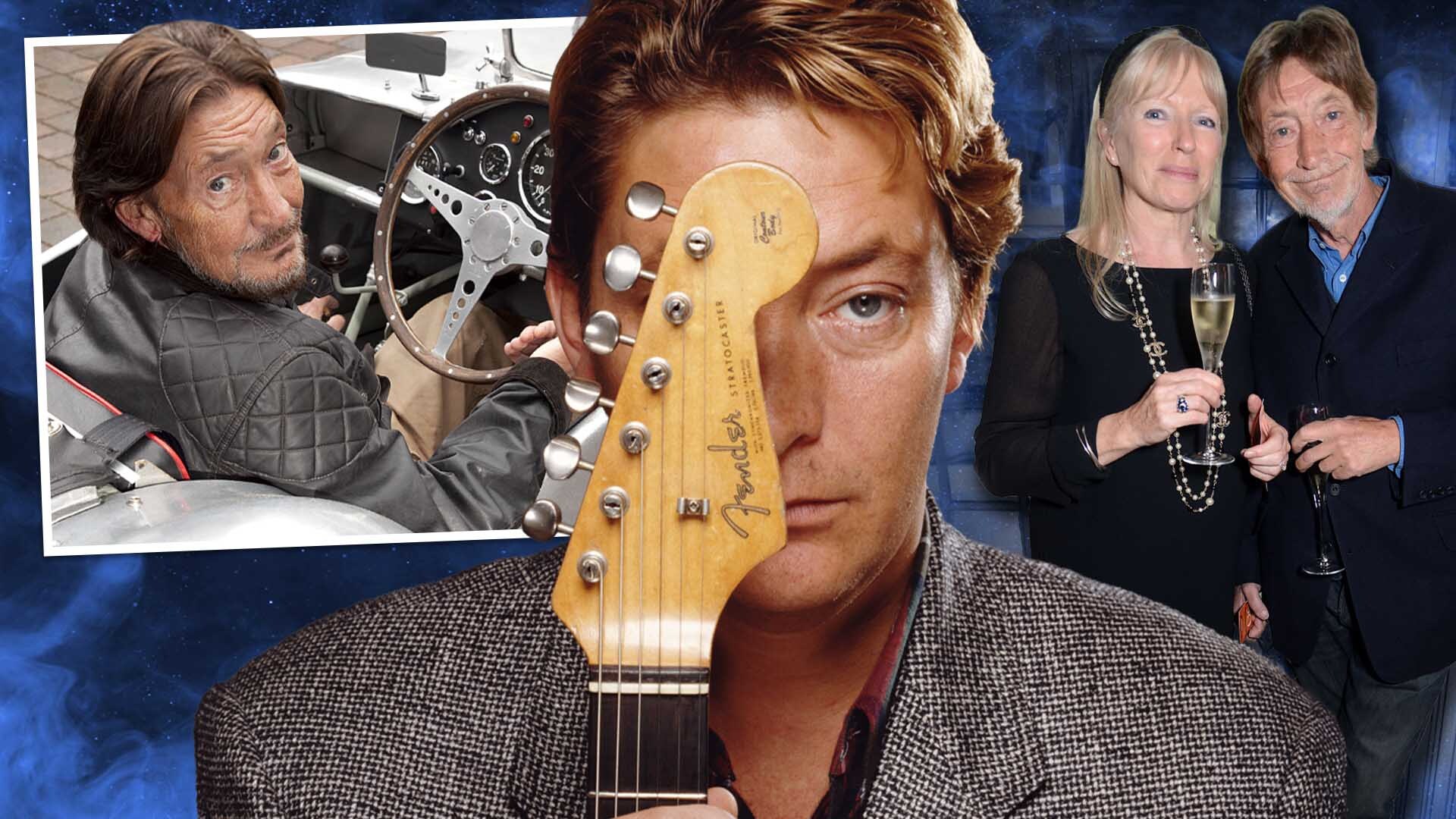
BANNED from driving and down on his luck, Chris Rea could not afford the train fare home from London to Middlesbrough for Christmas.
It meant the singer, who has died aged 74 after a short illness, had to cajole his wife Joan to make the tortuous drive from the North East and back to Teesside to pick him up.
The gravel-voiced songwriter had never planned to write a Christmas track because he was worried it would affect his credibility.
But as they battled north through snow storms and traffic jams, the lyrics flooded out.
Today, his Driving Home For Christmas single will chime from thousands of car stereos as folk criss-cross Britain to be with their families.
Chris would say the song’s genesis was “like a classic festive story”.
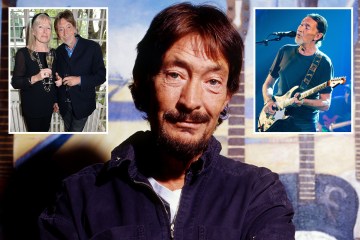
The guitarist remembered: “It was 1978, coming up to Christmas. It was all over for me — I was just about out of my record contract, and my manager had just told me he was leaving me.
“My wife got in our old Austin Mini, drove all the way down from Middlesbrough to Abbey Road studios to pick me up, and we set off back straight away.
“Then it started snowing. We kept getting stuck in traffic and I’d look across at the other drivers, who all looked so miserable.
“Jokingly, I started singing, ‘We’re driving home for Christmas . . .’
“Then, whenever the street lights shone inside the car, I started writing down lyrics.”
It was years later before he put the words to music, adding: “I’d never intended to write a Christmas hit — I was a serious musician! So initially, the song came out on a B-side.”
‘Crisis after crisis’
Recorded and released as a single in its own right in 1988, it only reached 53 in the charts.
But since 2007 the song has re-entered the festive rundown every year, peaking at No10 in 2021.
Dad-of-two Chris revealed in 2016: “If I’m ever stuck on the M25 — the Road To Hell (the title of another of his big hits) — I’ll wind the window down and start singing, ‘I’m driving home for Christmas’ at people in cars alongside. They love it. It’s like giving them a present.
Then it started snowing. We kept getting stuck in traffic and I’d look across at the other drivers, who all looked so miserable. Jokingly, I started singing: “We’re driving home for Christmas . . .
Chris Rea on writing Driving Home for Christmas
“I’d never played it live until one year at Hammersmith Odeon. The gig was on December 21, so the road crew kept badgering me to do it.
“We hired 12 snow cannons. When we started the song, you couldn’t hear it for the noise of the crowd, and we let go with the machines.
“We put three feet of artificial snow in the stalls. The venue charged me £12,000 to clean it up.”
Tributes rolled in last night, with Sun on Sunday columnist and music journalist Tony Parsons praising Chris as a “top man” and a “hugely underrated songwriter”.
Middlesbrough FC described the singer as a “Teesside icon”, while the town’s Labour MP, Andy McDonald, said on X that Chris “will live on through his wonderful music.”
Local mayor Chris Cooke, said the singer “helped put Middlesbrough on the map”.
Singing in his relaxed, trademark husky voice, he sold more than 30million albums.
Christopher Anton Rea was born in Middlesbrough in March 1951 to second-generation Italian immigrant father Camillo and Irish mother Winifred.
He was one of seven children, and his dad ran an ice cream parlour and chain of cafes.
Chris, who had suffered a series of health crises over the decades, recalled: “My grandfather had come from Italy via New York and Panama.
“How he finished up in Middlesbrough is beyond me.
“There were nine of us, lots of screaming, crisis after crisis, somebody would be in the bathroom when someone else had an important date.
“Every meal would be a time bomb, rows breaking out from one side of the table or another.
His father was a “distant figure” who was “a cross between the Pope and Mussolini”. A young Chris was drafted into the family business.
He said: “I started at 12, as a table clearer. I wore a white Bri-Nylon coat with Mr Really Good written on it.
“Nothing was ever clean enough for my father. You could never clean as good as he could, you could never clean as fast and as thorough as he could.”
Chris had his own ideas on how to improve the business but they received short shrift from his dad.
Leaving the business, he dreamt of becoming a journalist.
Then he began pursuing a career in music, falling in love with blues guitarists such as Charlie Patton who he had heard on the radio.
He said: “When I was young I wanted most of all to be a writer of films and film music.
But Middlesbrough in 1968 wasn’t the place to be if you wanted to do movie scores.”
Chris added: “I was late to the guitar. I didn’t pick up the instrument ’til I was 21.
“Think about how much the likes of Mark Knopfler or Eric Clapton had done before I even started.
‘On the dole’
“There had been beat groups in the area, lots of them, but they’d gone when I started playing.
“I was on the dole, didn’t know any musicians. I definitely missed the boat, I think.”
In 1973 he joined Middlesbrough band Magdalene and began writing songs for the band.
He only agreed to perform vocals when the singer failed to show up at a gig.
Signing a solo record deal, record execs asked him to change his name, and they took him seriously when he jokingly suggested the moniker Benjamin Santini.
His first single So Much Love was released — under his own name — in 1974, yet the big breakthrough did not come until four years later.
Another single, Fool (If You Think It’s Over), taken from his debut album, would become a huge hit, reaching number 12 in the US.
Yet the song, on which he played keyboards, saw him marketed as a piano man rather than the blues guitarist he was.
His record company was keen to promote him as either as “the British Billy Joel” or “the northern Elton John” — prompting Chris to joke that they should call him “Elton Joel”.
He said of Fool: “It’s the only track I never played guitar on.
“It was just a huge hit. So there was nothing I could do. It was like, this is not me!’”
Chris’s first album was called Whatever Happened to Benny Santini? — a sideswipe at the music biz suits who sought to erase his authenticity by changing his name.
His second and third albums were commercial flops and Chris toured West Germany extensively where he had built up a large fan base.
It was not until 1985’s million-selling album Shamrock Diaries that UK audiences began to take him to their hearts.
Hit singles from the LP included Stainsby Girls — written for wife Joan who he’d met as a teenager in Middlesbrough, and Josephine about his daughter.
He would later write a song about his second child Julia.
His star grew even brighter with the release of million-selling studio albums On The Beach in 1986 and Dancing With Strangers in 1987.
Chris explained that the song On The Beach was inspired by the Spanish island of Formentera, saying: “That’s where me and my wife became me and my wife.”
His US record label Tamla Motown told him he could be huge if he toured the States for three years, but the family man declined.
I had my pancreas, duodenum and half my stomach removed. The operation has a one-in-three survival rate, and it leaves you with diabetes and a lot of problems dealing with fat.
Chris on his battle with pancreatic cancer
In 1989, he landed his first No1 album in the UK with The Road To Hell with its title track inspired by the M25 and M4.
A boyhood fan of Ferraris, petrolhead Chris was a Formula One fan and raced historic cars.
He hung out in the pits with Eddie Jordan, then owner of the Jordan F1 team.
Chris remembered: “Me and Eddie became big mates and, one year, he even made me part of the pit crew.
“I had the full uniform. He put me in charge of the tyre-warmer for the rear right tyre of Eddie Irvine’s car.”
His album sales also allowed him to buy a converted mill built over a tributary of the River Thames in Cookham, Berks, with its own recording studio.
As his career went stellar, he was dogged by serious ill health.
In his forties he was struck down with peritonitis after a colon operation went wrong.
Then, at 50, he was diagnosed with pancreatic cancer.
In 2002 he revealed: “Last year I nearly died. I had my pancreas, duodenum and half my stomach removed.
“The operation has a one-in-three survival rate, and it leaves you with diabetes and a lot of problems dealing with fat.
“When I had the operation, they thought it was cancer everywhere and I didn’t have a chance.”
I’ll always be a Boro lad
Chris
Before the 14-hour op began, Rea had said goodbye to wife Joan who he had been with since he was 16.
Looking back on a career moulded by record company people, he said: “Just before I went into that operation, I thought, ‘If I get through this, I’ve got to make the record that I would have done if nobody ever got in the way’.”
It meant a return to the Delta blues he’d loved as a young man, and he recorded Dancing Down The Stony Road.
The cancer returned three more times, once in his liver and twice in his kidneys.
Then a stroke in 2016 left him with slurred speech. He recovered well enough to record a new album and embarked on a lengthy tour.
However, he was forced to abandon the shows in December 2017 after collapsing on stage. He released his 25th and final studio album, One Fine Day, in 2019.
He saw himself in the Bruce Springsteen mould, as “an ordinary bloke from the grass roots, with a craggy, lived-in face, singing about life”.
Despite years spent in the Home Counties, Chris said people were “amazed” he never lost his Teesside accent.
“I don’t mind,” he once said. “I’ll always be a Boro lad.”