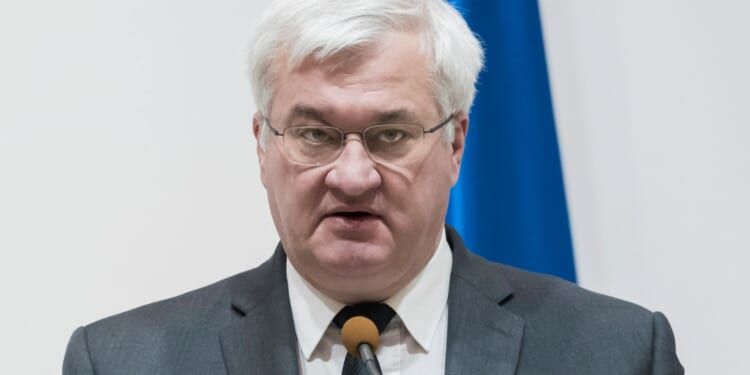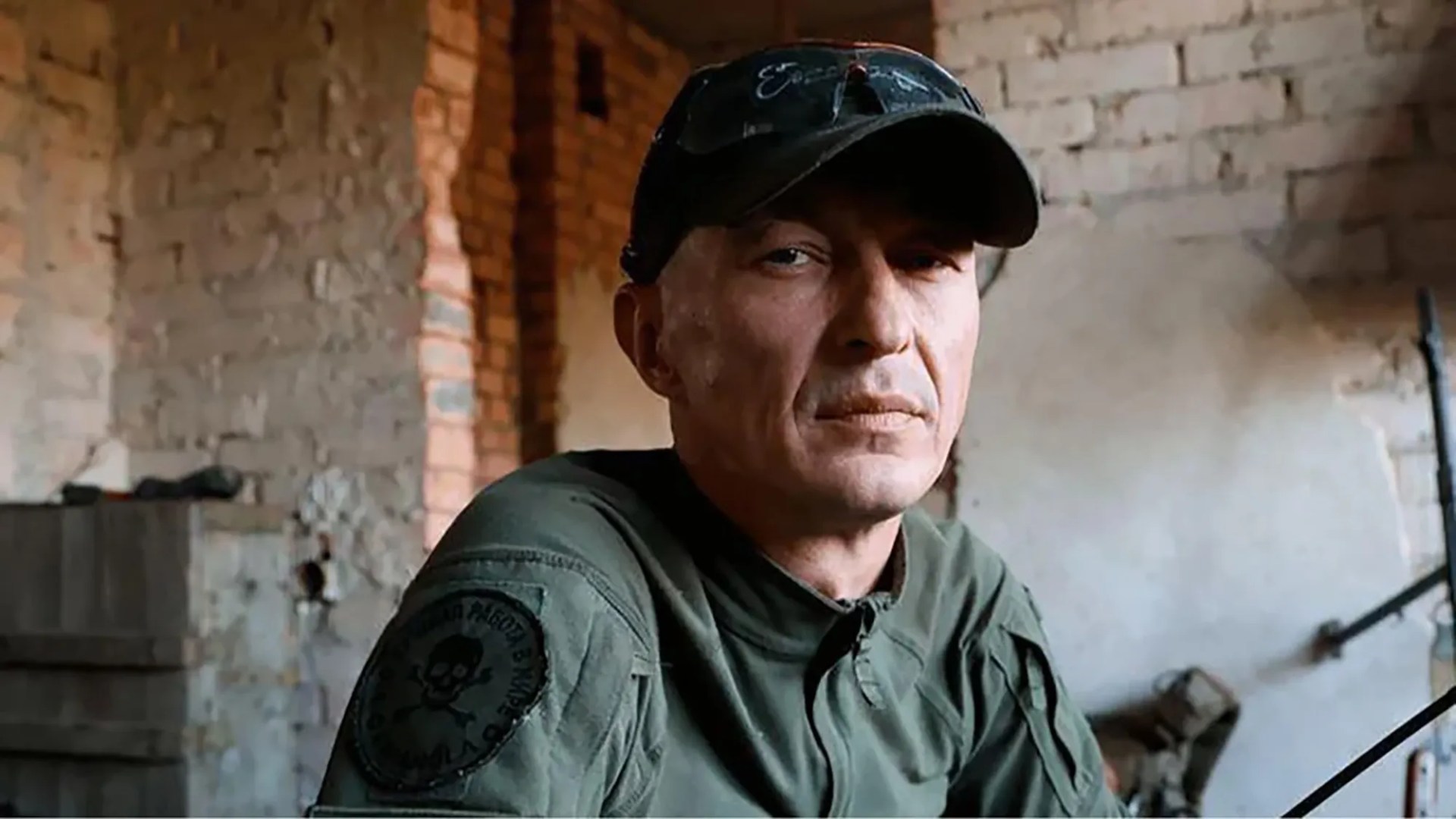
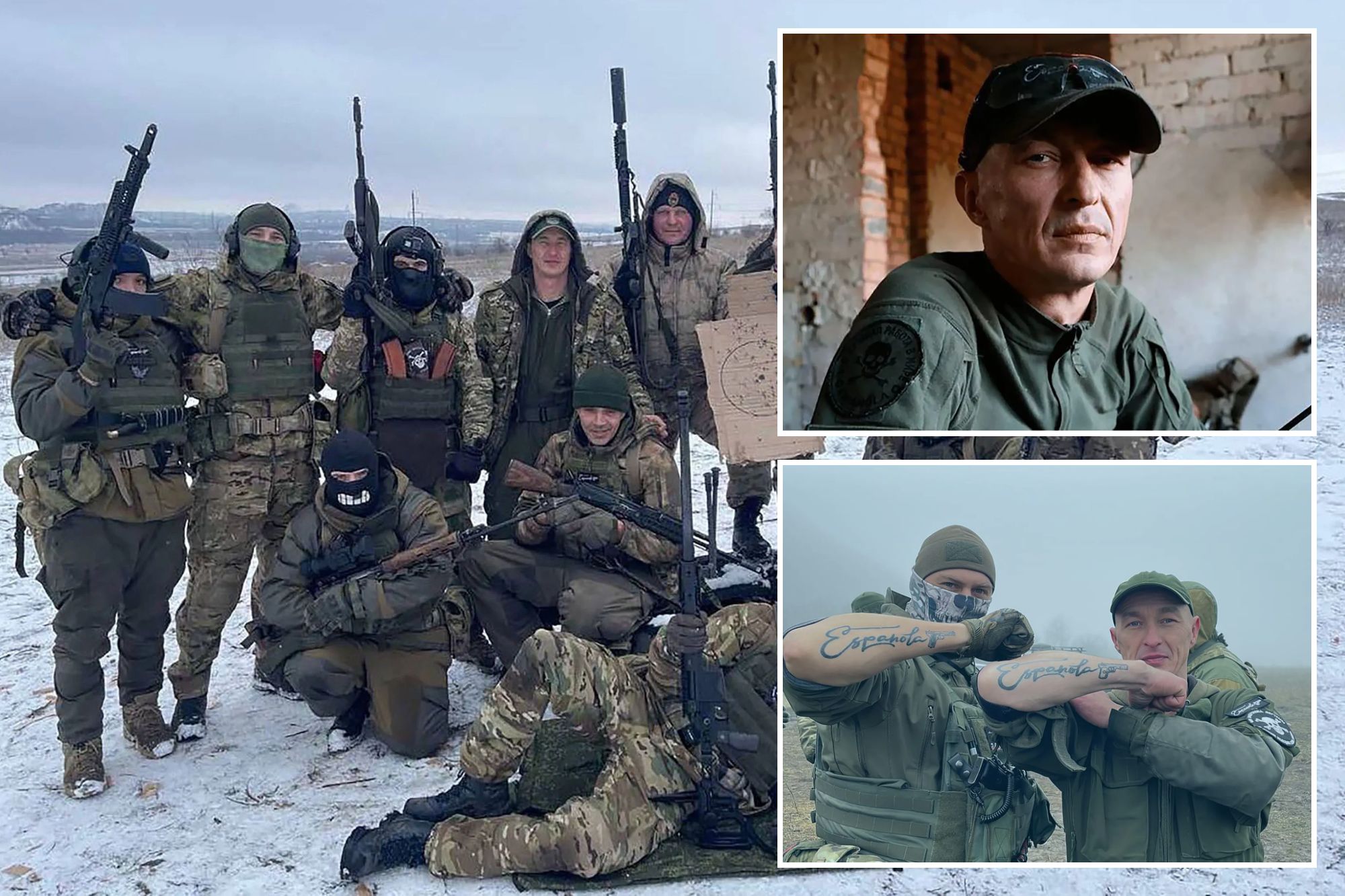
The commander of Vladimir Putin’s notorious football hooligan battalion – which fought in Ukraine – has died under mysterious circumstances.
The private military company known as Espaniola recruited some of Russia’s most notorious and hardened thugs from the terraces of leading clubs.
Lt-Col Stanislav ‘Spaniard’ Orlov, 44, has been declared dead and his funeral was scheduled for today in Moscow’s largest cathedral.
But rumours are swirling over the cause of death of the ultranationalist fanatic who had been hailed as a hero for drafting Russia’s hooligans to fight for Putin.
One version is that Orlov – sanctioned by Britain – died in suspicious circumstances in custody after being detained over alleged arms trafficking amid feelings Putin’s authorities had become hostile to him.
Another claim was that he was killed while “shooting back during the arrest”.

One pro-war blogger Vladislav Pozdnyakov wrote that criminal cases against 88th Reconnaissance and Sabotage Brigade Espaniola had been underway since spring, with searches conducted at the military unit’s locations.
Russia’s investigative news outlet Novaya Gazeta described Orlov’s death as occurring “under strange circumstances” and linked the murky episode to a broader campaign against ultra-right groups and radical pro-war figures.
Orlov in October announced the battalion’s disbandment, saying its fighters would be absorbed into structures controlled by the Russian defence ministry and security agencies.
Media outlet The Insider reported that Espanyol had been linked to a web of powerful patrons, including Russian Railways and the Rotenberg brothers Arkady and Boris, two of Putin’s oldest and closest allies, while also seeing it as linked to linked to the GRU, Russia’s military intelligence agency.
Ukrainian military analyst and blogger Yuriy Butusov alleged Espanyola had been disbanded due to looting, banditry and heavy losses, and that Orlov had been caught selling weapons from the front.
According to Butusov, Orlov was killed while resisting arrest — a claim echoed by some Russian ultra-nationalists but not acknowledged by authorities.
Notably, all official Russian statements refer only to Orlov having “died,” avoiding the word “killed.”
No explanation has been offered as to why investigators are still determining basic facts days after the announcement.
The likely date of his death was early in December, but even this is uncertain with claims he lay in a coma for days.
The episode fits a growing pattern of semi-autonomous nationalist warlords and outspoken hardliners initially useful to the Kremlin, later finding themselves sidelined, absorbed — or eliminated — as Moscow tightens control over the conflict.
One was former Putin chef Yevgeny Prigozhin – who set up the notorious Wagner private army – who was killed in a plane crash in 2023, widely seen as a Kremlin assassination.
Whether Orlov’s death was the result of a botched arrest, an internal purge, or something else entirely remains unclear for now.
Yet he is another figure once celebrated by the pro-war camp who died under circumstances that leave more questions than answers.
His funeral was taking place at Moscow’s Christ the Saviour Cathedral — the first war combatant to be granted this honour.
In a statement his friends and family said: “We cannot help but note that many are interested in the cause of Spaniard’s death, and we are no less so.
“The central investigative bodies are currently determining the exact cause and location of death and those responsible.”
The military unit was formed by Orlov in 2022 and recruited radical football fans – ‘ultras’ or hooligans – from multiple Russian clubs, including CSKA Moscow, Spartak, Zenit, and Lokomotiv.
It later accepted women recruits, training them as snipers.