Even with rubbish strewn in the garden, chairs oddly arranged in the hallway and the smell of marijuana in the air, one couple could see the ‘potential’ offered by their new family home.
What they didn’t know is they could soon be the owners of a former brothel – or that the property’s last tenants would be unscrupulous enough to keep using the address years after the house was sold.
Bank accounts, mobile phones, wage slips, businesses – and at least 16 vehicles – have all been registered to the house in an upmarket road located in a leafy Hertfordshire town.
To date, Lisa Freedman and her husband Elliot have received in excess of 2,000 letters chasing ‘hundreds of thousands’ in unpaid bills – and even one county court judgment – as well as speeding tickets, parking fines and congestion charge penalties.
The homeowners have lost count of how many times bailiffs have turned up at their door to collect debts that simply don’t belong to them.
In a concerning development just this week, evidence has emerged of a driving licence and ‘several car insurance policies’ fraudulently registered at their address.
But despite complaining to police and Action Fraud, the couple were told the threshold for identity fraud had ‘still not been met’.
It has meant Lisa spending untold hours on the phone and writing emails repeatedly telling debt recovery companies the named individuals do not live at her address – but even then, some will not deal with her as she is ‘not the account holder’.
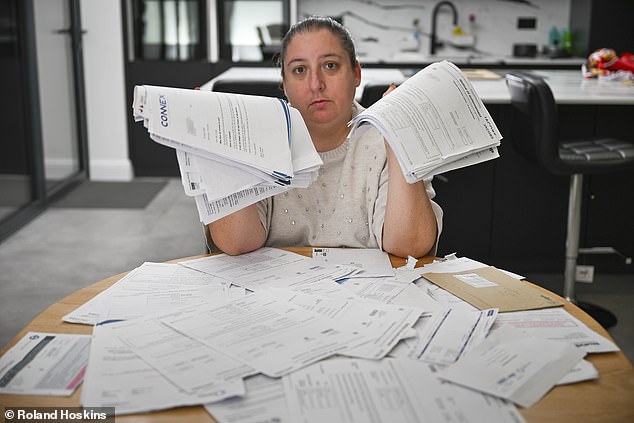
Lisa Freedman has received in excess of 2,000 letters chasing ‘hundreds of thousands’ of pounds in unpaid bills after fraudsters used her address to register cars and bank accounts

The Freedmans began receiving the letters after purchasing their Hertfordshire home in 2021
They now fear being stuck in an unsavoury game of ‘whack-a-mole’, where the onus has fallen on the Freedmans to prove they are the ones who live in their home for each new demand turning up in the post.
As the concerned mother-of-two told Daily Mail: ‘We feel like this could keep going on forever’.
The roots of this unlikely saga stretch back to 2021, when the couple were seeking to buy an undeveloped, three-bed house on the residential road, where semi-detached properties typically sell for more than £800,000.
They hoped to purchase a doer-upper they could extend over time and shape into a comfortable family home – and began posting hand-written letters through doors asking if anyone would be interested in a private sale.
One neigbour tipped them off about a house where the landlord might consider selling, because ‘they were having problems with their tenants.’
After tracking down the owner, Lisa arranged to meet him at the house for a viewing – and was left shocked by what she discovered.
‘The door opened, and there was this guy just standing there, looking at us,’ recalled the 42-year-old. ‘The owner told him, ‘I’m the landlord’, and I was taken aback that he didn’t actually know his tenants.
‘I had a look around the house and it was a mess. There were around 10 people in there. it was disgusting. The house stunk of marijuana and it was just horrible. The garden was full of rubbish.
The roots of this unlikely saga stretch back to 2021, when – to the couple’s surprise – they purchased a home that had formerly been used as a brothel
‘I think because the landlord wanted to sell he didn’t seem to care about the condition.
‘When I went back a second time with a builder, the neighbours started coming out and asking if I was looking to buy this house.
‘I told them I was – and they whispered, ‘you know it’s a brothel?”
‘They were telling me there were always people coming and going all the time and a guy would be sitting out the front.
‘Suddenly it all clocked. When you came in through the front door, there were two seats and a table, and a TV on the wall in the hall, which was probably their waiting room.
‘Every room had been turned into a bedroom. Every room.
‘We couldn’t actually even look in some rooms when we came to view it, because we were told people were ‘sleeping’ in there.
‘It took me a while to realise what was going on, because I had no idea what a brothel looks like – and it’s such a nice road.’
Despite the apparent issues, Lisa said she could still see the ‘potential’ of what the house could become and it was in one of the preferred streets she and her husband had wanted to move to.
They agreed to buy the house on the understanding the owner could ensure all the tenants had vacated by the time they exchanged and completed.
Despite their concerns, the tenants moved out as agreed and the Freedmans took hold of the keys – but more surprises awaited them.
Lisa recalled: ‘We got the house, we opened the door – and it was just awful. They had left everything, absolutely everything. All the beds, all their clothes, pots and pans in the kitchen, all the rubbish in the garden, pictures on the walls. The fridge was full of food. It was like they literally upped and left.’
As they went from room to room, the couple found credit cards and debit cards of ‘random people’ – alongside 14 mattresses at the three-bed property.
‘I told the builders to just strip it all back to the brick,’ said Lisa, who still shakes her head at the memory of what the house used to look like.
But for as many issues as there were inside the house, there were more outside.
‘The neighbours had told me they had being having problems with the drains. It turned out this house had blocked the entire road’s main drain. The occupants had been flushing everything down the toilet.
‘There were wipes and rubbish – and things that shouldn’t ever be flushed away.
‘We ended up replacing all the plumbing from the house down to the mains, because the pipes were so badly blocked.’
Over the course of the next 18 months the couple lovingly restored the house, turning it into a modern five-bedroom home.
The couple believed the property’s unappealing past was but a distant memory – until a torrent of letters began turning up.
They looked suspiciously similar to a mountain of unopened letters left behind by the previous tenants, which had been found shoved into a cupboard in the hallway. Now long discarded, Lisa simply believed the tenants would forward their mail to their new addresses – but that’s not what happened next.
‘We started receiving all these letters addressed to other people, so we wrote ‘return to sender’ and posted them back. But it never stopped. The stream of post was constant.
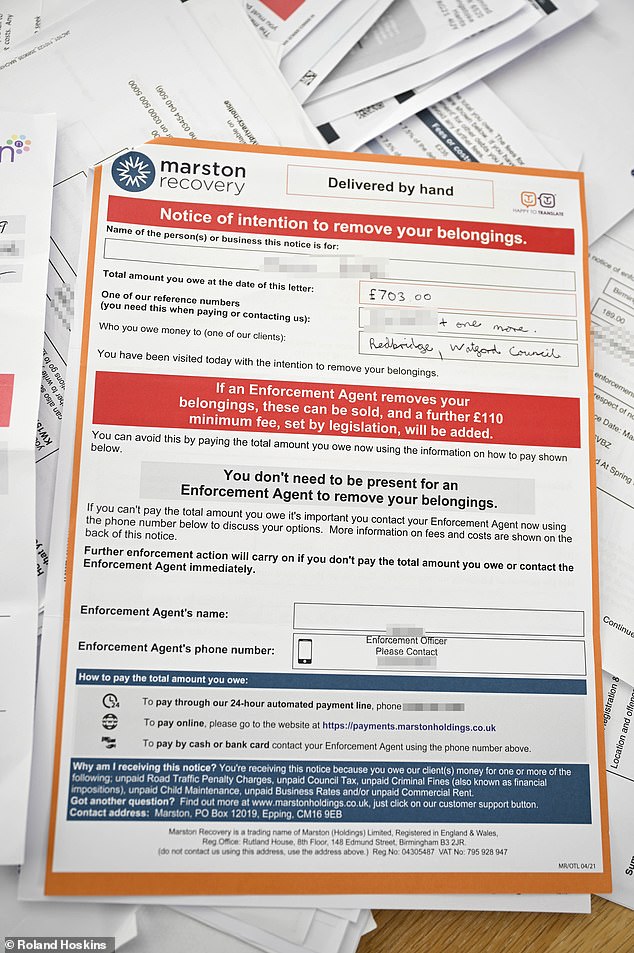
‘Then we saw some of them were enforcement notices. We were told that we can open letters if it is to prevent criminal activity, so we began opening them.’
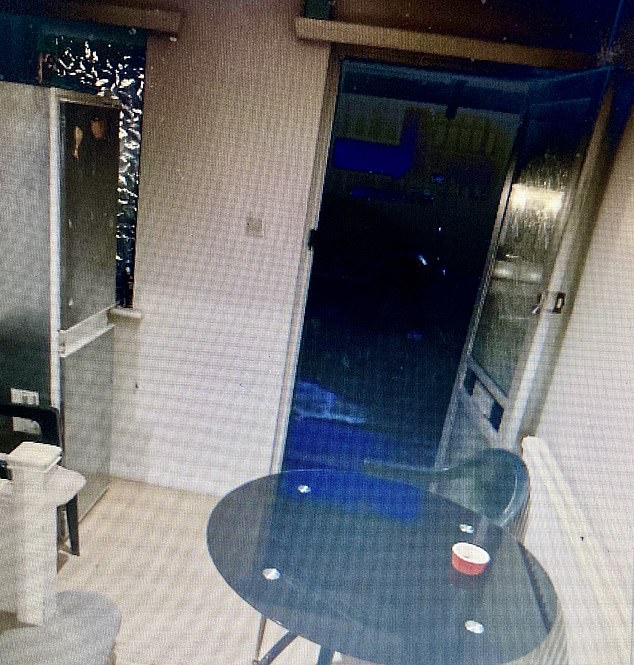
Lisa Freedman had noted the odd arrangement of tables and chairs facing a television in the hallway – before realising it was the ‘waiting area’ of the brothel
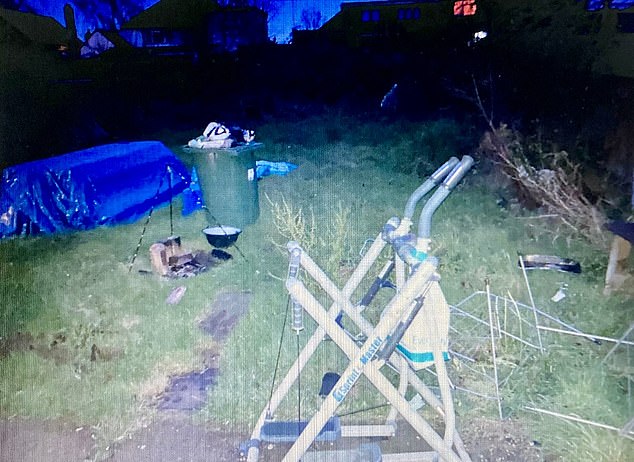
The garden was strewn with rubbish left behind by the previous tenants. Under the blue tarpaulin lay several old mattresses
At this point, Lisa paused to go and fetch the latest pile of letters received at the house. The hefty dossier landed with a slap on the table. ‘This is from just the last three months,’ she explained.
One letter from an enforcement agency showed an unpaid debt for £1,126 dating back to 2022 – a year after the Freedmans had purchased the house.
Another showed the debt at £5,000, a third for £15,000 from HMRC. At one point, an individual had applied for a Bounce Back Loan using the house address, before failing to make repayments.
Even British Gas was on the case, chasing for a £5,343 unpaid bill, and so it went on, with each letter addressed to different individuals.
‘There’s probably about 30 different names that we have received letters for, with the debts amounting to hundreds of thousands of pounds,’ said Lisa. ‘Each debt generates its own letter and its own intention to send a bailiff.
‘We soon discovered that writing ‘return to sender’ did absolutely nothing – and I’m talking zero. The only way we were able to stop it was either by contacting the enforcement agents and sending them a copy of our council tax bill – or waiting for the bailiff to show up and doing the same. After that they would close the case.’
Four years on, the majority of enforcement letters have stopped, said Lisa, but there are still at least two bank accounts and a business mobile phone linked to her home address. The companies involved – HSBC, Lloyds and O2 – told her that they are unable to help further as she is ‘not the account holder’.
To compound the issue, the mobile phone is one of the bills that the fraudsters are actually settling each month – meaning there’s not even a bailiff she can show her council tax bill to for proof of identity in order to sort out the situation.

The previous tenants left many of their possessions behind. Pictured: Dishes and cookware remained in the kitchen
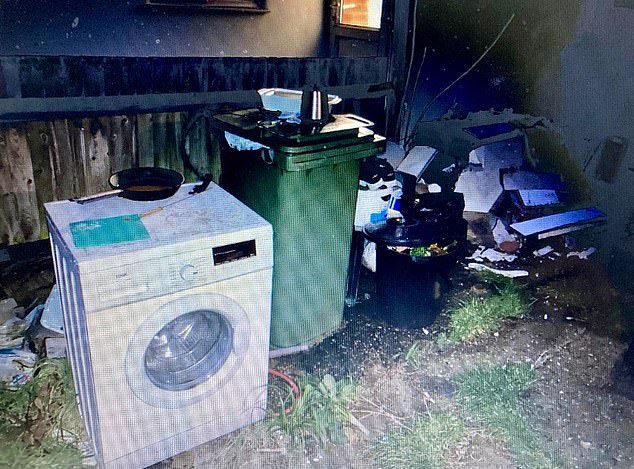
Discarded household items were left at the side of the house. Despite the condition of the residence, Lisa Freedman said she could see its ‘potential’ – but did not realise it was a brothel
‘I asked O2 why is it so difficult to take my address off – but it’s so easy for them to put it on. They just told me that they could not comment further on their processes. It’s just so frustrating and I don’t know how I can even resolve this one to be honest.’
But one of the more worrying concerns for Lisa are the amount of cars registered to her address. There are at least 16 vehicles registered to DVLA that she is aware of – though the homeowner is concerned there could be many more.
After repeated complaints, DVLA finally took action and removed 14 cars from her address. But two new ones have been added since.
The agency has told her it will only deal with the matter on a ‘case by case basis’ and will not reveal if other number plates are registered to her address.
‘I know for a fact that it’s not just people who used to have cars and lived here. They have been registering cars to our address even after we bought the house,’ she explained.
On any given day, Lisa expects a new wad of letters to turn up with warrants and bailiff letters pertaining to unpaid congestion and ULEZ charges, parking fines and speeding penalties.
She is now so au fait with the names of the individuals and their misdemeanours that only a quick glance is needed when she opens the newest letters to determine ifshe knows about them already. But inevitably some will not be.
‘It’s completely frustrating and maddening,’ added Lisa. ‘I’ve done nothing wrong. I have proof these people do not live here, but these companies still won’t take my address off. Some people have told me to sell or move, but I absolutely love my house and love my road.
‘It does worry me that there could literally be a hundred vehicles registered here and I won’t know about any of them until we get a fine.
‘My greatest fear is that we could keep going on like this forever, unless someone starts helping us.’
After being contacted by Daily Mail, DVLA confirmed its fraud department was now looking into her case and had been in contact with Mrs Freedman to resolve the issues she had been experiencing.
A DVLA spokesperson added: ‘Anyone being contacted about a vehicle they are not responsible for should contact Action Fraud and the issuing authority of any fines or penalties received.
‘They should also write to DVLA giving as much information as possible.
‘By law, motorists must ensure that the information they provide DVLA is accurate and up to date.’
O2 meanwhile said it would be in touch with Mrs Freedman regarding the registration of a mobile phone number that does not belong to her at her address.
Ageas also provided comment on the car insurance taken out using Mrs Freedman’s address.
In a statement, Ageas said it investigated and found ‘several short-term policies’ had been registered at the address, but none were currently active. They added that this matter was now part of ‘a wider fraud investigation’.
Fiona Reeve, head of Fraud at Ageas, said: ‘Unscrupulous individuals can go to great lengths to establish a credit footprint to undertake organised fraudulent activity, including using addresses for products and services which are not legitimately connected to it.
‘Ageas work closely with the Association of British Insurers (ABI), Insurance Fraud Bureau (IFB) and anti-fraud colleagues across the insurance and wider financial services sector to identify, investigate and, where appropriate, stop fraudulent activity.
‘We are grateful for the honesty and integrity of customers and victims of fraud, who support that work.’
HSBC confirmed it too was looking into the case.
An HSBC UK spokesperson said: ‘We have huge sympathy for Mrs Freedman and the distressing situation she finds herself in. We have taken steps to prevent letters intended for others being sent to the address.’
An Action Fraud spokesperson confirmed it had been contacted by Mrs Freedman and recorded an ‘information report’. This has been passed on to the National Fraud Intelligence Bureau to consider ‘investigative opportunities’.
Action Fraud added: ‘There are a number of criteria which are taken into consideration, including whether the report has viable lines of enquiry based on the information provided and the vulnerability of the victim.
‘Not all reports are passed onto a police force or result in judicial outcomes, however, there are other key outcomes which put victims first and prevent fraudsters from targeting more victims.’
Daily Mail also contacted Lloyds for comment.