If you’re beginning to grow weary of the dark days, there’s good news – it’s all up from here.
Today is the Winter Solstice, marking the shortest day of the year in the Northern Hemisphere.
At precisely 15:03 GMT, the sun will shine over the Tropic of Capricorn, making it appear to ‘standstill’ in the sky.
On average, Brits will receive just 7.5 hours of light, although the exact duration will vary based on how far north or south you are.
To put that into perspective, that’s nine fewer hours of sunshine than the summer solstice, which sees Britain enjoy over 16 hours of daylight!
While temperatures will continue to drop, thankfully the hours of sunshine will increase from today.
‘The amount of daylight is at its minimum, and the night is at its longest,’ explained Dr Shyam Balaji, an astrophysics experts at King’s College London.
‘After the December solstice, the days start to get longer in the Northern Hemisphere.’
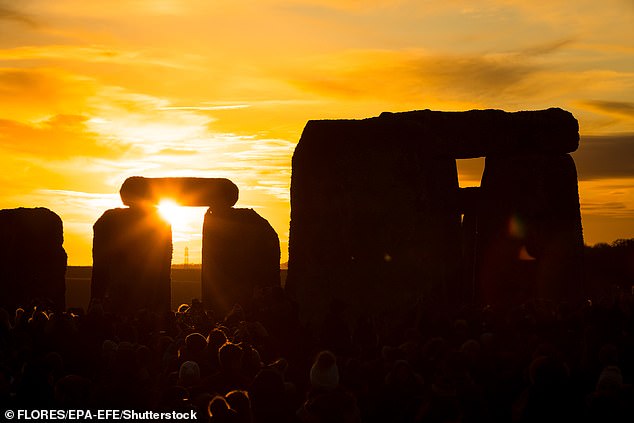
If you’re beginning to grow weary of the dark days, there’s good news – it’s all up from here. Today is the Winter Solstice, marking the shortest day of the year in the Northern Hemisphere
The word ‘solstice’ comes from the Latin words ‘sol’ (sun) and ‘sistere’ (to stand still).
‘It refers to the point where the Sun’s apparent movement north or south pauses before reversing direction,’ Dr Balaji explained.
It occurs because our planet is tilted on its axis, by about 23.5 degrees relative to its orbit around the sun.
This tilt provides different parts of Earth with varying amounts of sunlight throughout the year.
‘During the December solstice, the Northern Hemisphere is tilted the farthest away from the Sun, resulting in the shortest day and longest night of the year for that hemisphere,’ Dr Balaji added.
Depending on how far north or south you are, the length of the day will vary.
In London, Brits will enjoy 7 hours, 49 minutes and 42 seconds of sunshine, while those further south, in Truro, will experience 8 hours, 1 minute and 55 seconds of daylight.
In contrast, people living in John O’Groats – a village on Scotland’s north–eastern tip – will have just 6 hours, 16 minutes and 54 seconds of daylight today.
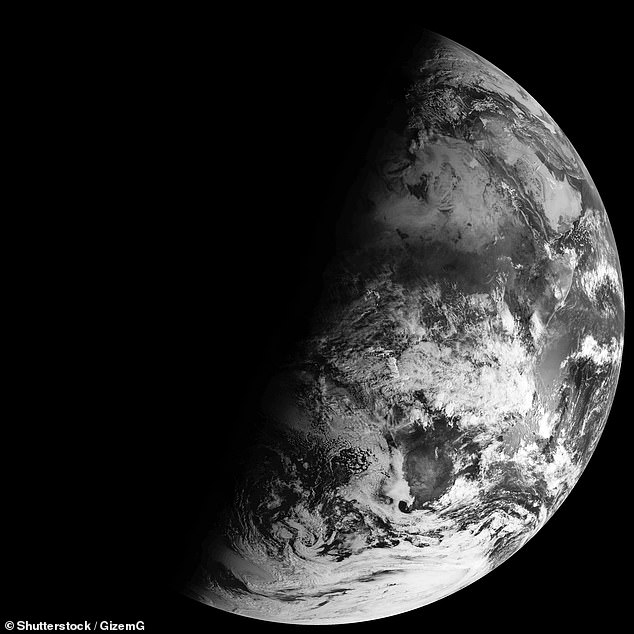
At precisely 15:03 GMT, the sun will shine over the Tropic of Capricorn, making it appear to ‘standstill’ in the sky
As well as marking the shortest day of the year, today also marks the first day of winter in the astronomical calendar.
This calendar is based on the tilt of the Earth, and sees winter begin on 21 December 2025 before ending on 20 March 2026.
In contrast, the meteorological calendar always has the first day of winter as 1 December, ending on 28 (or 29 during a Leap Year) February.