This article is taken from the December-January 2026 issue of The Critic. To get the full magazine why not subscribe? Get five issues for just £25.
Alfred Tennyson was one of England’s finest poets, made Laureate of the British Empire after Wordsworth’s death in 1850, and also elevated to the peerage for his contributions to literature — an honour he twice refused (in 1865 and 1869), before finally accepting in 1884.
With his full bardic-apostolic beard, he comes down to us as the very archetype of the Victorian patrician: a favourite of the Queen, his most remembered poem is “The Charge of the Light Brigade”, a panegyric for bluff courage in service of the Crown for which he was the well-plumed canary.
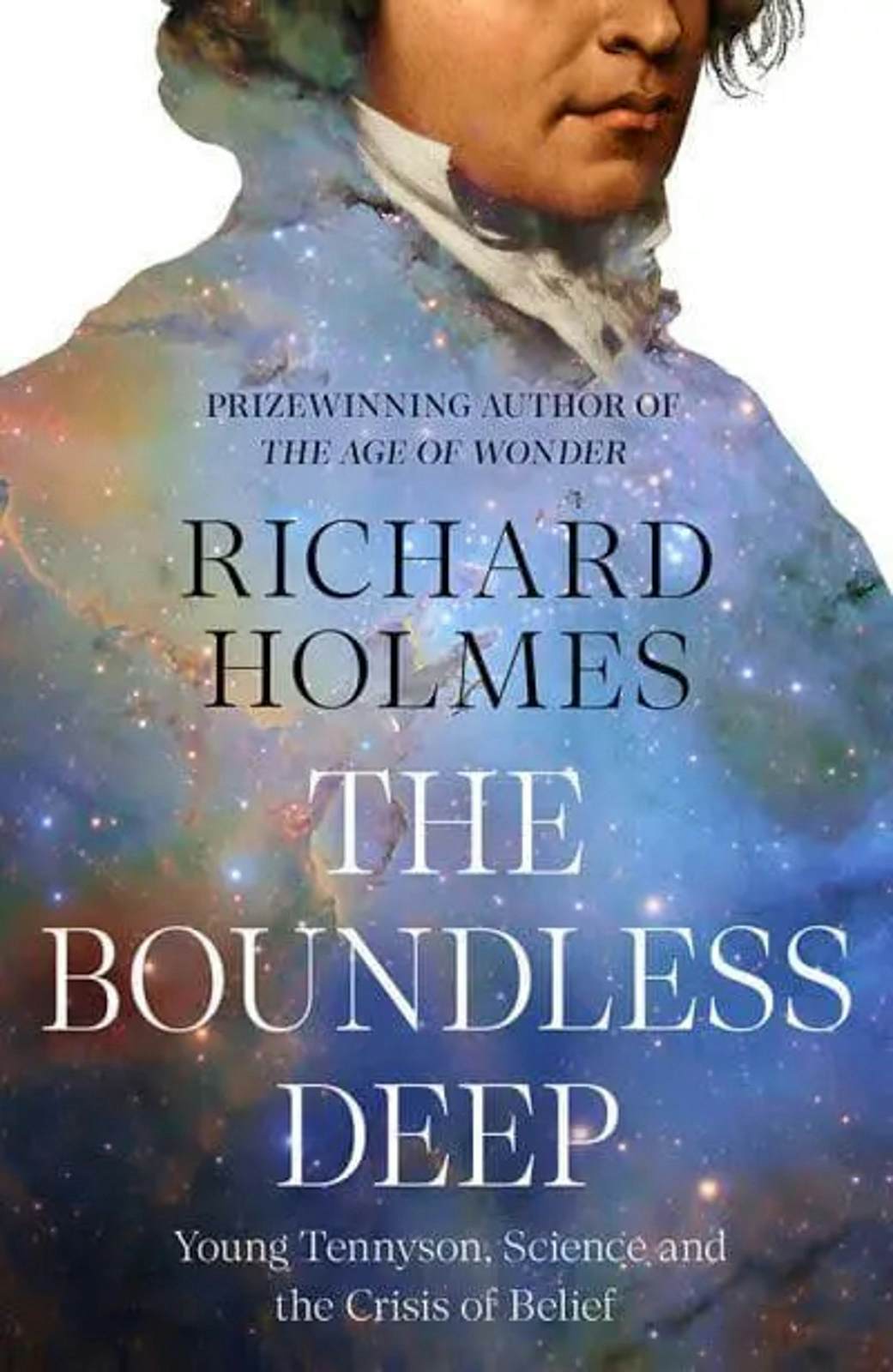
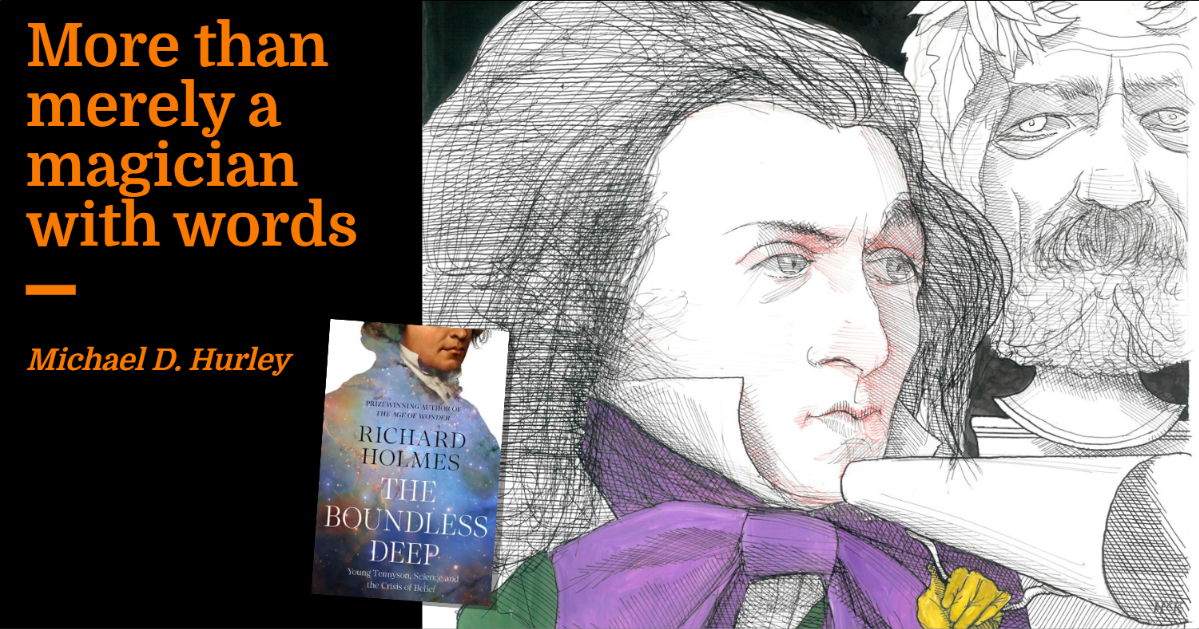
Richard Holmes’s wonderful new biography opens by inviting us to ponder this man as he sits larger-than-life, emmarbled and immortal, in the antechapel of his alma mater, Trinity College, Cambridge. Holmes would have us notice the company he keeps with the College’s other Olympian alumni: Sirs Isaac Newton, Francis Bacon and Lord Macaulay. But in tipping his hat to this stately Tennyson, literally on a pedestal, Holmes asks us to think again, to turn away from this Lord and Laureate, to imagine him instead when he was “young”.
For Tennyson was not born into greatness. Raised within a dysfunctional family by a drunken father in rural Lincolnshire, he attended a grammar school and for financial reasons was forced to drop out of Cambridge before completing his degree. What would it mean to recover this unknown, impecunious, clean-shaven teenager, “tall, clever, gangling”, “with wild surprising hair and an astonishing voice full of strange music”?
There are good reasons to want to see Tennyson afresh. The modernists did a lot of damage. “Alfred Lawn Tennyson, gentleman poet,” James Joyce called him: as tame as the genteel racket sport, apparently, his talent trivialised into a triumph of pure sound, style over substance. W.H. Auden put the point most harshly: “He had the finest ear, perhaps, of any English poet; he was also undoubtedly the stupidest.”
Tennyson’s superlative “ear”, his “finest verbalism” (Walt Whitman’s phrase), is immediately apparent. But what does it mean to speak of his supposed stupidity? Plato described the quarrel between poets and philosophers as ancient even in his day, and it remained heated within Tennyson’s lifetime, as it is in ours.
Whilst he was generally lauded by his peers, a number of readers anticipated Auden’s scepticism that his poetry was no more than a gorgeous trick of words, a siren song. “Nay, he will write you a poem with nothing in it except music,” remarked R.H. Horne in 1844. Like Auden, Horne is quick to emphasise the value of Tennyson’s poetry as music; “It shall charm your soul,” he says. But is it right to divide Tennyson’s achievement up in this way, as a magician of verbal sound, but whose words lack intelligent content?
Holmes is well placed to tell us. He offers a gripping account of the still-forming poet bravely excited, if also unsettled, by fast-paced developments in astronomy, geology, biology and psychiatry, preoccupied most of all with the implications of biological evolution, the notion of a godless universe and planetary extinction.
All are 21st century preoccupations too, we might note, the last especially, though it would be a travesty if reading Tennyson afresh meant making him a poetic poster boy for Extinction Rebellion.
Holmes is attempting something more subtle, though he ultimately dodges the question of how far Tennyson’s intellectual investments really matter to his achievement as a poet. These bracing lines from his poem “Locksley Hall” suggest the conundrum:
Not in vain the distance beacons. Forward, forward
let us range,
Let the great world spin for ever down the ringing
grooves of change.
Railways had become a symbol of Victorian “progress”, for good and for ill, and Tennyson’s rendering here is affectingly breathless and beautiful. Except he got his science wrong. The new technology of trains did not run on “grooves”. their wheels were flanged, and ran along the top of their rails. Readers shook their heads, one reviewer even supplying the original Stephenson standard railway gauge measurements. Tennyson was duly chastened — but should he have been? Holmes cites the example but doesn’t tell us what is at stake in Tennyson’s wonky engineering.
Charles Babbage, a computer pioneer, sent Tennyson a response to his burlesque sexual ballad, “The Vision of Sin”. In this “otherwise beautiful poem”, Babbage noted, “there is a verse which reads ‘every moment dies a man, Every moment one is born’.” “It must be manifest,” he cavilled, “that if this were true, the population of the world would be at a standstill. In truth, the rate of birth is slightly in excess of that of death. I would suggest that in the next edition of your poem you have it read — “Every moment dies a man, Every moment 1 and 1/16th is born”.”
Such pettifogging, whether earnest or playful, is important to consider because (back to Plato’s quarrel) it bears on the nature of poetic intelligence itself. One further example: Tennyson’s rousing verses on the “Noble six hundred” of the Light Brigade are strictly speaking inaccurate, because there were in fact 673 men who rode that day. But why does that matter, if the round “six hundred” sounds grander, more epic and is easier to scan?
Holmes deftly delineates the diverse, surprising ways in which the ideas and lexicon of science find a place in Tennysons’s poetry, but he is less strong on whether that enriches the verse. The strongest case in favour would seem to be Tennyson’s masterwork In Memoriam, saturated as it is with images and ideas of science in conversation with philosophy and theology.
Holmes quotes T.H. Huxley’s appreciation here, of Tennyson being “the only poet since Lucretius who has taken the trouble to understand the work and tendency of the men of science”. Leaving aside the dubiety of this claim on its own terms (one can think of many other poets who are scientifically literate), it says nothing about the value of the poem as a poem.
Tracing Tennyson’s scientific imagination, Holmes valorises the poems most obviously infused by it, as he correspondingly tends away from those that aren’t. The problem goes deeper, where poems are not merely scanted but impugned. “Ode on the Death of the Duke of Wellington” is called “laboured” in its rhetoric and “flat” in its rhymes.
I could not disagree more, though Holmes finds himself in good literary-critical company in saying so. Better therefore to let Tennyson plead his own defence: “It is a great roll of words, the music of words,” he explained, adding: “People do not understand the music of words.” Indeed.
The Boundless Deep is a fascinating, rigorously researched study of Tennyson’s intellectual formation, but in spite of several choice close readings of his poems, the book loses track of what makes his poetry worth reading. The opening pages which forecast his “astonishing voice full of strange music” are not followed through. Tennyson’s “words” are well weighed, but the singular and transformative meaning-making power of their “great roll” and “music” is lost.