This article is taken from the December-January 2026 issue of The Critic. To get the full magazine why not subscribe? Get five issues for just £25.
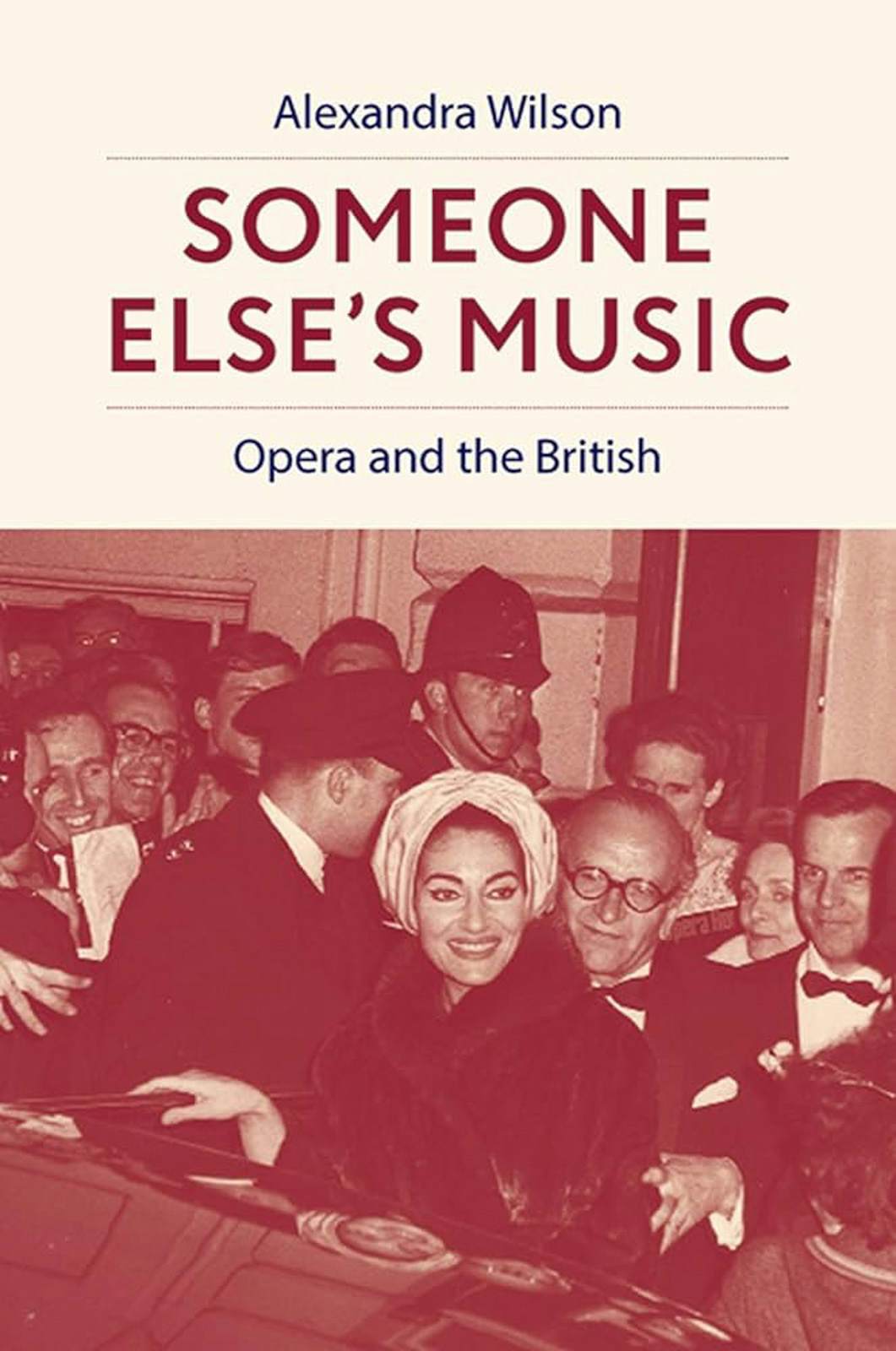
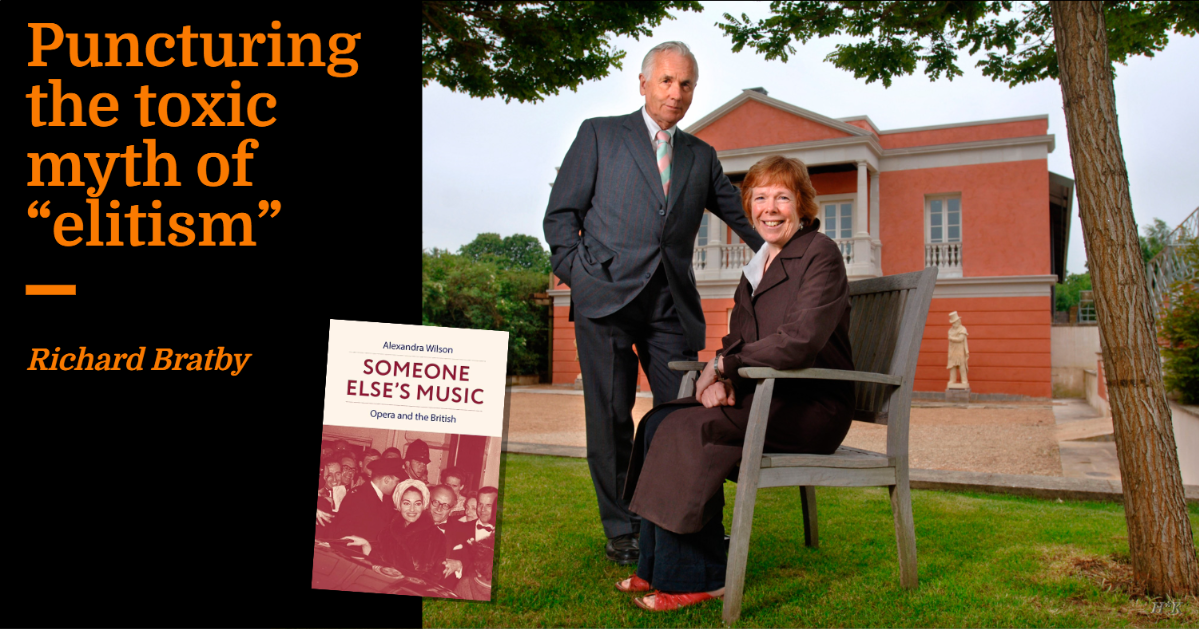
When Martin Graham died in April this year, a light went out in the world of opera. You might have read the obituaries: Graham was the Gloucestershire music-lover who staged Wagner’s Ring cycle in his chicken shed and created one of England’s most ambitious country house opera festivals in his back garden at Longborough.
Except Longborough isn’t a country house, and Graham wasn’t some Glyndebourne-style landed toff. He was self-made: an autodidact who left school at 17 to labour on a building site and listened to the Third Programme on his transistor as he heaved bricks. “Building an opera house is easy,” he liked to say. “You just go into a field and start digging.”
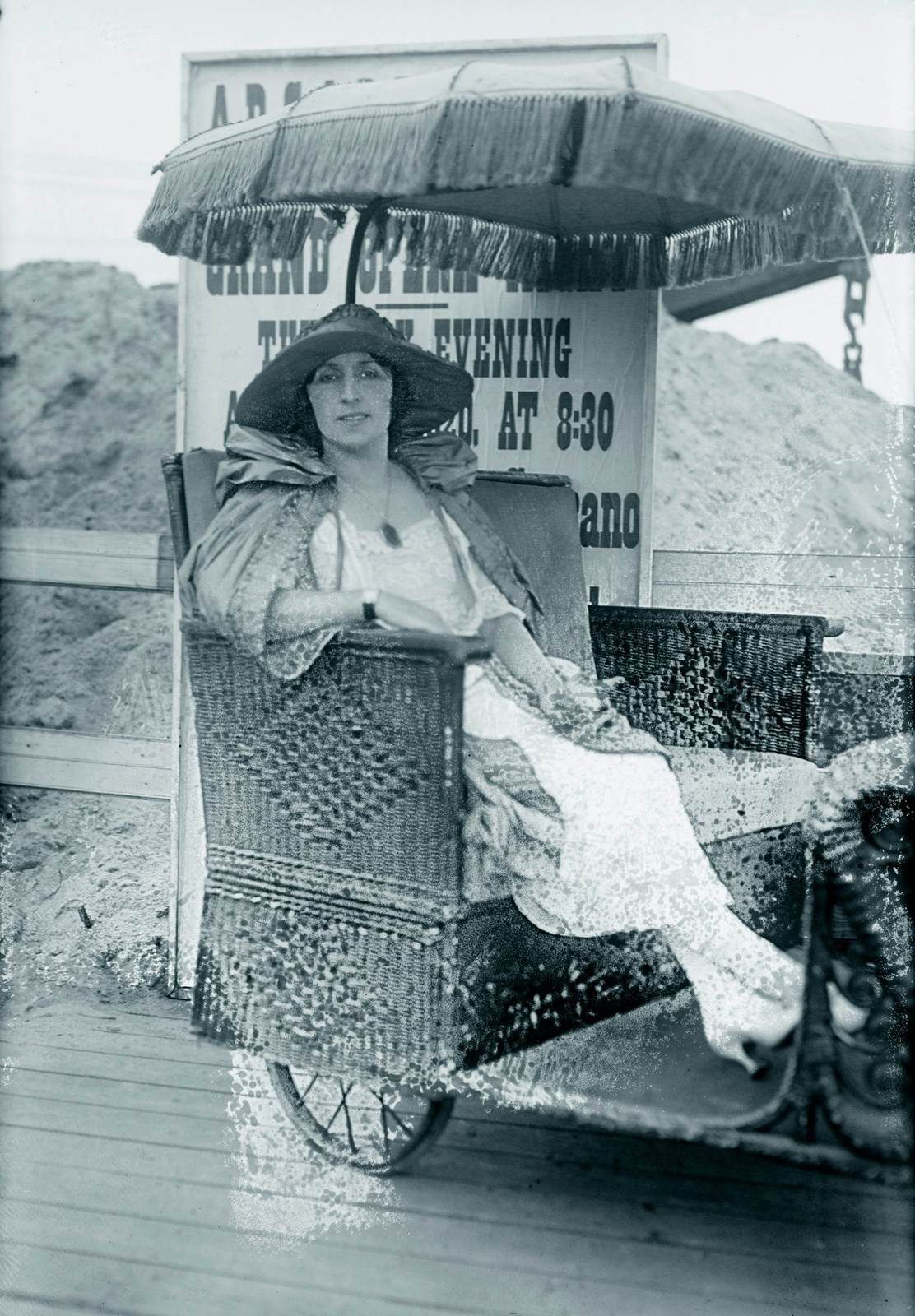
Martin Graham’s story doesn’t appear in Alexandra Wilson’s new book, but it doesn’t need to. Wilson is our pre-eminent living expert on the history of opera-going in Britain, and she has many, many testimonies like it. The two typist sisters who saved for three years in the 1920s for the chance to hear the soprano Amelita Galli-Curci sing live; the queues of clerks and factory workers who slept on the pavement outside Covent Garden to buy cheap tickets in the 1950s.
Most surprising (to me, anyway), the British soldiers who occupied Italy during the Second World War then took a love of opera back home — packing out performances of Rigoletto and Tosca in a post-war Britain where no political party seriously disputed the idea that great art should be available to all.
And now: well, here we are. Like Wilson, I write as a beneficiary of that postwar vision. My father began his career in Wills’s cigarette factory in Newcastle; he blew his first pay cheque on Solti’s recording of the Ring, and discovered a lifelong passion (indeed, it’s why I’m called Richard). The teenage Alexandra Wilson discovered the art through Opera North in Leeds. My first taste of the genuine article came from Welsh National Opera, on tour at the Liverpool Empire.
It couldn’t happen now. Today, the Arts Council has turned on the art of opera with vindictive and devastating ideological fury — hiding behind the skirts of indifferent governments (whether red or blue) and lying about “levelling up” whilst it dismembers the touring programmes and regional companies that have worked hardest to take opera to the nation.
For the first time in a century, my home city of Liverpool now has no regular professional opera, and it is far from alone. The message to my low-income, opera-curious teenage self — if he were around now — is plain. This isn’t for you. It isn’t “relevant”. Stick to what you know, and above all, know your place.
You’re probably wondering how we got here, and Someone Else’s Music provides an answer. It’s “the e Word”, elitism — the myth, as unkillable (and as dishonest) as Rasputin, that opera “is expensive and exclusive; ergo the people who enjoy it must be social and intellectual snobs”.
“The very word ‘opera’ has become a form of shorthand in the contemporary imagination for a mishmash of anxieties about money, class, dress, privilege and social status,” laments Wilson, acknowledging that the prejudice (at least in Britain) has deep roots. Antipathy to opera’s expense and (above all) its perceived foreignness dates back to the 18th century. Tabloid stereotypes about fat Italians in tights still come easily to opera’s enemies on the philistine right and the progressive left alike.
The puzzle Wilson tries to untangle is why, cockroach-like, that myth persists. And it really is a myth: Wilson deploys a century’s worth of evidence to demonstrate that between the wars, opera was a classless, widely-enjoyed form of mass entertainment. Then as now, the lavish productions and bejewelled audiences at Covent Garden were an exception rather than the norm — a source of aspiration, as well as resentment.
Yet this was still an era (and Wilson has a lively eye for human detail) when East End schoolboys could perform The Magic Flute, and when Dido and Aeneas was a classroom staple. Incredibly, all this happened long before surtitles (introduced in the 1980s) removed opera’s supposed “incomprehensibility” or, indeed, the massive post-war investment in outreach schemes, music education and accessible new companies such as Sadler’s Wells (now English National Opera), Scottish Opera and Opera North. In 1988 alone, Wilson points out, Channel 4 broadcast 17 operas.
In short, the “elitism” myth simply doesn’t stand up. But if it’s satisfying to watch it shrivel in the face of Wilson’s research, the gruesome truth is that it’s back and more damaging than ever. Wilson dates its re-emergence — like so many bad ideas — to the 1960s, and the radical-chic dogma of cultural relativism. Great art? Says who?
It metastasised into a more deadly form (let’s call it the Cool Britannia variant) after 1997 under New Labour. John Major had admired Dame Joan Sutherland; Blair preferred to hang out with Oasis. Coming after the mid-1990s PR disaster of the Royal Opera’s BBC documentary The House, this was the moment when opera’s fortunes in the United Kingdom were forced into sudden (possibly terminal) reverse.
The ideological toxins began their long march through the nation’s cultural organisations like some slow-growing autoimmune disease, until the scholars and institutions that were supposed to nourish opera in Britain began attacking it.
Audiences (and they’re still abundant, diverse and passionate) must be re-educated. Find yourself weeping as Cio-Cio San sings “Un bel di”? You’re sexist, racist and colonialist. As Wilson points out, under the Arts Council’s risible new “Let’s Create” strategy, even the word “Art” itself has been cancelled. It’s just too problematic.
This isn’t an optimistic book, then, but it’s certainly an energising one. With any study of this scope, there will be omissions: perhaps inevitably (and she’s far from the worst offender) Wilson occasionally gives the impression that the whole of British opera comprises two London theatres plus an outstation at Glyndebourne.
There’s a Gilbert and Sullivan-shaped hole in her narrative, echoing the notion (weirdly prevalent amongst British opera buffs) that G&S somehow doesn’t count as opera. Exhibit A, surely, in any study of the relationship between opera and class in these muddle-headed isles?
But Wilson already has an Armada of ignorance to fight, and Someone Else’s Music is a broadside of objectivity and intelligence in a battle that currently hangs by a thread. No art form is more subtle, more visceral, more preposterous and more life-affirming than opera; for my money, none is more entertaining, too.
Civilisation-wise, this is what peak performance looks (and sounds) like, and British defenders of that ideal will find a formidable intellectual arsenal in these pages. “To talk endlessly about opera being elitist is, it turns out, just about the most elitist thing one can do,” Wilson concludes. “It is time to change the conversation about opera.” The fightback starts here.