The boss of the controversial government Motability scheme that provides new cars to disabled people has been handed a bumper pay rise amid anger at benefits claimants having access to luxury vehicles.
Chief executive Andrew Miller, 59, took home £924,000 this year, around a quarter more than the year before, after being handed a huge £300,000 bonus.
His benefits also included a £21,000 car allowance and private medical cover, accounts show.
The former Guardian executive saw his base pay rise by nine per cent to more than half a million pounds, in a year in which the scheme has been dogged by controversy and criticism.
Last year, Mr Miller received a total package worth £748,000.
Accounts published yesterday showed Motability’s revenues from renting rose by a quarter to £3.5billion, driven by an increase in demand for vehicles from people receiving personal independence payments (PIP).
More than 890,000 people now use the Motability scheme, which accounts for around one in six new vehicles sold in the UK.
The Motability scheme allows disability welfare claimants to swap their mobility allowance for a lease on a new car, which are also exempt from VAT and insurance premium tax.

Chief executive of Motability Andrew Miller, 59, took home £924,000 this year, around a quarter more than the year before, after being handed a huge £300,000 bonus
While many disabled people rely on Motability cars to get around, the perk has been criticised for allowing those with more minor conditions such as anxiety or depression to claim taxpayer-funded cars.
The scheme has already been forced to remove luxury cars such as new BMWs and Mercedes Benz after public outcry.
Even Chancellor Rachel Reeves admitted it was ‘unfair’ to lease the expensive models to benefits claimants, with the Motability scheme later announcing it would cease offering these, as well as cars made by Audi, Alfa Romeo and Lexus.
Figures revealed this year showed that of all the cars leased through the scheme, one in ten are wheelchair adapted.
And data released in July in response to a Parliamentary Question revealed that cars were being handed to claimants for a variety of conditions including tennis elbow and anxiety.
It showed some 32,000 new cars were given to people suffering with anxiety or other depressive disorders, while 40 cars went to people with ‘tennis elbow’, a condition which the NHS advises ‘usually goes away with rest’.
A further 20 people suffering from constipation made use of Motability, along with 190 who had ‘social phobia’, the official figures show.
Ten people struggling with a ‘failure to thrive’ got a taxpayer-funded car, and so did another 20 with a ‘food intolerance’.

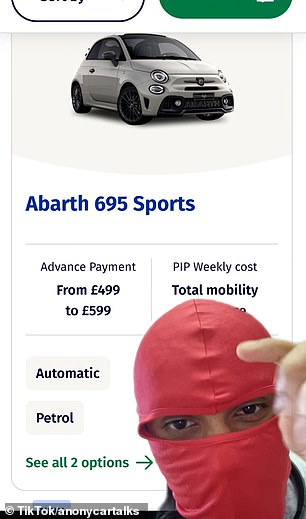
Online ‘influencers’ dish out tips for getting Motability cars, including this TikTok user hiding his full face with a red balaclava offering advice on claiming a £31,000 car for ‘essentially free’
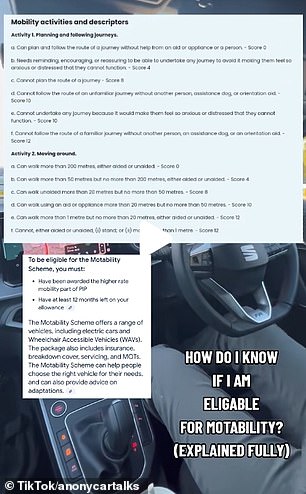

In other videos, he advises his followers how to find out if they are eligible for the Motability scheme (left) and reveals how he acquired his Seat Arona ‘for free’ (right)
The figures also revealed 800 cars have gone to people with obesity and 230 to those with Tourette’s syndrome. Some 770 people with ‘alcohol misuse’ conditions and another 220 with drug misuse issues lease cars from Motability.
It is not known if all these conditions are still eligible for the scheme, but planned changes to the scheme from July next year do not seem to include a crackdown on eligibility criteria.
All members of the scheme must be in receipt of one or more qualifying benefits, such as the higher rate of PIP, higher rate of Disability Living Allowance or higher rate of Child Disability Payment.
Some influencers have taken to social media to boast of getting brand new luxury vehicles ‘for free’ – although in truth, all claimants pay towards the cars by redirecting part of their benefit allocation.
In its report, the firm said the increase in Mr Miller’s pay and bonus was due to the ‘complexity’ of the role, and navigating challenges such as the move to electric vehicles.
He oversaw a total revenue of £7.1billion for Motability this year, made up of a roughly equal split between the renting of cars and sale of old vehicles.
Around one in six new car sales in the UK this year were part of the Motability scheme, but in some areas of the country the figure is closer to one in three.
Data published by the Conservatives earlier this week showed almost 280,000 new cars purchased in England and Wales in 2024-2025 were bought under the scheme – around 16 per cent of all car sales.
In Wales, 33 per cent of new cars sales were made through the scheme, followed by 26 per cent in the North East and 24 per cent in London.
Ms Reeves previously shared concerns that Motability was offering ‘a premium motoring experience subsidised by the taxpayer’ that was out of reach to many working families.
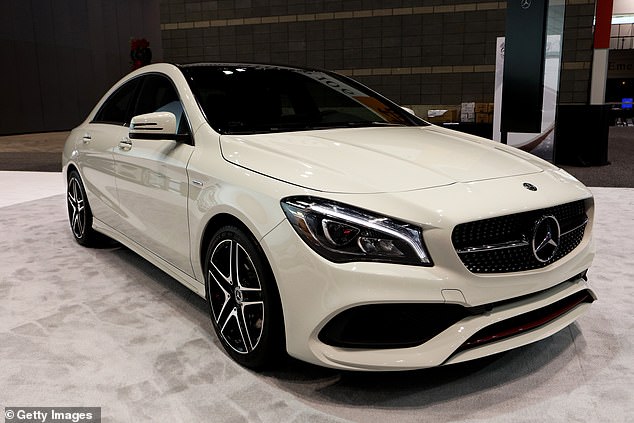
Claimants could have previously got a Mercedes-Benz CLA Coupe for the same upfront price
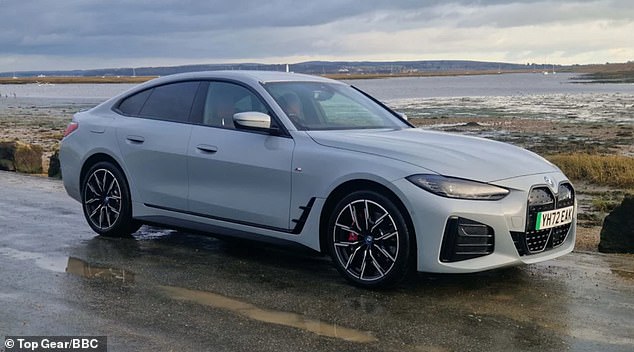
For an upfront payment of £7,999, customers have previously been able to walk away with a brand-new BMW i4 M Sport, which retails at £50,000
It came after it was revealed that 85 per cent of claimants through the scheme were paying an additional fee to access higher quality, luxury vehicles.
Motability said it would stop offering the models, meaning claimants currently driving BMWs and Mercedes will have to move to another brand next time they change vehicles under the scheme.
Motability has also vowed to increase their use of UK-made cars and aims for 2035 to be the first year that half of the vehicles leased through the scheme are British.
The Department for Work and Pensions (DWP) does not directly fund Motability, but the scheme allows disability benefits claimants to directly exchange their mobility allowance for a new car.
Motability was founded in 1977 as a charity by the government.
CEO Mr Miller is the previous head of the Guardian Media Group and was in charge when the media giant owned car company Autotrader.
Having headed up the group between 2010 and 2015, he continues to hold significant roles in the media, most notably as a non-executive director at Channel 4.
A Motability Operations spokesperson said: ‘The Motability Scheme’s priority is to continue to connect disabled people to freedom and independence now and in the long term.
‘In recent years, we have reduced costs even as inflation has risen. In the coming years, the Scheme will continue to evolve to manage the recent tax changes which will return £1 billion to the taxpayer, while still ensuring disabled people can remain independent as petrol car production declines.
‘The changes to executive pay reflect the experience needed to lead a large multi-billion-pound company through significant change in an efficient and responsible way to deliver for disabled people and the country.’
The DWP has been contacted for comment.