Rachel Reeves raked in an extra £5.5billion in taxes last month even before her latest Budget raid took effect.
Official figures showed central government receipts from tax and national insurance were up 7.3 per cent compared to November 2024.
However, the spike was partly offset by higher spending on benefits and running public services.
Overall government borrowing was lower than the same month last year, thanks to the higher revenues and an easing of interest costs on the UK’s debt mountain.
However, that was worse than many analysts expected. Between April and November borrowing was £132.3 billion, £10billion more than the equivalent period last year and a record apart from the 2020 Covid year.

Rachel Reevesraked in an extra £5.5billion in taxes last month even before her latest Budget raid took effect
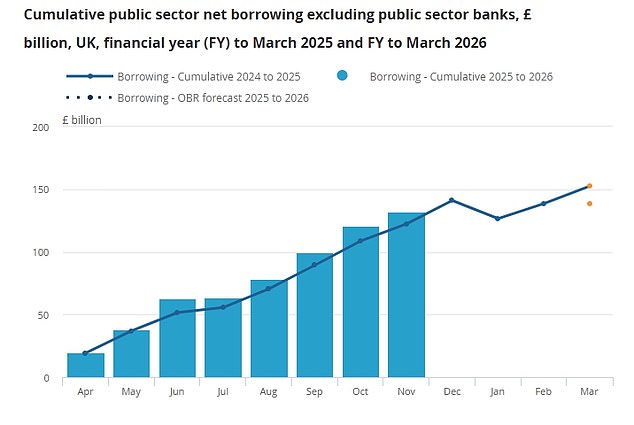
Overall government borrowing was lower than the same month last year, thanks to the higher revenues and an easing of interest costs on the UK’s debt mountain. However, between April and November borrowing was £132.3 billion, £10billion more than the equivalent period last year and a record apart from the 2020 Covid year
The ONS said central government tax receipts increased by £2.5billion to £63.5billion.
That included increases of £1.2billion in income tax, £800million in VAT and £400million in Corporation Tax receipts.
Changes to NICs rates for employers – which took effect in April – triggered a £3billion boost to £17.2 billion.
Meanwhile, net social benefits costs for central government increased £1.5billion to £26.8 billion.
The ONS said that was largely down to upratings of many benefits and the state pension.
Central government departmental spending on goods and services increased by £800million to £38.2billion, reflecting pay rises and inflation.
ONS senior statistician Tom Davies said: ‘Despite an increase in spending, this month’s borrowing was the lowest November for four years.
‘The main reason for the drop from last year was increased receipts from taxes and National Insurance contributions.
‘However, across the financial year to date as a whole, borrowing is higher than last year.’
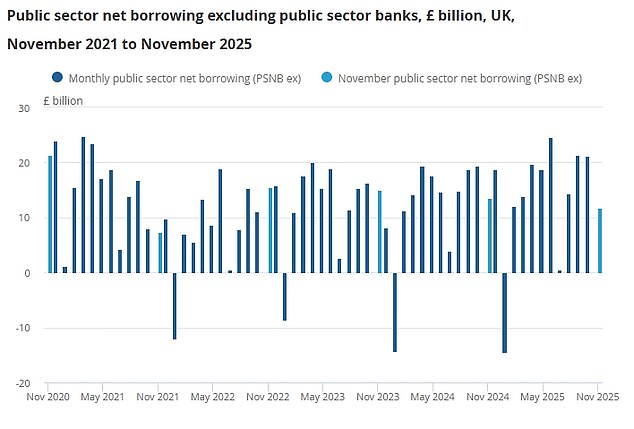
The government has been racking up more borrowing over the past year
The painful figures emerged as Keir Starmer was accused of ‘running scared of voters’ after he paved the way to delay local elections.
In an extraordinary move, Labour invited 63 councils to postpone next year’s local elections, which are widely seen as a litmus test for Sir Keir’s faltering leadership.
The move would rob more than 10million people of a vote in May. And with half the councils involved run by Labour, it could limit the party’s losses and boost Sir Keir’s chances of survival.
In some areas, the elections are being postponed for a second consecutive year, meaning councillors could go seven years before finally facing the voters.
Reform UK leader Nigel Farage likened the move to the actions of a ‘dictator’, adding: ‘Only a banana republic bans elections, that’s what we have under Starmer.’
Tory elections spokesman Sir James Cleverly said Labour was ‘running scared of the voters’, adding: ‘They thought they could completely overhaul local government and stack the deck in their favour. They were wrong.
‘Earlier this month, Labour cancelled mayoral elections and now they are at it again with council elections, fiddling the democratic process to serve their own political interests.’
Chief Secretary to the Treasury James Murray said: ‘£1 in every £10 we spend goes on debt interest – money that could otherwise be invested in public services.
‘That is why last month the Chancellor set out a Budget that delivers on our pledge to cut debt and borrowing.
‘For example, we’re cutting the cost of politics by abolishing Police and Crime Commissioners, reducing the number of councillors across the country by around 5,000 and reclaiming millions from asylum accommodation suppliers – because we know that every penny of taxpayers’ money must be spent wisely.’