This article is taken from the December-January 2026 issue of The Critic. To get the full magazine why not subscribe? Get five issues for just £25.
This year the Stirling Prize was won by Appleby Blue almshouse, a beautiful project designed by Witherford Watson Mann who also won the prize in 2013 for their intelligent reconstruction of Astley Castle for the Landmark Trust.
Since the almshouse scooped three of the RIBA prizes, including Client of the Year, much less attention was paid to the rear extension to a tile-hung 1890s terrace house on West Hill in Hastings.
Normally, such projects are below the notice of the judges of architectural awards, who are usually looking for large-scale ambition and bold invention. But times are changing and this year not one, but two houses made it to the shortlist, an indication that many architects only work at relatively small scale.
It’s good that the jury acknowledged that many more people experience architecture at the level of the domestic interior than in public buildings. There is no reason why we can’t experience the quality of buildings at a small scale.
The Hastings House is a project initiated and overseen by an energetic, young-ish, former BP executive whose grandparents lived in Hastings. He bought his house — not a particularly grand house — after a period working during Covid in Singapore. As with any small-scale project, he obviously had strong views as to what he wanted, how the rooms were to be arranged and the character of what was to be added.
He found an architect by googling other people’s projects online and consulting the online client advisory service of the RIBA. He didn’t pretend to any previous architectural experience, but he has worked on converting flats in Hastings and used many local contractors whose work he knew.
I sense he spent nearly as much time and energy on overseeing work on the project as the architect, which is partly what gives it its character, a sense of a meeting of minds, a close attention on both their parts to the details of construction.
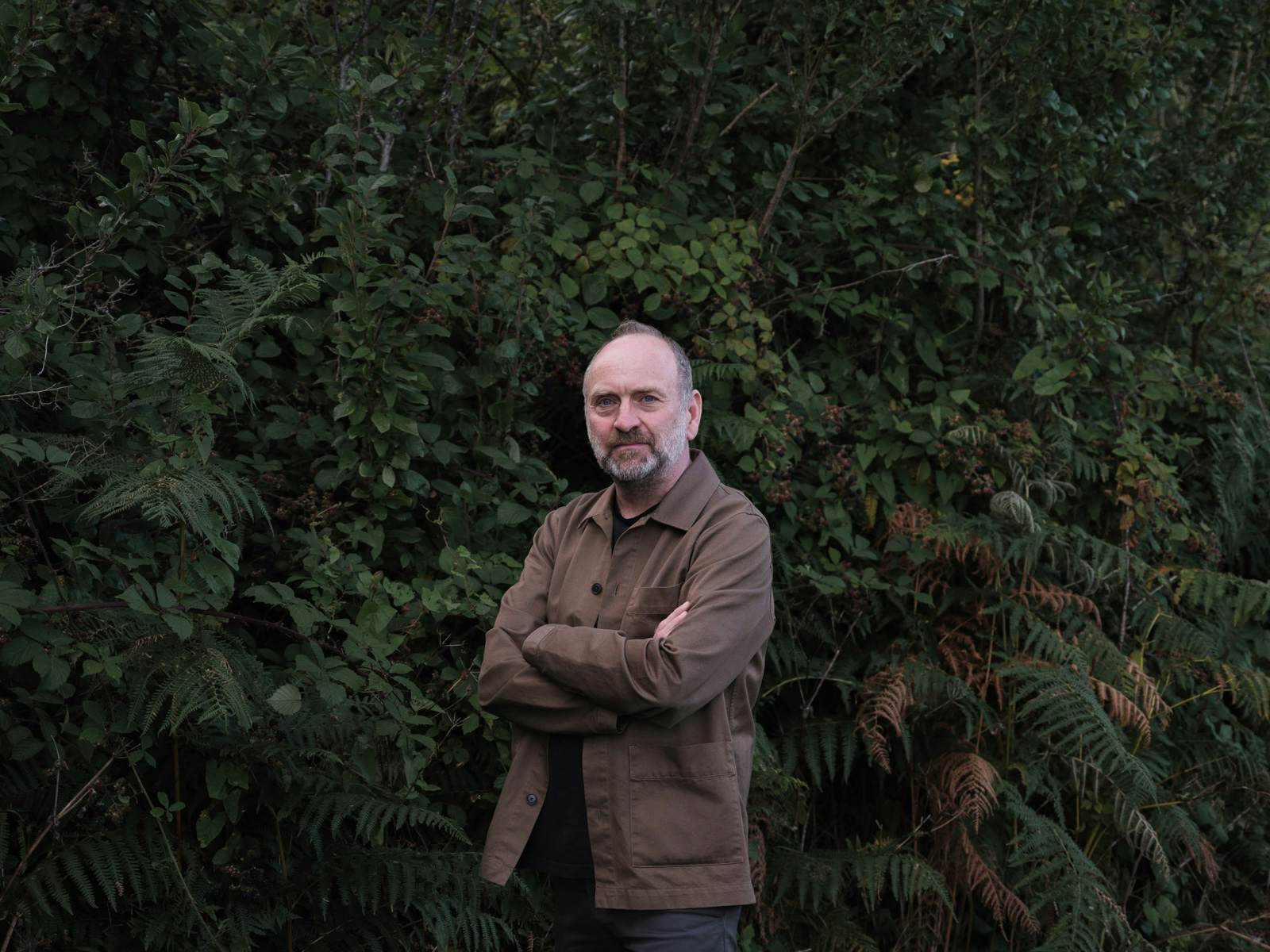
He selected as architect Hugh Strange, who was trained in the 1990s at Edinburgh University, then worked for Allies and Morrison and Panter Hudspith, but gave up working for bigger practices because he wanted to control not only the design of buildings, but the details of implementation.
Like many architects, he cut his teeth by building a house for himself in Deptford, a project which drew attention to his interest in the character and texture of small-scale projects. Soon after, he was asked to design a storage facility at Shatwell Farm in rural Somerset for Drawing Matter, the collection of architectural drawings assembled by Niall Hobhouse, a project which must have introduced him to what it is like to work for a knowledgeable and exacting client.
More recently, Strange has designed a long, low-slung, single-storey house for a farmworker in the middle of the countryside close to the coast in rural north Cornwall, a project which again demonstrated his interest in applying discipline to a small-scale and ostensibly unpromising project.

He is not much more than a two-man band. He expects to be involved in all aspects of a project — the initial design, the construction of a wooden model to work out its details and, so far as possible, the choice of sub-contractors.
In Hastings, he chose the joiners, K&D Joinery in Barking to do the windows and doors in Red Grandis timber and Jones Neville in Kentish Town for the furniture. He and an assistant were responsible for the supervision of work on site. Strange watched over every detail of the joinery, including the choice of nails.
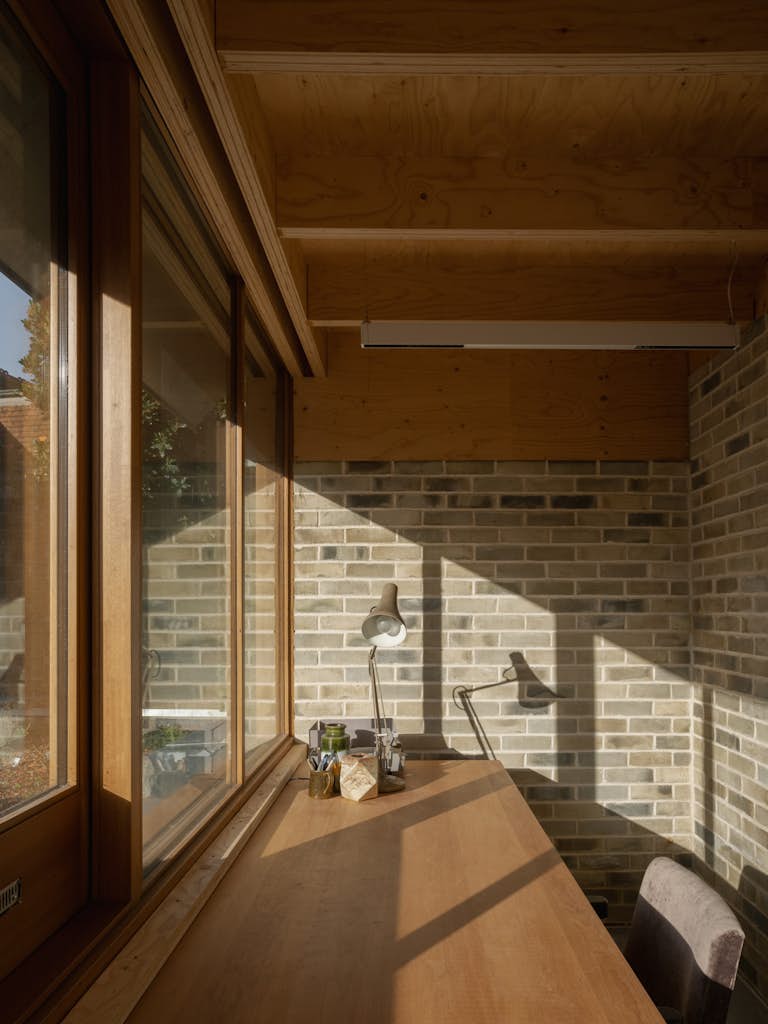
It’s an odd, but interesting, highly personal project. The house is on a steep hillside. There was a 1980s extension which was demolished to be replaced by an extremely spacious kitchen-cum-dining room with a huge window which can be opened wide to look out onto the steep back yard.
Beyond was a garden which was obviously a complete mess when the owner bought it. The walls of the back garden were stabilised and the ornamental laurel retained, whilst two further rooms were stacked, one above the other, connected by a metal staircase leading to a tiny little terrace garden at the top.

The materials chosen are deliberately not hugely expensive in order to retain a sense of textured ordinariness. The quality of the spaces derive from a sense of close attention to architectural detail — the cherrywood and good quality furniture, including the best toaster I have ever seen.
Under normal circumstances, no one would pay attention to a project like this — private, idiosyncratic, without any disabled access and entirely invisible to the outside world.
But a new generation of architects, including Strange, Sergison Bates and Rural Architecture, are now rightly interested in issues of small-scale adaptation: how to renew existing buildings without demolishing them; how to knit together the new and the old in a way where the new is distinct, but attentive to the qualities of what already exists; how to work at small scale on projects which have material quality and texture.
Hugh Strange has written a PhD, “Architecture at the Building Site”, for the Oslo School of Architecture and Design. It analyses the work of Philip Webb and William Lethaby, who, like Strange, were interested in qualities of craft in an age of industrialisation. He brings the same care, scrupulous investigation and intellectual originality to the writing of architectural history as to the construction of a Hastings house extension.