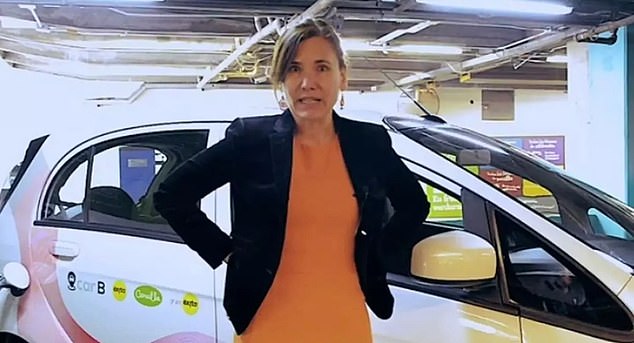
A businesswoman accused of killing two schoolgirls with thallium-laced chocolate raspberries is facing fresh scrutiny after it emerged her lover’s wife died with the same deadly metal in her blood four years ago.
Zulma Guzman Castro is alleged to have killed Ines de Bedout, 14, and her close friend, Emilia Forero, 13, who both died in hospital days after eating the poisoned fruit in Colombia on April 3.
The 54-year-old has been at the centre of an international manhunt since leaving Colombia on April 13, but was dramatically found in the UK after being rescued from the River Thames, near Battersea Bridge, west London, on Tuesday morning.
The former Colombian Dragons’ Dens star is alleged to have killed the two girls after spiking the fruit with thallium, a colourless and odourless heavy metal, as an ‘act of vengeance’ after a secret affair with Ines’s father, Juan de Bedout, between 2014 and 2020.
But in an astonishing update to the investigation, it has emerged how Mr de Bedout’s wife, Alicia Graham Sardi, mysteriously died with thallium in her blood on August 17 2021. She was suffering with hair loss and leg pain in the run-up to her death aged 50.
Mr de Bedout and one of his sons, who had no contact with the poisoned raspberries, also showed traces of thallium in their blood but survived, sparking fears Castro may have targeted his whole family.
He said his wife died of cancer, but admitted that she was poisoned with thallium twice before her death.
Doctors told him that, based on her symptoms, she was first poisoned at the end of September 2020. After treatment for thallium poisoning, her health improved but she relapsed in July 2021 when they travelled to Europe.
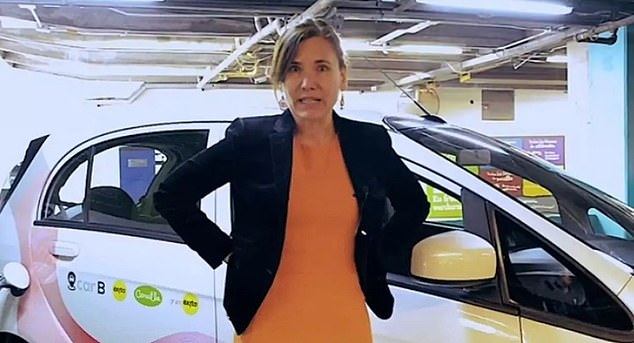
Zulma Guzman Castro is accused of killing Ines de Bedout, 14, and her close friend, Emilia Forero, 13, after they died in hospital days after eating the poisoned sweet treat in Colombia on April 3

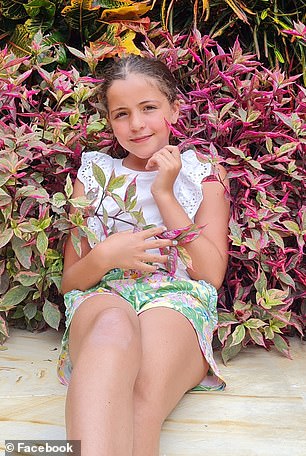
Ines de Bedout (left) and Emilia Forero died days after they were poisoned by the raspberries
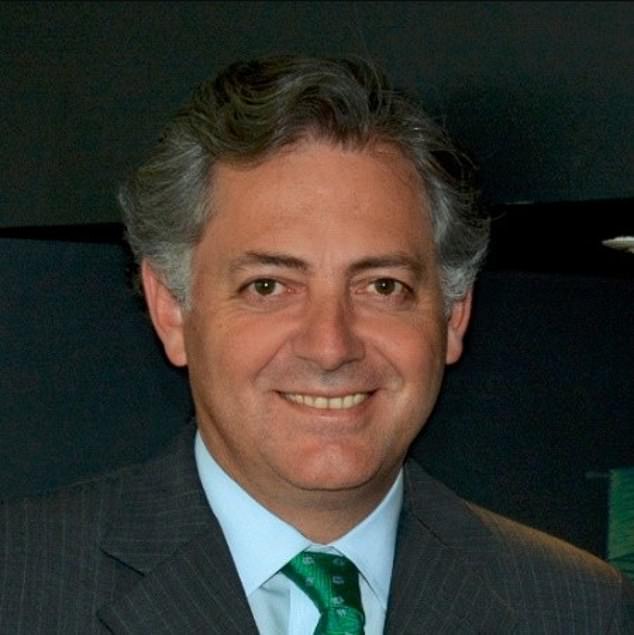
The former Colombian Dragons’ Den star had a secret affair with Ines’s father, Juan de Bedout (pictured), between 2014 and 2020
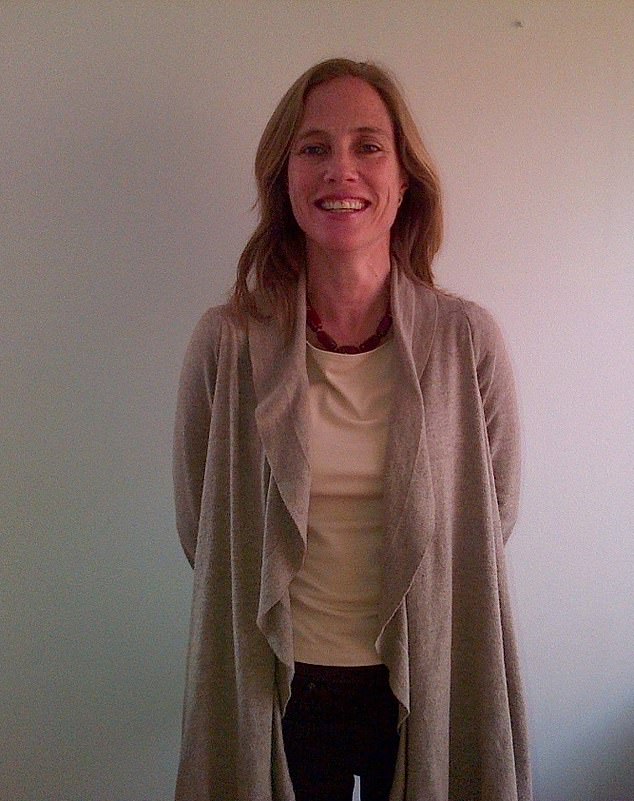
In an astonishing update to the investigation, it has emerged how Mr De Bedout’s wife, Alicia Graham Sardi (pictured), mysteriously died with thallium in her blood on August 17 2021
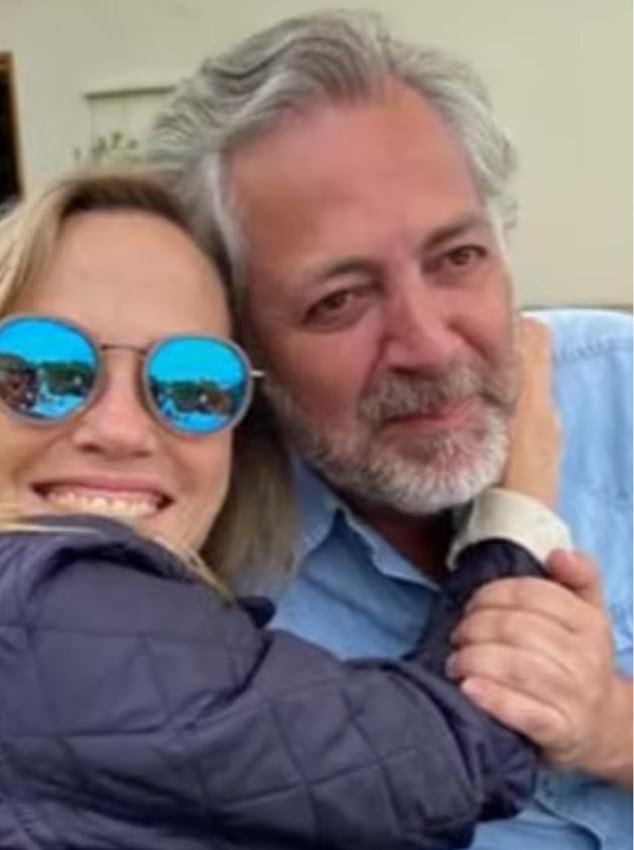
Mr de Bedout and his wife are pictured before she died with traces of thallium found in her blood
While they were in France, her hair fell out and when they returned to Colombia in August, she had to be hospitalised – again with thallium poisoning. A few days later, she died of systemic organ failure.
Mr de Bedout said doctors told him his wife’s body began to generate good and bad cells to defend itself against the thallium and she died with cancer, respected Colombian daily El Tiempo reports.
The revelations have prompted investigators to open a wider line of inquiry into whether the de Bedout family were being poisoned years before the schoolgirls were killed in April.
An Interpol Red Notice to find Castro was issued earlier this month, with authorities warning the fugitive had visited Brazil, Spain and the UK since leaving Colombia.
Castro denies the killings and claimed in an interview: ‘I was Juan de Bedut’s lover for so many years, and I think I’m practically very easy to implicate in that.’
The alleged double killer claims she came to the UK to see her son, arriving in Britain on November 11.
She said in a message while on the run: ‘I find myself in the middle of a very serious situation…where I’m being accused of having been the person who sent a poison that killed two girls.
‘They accuse me of having fled to Argentina, and then to Brazil, Spain and the UK. Those who know me know I haven’t fled anywhere. They know I’ve been working in Argentina and began a masters in journalism here.
‘I went to Spain more than a month ago, with a stopover in Brazil, and then to the UK because of my son.
‘I imagine they’re accusing me because I had a secret relationship with the father of one of the girls.’
According to her CV, Castro went to Los Andes University in Bogota, Colombia, for economics from 1989 to 1995, slightly longer than the average undergraduate degree length of four to five years.
The following year, she enrolled in a masters in environmental and natural resources economics, jointly run by her institution and the University of Maryland, in the United States.
As a fluent German speaker, she studied environmental economics for a further year at the universities of Cologne, Germany, and Gothenburg, Switzerland.
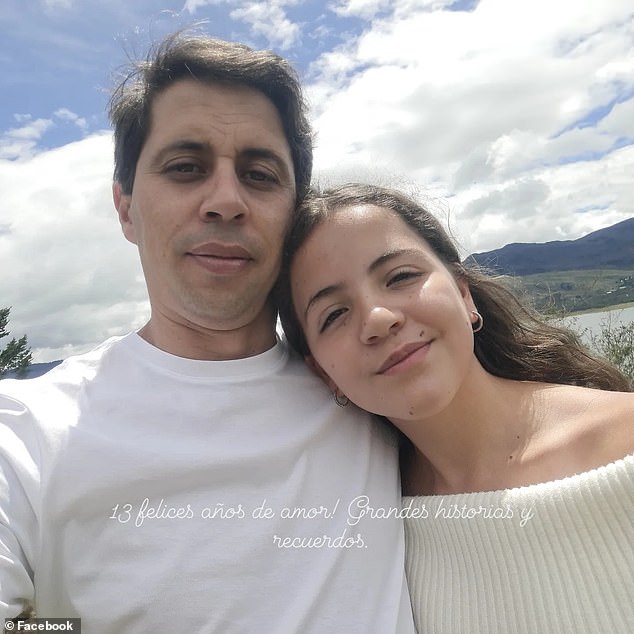
Ines de Bedout, 14, and her close friend Emilia Forero (right), 13, tragically died in hospital just days after eating the sweet treat. Emilia’s father Pedro posted this photo of them earlier this month
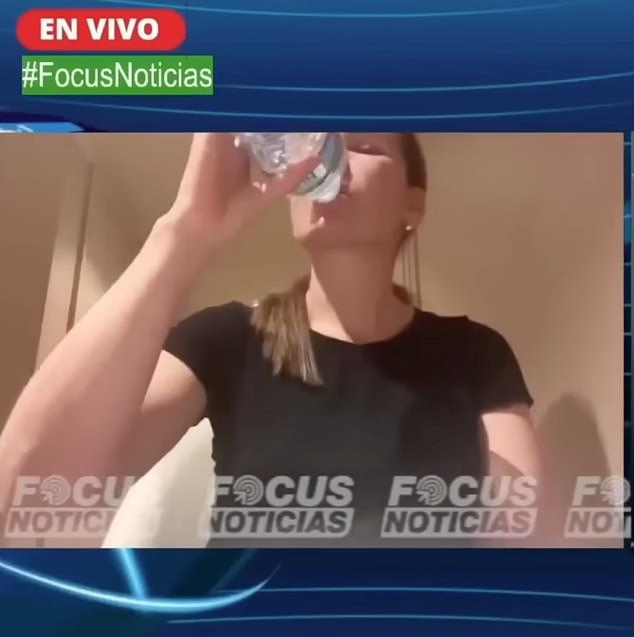
Zulma Guzman Castro drinks from a bottle of Buxton mineral water during an interview, which may have given away her location in the UK
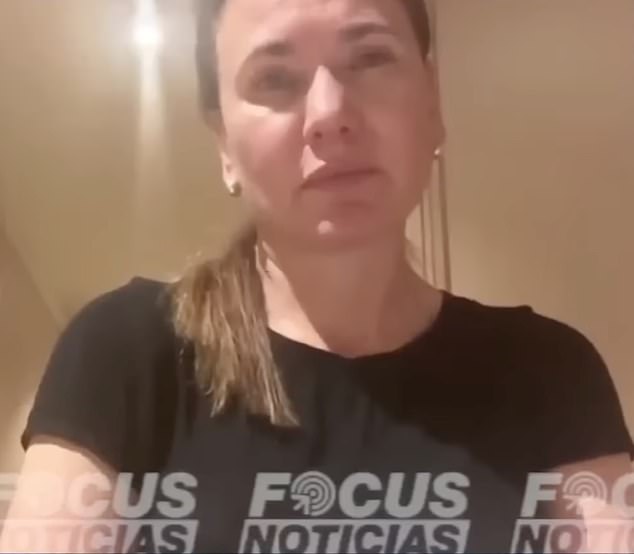
She raised suspicions that she might be in the UK by drinking from the British water brand
Castro did so on a scholarship awarded by the Konrad Adenauer Foundation, associated with the country’s centre-right Christian Democratic Union political party.
She was just as high-achieving in her working life in the late nineties, using her expertise in her local environment secretary’s office in Bogota before moving on to the Colombian Environment Ministry, where she rose to serve as advisor to the vice-minister.
Castro went on to found, in 2001, the Latin American Association of Environmental and Natural Resource Economists, for connecting South American professionals in the field to those in Europe and North America.
From 2004 to 2006, she made a brief career pivot, as the president of a firm called Integra Security, which sold alarm systems, restructuring and selling the company, after achieving a loss reduction of more than $1billion.
A year later, she acted as a consultant on a study aiming to improve the competitiveness of Colombia’s construction industry.
In 2007, she started a planning and redevelopment firm called Urbia, which identifies areas for urban renewal and plans the projects to carry the redevelopment out.
That summer, she decided to go back to university to retrain in architecture, heading to Parsons School of Design in New York City to upskill further for running the company.
She also later, from 2010 to 2012, studied a two-year entrepreneurship MBA based out of both The Haas School of Business at the University of California, Berkeley, and Columbia University in New York City.
Castro remains heavily involved in student life, as the leader of the Colombian branch of the Berkeley alumni association and a member of various real estate and entrepreneurship associations at Berkeley and Columbia.
In an ironic turn, she once served on the student board of an ethics and leadership body, the Sanford C Bernstein & Co Centre at Columbia’s business school.
‘The atmosphere was amazing, full of life,’ she told the Berkeley business school’s in-house magazine in 2013, of her time at the institution.
In the same interview, she admitted her mother had once forbidden her from going into what she saw as the ‘frivolous’ field of architecture.
‘My mom was right, I was horrible,’ she said, of her move into architecture, starting at Parsons.
‘But I learned what architects do and how they do it, and that is important because I now work closely with architects in Bogota.’
During her studies at Berkeley, she had been making plans back at her firm Urbia to work on two derelict areas in downtown Bogota.
And at Columbia, she won a real estate competition which allowed her to bring those ideas to reality.
She presented a concept for university housing next to Los Andes University in downtown Bogota – which was then put to the institution for approval.
Castro said at the time: ‘When I started university, no one even thought about leaving their parents’ homes. But Colombia’s become Americanised – kids leave home and many come from other cities. So it makes a lot of sense to have housing there.’
She went on to establish a Bogota-based electric car rental company called Car B in 2015.
Castro appeared on the Colombian version of Dragons’ Den in this capacity in 2021, where she presented the firm to a panel of investors.
She explained on the programme: ‘CarB is the first car-sharing service in Colombia. It’s a platform that allows you to rent electric and gasoline-powered cars by the hour through an app. We also currently have electric cars in partnership with a large retailer and an energy company.’
When questioned by panellists on how to insure against any illegal activity by customers, she said: ‘The filter is based on credit bureaus and payment capacity. They have to be at least 21 years old and have a valid driver’s license, obviously.’
She also explained why she changed careers to start the firm: ‘I was tired of my previous job, and my sister lives in Barcelona. She gave me the idea, saying, ‘Why don’t you look into this project that will soon be up and running in Bogotá?’ And I jumped right in.’
Castro accepted an offer of investment which led to nearly four years of trading, which saw the company built a fleet of around sixty vehicles, serving around 5,000 customers.
She said the company ran into difficulty over pricing, which saw customers pay either by subscription or per use, comparing it to the rental bike system many capital cities use.
She said: ‘It’s a model that requires economies of scale. That’s the big problem. A lot of investment.’
More recently, in a 2025 interview, she admitted she started the firm on her sister’s suggestion, knowing nothing about cars – and she made personal financial sacrifices to do so.
‘Honestly, I used my own capital. I started with all my savings, with everything I had, and I began the process that entrepreneurs go through, looking for support and those who might try to take advantage of you. I was alone, which is a terrible mistake in entrepreneurship… So, when I’m attacked, I’m quite reactive,’ she said.
Over the weekend, Castro gave an interview to Colombian site Focus Noticias, where she defended her innocence regarding the recent allegations against her, which she felt had been represented unfairly in the media.
She said, according to Colombian title El Tiempo, she was being assumed guilty before proven innocent at trial.
‘I feel I have the right to correct a false and distorted version,’ she said, confirming she has legal representation and asserting she had no involvement in shipping the deadly raspberries, which she intends to try to prove in court.
Majer Abushihab, the legal representative of the girls who died, meanwhile, said prosecutors have a ‘very serious and compelling’ body of evidence against Castro.
Castro also expressed solidarity with the deceased girls’ families, acknowledging their pain.
This was a particularly striking addition – as while her career was on the rise in the 2010s, she was having an affair with a Colombian investment banker, Mr de Bedout.
In the interview, she confirmed the relationship began in early 2014 and ended in early 2020 – and that there has been no close relationship since.
Castro said, however, this history makes her an ‘easy target’ for investigators.
Mr De Bedout studied economics at Los Andes University – the very same institution Castro presented an architectural concept for – in the late nineties.
He moved on to study for an MSc in Finance at the London School of Economics in 1999.

The Businesswoman is alleged to have spiked fruit with a deadly substance as an ‘act of vengeance’ after a secret affair with the father of one victim, according to reports
After his affair with Castro reportedly ended, he enrolled, in April 2020, in a further degree in business administration and management from the INALDE Business School in the Colombian city of Chia, near Bogota.
Mr De Bedout has worked in a variety of positions in investment banking, capital markets and the financial sector, including for high-profile companies like the Rothschild Group and the Bancolombia Group, one of the biggest financial services firms in his home country.
Castro insisted in the Focus Noticias interview she left Colombia on April 13, ten days after the deadly package was sent, to follow previous work and academic plans, including enrolment in a journalism master’s programme in Argentina.
She denied this trip was to evade police and asserted her willingness to appear in court – a point the victims’ lawyer Mr Abushihab celebrated.
‘It’s great news that she’s decided to do it, hopefully it will be as soon as possible,’ he said.
Over the weekend, she raised suspicions that she might be in the UK by drinking from a bottle of Buxton mineral water during an exclusive interview with Focus Noticias.
El Tiempo was one of the first to pick up on the fact it could offer a clue to her current whereabouts, after Interpol’s 196 member countries were asked to locate and detain Castro.
A source told the paper: ‘The bottle of water she drank from was Buxton Natural Mineral Water, a reputed product which is mainly commercialised in the UK, although it can be purchased online.’
The same source said: ‘The size of the bottle she was drinking are sold in street shops, which would indicate Guzman is in an apartment or house and not in a hotel.’
Another Colombian newspaper, Semana, added: ‘Investigators made inquiries on the official website and found out from it that the bottled water is only sold in the UK and is supplied to physical shops and retailers based in that country.
‘That information points to the possible place in which the alleged killer of the children could be staying.’
Another said: ‘This clue has enabled the authorities to temporarily rule out Guzman’s presence in Argentina where she initially fled, reinforcing the theory she is in hiding in the UK.’
Colombian police have not yet confirmed whether the water bottle clue was the lead factor which led to investigators in the South American country closing the net on Castro’s location, via cooperation with their British counterparts.
In her interview over the weekend, the businesswoman also confessed she had put a GPS tracker on Mr de Bedout’s car.
She said: ‘Regrettably I was his lover for many years, more than six.
‘The relationship with him was basically clandestine and we would see each other in my house or elsewhere in Bogota.
‘Our relationship ended at the beginning of 2020.’
Confirming she had tried to track his movements, she added: ‘I committed an error many years ago.
‘Precisely when I was in a relationship with Juan, out of jealousy and because I was entangled in all the lies, he challenged me, saying that I wasn’t capable of knowing where he was hiding.
‘I told him that I was capable, and that’s when I looked for a way to put the GPS in the car.’
But Castro denied any involvement in the schoolgirls’ poisoning, saying: ‘I am a mother, and that must be unbearable pain, and I understand that for that reason they want to find the culprit and use all possible means to do so, but I am not that culprit.
‘The strategy is clearly to completely destroy me before any legal proceedings, to destroy my image and give a version that would destroy me without any trial, without any guarantee of a fair trial at this time.’
The two schoolgirls lost their fight for life at Bogota’s benchmark hospital Santa Fe de Bogota Foundation just under a week after they were poisoned on April 3.
Another friend and 21-year-old brother of one of the victims were also hospitalised after eating the raspberries but survived, although the girl is understood to have suffered lasting injuries.
Forensic experts have determined the heavy metal, which can be lethal in tiny doses, was deliberately injected into the raspberries before they were delivered to the luxury apartment in the Colombian capital Bogota, where the victims had been playing after school finished for the day.
Prosecutors allege Castro, who left Colombia on April 13, used a courier firm to deliver the fruity treat.
The delivery man told investigators he was given the package containing the raspberries by a friend of the fugitive and advised it was a present for them because the dessert was one of their favourites.
Castro has been described as a long-term friend of the de Bedout family who knew their daily routine and was aware the youngster loved chocolate-covered raspberries.
The package was delivered to the girls just after 7pm local time on April 3, after they reportedly rejected an earlier attempt to hand it to them saying they weren’t expecting anything.
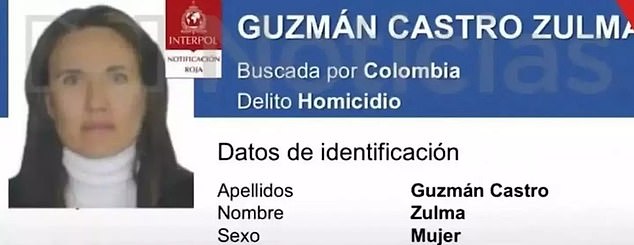
Castro denied any involvement in the schoolgirls’ poisoning
After Emilia died, her father Pedro Forero urged mourners to put on brightly coloured clothes instead of black to attend the teenager’s funeral.
He said in a previous social media post: ‘Today I am trying to find words for something that cannot be explained. Emilia, my driving force in life, left this world leaving an infinite mark on all of us who had the privilege of knowing her, embracing her and loving her.
‘Her joy, her sensitivity, her immense heart and her unique way of seeing the world will always be with us.
‘I would like to invite those who loved her, those who shared unique and special moments with her, to bid her farewell with love, with gratitude, with the colours she loved so much and with the joy she taught us to have even in difficult times.’
Colombian authorities have made a request to the UK for her capture and it is understood a warrant was issued by Westminster Magistrates Court for her arrest earlier this week.
If she is fit enough, Castro will be taken into custody to appear at Westminster Magistrates’ for an extradition hearing.
The poison used was initially linked to the poisoning of former Russian spy Alexander Litvinenko who died in a London hospital in November 2006.