This article is taken from the December-January 2026 issue of The Critic. To get the full magazine why not subscribe? Get five issues for just £25.
“Oh, beware my lord of jealousy! It is the green-eyed monster which doth mock the meat it feeds on.” Iago’s (ironically intended) words to Othello nevertheless hit upon a universal dramatic truth, namely that plays revolving around envy — whether based on class, sex or money — often make for richly compelling viewing.
Get it wrong, however, and the results can be tortuous. Two new productions, each of which touch on the theme in different ways, cannot be accused of lacking ambition.
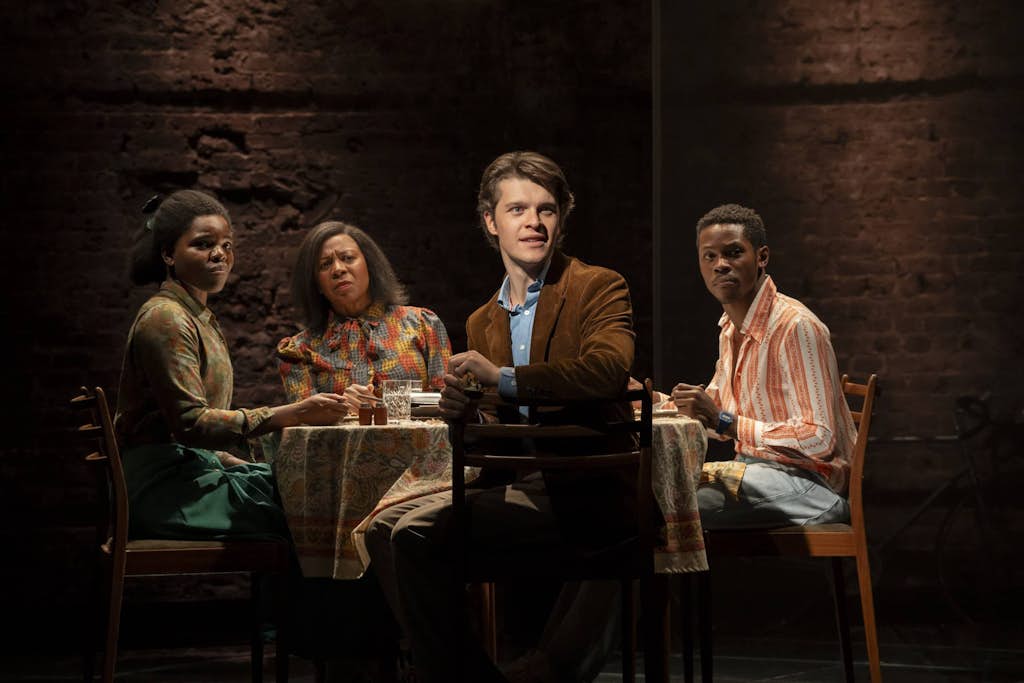
Walking into Jack Holden’s adaptation of Alan Hollinghurst’s Booker-winning novel The Line of Beauty, I was unsure what to expect. Hollinghurst’s book, in which a naïve but personally ambitious young gay man becomes the houseguest of a wealthy Tory MP and his family, is a languid fantasia on Thatcherism, AIDS and Henry James, in which explicit sex scenes jostle with wordy reflections on Eighties Britain.
It works well on the page, but I wondered if the semi-literal approach that theatre demands would flatten the narrative, turning elegant literary reverie into something crass and obvious. In his production, the estimable Michael Grandage is aware of the potential for disaster, and so opts for another, less predictable path: speed up the narrative to such an extent that what plays out as limpid tragedy on the page becomes trouser-dropping farce.
Stripped of the poetic qualities of Hollinghurst’s prose, the novel’s intrinsically ridiculous aspects now bear an unfortunate similarity to a Brian Rix comedy.
From the early scene in which Jasper Talbot’s wide-eyed, corduroy-clad Nick Guest engages in Donna Summer-soundtracked buggery in an exclusive Kensington private garden with a young, black bike courier, I was uncertain how seriously any of this was to be taken, as it were. Judging by the howls of laughter from the audience — which included Hollinghurst himself — “not very”, was the answer.
At times, I was reminded of Grandage’s recent directorial effort, the royal-themed comedy Backstairs Billy. That, however, was clearly intended to be funny, whereas I am uncertain that The Line of Beauty — or “the line of booty”, as some wag dubbed it in the interval — lends itself to such a pantomimic approach.
Some of the performances, including Talbot’s intentionally opaque, almost Tom Ripley-esque lead and Ellie Bamber’s unstable party girl, tend towards the understated, even bland, but they are compensated for by a trio of full-throttle turns from Arty Froushan (as a closeted half-Lebanese millionaire), Charles Edwards (as an adulterous MP) and, above all, Robert Portal, who plays an asset-stripping financier known as “Badger”.
The admirable Portal delivers every homophobically abusive line in such a fruity basso profundo that I half expected him to turn to the audience and wink, as if he were Captain Hook in Peter Pan.
The tragedy of The Line of Beauty, of course, is that a whole generation of these lost boys never were able to grow up, with their lives being cut short by AIDS. The play makes this loss clear, and by the end Talbot’s performance becomes honourably moving.
Yet this comes in the same act as a scene in which Guest, asked to put sun lotion on the back of his Speedos-clad university chum Toby (the impossibly well-built Leo Suter) becomes understandably, embarrassingly aroused at the prospect: a scene that Grandage plays for big, filthy laughs. Asking the audience to pivot from prurient hilarity to mournful compassion is, I fear, a step too far.
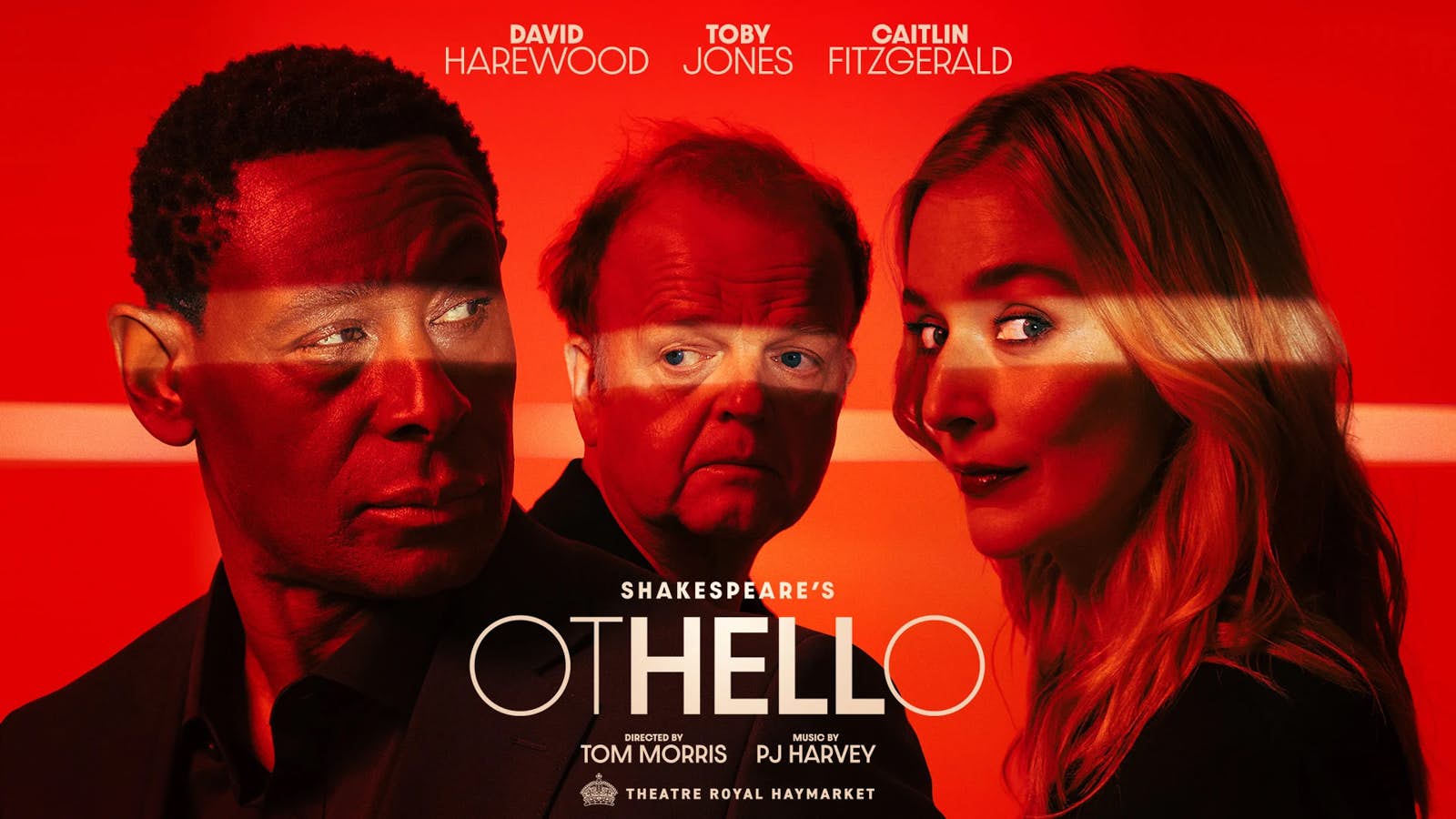
Tom Morris’s new staging of Othello at the Theatre Royal Haymarket is a more straight-down-the-line offering, in every sense. Its big appeal is the casting of David Harewood as Othello, reprising a role he first played at the National in 1997, and the currently ubiquitous Toby Jones as Iago.
The two work well together on stage, striking the kind of perverse sparks that are largely absent from Harewood’s relationship with Caitlin Fitzgerald’s bland, slightly girlbossy Desdemona.
Othello is portrayed as a preening, credulous fool, forever pausing to check the cut of his jib, whereas Jones’s Iago is a pug-nosed schemer, alternating between salt-of-the-earth mateyness and cold contempt at his former friend. There were considerably more laughs in Morris’s production than I would have imagined the play usually possessed, but this is no Hamlet-at-the-National exercise in frivolity.
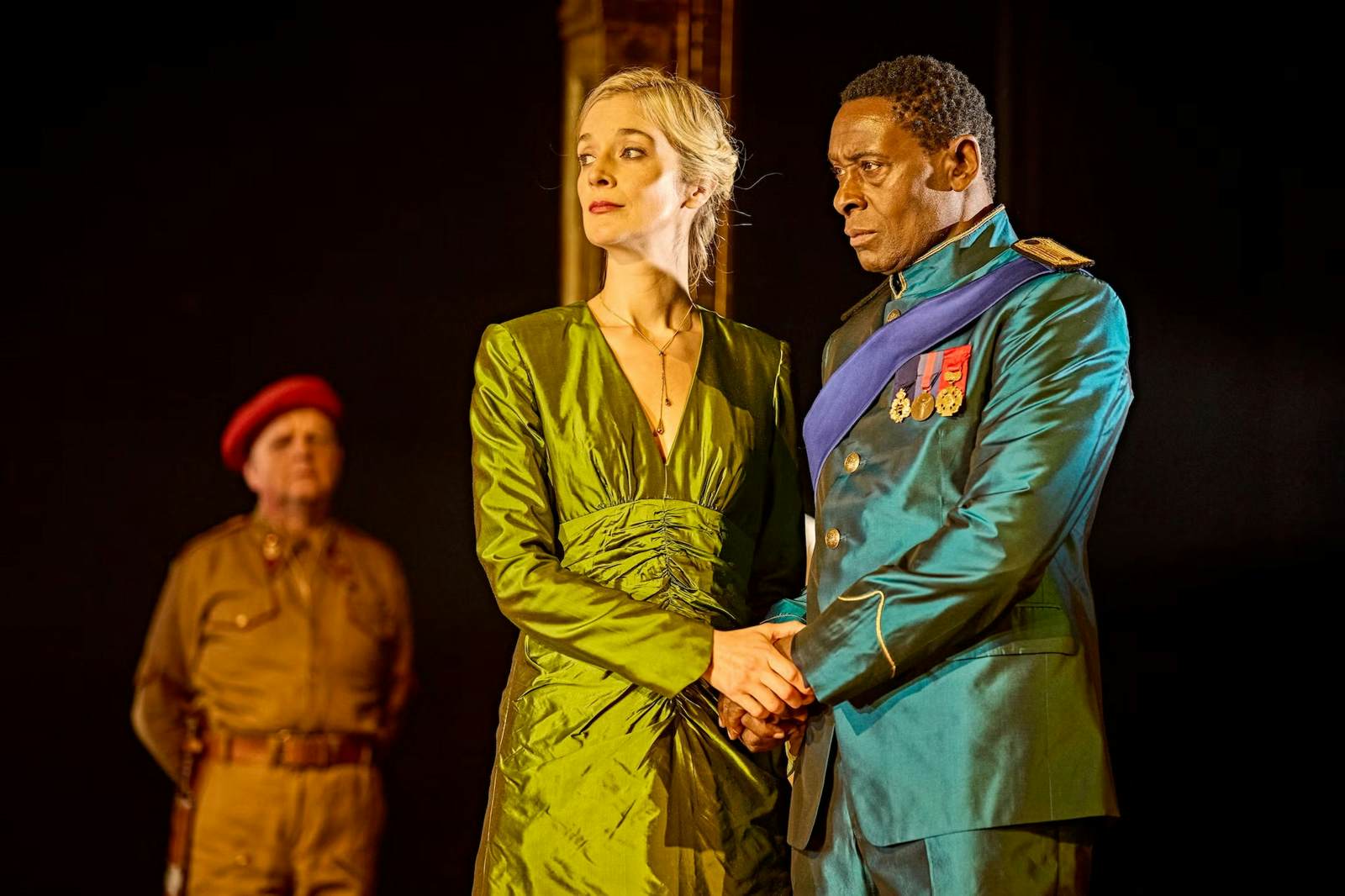
Instead, it is a pacy, accessible reading in modern dress that has a few spectacular directorial flourishes (a storm scene that reminds the viewer Morris was responsible for War Horse; semi-distracting video projections at crucial moments) but generally lets the actors get on with what they excel at. PJ Harvey’s original music, if perhaps overused, gives it all a thrumming momentum.
It is a gripping, often nasty staging. The second half, in particular, contains some really disturbing moments of violence — Desdemona’s murder, of course, but the scene in which Othello strikes her had the audience wincing — and when it concludes with a swift, bloody exclamation mark, it is a vicious reminder that there is no limit to the corrosive effects of envy.
Shakespeare of this clarity is surely what subsidised theatre should be coming up with. If those institutions’ artistic directors were looking at the Theatre Royal Haymarket in green-eyed fashion, that is a reflection of the poor-quality meat they’re currently serving up to their own audiences.