This article is taken from the December-January 2026 issue of The Critic. To get the full magazine why not subscribe? Get five issues for just £25.
You may have noticed on your local high street Clarendon Fine Art. This company sells 20th century and contemporary art for less than £1,000 up to £1m in more than 90 locations across the UK (and one in the USA). They describe themselves as offering “exclusive artwork in an inclusive atmosphere, and that is what makes us so different”.
Clarendon Fine Art’s success flies in the face of the recent spate of gallery closures. In 2024 the company turned over £87m (and the year before, £94m). This puts it firmly in the mega gallery league.
The widely respected US gallerist, Tim Blum, announced earlier this year that he was “sunsetting” (i.e. closing) his galleries, although he had worked extremely hard and, to many, had appeared to be making a success of his gallery model.
Blum said, “This is not about the market … This is about the system … It’s not working. And it hasn’t been working.” His gallery, Blum & Poe, like most contemporary art galleries, looked after and promoted living artists, usually by staging solo or small group exhibitions, painstakingly explaining the artist’s aims and providing a platform for their art, often in upmarket or trendy locations.
Clarendon, on the other hand, shows a broad range of modern and contemporary art, some of a type which a fair few art world insiders would disparage.

I visited the Dover Street gallery one damp Friday in November and spotted some pictures which looked rather like paintings by the red-hot American superstar de nos jours Jean-Michel Basquiat, who died in 1988. His paintings sell for tens of millions.
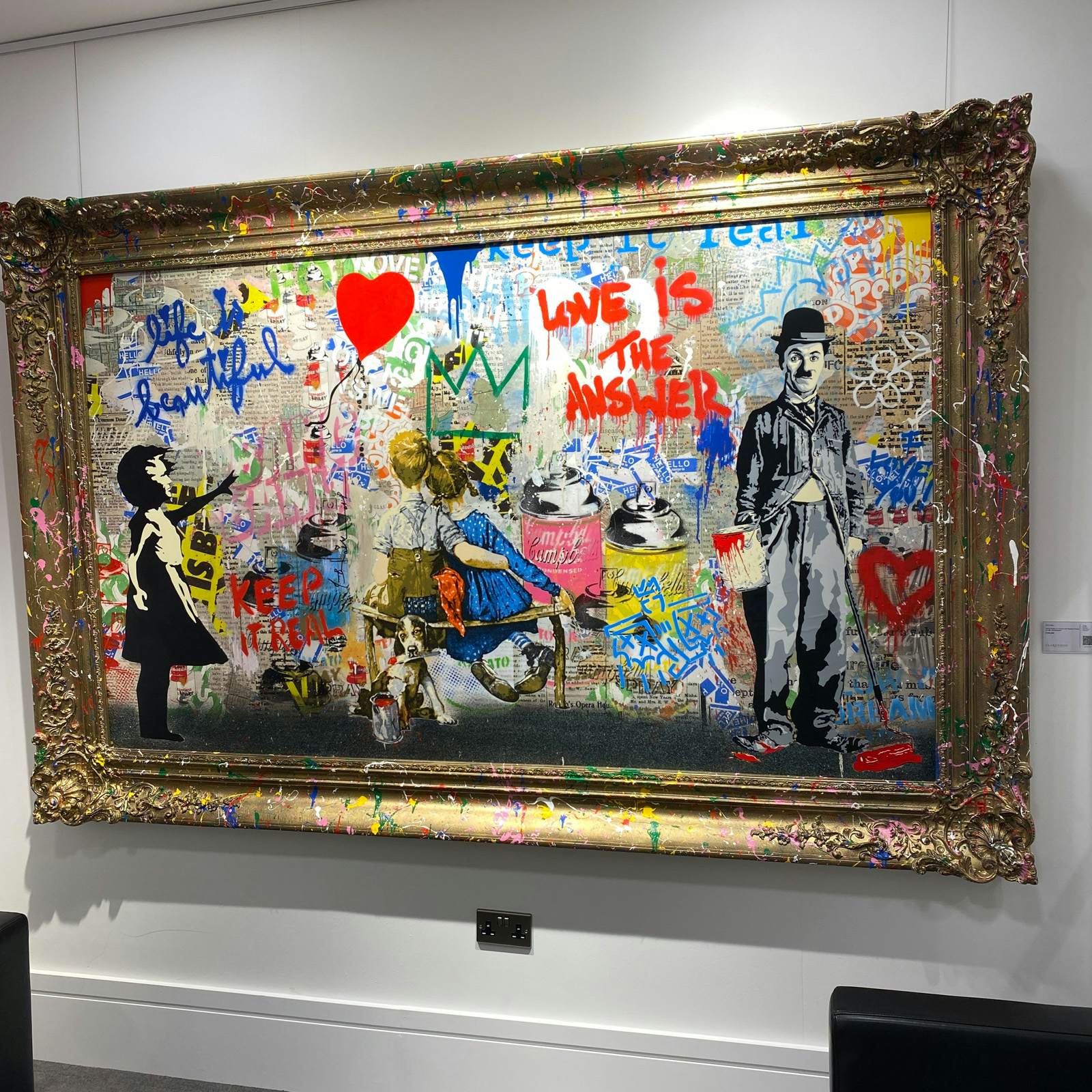
Nearby was a spin/butterfly picture by Damien Hirst, for £8,950. On the back wall was a riot of street art and graffiti by an artist calling himself “Mr Brainwash”, a former collaborator of street artist Banksy (asking price £145,000).
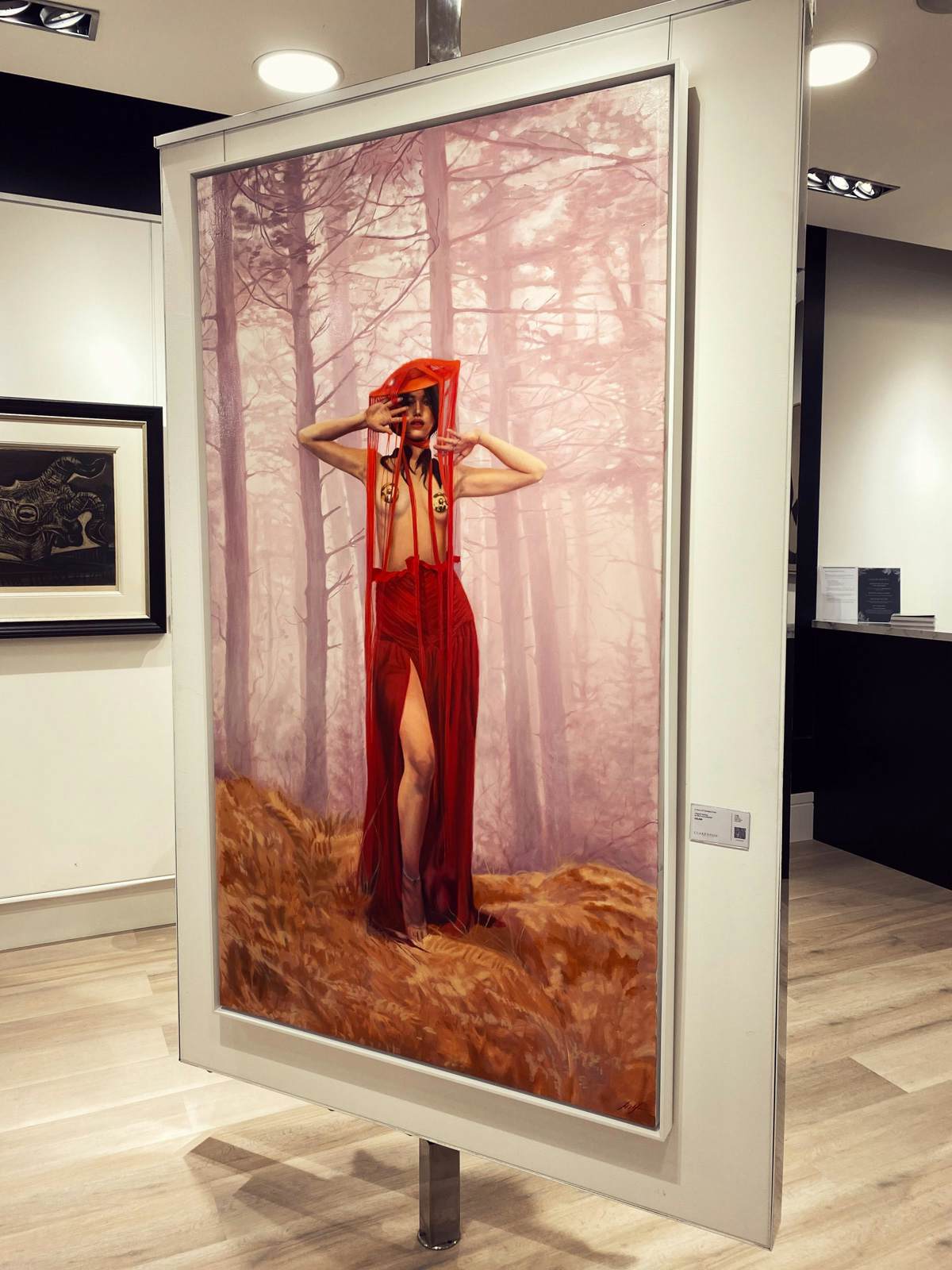
In a prominent spot in the centre of the gallery was a painting of a woman standing in a pine forest in a red dress — the upper part of which seemed to have been shredded, her nipples covered by brass plaques (by Mila Alexander: asking price £22,000).
Prints by established artists such as Takashi Murakami, Jackson Pollock and L.S. Lowry were also available. There was no attempt at presenting a coherent narrative of art, there was no presentation of a particular artist or theme, and very little in the way of specialisation.
The gallery was bright, comfortable, welcoming, and the staff unpretentious. In fact all the galleries I visited in and around Dover Street were bright, comfortable and welcoming, with unpretentious staff.
So what is Clarendon’s secret recipe? First, the price point for the vast majority of art is sub-£10k. That is much below some art sold in other Mayfair galleries, but there is also an openness: the works are clearly available for sale, and the price is on the label and the website.
Second, they know their target market and what that buyer is looking for. Works by well-known names, certainly; works by artists that are remarkably similar to works by well-known names (“Is that a Basquiat?” “No.” “Oh … well, it certainly looks like one!”); works which appeal to an uncritical audience who do not necessarily want to live with sometimes difficult, radical-chic conceptual art accompanied by impenetrable text signalling some sort of virtue politics or cleverness.
No, they want something sexy, fun, and perhaps even to cock a snook at the art establishment and its seriousness, its earnestness and faux fun.
There are many buyers for this sort of art. And here’s the rub, this is a gallery brand run solely for the buyer. Indeed, CEO Helen Swaby, said Clarendon galleries were ”a welcoming destination for everyone”.
This ethos runs contrary to the conventional “system” which, through the judicious selectiveness of the gallerist, seeks out brilliant, relevant and vital artists, exhibiting in their galleries what might become tomorrow’s great art. That system functions best if the gallerist is trusted to show artists of real merit.
However, with so many galleries closing, either artists are not making such great art, or (more likely) fewer collectors are genuinely interested in what the galleries are showing.
Clarendon’s model has flipped that on its head by giving buyers what they want. Do we want a contemporary art world where those with years of experience, knowledge, discernment and judgement promote and sell the art of the future, or a Clarendon-type gallery system which exists to service the whim of the buyer?