When the COVID-19 pandemic hit, the U.S. government spent an unprecedented amount of money to prop up the economy and aid Americans whose daily lives had come to a sudden halt. Between 2020 and 2021, President Donald Trump and former President Joe Biden signed a combined six laws shelling out over $5 trillion – helping small businesses guarantee paychecks and paying for COVID-19 tests. The money also went toward health care and housing support, and to things like emergency food programs for children going without free school lunches.
A lot of the money, it turns out, went to fraudsters.
Five years on, the total amount of pandemic relief fraud remains unknown, with estimates ranging from hundreds of billions of dollars to $1 trillion. While federal investigators, private experts, and even citizen sleuths continue to uncover new schemes, they say much of the stolen money may never be identified, much less recovered.
Why We Wrote This
A high-profile fraud case in Minnesota has spotlighted the lack of safeguards during the COVID-19 pandemic surrounding funds intended to prop up vulnerable Americans. The looting of taxpayer dollars holds lessons about the social safety net and the federal bureaucracy that oversees it.
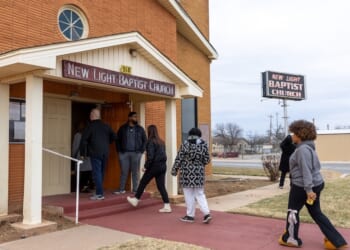
The latest high-profile example has come out of Minnesota, where a local nonprofit obtained more than $240 million to feed hungry children but instead spent the money on luxury cars and real estate. Prosecutors say the sprawling Minnesota case, which continues to expand (a 78th defendant was charged late last month), is linked to a web of other “massive fraud schemes,” including some involving the state’s housing support program, that together could exceed $1 billion. The state’s acting U.S. attorney said in announcing charges this fall that the depth of the fraud “feels never ending,” adding, it “takes my breath away.”
Many of the Minnesota defendants are of Somali descent, which has added fuel to debates over immigration policies as well as the state’s social safety net, which ranks among the most generous in the country. Conservatives have excoriated Democratic Gov. Tim Walz and his administration for mismanagement of taxpayer dollars, and point to the state as an example of the unintended consequences of big government spending. Governor Walz, who is running for a third term next year, has defended the state’s Somali community while signing an executive order to combat fraud within state programs and moving to shut down the housing program altogether.

Yet while the Trump administration has made targeting government waste, fraud, and abuse a stated priority of the president’s second term, experts say little is being done at the federal level to correct the systematic problems and lack of oversight that allowed so much taxpayer money to be pillaged.
Lessons about pandemic spending and fraud remain relevant today, as Washington debates the merits and efficacy of the welfare state and the federal bureaucracy that manages it. This month, members of Congress are considering whether to extend tens of billions of dollars in enhanced Affordable Care Act subsidies that were enacted as part of one pandemic spending bill. Many congressional Republicans have been citing a recent watchdog report that found a high percentage of fraudulent accounts as a reason to let them expire.
“There are examples based on hard experiences from the pandemic that should be built into any response to a recession going forward,” says Matt Weidinger, a senior fellow at the American Enterprise Institute who previously worked on the House of Representatives’ Ways and Means Committee, which oversees unemployment benefits. “One of my roles in life now is to make this argument: Don’t do the stuff that was so objectively wrong during the pandemic again.”
“We operated in a trust system”
Many experts say they expected some fraud during the pandemic, given the vast sums of money being spent in a hurry. The CARES Act alone, signed by President Trump in late March 2020, sent out more than $2 trillion, making it the largest stimulus package in U.S. history. Just one part of the CARES Act, the $800 billion Paycheck Protection Program, also known as PPP, was equivalent in size to the entire stimulus package that Congress passed in response to the 2008 recession.
Haywood Talcove, CEO of LexisNexis Risk Solutions for Government, a company that works with governments to detect fraud, estimates that roughly 8% of government funds are routinely stolen due to fraud. That’s in line with an April 2024 report from the Government Accountability Office (GAO) estimating government-wide fraud between 2018 and 2022 to be between 3% and 7%. But Mr. Talcove estimates this percentage went up to 20% for pandemic spending, with $1 trillion of the $5 trillion spent going to fraud.
Other estimates put the fraud total in the hundreds of billions, such as a 2023 analysis by The Associated Press that suggested 10% of pandemic relief funding went to fraud, with $280 billion stolen and $123 billion misspent. Government agencies have been slow to update pandemic fraud estimates in recent years, which Mr. Weidinger attributes to “embarrassment and desire to move on,” given how unlikely it is the government will get much of this money back.
Experts agree that three programs in particular accounted for much of the pandemic-era fraud: the Small Business Association’s COVID-19 Economic Injury Disaster Loan (EIDL) program and PPP, as well as the expanded unemployment insurance program. In many ways, these new or expanded programs were unique to that moment in time. Government officials – both Republicans and Democrats – believed speed was of the essence to prevent economic catastrophe. Some guardrails were removed either intentionally or as a result of changed circumstances (most field offices that typically verify identities for benefits were closed).

The Small Business Association (SBA), for example, distributed $343 billion in partially or fully forgiven PPP loans to small businesses to cover payrolls and other expenses in just the first two weeks. This allowed many businesses to forgo immediate layoffs amid stay-at-home orders. But in the name of speed, the government let prospective borrowers “self-certify” that their information was valid and that their businesses actually existed.
“We operated in a trust system,” says Mr. Talcove. He and other experts say that speed shouldn’t have come at the cost of basic identification requirements.
A 2023 report from the SBA found that of the $1.2 trillion in PPP and EIDL spending, $200 billion, or 17%, was disbursed to fraudsters. A 2023 GAO report flagged 3.7 million of the 13.4 million PPP and EIDL recipients, or 27%, as potentially fraudulent.
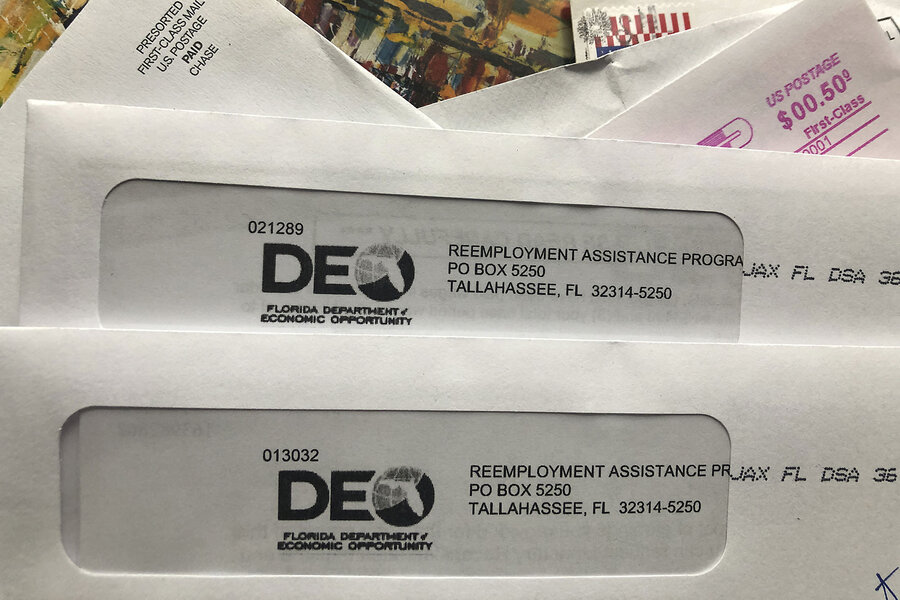
Self-certification also contributed to high levels of unemployment insurance fraud. Mr. Weidinger describes this as a one-two punch: The Pandemic Unemployment Assistance (PUA) program offered benefits to workers previously not covered by unemployment insurance programs, such as independent contractors and the self-employed, who were then allowed to claim retroactive benefits. Essentially, says Blake Hall, co-founder of ID.me, which partnered with some states during the pandemic to help with identification, the government allowed applicants to “pinky promise” that they were newly out of work.
Mr. Hall cites an example out of Arizona, where his company was hired to help with identity verification for PUA claims. Half a year into the pandemic, there were hundreds of thousands of initial claims filed in a single week alone – an improbable number for a state of roughly 7 million (including children), says Mr. Hall. After ID.me services were implemented, such spikes didn’t recur.
The government also added hundreds of dollars onto typical unemployment checks. As a result, “the reward for being a bad guy went up by record amounts,” says Mr. Weidinger. “Astonishing amounts of money were sent through this system that had very little in the way of identity verification, much less work verification. … The bad guys quickly figured this out.”
The GAO has estimated that $100 billion to $135 billion of unemployment insurance, or between 11% and 15%, went to fraudsters. Mr. Hall puts the estimate closer to $400 billion, a number Mr. Weidinger agrees is likely closer to the actual number than the government’s calculations. Mr. Talcove thinks the amount is somewhere in the middle, around $250 billion.
“The first step to fixing a problem is acknowledging it exists,” says Mr. Hall. But fraud on this scale can be a hard thing for governments to admit to. “No government wants to be known as the administration that lost all this money to fraud.”

J. Scott Applewhite/AP/File
Efforts to recover stolen funds
Some of the stolen money has actually been clawed back. But not much.
As of April 2024, the Department of Justice had criminally charged more than 3,500 defendants and recovered more than $1.4 billion in seized or forfeited CARES Act funds. That’s less than 1% of what was stolen from just the two SBA programs alone.
A congressional report from earlier this year says that the Department of Labor has recovered $5 billion in stolen unemployment insurance funds – roughly 4% of what was lost, according to the government’s estimate. Since April 1, 2020, the Department of Labor’s Office of the Inspector General (DOL-OIG) has opened more than 200,000 investigations into the unemployment insurance program – a thousandfold increase compared with before the pandemic, when unemployment insurance made up 11% of its case inventory (as of 2025, it is 96%). With fewer than 130 criminal investigators, the DOL-OIG has focused on large-scale theft schemes that “pose the greatest risk” to the unemployment insurance program.
And there is a larger question of whether more can now legally be recovered. The Senate failed to vote on the Pandemic Unemployment Fraud Enforcement Act, which passed the House earlier this year, and which would have extended the statute of limitations on pandemic unemployment insurance fraud from five to 10 years. President Biden did sign laws in 2022 that extended the statute of limitations for tracking down fraud within the SBA’s pandemic programs; a 2023 update said that almost $30 billion in EIDL and PPP funds were seized or returned, or about 15% of what was stolen.
But as prosecutors continue to hunt down stolen PPP funds, experts say Washington needs to be looking forward. Even if another pandemic is unlikely, a recession may well come at some point, and many of the enhanced benefit structures that the federal government uses to prop up the economy in those circumstances are similar.
Rather than the federal government just throwing additional dollars at states to distribute through their unemployment insurance programs, there should be a “shared partnership,” says Mr. Weidinger, with “clearer lines of responsibility.” Getting money to people quickly doesn’t need to come at the expense of basic verifications, such as running applicants’ names through the Treasury Department’s “Do Not Pay” database or confirming that the same individuals are not receiving unemployment benefits from multiple states.
As former SBA Inspector General Hannibal Ware told The Associated Press, an extra few days of checking applications during the pandemic would not have upended the program or forced businesses to shutter.
“You have to have some oversight,” says Mr. Talcove. “And it doesn’t mean that you are trying to deny a benefit.”