
This article is taken from the December-January 2026 issue of The Critic. To get the full magazine why not subscribe? Get five issues for just £25.
Towards the end of Domination, Alice Roberts describes the Apostle Paul as “anti-intellectual”, based on her reading of the First Letter to the Corinthians and its insistence that Christ has rendered foolish the wisdom of this world.
This is a daring assessment of a man who received a rabbinical training amongst the vibrant intellectual culture of the Mediterranean Jewish diaspora, debated all comers in the forums of various Greek cities, and effectively defended himself in Roman courts, as well as writing the book of Romans, a densely argued and innovative explication of Christian moral theology.
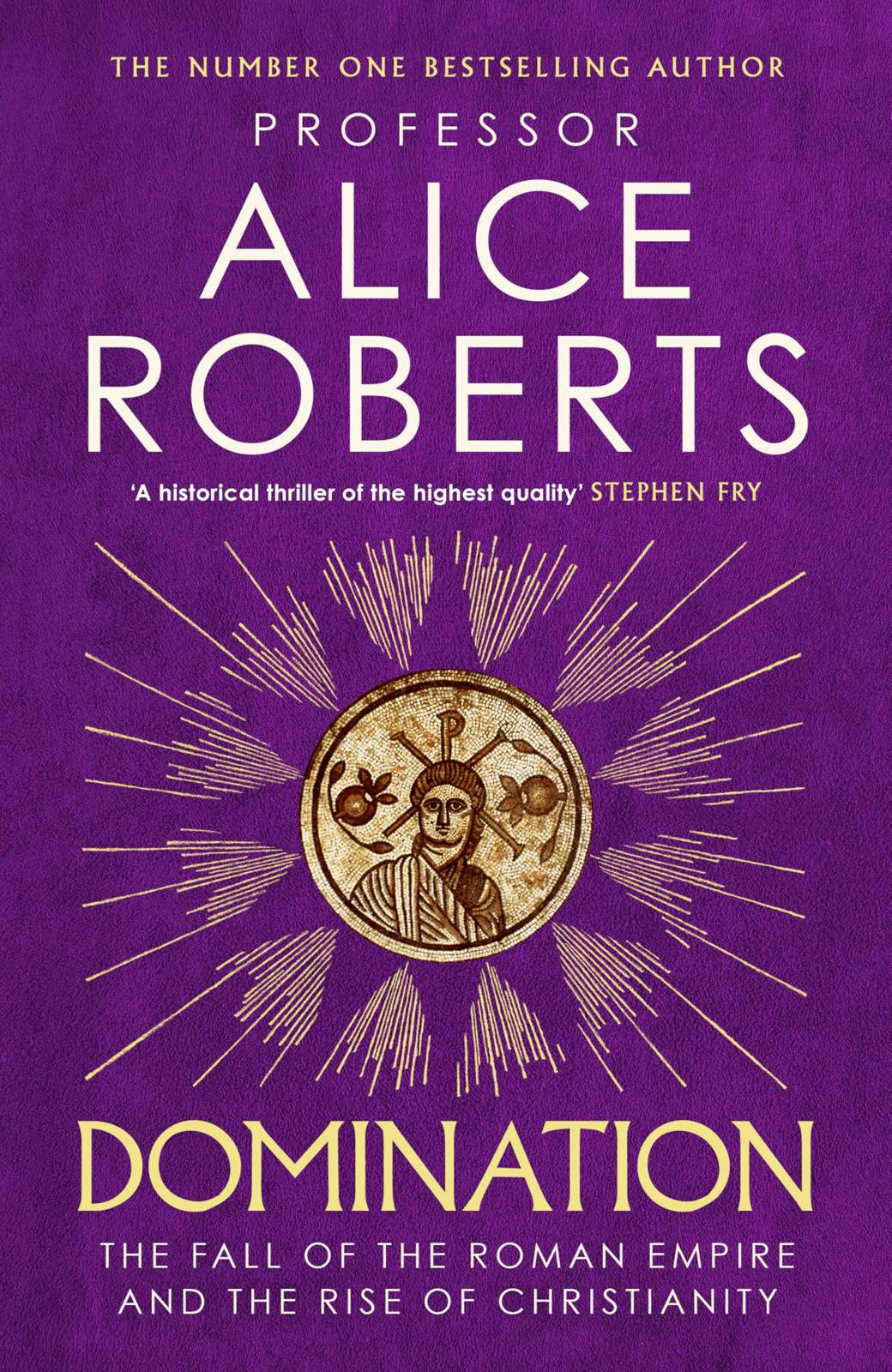
But perhaps Roberts — a multi-talented TV presenter, scientist and anatomist, who has written a book about the cultural and political evolution of the late Roman Empire — is making the point that people can be highly accomplished in certain domains, and still produce extremely flawed work in another.
The first quarter of the book is genuinely fascinating: a well-informed survey of recent archaeological discoveries at early medieval sites in the west of the British Isles. The already knowledgeable reader might learn a good deal about the cultural and commercial links between Wales, the West Country and north-west France in the 4th to 6th centuries. But even in this section an anti-Christian polemical edge creeps in, and that soon becomes the dominant tone.
There is nothing wrong with polemic, in and of itself. Roberts’s scepticism about some of the more improbable incidents in many hagiographies is shared by many Christians. However, difficulties do arise when polemic overwhelms historical analysis.
Careful exploration is not Domination’s strong suit. Contemporary political considerations are clearly at work, with words like “barbarians” and “Anglo-Saxons” put in scare quotes whilst Roberts stresses ideologically-correct scepticism about whether it was really uncontrolled migration that destroyed the western Empire.
The book is repetitive, making very heavy weather of expositing the unremarkable thesis that the rise of Christianity in early medieval Europe was in many ways a worldly affair, with the growth of the movement becoming inextricably entwined with power politics.
This is not some secret knowledge being concealed by a guild of pious historians. It is a core theme, for example, in Christendom, by Peter Heather of King’s College London, one of the world’s leading experts on Late Antiquity — a book to which Roberts herself refers.
The idea that Constantine’s patronage of the faith, beginning around 312, corrupted the purer and more humble church of earlier centuries, has been a commonplace of Protestant polemic since the Reformation. Roberts’s critique of the first council of Nicaea in 325, that it was above all a political event by which the Emperor cemented his control of the church and reduced the influence of opponents, is also well-worn, as are her observations about how diocesan bishops became figures of secular as well as ecclesial authority — the word “diocese” originally meant an administrative unit of the late Roman Empire.
None of this is completely wrong. It is a fair criticism of conventional Christian accounts of the early Church that they tend to present an over-simplistic and over-determined narrative of doctrinal and ecclesiological development. The recent scholarly fashion for talking of “Christianities” is overdone but does gesture at a real phenomenon — the comparatively patchwork nature of the faith in those first centuries.
All historians privilege certain facts and interpretations over others. Fundamentally, however, this is a cynical book rather than a sceptical one, and that difference matters. Raising questions about Christian origins in good faith is one thing, but Roberts has set out to discredit or problematise every aspect of the Church’s work and mission, regardless of the evidence.
She is constantly on the hunt for ulterior motives. In a discussion of charity, she grudgingly admits that the hospital as we know it today has distinctively Christian roots, before undercutting that moment of generosity with a snide line about how hospitals made the problem of poverty “less visible”, as if there were a dastardly Christian conspiracy to cleanse the pavements of provincial cities so that the well-to-do could shop in peace. She claims, without citation, that the Church encouraged the faithful to look on the poor as “an abstraction” rather than as real people in need of help.
She offers a bizarre argument that Christians consciously refused to lift people out of poverty because the ongoing existence of a critical mass of the poor was essential to its “business model”. I am not persuaded that the Church could have chosen instead to eliminate poverty across an Empire of fifty million people, where a majority still lived more or less at subsistence level.
The treatment of asceticism is similarly distorted by an excessive and indiscriminately applied hermeneutic of suspicion. The rise of monasticism from the 3rd century onwards, and the theological, economic and social challenges posed, is a complex and multi-faceted topic.
But Roberts is preoccupied with implying, through vague innuendos, that those Christians who imposed severe ascetic regimes upon themselves, or withdrew from the world, were mostly grifters or attention-seekers, to which end she makes some heavy-handed and trite allusions to modern celebrity culture.
The laboured comparisons to contemporary events are some of the most painful passages of the book. Time and again we are told how some incident from the ancient world is reminiscent of modern “culture wars”, or the way in which “certain modern politicians” use religion to advance their cause or dismiss scientific expertise when it doesn’t suit them. There is even a snarky reference to US vice president J.D. Vance having prayed for victory when U.S. forces bombed Yemen.
The anachronistic analogising is perhaps indicative of Roberts’s background in TV documentaries, which assume that no audience can understand any subject unless it is compared to something they saw on the news recently. It reaches a nadir in her overdone metaphor of the Church as a business, with incessant references to “branding” and “messaging” and a repeated description of monasteries as “franchise operations”.
Understanding the matter in this way is central to her materialist view of the rise of the faith, but it seals her off from a more holistic understanding of why Christianity grew as it did. At one point she chides historians who want to privilege metaphysical or psychological explanations for not taking full account of the social context which shaped the actions and ambitions of Late Roman Christians.
But she falls off the horse in the other direction, barely even considering the stories of those attracted to Christianity because they were convinced it was true, and because they believed in its spiritual strength.