IRAN’s capital city is now on the brink of a major water crisis after water levels hit record low levels.
Tehran may be forced to evacuate its 15 million-strong population as it heads towards “day zero” when all the water runs out.
The country is facing one of its most severe droughts since records began six decades ago.
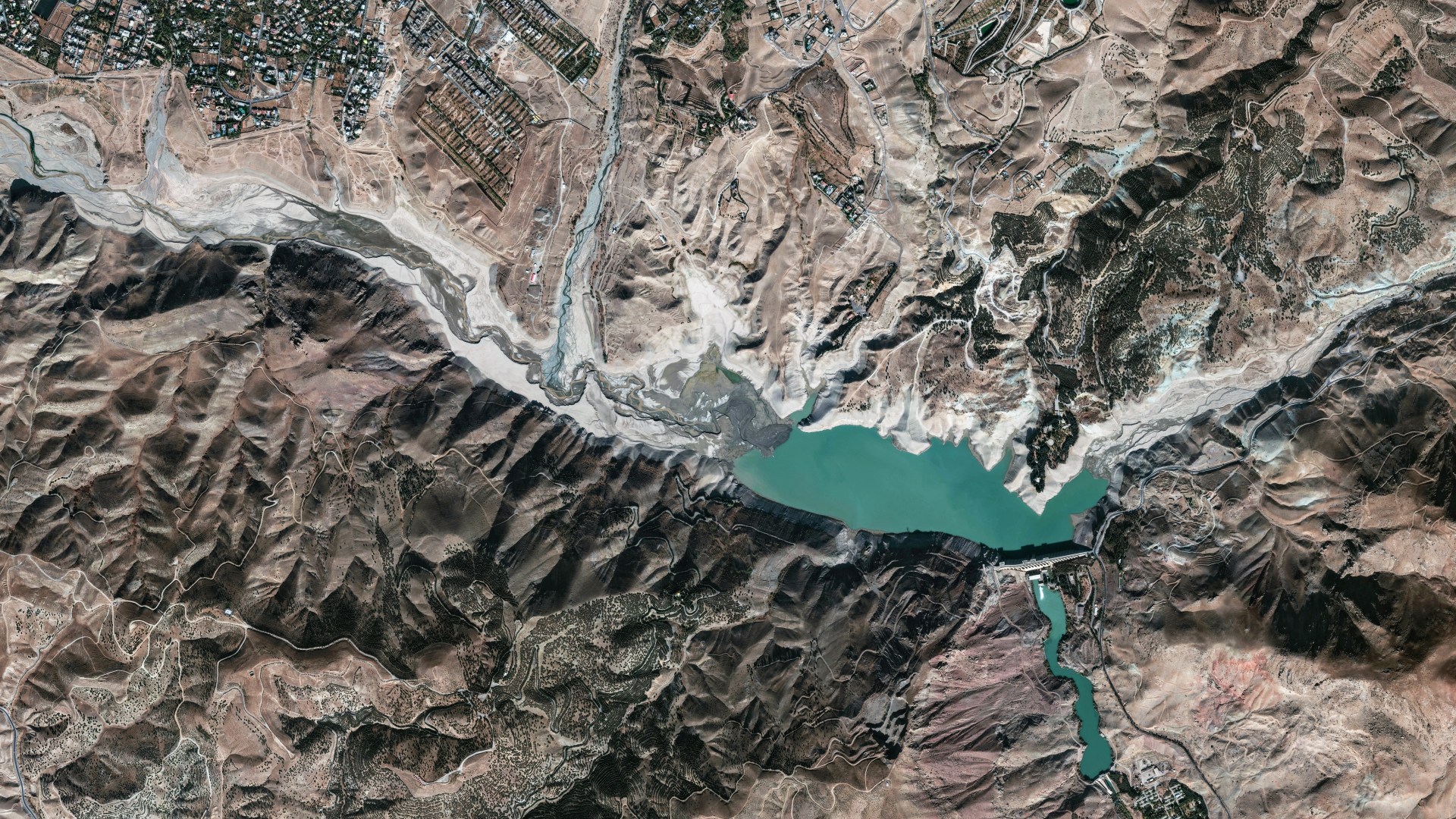
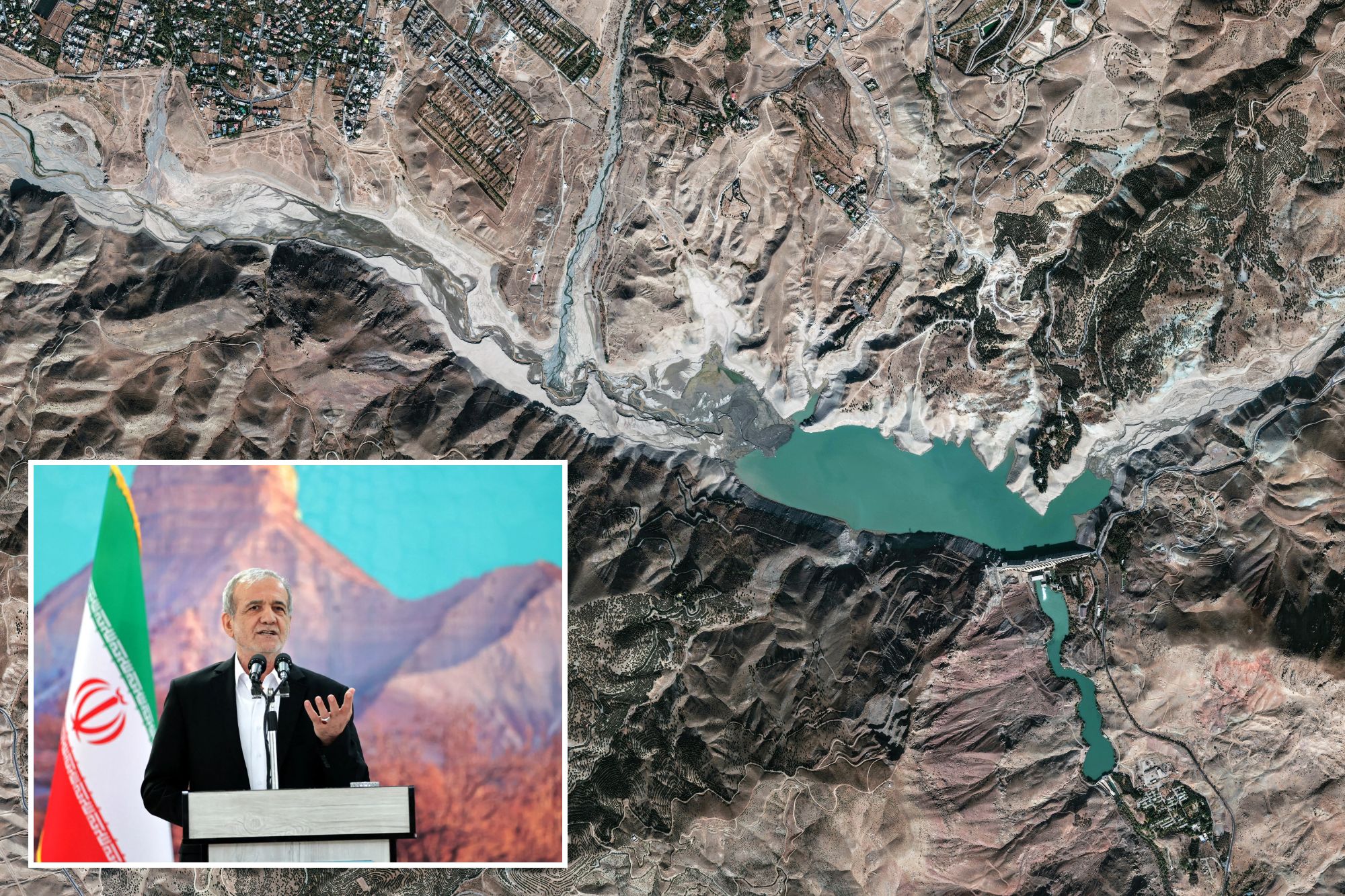
Satellite pictures show how most of the reservoirs that supply Tehran‘s residents are almost empty.
The Karaj, which supplies a quarter of the capital’s drinking water, is just eight per cent full.
It is one of the biggest earthen dams in the world and the largest in Iran and the Middle East, according to IRNA.


Iranian media have in the past weeks reported that precipitation levels have decreased by about 90 per cent this year, compared with the long-term average.
Water levels at reservoirs supplying many provinces have fallen to record lows.
Residents have been holding prayers for rain in different cities over the past several weeks.
President Masoud Pezeshkian warned Tehran may have to be evacuated and urged people to use water sparingly.
Rationing has already begun. Some universities have shut off dormitory showers, and residents in poorer districts say water pressure has dropped to a trickle.
“Some nights the pressure is too low and water just drips from the taps,” said Siamak, a resident of south Tehran.
“We are worried about it and don’t have any idea what to do if Tehran runs out of water.”
Mohsen Ardakani, head of Tehran Province Water and Wastewater Company, told state TV that the capital’s dams are at “historic minimum” levels.
Kaveh Madani, a former deputy head of Iran’s environment department, said the situation is “beyond” a crisis.
“Both the checking account of rain-filled mountain reservoirs, and the savings account of groundwater are exhausted,” he said.
Officials say rapid urban growth, poor planning, and overuse of groundwater have worsened the disaster.
Madani, who once warned that Iran was “water bankrupt,” was accused of espionage and forced into exile after urging reform.
He said the crisis is also very much rooted in politics.
Under Supreme Leader Ayatollah Ali Khamenei’s “resistance economy,” which prioritises self-sufficiency under sanctions, large-scale agricultural reform has been politically impossible.
“The government, instead of providing structural solutions, has effectively shifted crisis management onto the shoulders of the people,” the Tehran daily Jahan-e-Sanat wrote this week.
“Today, the result of those policies is before us: a city that must pray for rain to continue living.”
For now, Tehran is waiting for the weather to decide its fate.
Iranian authorities have launched cloud seeding operations to induce rainfall and resorted to cutting off water supplies periodically to manage consumption.
Last week, Iranian authorities stopped electricity production at Karaj dam due to a marked decrease in the reservoir’s water levels, state media reported.
Amir Mahmoudi, the head of the dam and its power plant said: “Due to the drop in the Karkheh Dam reservoir level, its power plant’s units were removed from the production circuit.
He added that the water was subsequently released from the lower valves of the dam to meet the needs of people living downstream.
He said that the reservoir behind the dam is currently holding about one billion cubic metres of water, adding that “the current water level is 180 meters, which is 40 meters lower than the natural operating level” for electricity production.
Iran, a largely arid country, has for years suffered chronic dry spells and heat waves, which are expected to worsen if there is no rainfall.