With Iran reportedly affirming its desire to return to the negotiating table on its nuclear capabilities, the United States has a rare opportunity. There is a confluence of American and Iranian interests to navigate the nuclear weaponisation issue through a deal, hastened by Israel’s divergent ambition to resolve it by military means. As in the 12-day War, the United States is likely to become entangled in such an outcome; but the United States is in the driver’s seat, and there are ample opportunities for securing American interests without a costly war.
Since the 12-day War’s conclusion, time has taken on different significance. Before the war, Iran retained a nuclear threshold option; it had uranium enriched up to 60 per cent, with 90 per cent required for weaponisation. This gave Iran a deterrent to discourage an American or Israeli attack. If attacked, it could develop a nuclear weapon in weeks. Now, Iran no longer has the “race to the bomb” option. With its highly enriched uranium (HEU) stockpiles destroyed by American bombers, there is not an imminent threat of Iran tipping over from threshold status into a nuclear power. But now the clock is ticking from a different direction — Israel.
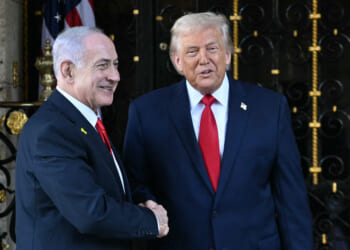
Israel has been systematic in dismantling Iran’s “Axis of Resistance” proxy network since October 7, 2023. Hamas in Gaza, Hezbollah in Lebanon, and Iran’s patchwork of groups in Syria have been severely degraded in the ensuing two years, opening the path for Israel to deliver a knockout blow against Iran. But Washington’s aim was to neutralise Iran’s nuclear program, while Tel Aviv had the more audacious aim of regime change. These objectives have not changed. From Israel’s perspective, a nuclear deal negotiated by President Trump is not just undesirable, but perilous. President Trump is the only figure with the political capital to negotiate with Iran without the deal being ripped up later. A nuclear deal therefore threatens Israel’s maximalist aims. If a deal looks imminent, the Israelis will likely attempt to play a spoiler role. The United States should call their bluff.
Some proponents of a hawkish policy contend that Iran will perennially have a nuclear program that Israelis and Americans must periodically “mow the grass” on. There are myriad problems with this. First, damage assessments are still unclear as to whether the strikes on Iran worked and how much they would delay reconstitution of Iran’s threshold capabilities. We don’t know where Iran’s remaining centrifuges are or how many remain, nor do we know whether the HEU is buried under rubble. Likewise, we have not eliminated the physical means and knowledge base for Iran to reclaim its threshold status. Second, as seen during the 12-day War, mowing the grass is not surgical. There is a whole yard to mow, with air defences scattered throughout the country that must be destroyed first. No sovereign country can remain viable if the entire country is attacked regularly without consequence. Iran’s leadership will therefore face pressure to prevent this by any means, making an Iranian sprint for nuclear weapons more likely, not less.
Israel was only able to conduct strikes against Iran because of American support. Israel required American logistical and intelligence support. Defensively, Israel’s vaunted air defense ecosystem was not alone. American F-35s conducted counter-air operations against Iranian drones, while American THAAD and PATRIOT systems shot down ballistic missiles. Israeli dependence on American aid means the leverage is in Washington. If the United States doesn’t want Israel to disrupt negotiations, then Israel can’t.
America has the opportunity to achieve its aims without another costly foreign misadventure
While costless in American blood, American material expenditures were significant. According to reporting, the United States expended 20 per cent of all THAAD interceptors in its inventory during the 12-day war. These are extremely costly — about $12-15 million per interceptor — and production lines are limited, with only 37 interceptors slated for production in the next fiscal year. With 150 expended, this means the United States exhausted four years’ worth of these interceptors in 12 days. Moreover, Iran extracted lessons from the conflict: volume is our weakness. A reoccurring war with Iran effectively consigns America to mowing down our air defense missile inventory.
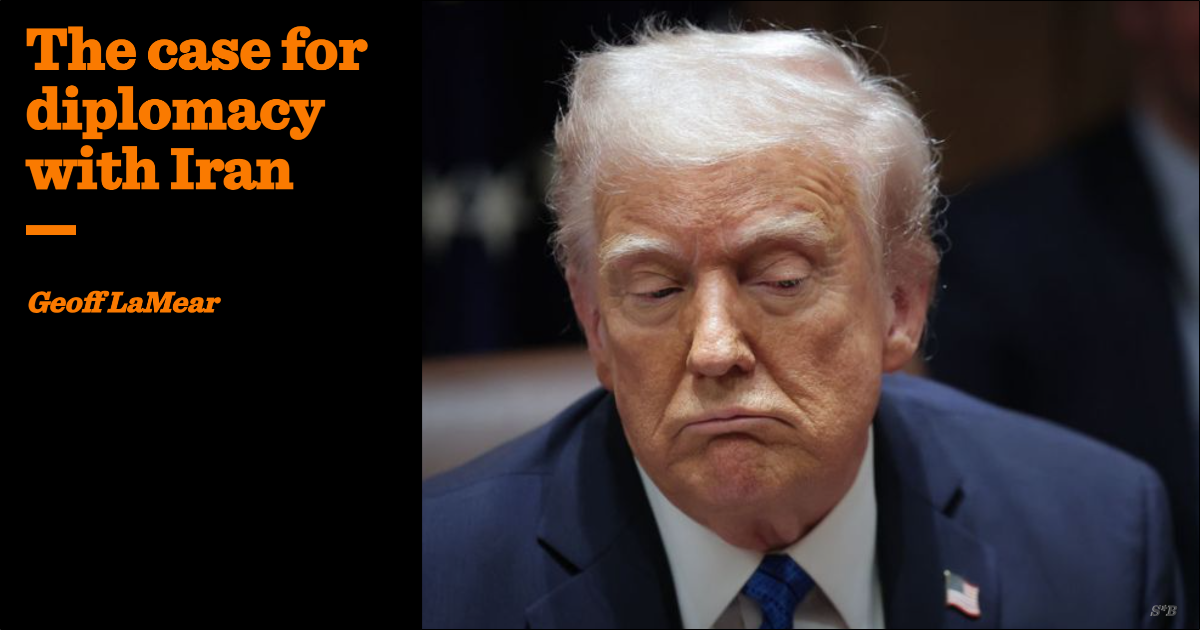
America has the opportunity to achieve its aims without another costly foreign misadventure. The value of a nuclear weapon is deterrence; if Iran lacks an elevated threat perception of American-backed regime change, the incentive to get the bomb decreases. The way to solidify a nuclear-free Iran is through negotiation. President Trump can be to Iran what Nixon was to China. He can reorient foreign policy to America’s advantage and secure American interests and regional stability. This is of particular note now that Qatar and Saudi Arabia have been elevated to major ally status and Israel’s standing in the Arab world is an albatross for advancing US interests.
On one side of the ledger, Washington can expend munitions, exhaust taxpayer money, and risk servicemembers’ lives to support Israel’s hijacking of negotiations. On the other, it can expend the political will to make clear that American interests are distinct. Israeli misdirection of American foreign policy needs periodic mowing — this is not a hostile reproach, but a realistic assessment of American interests and a reckoning of when those interests diverge.