This article is taken from the December-January 2026 issue of The Critic. To get the full magazine why not subscribe? Get five issues for just £25.
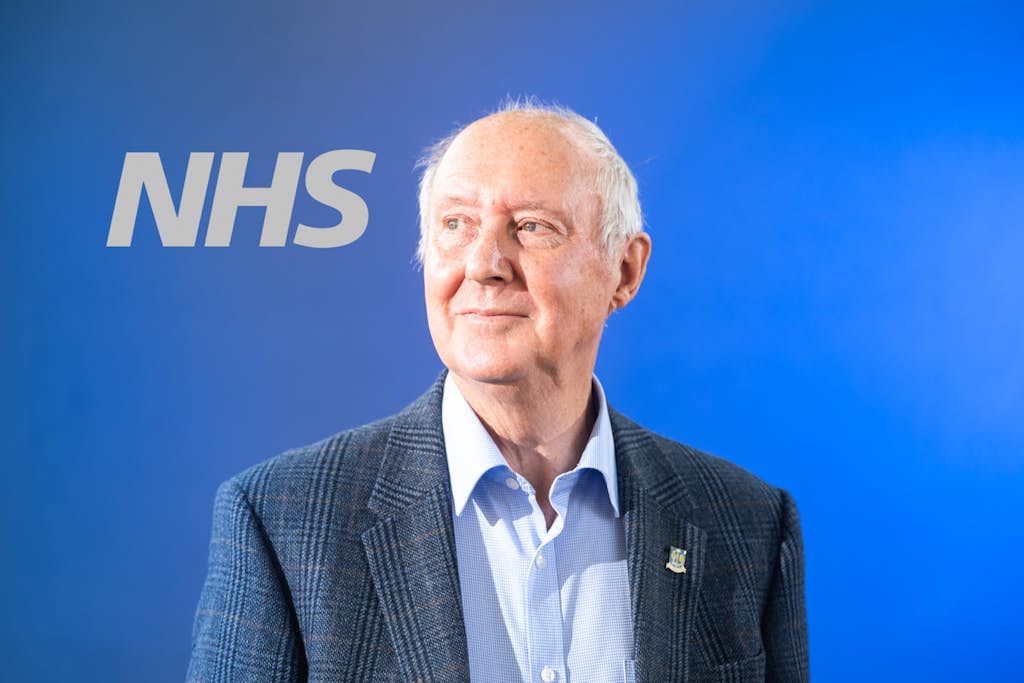
All societies live by myths and perhaps die by them. This came to my mind as I read an obituary of Lord Calman in the British Medical Journal. Calman, who was successively Chief Medical Officer for Scotland and England and Wales, and was largely responsible for humane changes of working conditions for junior doctors, which unfortunately (and, of course, inadvertently) also led to the inhumane treatment of millions of patients ever since.
As to whether the changes were beneficial to anyone’s health, health being a different thing from humanity, is anyone’s guess.
In the BMJ obituary, Calman was quoted as having said, in the service held in Westminster Abbey in 1998 to celebrate the fiftieth anniversary of the NHS, that “There is no clearer mark of a civilised society [than the NHS].”
Can anyone believe that the NHS is the clearest mark possible of a civilised society?
This statement seemed to partake of the rhetorical vices of both suppressio veri and suggestio falsi. Is it really true, can anyone believe, that the NHS is the clearest, or equal clearest, mark possible of a civilised society? If so, alas for civilisation.
Could Lord Calman really have been unaware that the NHS had been stumbling along, staggering even, from crisis to crisis, for decades, and that many countries in Europe had better healthcare systems than the NHS? Calman was one of the envy-of-the-world brigade, long after everyone in Europe knew that the worst or most unpleasant place in Europe to be ill was Britain.
We have paid dearly for the myth of the NHS, which feeds on the equal myth that the alternative to the NHS is for people to die in the street, as they supposedly did in Britain prior to 1948, or as they really did in the Ukrainian famine or the siege of Leningrad. The myth of the NHS had prevented serious thought about how healthcare should be arranged in a modern society: and of course, the longer the avoidance of such thought, the more painful the reformation.