

SHAKA Hislop has revealed he’s battling “aggressive” prostate cancer.
The premier league legend said he’d been diagnosed with the disease – which affects one in eight men – after “insisting” on getting a PSA test during his annual check-up.
PSA tests are blood tests that check for proteins called the prostate-specific antigens.
A high reading can indicate cancer — although it may be caused by a benign enlarged prostate or infection.
It’s possible the NHS will routinely screen men with high risk gene mutations for prostate cancer with PSA tests in the future – but for now, men over 50 can only get this test if they specifically request it from their GP.
Sharing a video to Instagram, Shaka said: “Roughly 18 months ago, I went for my annual physical and insisted on a PSA test, as I always do. This time around though my PSA was elevated.
Read more on prostate cancer

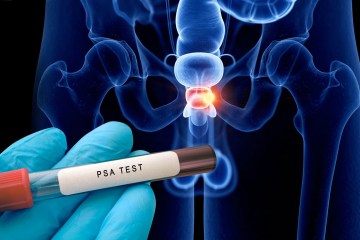
“An MRI and biopsy quickly determined that I had a fairly aggressive prostate cancer.
“A year ago, almost to the day, December 6 to be exact, I had a radical prostatectomy.”
This is surgery to remove the entire prostate – a small, walnut-sized gland in the male reproductive system that helps make semen.
Shaka said he “thought that was it”.
“But then, six months later, my PSA was again on the rise and another scan showed that my prostate cancer had spread to my pelvic bone,” the former goalkeeper revealed.
“I started on medication pretty soon after, and just this morning completed seven-and-a-half weeks of radiation therapy.
“The journey continues.”
Early prostate cancer doesn’t normally cause symptoms.
“That’s why we do everything we can to make every man aware of his risk of getting the disease and empower him to think about his testing options,” Chiara De Biase, from Prostate Cancer UK, says.
“This is so that he has the best chance of getting that all-important earlier diagnosis.
“Because the earlier you find prostate cancer, the easier it is to treat.”
Some symptoms may start to emerge when the cancer growth is big enough to put pressure on the urethra – that tube you pee through.
When this happens, some people may experience the following:
- Needing to urinate more often, especially at night
- Needing to rush to the toilet
- Difficulty in starting to pee
- Weak flow
- Straining and taking a long time while peeing
- Feeling that your bladder hasn’t emptied fully
If the disease has spread to other parts of the body – which is when it’s known as advanced or metastatic prostate cancer – it can cause several other symptoms, including:
Over 63,000 men in the UK are diagnosed with prostate cancer each year, and 12,000 die of it.
The likelihood of having the disease increases from 50 onwards.
Meanwhile, Black men carry double the risk – which is why you’re advised to speak to your GP about prostate cancer over the age of 45.
The threat also doubles if your father or brother has had prostate cancer.
Shaka pleaded with men to get checked for the disease.
He said: “Doctors recommend that all men over the age of 50 get their PSA checked regularly. If you’re of African descent, that age drops to 40.
“If you’re somewhere like the UK or somewhere else where PSA tests aren’t encouraged, you have got to insist.
“Having a history of cancer in the family doesn’t matter. I had genetic testing done and it showed no traits in my family.
“Yet this year would show that, without going into too much detail, even that didn’t exclude everybody in my immediate family.
“The highest rate of prostate cancer mortality is in Caribbean men, so allow me to speak to my community, my people. Please, go get tested. Know your PSA, track its history.
“Prostate cancer is survivable if caught early enough. There are treatments for it. Testing saves lives. It saved mine.”
If you suspect you might have prostate cancer or you are worried about your risk, speak to your GP.
PSA tests aren’t routinely offered on the NHS, but you may be offered one if a doctor thinks you have symptoms that could be prostate cancer.
All men aged 50 or over can ask their GP for a PSA test, even if they do not have symptoms.
If you’re under 50, it’s not as easy to get a PSA test because of GP guidelines.
Prostate Cancer UK recommends you use their online risk-checking tool – which takes 30 seconds and is free – and speak to your GP about getting blood tests if it shows your risk is elevated.
The UK National Screening Committee (UK NSC) recently considered whether to roll out a national prostate cancer screening programme for men.
But it decided against routine testing for a large majority of men, citing the risk of “overdiagnosis” and men suffering side effects from treatment they did not need.
It recommend NHS testing for men with high-risk BRCA gene mutations – about 30,000 men – but not Black men or men with a family history of disease, as campaigners hoped.
Organisations, experts and members of the public will be able to respond to the NSC’s recommendations over the next 11 weeks, before Health Secretary Wes Streeting makes a decision on whether to implement them.
What causes prostate cancer and how can I lower my risk?
Prostate cancer is very common, but its causes are unknown, the NHS says.
Recent research suggests obesity increases your risk of prostate cancer while exercising regularly lowers it.
Prostate Cancer UK says: “There is strong evidence that being overweight increases the risk of being diagnosed with advanced prostate cancer.
“Keeping active and eating a healthy diet can help you stay a healthy weight, and can improve your health in other ways too.
“You can’t change your age, ethnicity or family history, but you can take control of your lifestyle.
“If you would like help making changes, ask your GP or practice nurse if there are any local healthy lifestyle services.”
You can use your body mass index (BMI) as a measure of whether your weight is healthy.
For most adults, a healthy BMI is between 18.5 and 24.9. Any higher means you are likely to be overweight or obese and at increased risk of health issues.
The NHS has a useful tool to calculate your BMI.
One in eight men will get prostate cancer
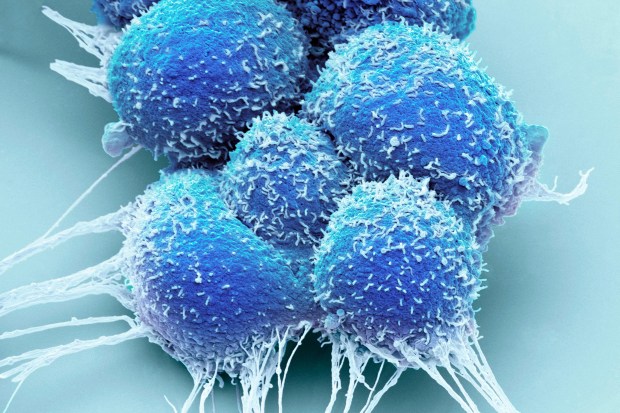
The risk of developing prostate cancer depends on many factors, here are some of the facts about the disease and how many men it affects.
- One in eight men will get prostate cancer in their lifetime
- It is the fourth most common cancer worldwide, and the most common in men
- There are 55,000 new cases every year in the UK, and 1.4million globally
- Around 12,000 people lose their lives to prostate cancer annually in the UK and almost 400,000 around the world
- Prostate cancer accounts for 28 per cent of all new cancer cases in men in the UK, and 14 per cent of all new cancer cases in men and women combined
- Prostate cancer survival has tripled in the last 50 years in the UK
- More than three-quarters (78 per cent) of patients survive for 10 or more years
- About 490,000 men are living with and after prostate cancer in the UK
- It is most common in men aged 75 to 79
- Since the early 1990s, cases have increased by 53 per cent in the UK
- Mortality rates are up 16 per cent since the early 1970s in the UK
- Incidence rates are projected to rise by 15 per cent in the UK between 2023 to 2025 and 2038 to 2040
- Mortality rates are expected to fall five per cent in the UK over the same years
Source: Prostate Cancer UK, World Cancer Research Fund International and Cancer Research UK
“Another way to check if you’re a healthy weight is to measure the size of your waist,” Prostate Cancer UK says.
“Carrying fat around your stomach can raise your risk of, heart disease, diabetes and other health problems.”
To measure your waist, wrap a tape measure around your stomach, half-way between the top of your hips and the bottom of your ribs. Breathe out naturally.
If a man’s waist is 37in (94cm) or higher, you have a higher risk of health problems.
If it’s 40in (102cm) or more, you’re at very high risk and should speak to your GP.
To lose weight, you should focus on being physically active (at least 150 minutes of moderate intensity exercise every week) and eating a balanced diet.
This means plenty of fruit and veg, lean meat and whole grains, and not many high-fat, high-sugar, processed foods.
You can use the Eatwell Guide as a guide for how much of each food group you should eat.
If you stop smoking, your risk should start to drop and after 10 years it could be as low as men who have never smoked
Prostate Cancer UK
But it might be worth decreasing your intake of certain foods and increasing others.
For example, a diet rich in dairy is thought to be unfavourable when it comes to risk level.
“This could be because milk, yoghurt and cheese contain calcium, and having too much can increase your risk,” Prostate Cancer UK says.
“It’s still important to eat some dairy foods every day, but you don’t need more than about 700mg to keep your bones healthy.”
A 200ml glass of milk contains about 250mg, while 120g of low fat yoghurt contains about 180mg.
But eating foods that contain lycopene is said to reduce the risk of prostate cancer developing, Cancer Research UK says.
This includes tomatoes and tomato-based foods, particularly when cooked.
Selenium, found in Brazil nuts, fish, seafood, liver and kidney, is also thought to be somewhat beneficial, as is vitamin E, from foods such as nuts, seeds, whole grains, green leafy vegetables and avocados.
And finally, there is strong evidence that smoking is linked to aggressive prostate cancer.
“If you stop smoking, your risk should start to drop and after 10 years it could be as low as men who have never smoked,” Prostate Cancer UK says.
You can take an online test to reveal your risk of prostate cancer here.