As the White House moves to negotiate an end to the yearslong Ukraine proxy war, establishment members of Congress, elements of the deep state, and their corporate media allies work overtime to sabotage the president’s efforts.
The aggressive establishment campaign seeks to derail a draft settlement, negotiated largely in Washington, that would bar Ukraine from NATO in exchange for U.S. security guarantees, grant Russia de facto control of Crimea and the Donbas, and limit the size of the Ukrainian armed forces, among other measures.
By pursuing a negotiated resolution to the Ukraine war, the Trump administration is doing exactly what it was democratically elected to do. Voters who wanted to continue the proxy war against Russia were told to — and overwhelmingly did — vote for the defeated candidate, Kamala Harris.
But even though President Donald Trump and voters may prefer restraint and diplomacy with nuclear powers like Russia, the Washington political establishment that drives U.S. foreign policy has long made clear that it does not — and that it will take aggressive measures to subvert democratically decided policies in favor of its own. With a peace deal possibly within reach, this remarkably bipartisan campaign has become increasingly overt.
A bipartisan group of lawmakers last week floated the rumor that the Trump administration’s 28-point peace plan was secretly a Russian-authored “wish list.” The claim has since fallen apart — and never made sense in the first place — because, as Steve Bannon has pointed out, the terms of the deal are, if anything, overly favorable to Kiev, not Moscow. Under the proposal, the Ukrainian military would be permitted to build a fighting force of up to 600,000 troops. “That’s unacceptable to the Russians,” says political scientist John Mearsheimer. And while the draft would formally rule out NATO membership for Ukraine, it nonetheless commits the United States to extending security guarantees, a provision that leaves the door open for future rounds of confrontation between Ukraine and Russia.
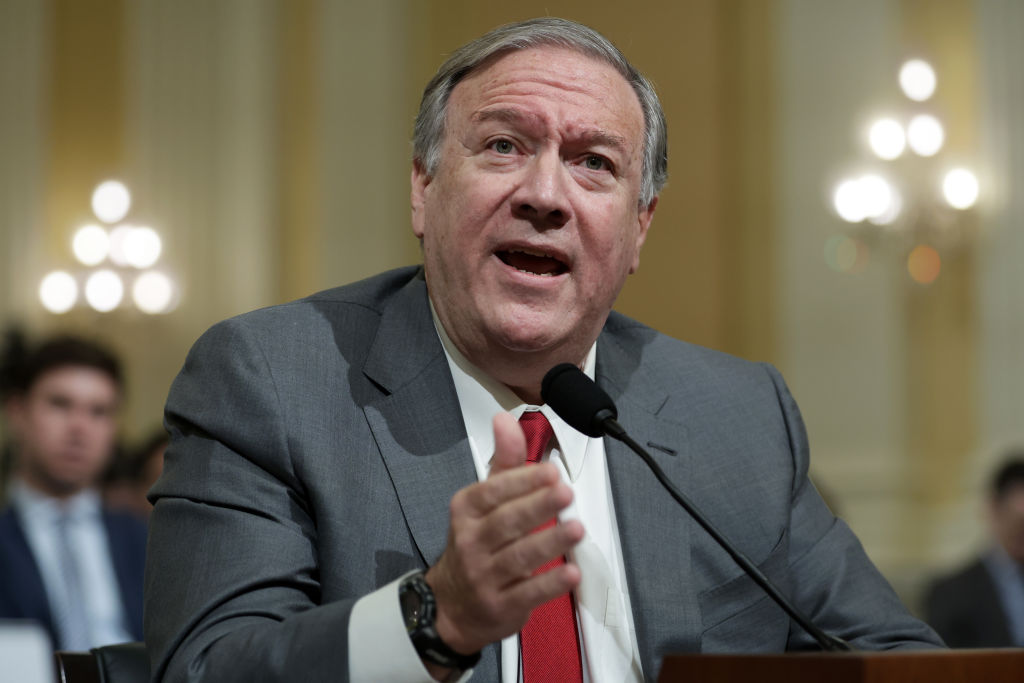
Nonetheless, bipartisan factions continue to argue that Trump’s proposal favors Moscow, branding the pursuit of peace as Neville Chamberlain-style appeasement. Joining them to do it has been former Trump official Mike Pompeo, who argued against the 28-point plan on X, saying that “any so-called peace deal that limits Ukraine’s ability to defend itself would look more like a surrender.”
The former CIA director has in recent weeks emerged as a regular guest on Fox News to sabotage Trump’s peace plan, while simultaneously serving on the advisory board of the Ukrainian defense company FirePoint. The Murdoch-owned news network, which previously partly fired Tucker Carlson over his opposition to the Ukraine war, does not disclose that the former CIA director stands to profit directly from the war he goes on air to promote.
The most brazen and revealing effort to derail the Trump administration’s diplomacy comes from anonymous leakers, likely from the U.S. security state, which, through their servants in corporate media, repeatedly leak classified information in what has so far been a failed attempt to embarrass and undermine the president’s lead negotiator, U.S. Special Envoy Steve Witkoff.
The campaign against Witkoff began when Reuters reported that unnamed “U.S. officials” were “increasingly concerned” by Witkoff’s discussions with Russian diplomats to end the war. Soon after, Bloomberg published a selective leak of a classified call transcript, claiming Witkoff had “advised Russia on how to pitch Ukraine plans to Trump,” framing his diplomacy as improper.
The bipartisan pro-war establishment took their cue and seized on the leak, deploying the same strategy wielded against Trump’s first National Security Adviser Michael Flynn in 2017, when classified surveillance material was leaked to derail détente with Moscow. Now in the case of Witkoff, routine diplomatic back-channeling has again been framed as sinister and improper, in a controversy likely manufactured by unelected elites in northern Virginia to sabotage the foreign policy agenda of the elected president.
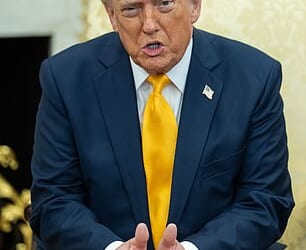
Their efforts fell flat, however, when the next morning, Trump reassured the press that nothing improper had occurred with Witkoff’s diplomacy. “That’s a standard thing…he’s got to sell this to Ukraine. He’s got to sell Ukraine to Russia. That’s what a dealmaker does,” Trump told reporters aboard Air Force One.
Subscribe Today
Get daily emails in your inbox
While negotiations with Russia nonetheless continue to advance, the episode reveals an unsustainable tension for the Trump presidency: the figures actively sabotaging its foreign policy agenda are largely the same Republican establishment actors the president continues to defend and campaign for.
At the same time, Trump has now spent several months campaigning against the chief opponents of Ukraine war spending in the House of Representatives — retiring Congresswoman Marjorie Taylor Greene of Georgia and Congressman Thomas Massie of Kentucky — mainly because they dared to consistently apply America First principles. Yet the actual saboteurs in the GOP work hard to subvert Trump’s foreign policy agenda without any consequences.
With the administration’s disapproval ratings now approaching record highs, there has never been a better moment for President Trump to cut loose those saboteurs from his coalition and rediscover the America First instincts that first carried him to the White House.