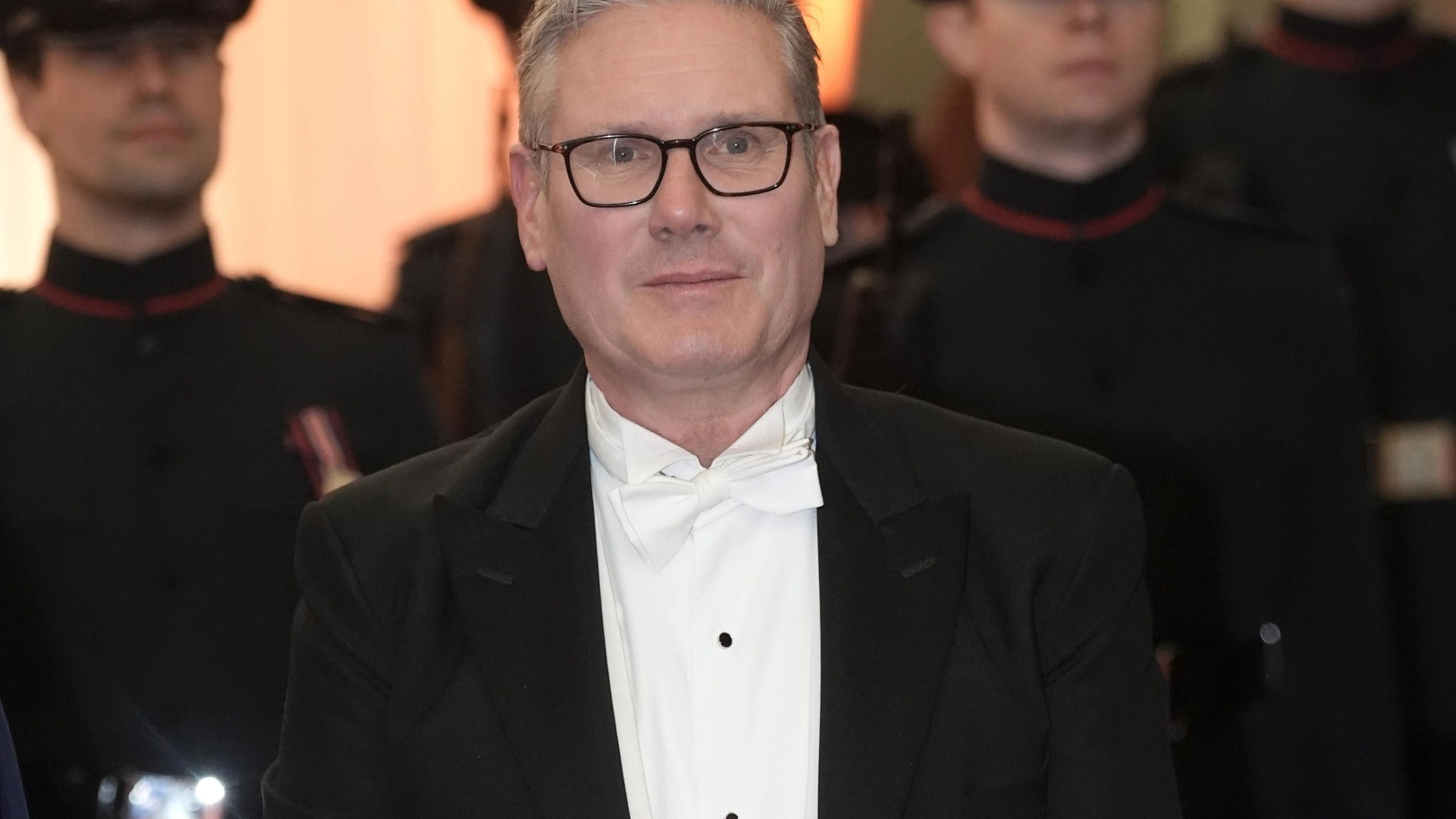
SIR Keir Starmer has warned that China poses “real national security threats to the United Kingdom”, tightening his stance as tensions rise over alleged espionage attempts targeting Westminster.
Speaking at the historic Guildhall, the Prime Minister said Britain could no longer afford years of “blowing hot and cold” on China, urging a clearer and more consistent approach to Beijing.
Sir Keir stressed that China remained a “nation of immense scale, ambition and ingenuity” and a “defining force in technology, trade and global governance”.
But he insisted the UK must face the “reality” of the challenges China presents.
He said: “Our response will not be driven by fear, nor softened by illusion. It will be grounded in strength, clarity and sober realism.”
The Prime Minister slammed the lack of engagement with the world’s second-largest economy as “staggering” and a “dereliction of duty”, arguing Britain must protect itself without cutting off essential cooperation.
“This is not a question of balancing economic and security considerations,” he said.
“We don’t trade off security in one area, for a bit more economic access somewhere else.
“Protecting our security is non-negotiable – our first duty.
“But by taking tough steps to keep us secure, we enable ourselves to cooperate in other areas.”
His comments come after fresh warnings that Chinese operatives have attempted to spy on MPs and peers, and just weeks after a high-profile espionage case collapsed.
Two men, Christopher Cash, 30, and Christopher Berry, 33, had been accused of passing sensitive parliamentary intelligence to China, but the prosecution fell apart when a key government witness refused to label China a national security threat.
Both men denied wrongdoing.
The fallout sparked claims that ministers had sabotaged the case to avoid diplomatic damage, accusations the Government strongly denied.
Sir Keir previously sought to pin the blame for the fiasco on the former Conservative administration, which he said had mishandled century-old legislation on whether China could be deemed an “enemy”.
Despite the tensions, the PM is expected to approve plans for a controversial Chinese “super embassy” at the former Royal Mint site near the Tower of London, with a final decision due on December 10.
He is also preparing for a likely visit to China early next year.
Sir Keir insisted his approach marked “the biggest shift in British foreign policy since Brexit”, championing a return to outward-facing international leadership.
But he hit back at critics who say he spends too much time abroad, accusing them of pushing a “corrosive, inward-looking attitude”.
He warned that retreating from the world would be a “fatal misreading of the moment”.
Sir Keir said: “Moreover, it is a fatal misreading of the moment, ducking the fundamental challenge posed by a chaotic world , a world which is more dangerous and unstable than at any point for a generation, where international events reach directly into our lives, whether we like it or not.”
“In these times, we deliver for Britain by looking outward with renewed purpose and pride, not by shrinking back,” he said.
“In these times, internationalism is patriotism.”
Taking aim at those who advocate leaving the European Convention on Human Rights or Nato, he said they offered “grievance rather than hope” and “a declinist vision of a lesser Britain”.
Since taking office, Sir Keir has touted new partnerships with the US, India and the EU, and has led what he calls a “coalition of the willing” backing Ukraine.
While saying he would “always respect” the Brexit vote as a “fair, democratic expression”, he said the way the UK’s departure from the EU had been “sold and delivered” was “simply wrong”.
“Wild promises were made to the British people and not fulfilled. We are still dealing with the consequences today.”
He defended his Government’s thaw in relations with China, rejecting a “binary choice” between the “golden age” of engagement under David Cameron and the “ice age” under more recent Conservative prime ministers.
Commenting on the speech, Conservative shadow foreign secretary Dame Priti Patel said Sir Keir had become “Beijing’s useful idiot in Britain”.
She accused him of pursuing a “naive one-way street” that puts Britain at risk while giving Beijing “everything it wants”.
But his China strategy, firm on security while open to cooperation, is now set to face its biggest test amid ongoing tensions and scrutiny at home.