Rachel Reeves’ pay-per-mile tax on electric vehicles from 2028 is a baffling move in my view, by a government that’s supposed to be doing all it can to promote greener motoring.
With an outright ban on sales of new petrol and diesel models a mere five years away, private EV registrations accelerating at a limp, and car makers held at ransom to ramp up zero emission vehicle sales, you’d think the Chancellor would be going gung-ho to announce a string of measures that make battery cars more appealing to the masses.
And in some ways, she did.
‘Here’s another £1.3billion towards grants to shave thousands of pounds off the price of a new EV.’ Cheers Rachel!
‘Hey, how about we also increase the expensive car tax threshold so EV buyers can evade a costly premium tax on top of vehicle excise duty?’ Why, that sounds like a pretty logical idea, Chancellor.
‘Do you know what? I’ll chuck another few million quid into speeding up the expansion of public charging infrastructure and review how we can reduce charging costs while I’m at it.’ Okay, now I’m quite tempted to buy one.
But then the bombshell: ‘Oh, but I’ll also tax you for every mile you drive…’ Nah, I’ll stick with my six-year-old petrol car, thanks.
Yet, I’m not surprised by Reeves’ ‘giveth with one hand and taketh with the other’ approach to EVs in the Autumn Budget…
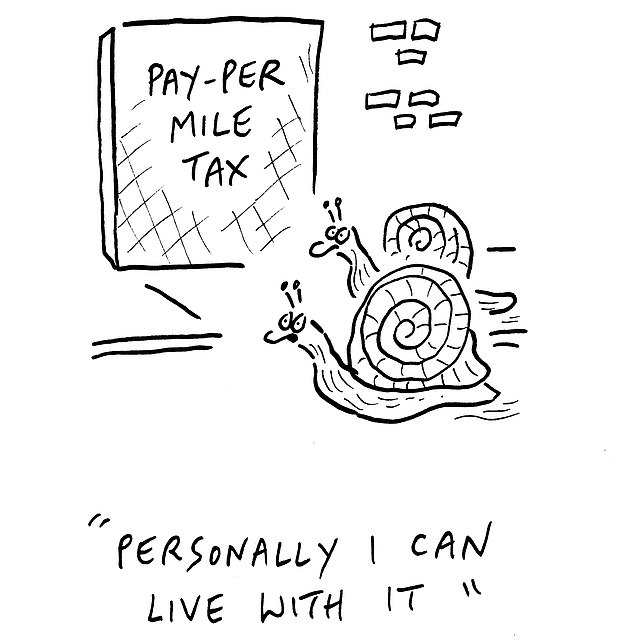
Rachel Reeves’ pay-per-mile tax on electric vehicles from 2028 is a baffling move by a government that’s supposed to be doing all it can to promote greener motoring, says Daily Mail and This is Money motoring editor Rob Hull
The policies announced this week are the latest page in a catalogue of mixed messaging delivered by a Labour Government that seems to think it has us – the nation’s drivers – and the automotive sector by the short and curlies when it comes to navigating the transition to electric vehicles.
This is the same party that fast-tracked the ban on sales of new combustion-engine cars by half a decade at a time when every industry statistic showed that demand for EVs among private buyers was hobbling rather than thriving.
But with the nation’s drivers baulking at high EV prices, a lacking charging network, and concerns over range anxiety, the Prime Minister dug his heels in to pull forward the deadline from 2035 to 2030.
He would, I imagine, defend his actions as a delivery of a Labour manifesto pledge. But as we’ve seen from Sir Keir’s government in recent days, its track record for standing by such promises is far from bulletproof.
When it should be embarking on a campaign of bolstering confidence in a brave new world of battery cars – which many of us simply aren’t yet ready for – ministers have instead given drivers every excuse not to make the switch.
If I had to use a motoring analogy to describe this government’s approach to advocating EV ownership it would be flooring the throttle while cranking on the handbrake at the very same time.
In April, it saw through a Tory policy to tax electric cars for the first time – and at the same annual rate as vehicles with polluting combustion engines, the very motors it is trying to encouraging drivers to kick to the kerb.
More VED-related confusion has hung over the EV market like a black cloud when ministers were warned months ago that imposing the existing Expensive Car Supplement would further stifle electric car demand with seven in ten battery models being hit with the £425-a-year premium tax.
But instead of immediately raising the £40,000 threshold [which, I should add, has been in place since 2017 and hasn’t been increased despite a surge in new car prices], ministers sat on their hands for seven months before the Chancellor eventually confirmed this week that the allowance will increase to £50,000 for EVs from April next year.
That’s great, but those potential EV buyers who instead bought petrol cars between April and now over concerns they’d get stung by the premium tax from next year can’t go back in time and place an order for a zero-emission model now, can they?
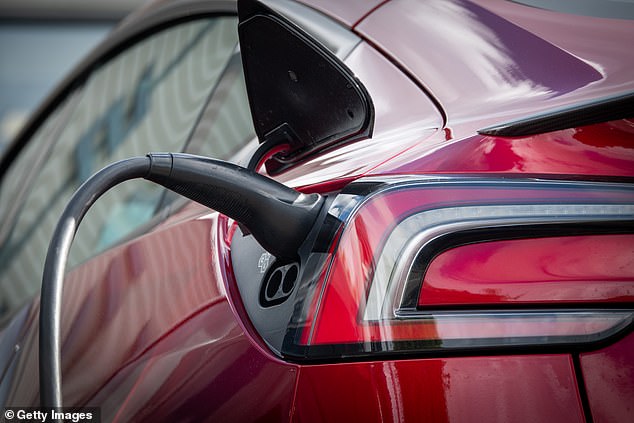
The motor industry has dubbed pay-per-mile tax on EVs as the ‘wrong policy at the wrong time’
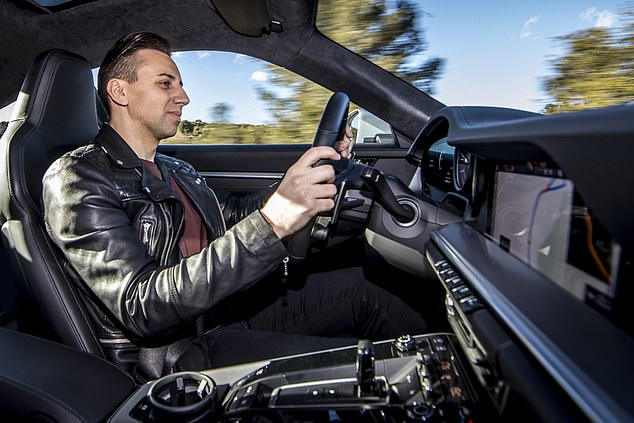
We shouldn’t be surprised by Reeves’ ‘giveth with one hand and taketh with the other’ approach to stimulating EV uptake in the Budget – it’s what the Labour government has been doing for 18 months (pictured, Rob Hull)
Then in the summer, with private EV sales still at a creep, it provided a lifeline in the shape of the Electric Car Grant.
This offer of up to £3,750 discounted from the price of ‘affordable’ new battery models costing less than £37,000 presented the much needed shot in the arm motorists and the automotive sector needed.
But even this seemingly progressive policy has become a muddled mess.
Car makers are being forced to undergo a tedious application process for the grants, which is ringfenced by a tiered ‘sustainability criteria’ system with varying levels of subsidy based on how much green energy is used to make the EVs and their batteries.
As such, only four of the 39 eligible models (10 per cent) have been awarded the full £3,750 grant amount; the remaining 35 have their prices slashed by just £1,500 – a discount most car buyers could negotiate in a showroom with their eyes shut and mouth taped.
Chinese and Korean EV makers – they’ve been ruled out of the scheme entirely.
Shockingly, this cocktail of confusing measures comes against a backdrop of threats to impose fines on car makers who don’t up the number of EVs they sell each year under the Zero Emission Vehicle (ZEV) mandate.
That’s a bit like you telling me I’ll be fined if I can’t beat Usain Bolt in a 100-metre sprint – then strapping a fridge to my back before the starter pistol goes off.
This mandate forced manufacturers to provide £4billion in discounts in 2024 just to encourage drivers to opt for battery cars to hit sales quotes. That’s completely unsustainable if these brands want to survive to see 2030.
It even resulted in some manufacturers reportedly rationing availability of petrol models to artificially inflate their ZEV sales shares.
While the Labour Government celebrated the fact that no manufacturers incurred fines in 2024, various brands have told me that they’ll barely meet the 28 per cent market share target for this year – and have no hope in hell of making it to 33 per cent for 2026.
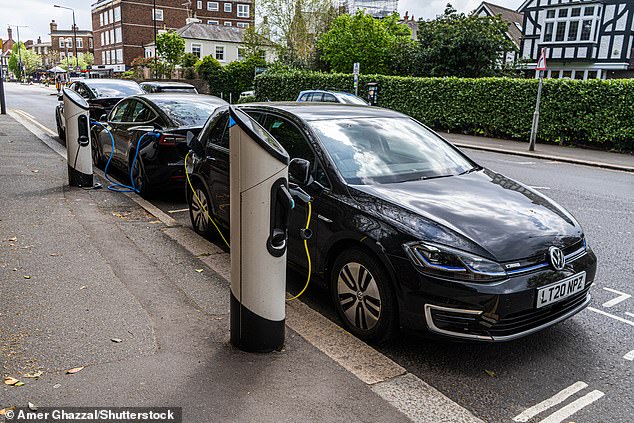
While electric cars are due to be hit with a 3p per mile tax in five years’ time, plug-in hybrid drivers will be stung too with a reduced 1.5p-a-mile charge from April 2028
But if manufacturers thought the landscape couldn’t look any bleaker in Britain, Rachel Reeves this week drops a demand-killing bomb in the shape of road pricing from 2028 that targets only EVs and plug-in hybrid cars.
The Chancellor says pay-per-mile taxation – at a rate of 3p per mile, costing the average EV owner an additional £300 a year – is an act of ‘fairness’.
This is because petrol and diesel drivers already pay towards road maintenance costs via taxes levied on fuels.
And, in its most basic form, filling up with unleaded is a pay-per-mile taxation, with 52.95p from every litre lining the Treasury’s pockets.
But charging an EV is a pay-per-mile tax with VAT (at 20 per cent if using a public charger) levied on every kilowatt.
And for many drivers, it is already more expensive to charge a battery than fill up with petrol and diesel; for motorists without off-street parking, the cost to charge an EV using a public device can already be up to 10 times more expensive than plugging in at home and twice the cost of filling up with petrol.
There too are glaring holes in the eVED pay-per-mile system Ms Reeves plans to impose in less than three years’ time – I’ve outlined the five major flaws in a separate article.
So, surely, with such a regressive scheme on the horizon for EVs you might reasonably think the Chancellor would impose higher levies on polluting petrol and diesel cars to at least make them less attractive…
But no. Instead, Rachel Reeves has extended the ‘temporary’ 5p cut and frozen fuel duty at a maximum of 57.95p until April 2027.
It means fuel duty, a tax that is supposed to increase in-line with RPI inflation annually, will have been untouched for some 16 consecutive years.
With pay-per-mile charges on electric car drivers plotted to rise in-line with CPI inflation once introduced, this isn’t the best precedent for increasing motoring taxations on a specific group of motorists.
But for any petrol or diesel car driver sniggering at EV owners and their misfortune of coughing up a pay-per-mile charge in the not-too-distant future, don’t get too ahead of yourselves.
Because if it proves to be a successful revenue generator for the Exchequer, you can bet your house on road pricing being rolled out for the rest of us too.