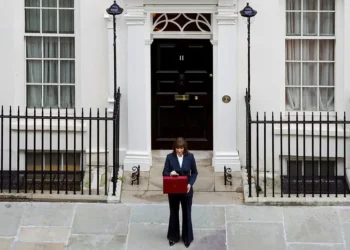
Benefit claimants in a seaside town branded one of the most deprived in Britain say they are ‘absolutely delighted’ with Rachel Reeves‘ benefits Budget giveaway.
Unemployed people in Jaywick, Essex, are celebrating after the Chancellor ceded to Labour MPs’ demands for more benefits handouts – with welfare spending set to rise by an annual £16billion.
The under-fire politician axed the two-child benefit cap as part of a series of measures announced in last Wednesday’s financial statement.
Statistics show two thirds of Jaywick’s working age population are economically inactive.
That includes those who are unemployed, not seeking work, students or off work due to sickness and contrasts with a UK-wide average of 39 per cent.
Homes in Jaywick are valued at an average £175,636 by estate agency Rightmove, less than two thirds of the national average.
And the town is in the ten worst ranked neighbourhoods in England across seven indications of deprivation, including employment, income, health, crime, access to housing and environment.
Jason Fairbrother, 45, has been out of work for ten years and said he believed ‘not enough’ was being done to support the unemployed.
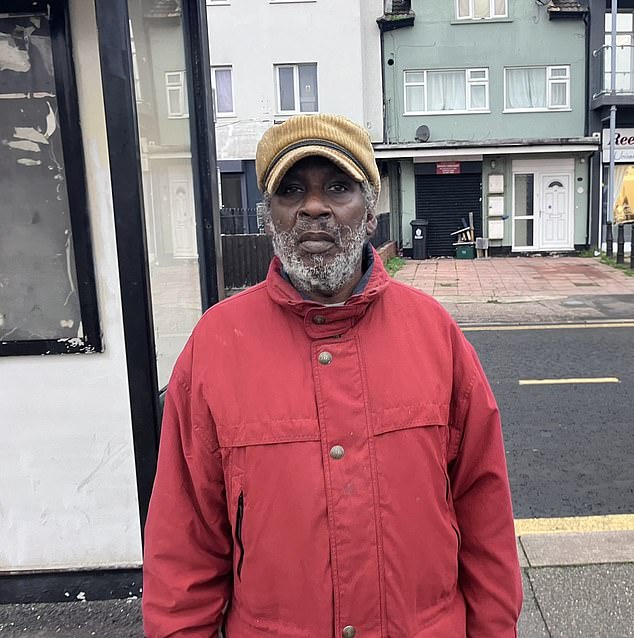
Shakka Phipps, 62, lives in the Essex town of Jaywick but says he ‘stays away’ if he can – he has said politicians need to put more money into the area
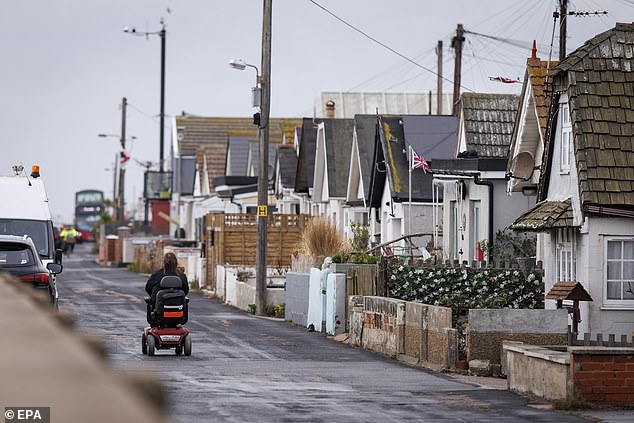
Two thirds of Jaywick’s working age population are economically inactive, which includes people who are unemployed, not seeking work, students or people off work due to sickness
He is on Universal Credit and Job Seeker’s Allowance and receives housing benefit, while he also is allowed free medical prescriptions.
He said: ‘Jaywick is forgotten. People don’t care about us. Hopefully this will help.
‘If it helps us, which it will, then I’m absolutely delighted. We’re just a part of the country people look down on – we’re not looked after.
‘Nobody helps us – that’s wrong. I would rather work but there’s no jobs here.
‘That’s wrong – nobody tries to create jobs around here, so how are we supposed to get any?’
Shakka Phipps, 62, lives in the town but says he ‘stays away’ at all costs.
Mr Phipps, who works in a charity shop in Clacton, said: ‘I don’t like Jaywick.
‘There’s no money, no investment. They need to put more money into the town. There’s always police, for trouble and fighting. There’s not much hope.’
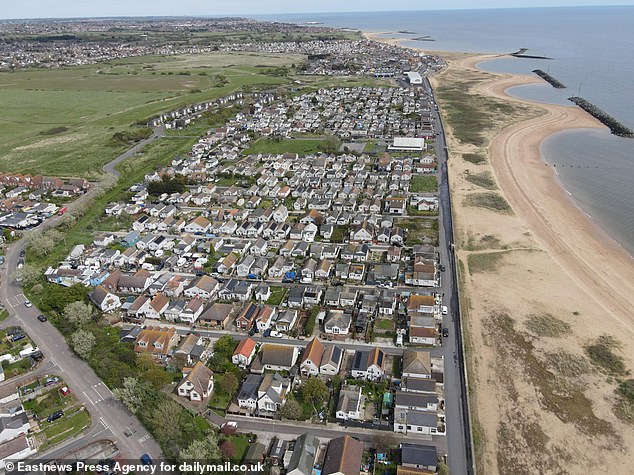
An aerial shot of the seaside town of Jaywick, Essex which is one of the most deprived towns in the UK
Another resident, who did not want to give his name, said he had been unemployed for ten years and thought politicians were to blame.
The man, who is on Universal Credit, described the new welfare package put forward by Ms Reeves as ‘excellent’.
He said: ‘I really think more needs to be done to support us. There’s no jobs. I used to be a labourer on a building site but nothing has been built here properly in years – there’s no job opportunities.
‘I’ve got health problems as well so it’s hard. I’m entitled to claim benefits, so I do. It’s easy for people to have a go, but they don’t live here – I do.’
Shopkeeper Patricia Dennis, 45, who works in a corner shop in Jaywick, said the number of unemployed people in the town ‘staggered’ her.
She said: ‘I’ve lived in the town all my life, I’ve always worked but I know that’s not been the case for everyone.
‘People are really happy with this Budget. A lot of mums live here and I think it means they can get more.
‘Most mums have three or four children – they’re always in here a lot. It staggers me how many there are. It’s shocking – it annoys me, to be honest.’
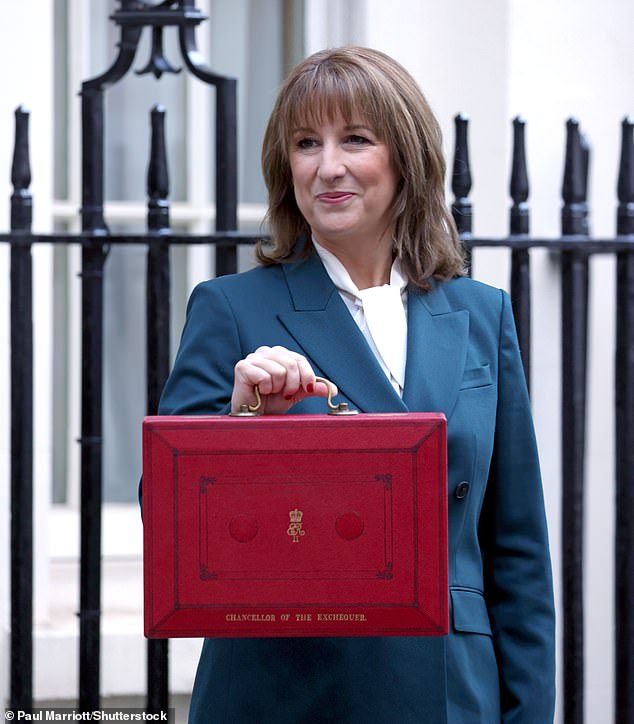
The bleak figures undermine Labour hopes that Ms Reeves (pictured) and Keir Starmer might be able to kick-start a revival after a torrid first 16 months in power
Alison Dilks, 32, believes she will be £900 per year better off from the two-child benefit scheme being scrapped.
She said: ‘I’m really pleased. I’m a mum trying my best.
‘I’d love to work, but I’ve got three children. This is really good news.’
In contrast, a new poll has shown a majority of working people across Britain giving Ms Reeves’ Budget a thumbs-down.
YouGov research suggested that abolishing the two-child benefit cap, freezing tax thresholds and curbing how much can be put in cash ISAs were especially unpopular.
Only 11 per cent of those pollled believe Ms Reeves is doing a good job, with 59 per cent saying she is performing badly.
Ms Reeves and Prime Minister Sir Keir Starmer have both denied breaking the Labour manifesto’s tax promises/
The Treasury’s OBR watchdog concluded that none of the Budget’s measures would make a significant difference to economic growth, which has been stalling despite apparently being Sir Keir’s top priority.
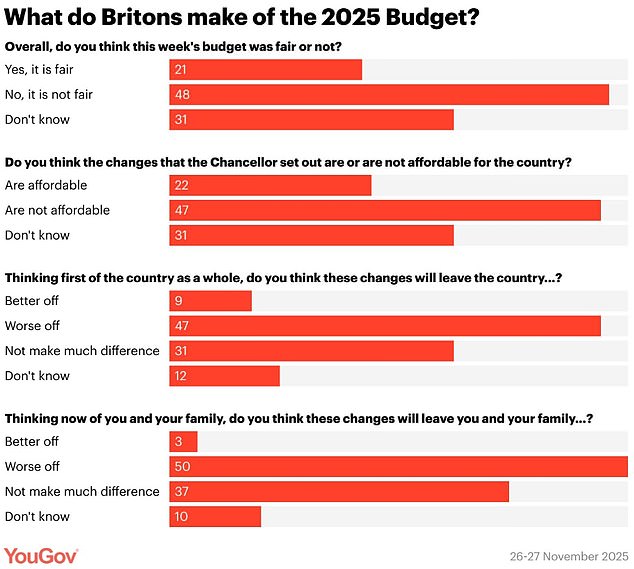
The Chancellor’s package was widely regarded as unfair and unaffordable, according to a poll
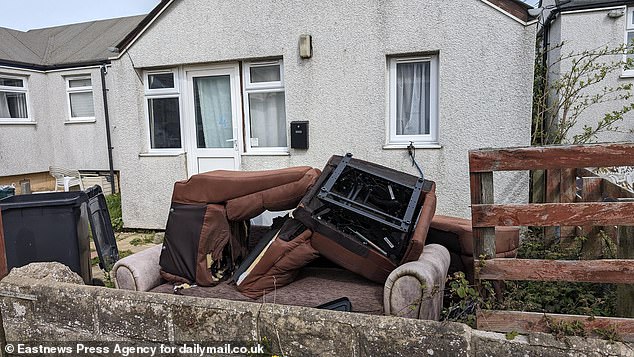
Jaywick was hsa beenranked in the top ten most deprived town in England by the Office for National Statistics using ‘indices of multiple deprivation’ (IMD) to determine their scores
The YouGov polling, carried out last Wednesday and Thursday, found 21 per cent thought the Budget was fair overall, while 48 per cent said it was unfair.
It was seen as affordable by 22 per cent, and unaffordable by 47 per cent.
Just nine per cent viewed it as likely to make the country better off, and 50 per cent said it would make their own family worse off.
Two thirds expected the UK’s economic situation to get worse over the next year, and 56 per cent said the same about their personal circumstances.
Scrapping the two-child benefits cap was seen negatively by a margin of 56 per cent to 31 per cent.
The same proportion opposed extending the ‘stealth raid’ freeze on tax thresholds, with only 26 per cent in favour.
Half were against slashing ‘salary sacrifice’ reliefs for private sector workers paying into pensions – a measure supported by just 21 per cent.
Cutting the annual limit for cash ISAs from £20,000 to £12,000 was found to be the least popular, with 16 per cent in favour and 62 per cent against.
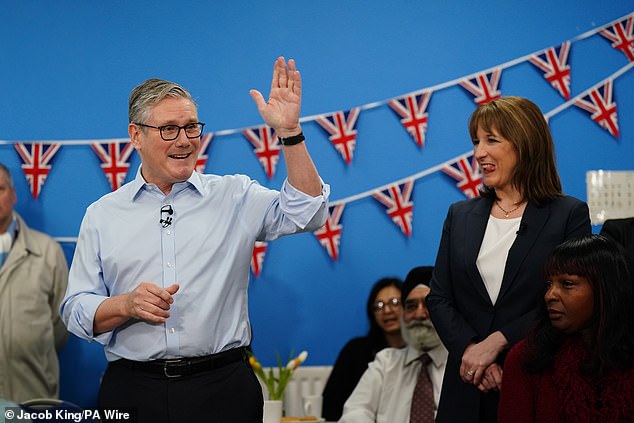
Chancellor Rachel Reeves is seen standing next to Prime Minister Sir Keir Starmer at the Benn Partnership Centre, a community centre in Rugby, Warwickshire, on November 27 2025
Yet there was strong support for gambling taxes, freezing most rail fares, and the ‘mansion tax’ on homes worth more than £2million.
The £30billion tax raid unveiled on Wednesday included forecast Treasury revenues of £12.7billion from extending the tax threshold freeze for another three years.
About a quarter of the working population will be paying higher or top rate tax by then, up from 15 per cent when it was imposed in 2021.
The higher rate threshold would have been £70,370 by 2030 instead of £50,270 had it risen in line with inflation.
The tax burden is due to reach a new peak as a proportion of GDP in records that go back more than 300 years.
The Office for Budget Responsibility said economic growth under Labour would be even lower than forecast last year – and warned none of the 88 measures unveiled by Ms Reeves would have a ‘material impact’ on boosting GDP.
The decision to spend £3billion a year axing the two-child cap was cheered by Labour MPs – but it will involve the taxpayer funding handouts worth thousands of pounds a year each to Britain’s biggest jobless families.
Salary sacrifice for pensions schemes will be limited to £2,000 a year in a £4.7billion raid.
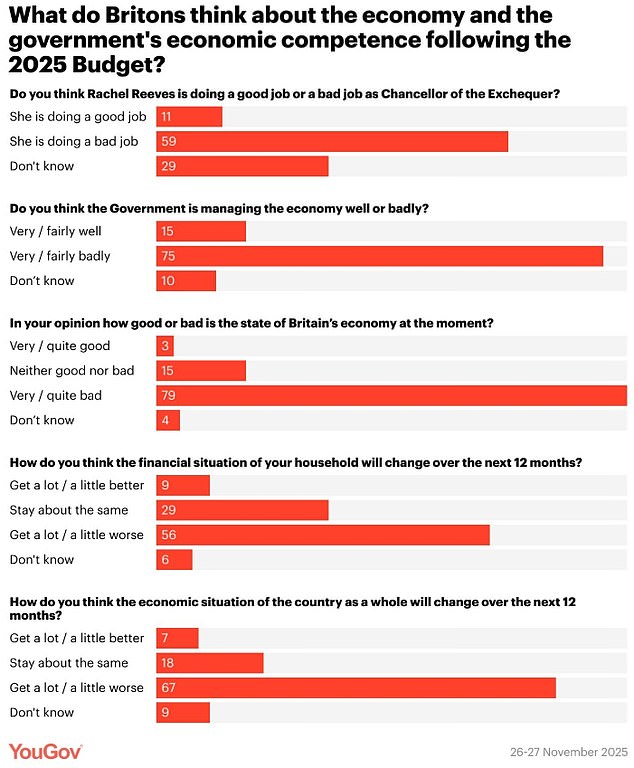
Just 11 per cent believe Ms Reeves is doing a good job in the aftermath of the long-awaited fiscal statement – with 59 per cent saying she is performing badly
There have been mixed responses to the Budget from people living in so-called ‘Benefits Street’ in Birmingham, setting for a 2014 Channel 4 series.
The show followed the lives of benefit claimants in James Turner Street, making a living via a combination of taxpayer handouts and, in some cases, petty theft.
In her response to Ms Reeves’ plan to scrap the two-child benefit cap while raising taxes on working people, Conservatives leader Kemi Badenoch branded Wednesday’s announcement a ‘Benefits Street Budget’.
James Turner Street resident and mother-of-four Elise, not her real name, told the Daily Mail: ‘I don’t think it’s fair for working people like myself who are having to pay more tax while all these foreign nationals get more money for popping out kids like there’s f***ing no tomorrow.
‘It’s just bloody awful. It’s disgraceful. Half of this street, there are working people, but the other half, no.
‘There’s a crowd over there and I think there’s about 12 or 13 of them in one house. And the woman is just popping out kids. It’s disgusting that we have to pay to keep them going.’
Elise, who works as a housekeeper at a care home for people with dementia, added: ‘I’ve got no choice. If I want money, then I have to go to work. Sometimes, when I come home, I can’t even stand up because I’m that tired.’
But not all locals agree that this is an immigration issue.
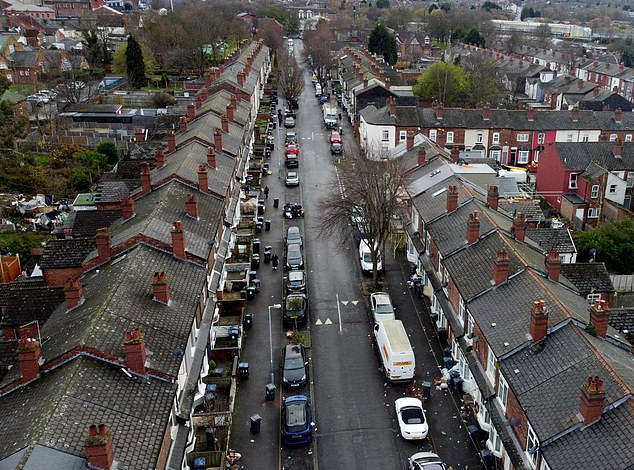
Channel 4 first arrived on James Turner Street, dubbing it Benefits Street, for a 2014 series
Irene Renzeta, 48, a Sudanese carer who has been here for five years, told the Daily Mail: ‘When I first came to this area I was very shocked because it’s very dirty and a lot of people don’t want to work, especially white British people.’
But she also concluded: ‘I don’t think the government increasing benefits is a good thing because they should be encouraging people to work. There are too many people who don’t want to make anything of their lives.’
Software engineer Matthew Stennett, 38, who has lived on James Turner Street his whole life and appeared in the background of several scenes in the Channel 4 series, said he was furious about the Chancellor’s plans to lift the two-child benefit cap.
He said: ‘It’s a bad thing, because you’ve got some people who don’t want to work and all they want to do is just sit on benefits for life and push out loads of kids.
‘They’re getting free money while the rest of us break our backs. Some people have got nine or ten kids now and they’re going to get loads of money for them.
‘This street used to be nice and then it just went downhill. When the show came out, I was working so it didn’t bother me. There were people here complaining and I was like, “You’re not working, you’re just sitting here complaining – go get a job!”‘
But Ikram Hassan, 34, who is originally from Somalia and first moved her family to Sweden and then in 2008 came to the UK, where she lives on state handouts, said: ‘The Budget is good news.
‘I’m pleased to hear that it will help a lot of families on low incomes. They can use it for their expenses for the children, all their needs. It helps them survive during the week.’
Labour were this month accused of ‘overseeing a mass-opt out’ after ditching requirements for all jobless benefits claimants to look for work full time.
Instead of making the unemployed spend 35 hours a week seeking work the Government is testing simply ‘encouraging’ them to ‘take all reasonable steps’ to get a job.
The Department for Work and Pensions confirmed it was trialling the change to give benefits claimants ‘more choice and empowerment on their journey into work’.
Among other reforms are new Jobcentres with ‘areas to support a trauma-informed approach’ and a ‘calming biophilic design’, while security guards will wear uniforms with ‘a more approachable style’.
The Tories have criticised the move and said Labour was now ‘overseeing a mass opt-out’ of work.
It comes amid a spiralling worklessness crisis in Britain – with more than eight million people now claiming Universal Credit and four million getting benefits with no requirement to seek work.