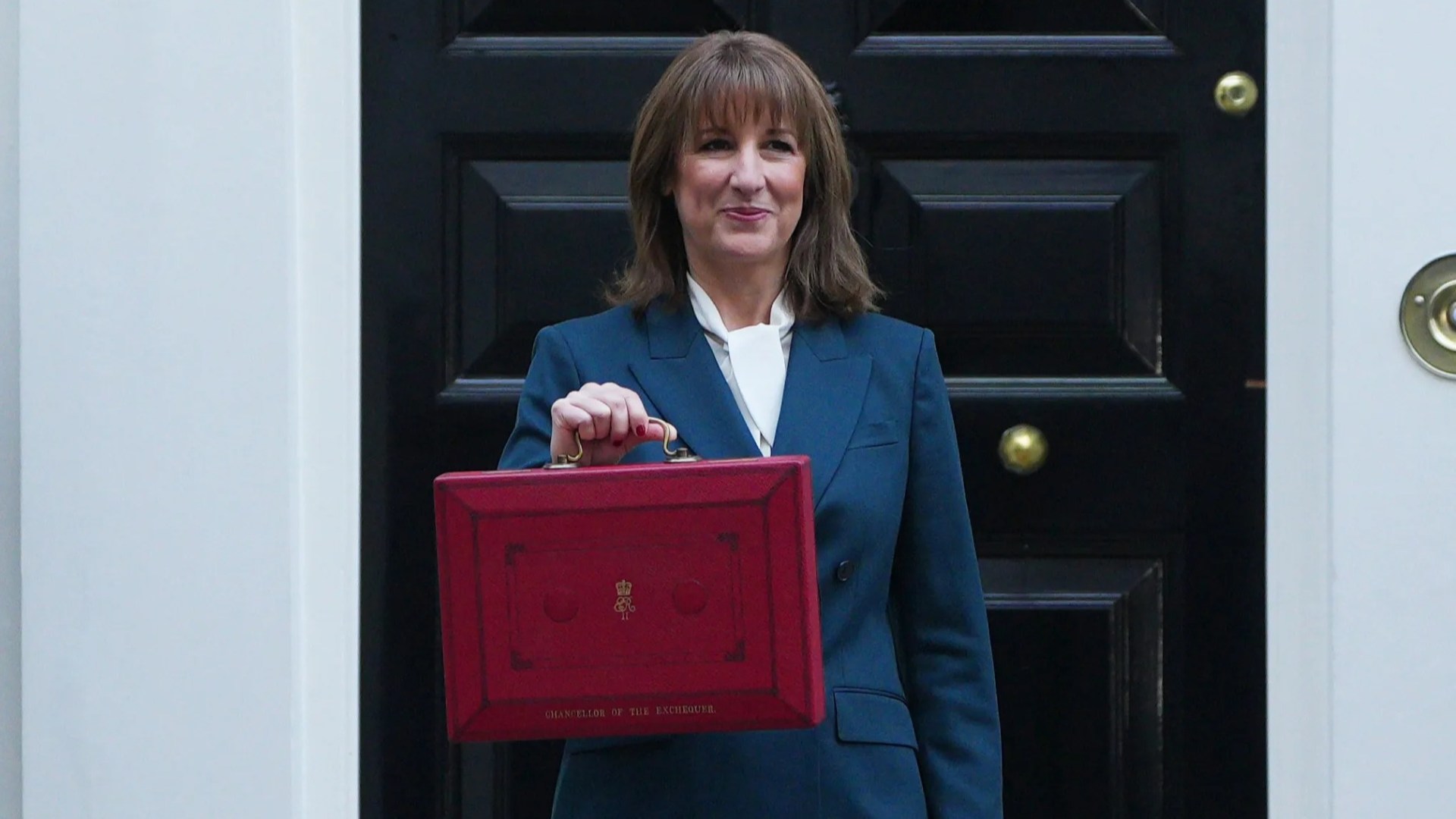
CHANCELLOR Rachel Reeves may have hit us with £26billion of tax rises, but you can fight back by shielding your cash.
As a result of her Budget this week, average households face being £850 worse off in 2029-30 compared to this year, the Joseph Rowntree Foundation warns.
Lucy Andrews, Deputy Consumer Editor, presents her eight-step action plan to stop your pockets being picked . . .
1. Don’t miss out on help with the council tax
MILLIONS could see their council tax bill rise by five per cent next year, the Office for Budget Responsibility predicts.
The average bill for a homeowner with a Band D property is currently £2,280 a year. That would rise to £2,394.
Making the most of the council tax support on offer can offset some of the hike.


If you are on a low income and claim certain benefits, you may be able to get your entire bill wiped – but this will vary depending on your council’s policy, your personal circumstances and household income.
You don’t need to pay council tax if you get the Guarantee Credit element of Pension Credit.
If you live alone, you can use the single person discount, which will knock 25 per cent off your council tax bill.
2. Act now before the 2029 salary-sacrifice cap hits
THE Chancellor took a swipe at millions of workers’ retirement savings by capping the salary sacrifice scheme.
Salary sacrifice allows workers to boost their pension by officially giving up part of their earnings.
In exchange, the employer pays the sacrificed amount into their pension – and that money is not subject to National Insurance.
But from April 2029, the amount that can go into pensions this way and be exempt from National Insurance will be capped at £2,000.
A 35-year-old saver on a £40,000 salary who has £30,000 in their pot and saves for another 30 years would see the value of their final pot slashed by £20,101, according to investment platform AJ Bell.
Sarah Coles, from investment platform Hargreaves Lansdown said: “Salary sacrifice doesn’t change until 2029, so you should make the most of it now while the old rules apply,”
Ask your employer if they offer a salary sacrifice scheme and how to sign up. Then work out how much you can afford to pay in.
If you are struggling to stash away more money into your pension, why not pay in your Christmas bonus, if you get one? Or, if you get a pay rise, put the extra amount into your pension.
3. Energy-bill help can fight 2026 rise in green levies
IN some respite for households, Rachel Reeves announced energy bills will be slashed by £150.
She removed various green levies to make bills cheaper, but they are still expected to rise next year and could wipe out these savings.
Make sure you’re making the most of energy bill help schemes to ease the strain.
If you’re on benefits, you may be entitled to the Warm Home Discount, which offers households payments of £150 towards their energy costs.
Struggling families may also be able to get energy support via the Government’s Household Support Fund.
Eligibility criteria vary based on where you live but help is typically offered to those on a low income.
4. Pull £1 from your pension pot to trigger tax code
PENSIONERS claiming the state pension face being in the unusual position of handing a slice of it back to the taxman, thanks to frozen tax thresholds.
But in an interview with financial stalwart Martin Lewis earlier this week, Ms Reeves said those solely claiming the state pension will be saved from this tax raid.
The triple lock guarantee ensures that the state pension rises each April based on whichever is highest out of September inflation, average earnings growth between May and July, or 2.5 per cent, and it was set to increase payments to £12,862 a year in the 2027-28 tax year.
That’s £292 over the £12,570 personal allowance (the amount you can earn before paying tax).
This would have seen millions of pensioners pay income tax on the benefit for the first time ever.
But the Chancellor told Mr Lewis on ITV following the Budget that pensioners receiving only the state pension “won’t have to pay the tax”.
However, it’s likely you will have to pay tax if you have other sources of income aside from the state pension, such as a private pension.
To avoid the tax trap, spread out your tax-free pension withdrawals.
You can take 25 per cent out tax-free, but taking out a portion of this amount each year can help to keep you under a higher tax bracket.
But first, withdraw £1 from your pension pot. This triggers HMRC to issue the correct tax code – otherwise you may be charged a higher rate of tax which can take months to reclaim.
5. In work? Play your codes right for potential refunds
PICK the taxman’s pocket for once by checking if you can get a tax refund.
The first step is to check your payslip for any errors – you may have been overpaying without realising.
Most people are on the 1257L tax code. If you have changed jobs recently, you may see codes such as C0T, W1, M1 or X, which are emergency tax codes.
These mean you are paying more than you should.
Data from Rift Refunds shows that in 2023, the average tax refund payout was £1,592.
Check if you can claim back money on work-related expenses, too.
You can get employee tax relief on job-related expenses such as uniforms, tools and professional fees.
6. Use legal loopholes to reduce your tax bill
THE biggest hammer blow from the Budget was a freeze on thresholds for income tax and National Insurance staying in place until April 2031.
This has been dubbed a “stealth tax” because as your wage goes up, more of it will fall outside the tax-free allowance – and you may move into a higher tax band, too.
Someone on a £27,500 salary will be £300.21 worse off in 2028/29, when the three-year freeze kicks in and £483.64 worse off in 2030/31 when it ends, according to data from accountants, Blick Rothenberg.
Check how the frozen thresholds will cost YOU by using our calculator at thesun.co.uk/taxfreeze calculator.
One answer is to explore legal loopholes to reduce your tax bill, including the marriage allowance.
This lets the lower-earning spouse transfer £1,260 of their tax-free personal allowance to the other. This would save a couple £252 a year in tax.
If you’ve got children, you can claim £2,000 from the Government through the tax-free childcare scheme.
You can pay up to £500 into a tax-free childcare account every three months. And for every £8 you pay in, the Government will add £2.
7. Make the most of the Help To Save scheme
THERE are procedures in place to help if you are on a low income.
The Help To Save scheme for those on Universal Credit, which was due to end in 2027, has been made permanent.
Described as “unbeatable” by Money Saving Expert Martin Lewis, the scheme allows savers to put away up to £2,400 over four years, which is then bolstered by £1,200 from the Government.
It aims to help families build up savings for emergencies like a boiler replacement.
The Government gives you 50p for every £1 you save into your account over four years.
8. If you have money to save, then get an ISA
GOT some extra cash? Put it in a tax-free Isa.
Chris Etherington, from accountancy firm RSM, said: “A key step is making sure you are fully using all of your ISA allowances.”
At the moment, you can put up to £20,000 a year in an ISA. But from 2027, you will only be able to save £12,000 into a cash ISA if you are under 65.
ISAs are a great way of shielding your cash from the taxman, considering that you will have to pay more tax on interest you make from your savings from April 2027.
Currently, basic-rate taxpayers get a £1,000 tax-free interest earnings allowance every year, while higher-rate taxpayers get £500.
From April 2026, any interest earned over these allowances will be taxed at 22 per cent for basic-rate taxpayers, up from the current 20 per cent.
INN FOR A £50M BILL
PREMIER INN’S owner has warned it will face up to £50million in extra costs because of the Budget.
Hotel giant Whitbread said it was “extremely disappointed” to be facing a “large increase” in business rates.
Chancellor Rachel Reeves announced changes to how the tax affecting commercial properties will be calculated.
The Treasury published new rateable values which will influence how much firms pay.
Whitbread said many of its hotels have had “significant increases” which will come into effect from April.
It said it is “still finalising the precise details” but expects a hit of between £40million and £50million in its 2026/27 financial year.
Its performance for the current financial year has not been affected, it said, and is on track with previous guidance.
Shares in the firm slid more than 11 per cent yesterday.
Whitbread boss Dominic Paul said: “We’re extremely disappointed with the outcome of this week’s UK Budget which will have a significant impact on our business and the wider hospitality industry.
“However, we have a strong track record of responding to inflationary headwinds by adapting our business and over time we are well placed to mitigate their impact through careful management of our cost base and the delivery of significant cost efficiencies.
“To help mitigate the estimated impact of these changes, we will deliver accelerated cost efficiencies of £60million in full-year 2026/27.”
COOK CHRISTMAS DINNER FOR FREE
EDF is offering customers eight hours of free electricity on Christmas Day.
The offer is part of the Sunday Saver challenge, which allows customers to earn up to 16 hours of free electricity.
In December you will automatically get eight hours of free electricity to use on Christmas Day between 8am and 4pm.
Customers who sign up for the Sunday Saver challenge can also get up to 72 hours of free electricity next month.
EDF’s Sunday Saver challenge encourages households to use less energy each month.
If you reduce your usage between the peak times of 4pm to 7pm from Monday to Friday, you can earn up to 16 hours of free electricity the following Sunday.
The exact amount of depends on how much you reduce your use.
If you manage to cut your consumption in half, you get the full 16 free hours.
To be eligible you need to have a smart meter which gives half-hourly readings.
You also need to sign up for the challenge on the EDF website.
NUKE COSTS
THE Hinkley Point C nuclear power station will add £1billion a year to UK energy bills when it is turned on, figures have revealed.
Treasury and Office for Budget Responsibility documents show cash will go to operator EDF to pay running costs for the facility in Somerset, which is expected to be switched on in 2030.
Meanwhile, from January next year, energy bills will be hit by a separate levy to subsidise building of a nuclear power station at Sizewell in Suffolk.