A burst in the AI ‘bubble’ on the stock market could deliver a £26billion borrowing shock and hobble the Chancellor’s hopes of balancing the books, experts warned on Wednesday.
It was the first time the Office for Budget Responsibility has outlined how public finances could be affected if the rally in tech stocks sparked by the boom in artificial intelligence crashes to a halt.
And it revealed a reversal in the fevered demand for shares in companies such as chip maker Nvidia could have a direct impact on Rachel Reeves‘ ability to meet her fiscal targets. It would potentially force the Government to raise taxes or cut spending – showing how volatile Wall Street trading patterns might hit UK households.
The estimate comes after warnings from the Bank of England and the International Monetary Fund about the potentially damaging consequences if the bubble in US stock markets bursts, resulting in knock–on effects well beyond the tech sector.
A worst–case ‘global correction’ scenario outlined by the OBR models the impact of a 35 per cent slump in global and UK share prices. That would cut household wealth and firms’ valuations, while also creating a ‘sharp fall in confidence’, the OBR said.
It would knock 0.6 per cent off gross domestic product a couple of years from now ‘as households lower consumption and businesses cut or postpone investment’.
Tax receipts in the 2027/28 financial year would take a £27billion hit, with borrowing £26billion higher than currently forecast.
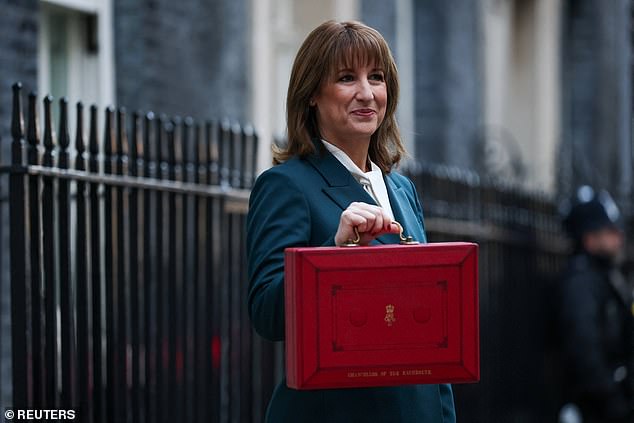
Rachel Reeves ahead of Wednesday’s budget. A burst in the AI ‘bubble’ on the stock market could deliver a £26 billion borrowing shock and hobble the Chancellor’s hopes of balancing the books

The Bank of England and the International Monetary Fund have issued warnings about the potentially damaging consequences if the AI bubble in US stock markets bursts
This would narrow over the subsequent two years to a £16billion hit, but still take a huge chunk out of the Budget ‘headroom’ – the amount the Chancellor is forecast to have left after meeting her targets to reduce borrowing and spending by 2029/30.
It is currently estimated at £22billion but would be reduced to £6billion in the event of the worst–case AI shock.
The OBR’s warning came as the European Central Bank also sounded the alarm Wednesday over what it called ‘stretched’ market valuations.
It said ‘fear of missing out’ could be behind the extended rally, which is heavily concentrated in the so–called ‘Magnificent Seven’ US tech stocks – Alphabet, Amazon, Apple, Meta, Microsoft, Nvidia and Elon Musk’s Tesla.
US tech stocks have surged over recent months amid investor frenzy over the potential for AI to transform both business and wider society.
But some critics have started to raise fears that their valuations have raced too far ahead, creating a bubble that – if it bursts – could have devastating financial consequences.