Rachel Reeves launched a ‘mansion tax’ attack on London and the South East today – despite the Treasury’s own watchdog warning it will cost the government money.
Homes worth more than £2million face a ‘surcharge’ as the government bows to Labour demands to punish the ‘wealthy’.
The annual levy will be £2,500 for those worth up to £2.5million.
And the highest band of £5million-plus will be hit with a £7,500 charge, uprated by inflation every year.
Although only around 100,000 properties are thought to be directly in the firing line, experts have warned of major impacts for the property market.
Over the next three years before the charge takes effect it is expected to cost the government £300million due to falling stamp duty revenue. After that it will only raise £400million annually.
It is also unclear whether the consequences will be felt far more widely.
The Chancellor is ordering a revaluation of Band F, G and H properties in England to facilitate the levy.
There are concerns that some of those properties could see their bands changed as prices have changed dramatically since 1991, the current baseline.
Kate Allen, 45, founder and owner of Finest Stays, a luxury holiday letting agency based in Kingsbridge, Devon, told the Daily Mail: ‘When you manage over 100 high-value holiday homes, most worth £2million-plus, you see very quickly how sensitive the top end of the housing market is to policy shifts, and these proposals risk slowing it dramatically.

Kate Allen, founder and owner of Finest Stays, a luxury holiday letting agency based in Devon, manages more than 100 high-value holiday homes, most worth more than £2million
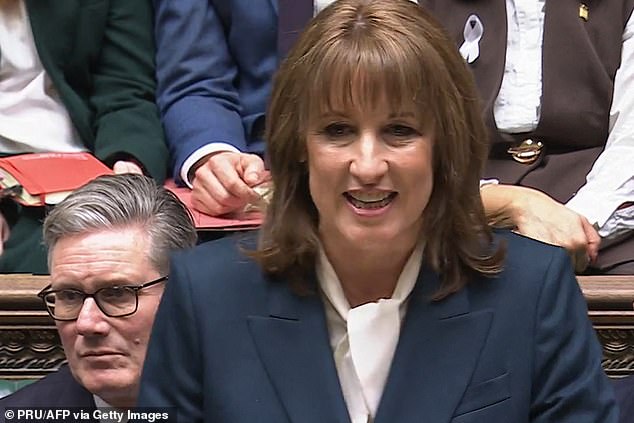
Chancellor Rachel Reeves delivers her Budget in the House of Commons this afternoon
‘We’re already seeing developers choosing to holiday-let rather than sell because the economics now make more sense.
‘If a mansion tax can be avoided by switching to business rates, we’ll see a wave of wealthy homeowners letting for the 70+ nights required to qualify.
‘And if a mansion tax still applies even on business rates, we’ll be under even more pressure to drive higher-value bookings simply so owners can cover the rising cost of holding a high-value home.
‘High-value homes aren’t just luxury assets; they’re a major economic engine. Discourage ownership or development at the top, and you don’t just hit wealthy individuals, you hit the entire ecosystem of trades, suppliers, builders, local businesses and tourism that depends on them.’
The overhaul comes despite then-Labour frontbencher Jon Ashworth vowing during the election campaign: ‘We’re not changing council tax banding.’
Properties in England are currently put into bands based on their values from 1991, after successive governments shied away from revaluations.
But the surge in prices in London and the South East means that under a new system many could move upwards dramatically.
Labour could argue that because the typical Band D property is not affected they are protecting ‘working people’.
However, huge numbers of people who have stretched themselves for modest properties in the South East, as well as pensioners on fixed incomes, could be in for a shock.
Some 2.4million properties were in Band F, G and H as of this year.
Homes worth over £2million would then face an extra levy which could cost them £4,500.
The Chancellor was initially thought to want a £1.5million threshold, but decided to move it up to avoid penalising ‘asset-rich, cash poor’ families who don’t have outsized incomes but have benefited from a house price surge.
It is not clear how the value of the homes would be determined for this purpose.
Property guru Kirstie Allsopp has warned that the ‘performative’ plan would see more properties being valued at £1.99million by owners to avoid a tax ‘cliff edge’ at a time when the market is already ‘desperately in the doldrums’.
Zena Hanks, partner at accountancy firm Saffery, said: ‘The new high value council tax surcharge will hit many homeowners, particularly in London and the South East, where £2 million-plus properties are increasingly prevalent and may be owned by families whose incomes lag far behind the value of their homes.
‘From 2028, these households will face an extra charge of £2,500 to £7,500 a year, rising with inflation, adding yet more pressure at a time when living costs are already challenging.
‘There must also be a greater concern that the threshold will be reduced over time, bringing more and more households within the scope of this ‘wealth tax’.’