In the heart of Northumberland, just north of Newcastle, lies the chocolate box market town of Rothbury, lined with sandy brick cottages and quaint shops.
Though a quiet rural parish, with only just over 2,000 residents, the place became infamous when the largest manhunt in modern British history concluded there 15 years ago.
The horrific Raoul Moat case in 2010 saw the 37-year-old nightclub doorman shoot himself on its riverbank, after being cornered by armed police in a six-hour stand-off.
The Rothbury siege also featured a bizarre cameo by former football star Paul Gascoigne, arriving unbidden with a six-pack of lager and a fishing rod, hoping to be allowed to speak to his friend.
Moat had been on the run for a week after wounding his ex, killing her new partner and blinding a police officer with a shotgun.
These days the town’s residents can never forget the bloodshed – but now have a more pressing battle on their hands.
In 2023, the Rothbury Estate, comprising farms, moors, rivers, hills and forests around the town became the largest single block of land to be put up for sale in England for more than 30 years.
The estate, which boasts around 9,500 acres, is owned by the Duke of Northumberland’s youngest son Lord Max Percy, who put it on the market for £35million, after his family spent nearly 700 years as its owner.
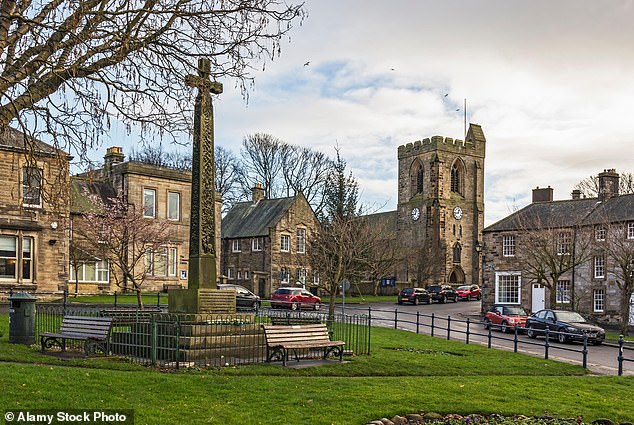
The chocolate box market town of Rothbury (pictured) is lined with sandy brick cottages and quaint shops
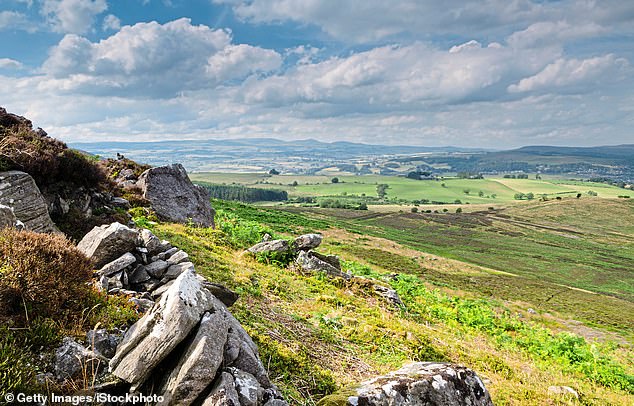
Northumberland Wildlife Trust has joined other branches of the conservation charity across the UK to try to raise £30million by September next year to buy the estate under a purchase agreement. The group has already secured part of it, the Simonside Hills (pictured)
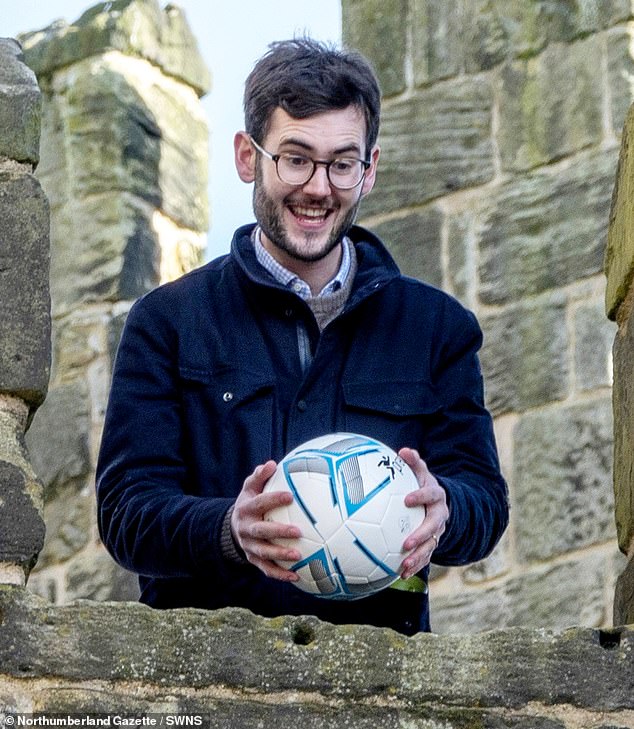
The Rothbury estate, which boasts around 9,500 acres, is owned by the Duke of Northumberland’s youngest son Lord Max Percy (pictured)
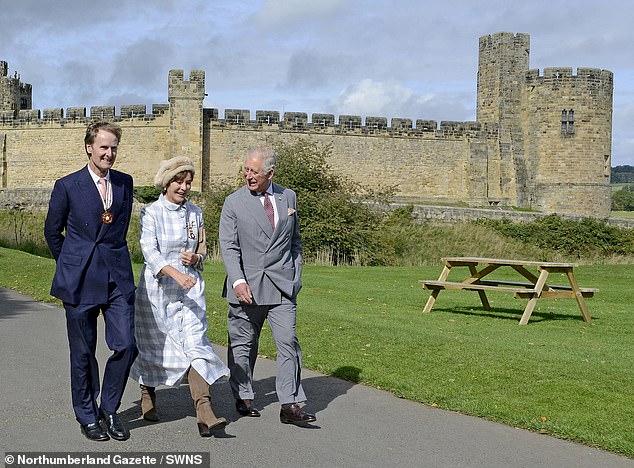
The current 12th Duke, Ralph Percy, 69, is worth £517million, according to the Sunday Times Rich List. He is pictured with his wife and King Charles
It has attracted celebrity attention, with Queen guitarist Sir Brian May once tipped to buy it and national treasure naturalist Sir David Attenborough recently releasing a video extolling its ecological importance.
A sale has been agreed, but only if a grouping of wildlife trusts can raise the cash to buy the estate outright. So far they’ve stumped up nearly £10million of their £30million target, but if they don’t hit it by Autumn of 2026, the sale will fall through.
Though Rothbury isn’t officially part of the Ducal estate, the fight for its future cannot be viewed without a glance back at the colourful recent history of the House of Northumberland.
The current 12th Duke, Ralph Percy, 69, is worth £517million, according to the Sunday Times Rich List, and lives at Alnwick Castle, 11 miles from Rothbury, owning 100,000 acres of land across Northumberland and the Scottish borders.
He never expected to have the title, as his elder brother Henry, better known as Harry, inherited it in 1988. A Godson to the late Queen, incredibly rich, Harry lived grandly in Syon House, west London.
He became a favourite of the gossip columnists, with a penchant for drink, drugs and glamorous women. For a time he squired supermodel Naomi Campbell’s mother Valerie, and also had flings with former Page Three model Jackie St Clair and Bond girl, Nicaraguan actress Barbara Carrera.
But Harry was a troubled soul, and the late Daily Mail journalist Ross Benson once observed of him at society parties: ‘He chain-smoked to the point of absurdity. The glass in his hand was drained as soon as it was filled. His face was coursed with rivulets of sweat.’
Because of Harry’s problems, his father had made sure that brother Ralph would promise to look after the estate on his behalf, so that he had to ask his younger sibling when he wanted money.
But in October 1995, Harry Percy the 11th Duke was found dead by his valet, slumped beside his bed at Syon House.
A post-mortem examination revealed he had died of heart failure brought on by an overdose of amphetamines. His doctor told a subsequent inquest that he regularly took 20 amphetamines a day to stay awake, followed by 20 sleeping pills at night, and the coroner concluded that his death was accidental.
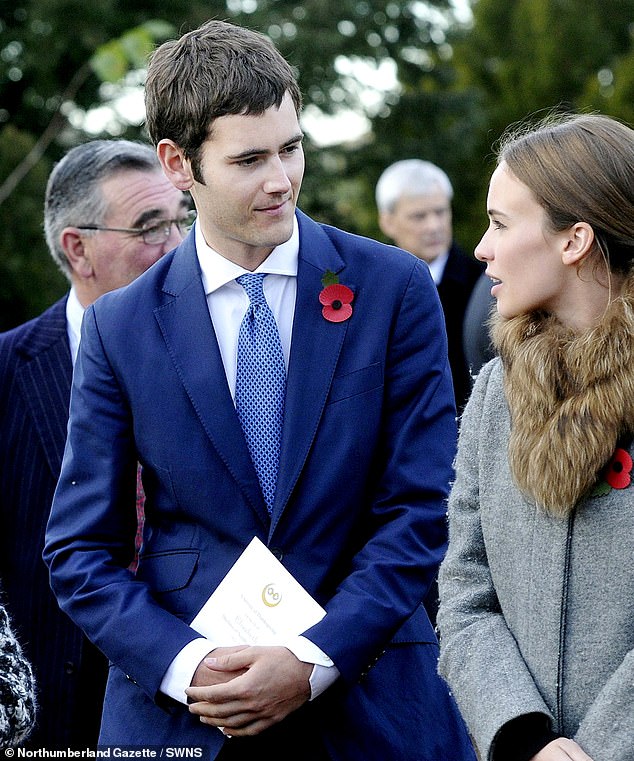
Lord Max Percy and his wife, Princess Nora zu Oettingen-Spielberg, in 2012
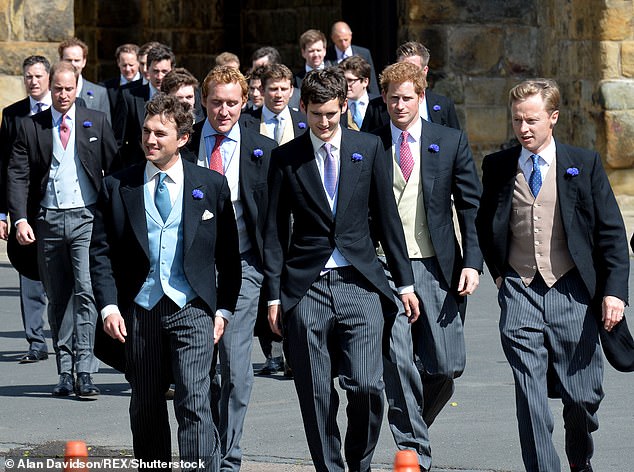
Lord Max Percy is pictured at the wedding of his sister, Lady Melissa Percy and Thomas Van Straubenzee, in 2013. Prince Harry and Prince William can be seen behind
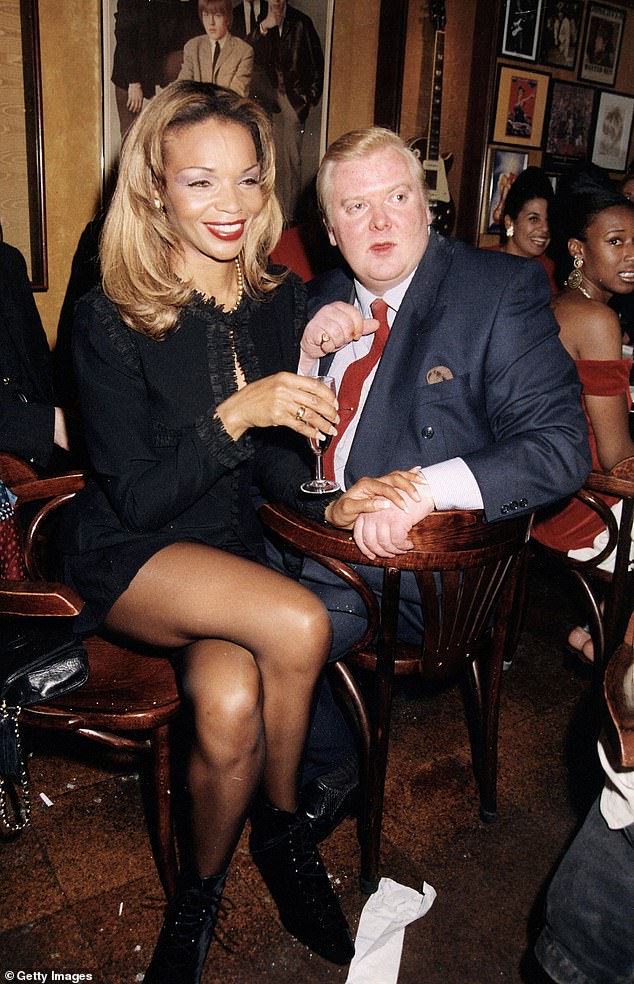
In October 1995, Harry Percy (pictured with Valerie Campbell at Sticky Fingers in October 1994) the 11th Duke was found dead by his valet, slumped beside his bed at Syon House
Another driving force in the recent history of the 700-year-old estate has been Jane Percy, 67, the current Duchess of Northumberland, and Max Percy’s mother.
The former professional ice skater from Edinburgh has always had a keen interest in gardening and is in charge of a mammoth project at Alnwick Castle, which has become a major tourist attraction under her care.
In one corner she has created a magical fairy realm for children called Lilidorei, and even written a book to go along with it.
Known for her candour and acerbic sense of humour, this week she couldn’t resist a veiled dig at Meghan Markle and Sarah Ferguson as she showed the Telegraph around the Alnwick Garden.
She explained to the newspaper that she writes her books under the name Jane Northumberland, without reference to her title.
‘Unlike other duchesses who put their names everywhere, I’m not using my title,’ she says. ‘I’d say it could be detrimental as one or two duchesses haven’t really helped the cause lately.’
Back in the town, ongoing discussions are going on about who would then snap it up and what they would do with it.
Locals are divided about what the fate of this patch of land the size of the city of Athens should be.
Jane Davis, 61, who heads the Coquet River Action Group, named for the waters flowing through the county, told the Daily Mail: ‘It’s not unanimous, shall we say!
‘I’m an incomer, I’ve only lived here for five years, but perhaps for the people who are born and bred here, it’s a mixed reaction.
‘Some of them are positive and some of them feel it’s going in the wrong direction.’
She was referring to the current most likely buyer of the land – not long-time animal welfare campaigner Sir Brian, who toured the estate by helicopter in 2023, but rather a consortium of wildlife trusts.
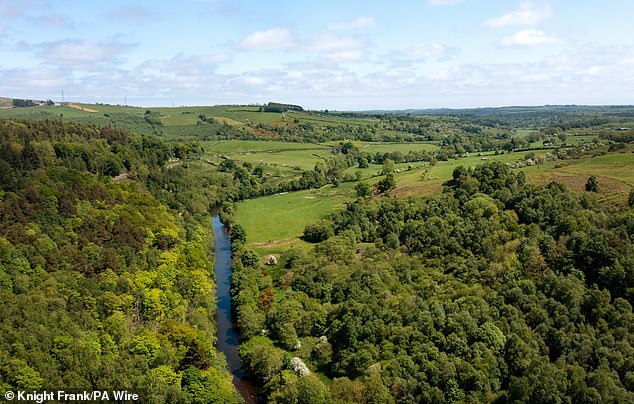
A sale has been agreed, but only if a grouping of wildlife trusts can raise the cash to buy the estate outright. Pictured: Rothbury Estate land
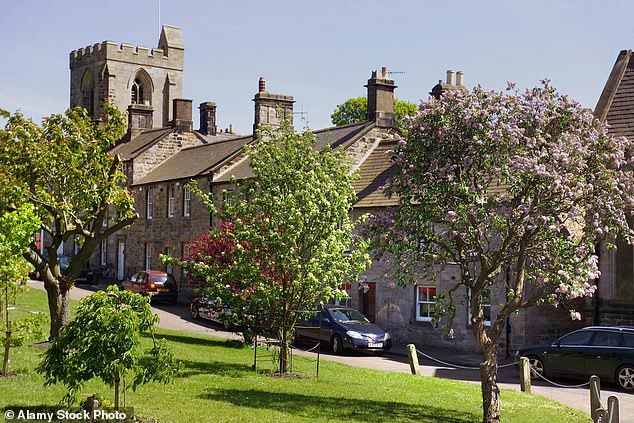
Locals are divided about what the fate of this patch of land the size of the city of Athens should be. Pictured: Rothbury
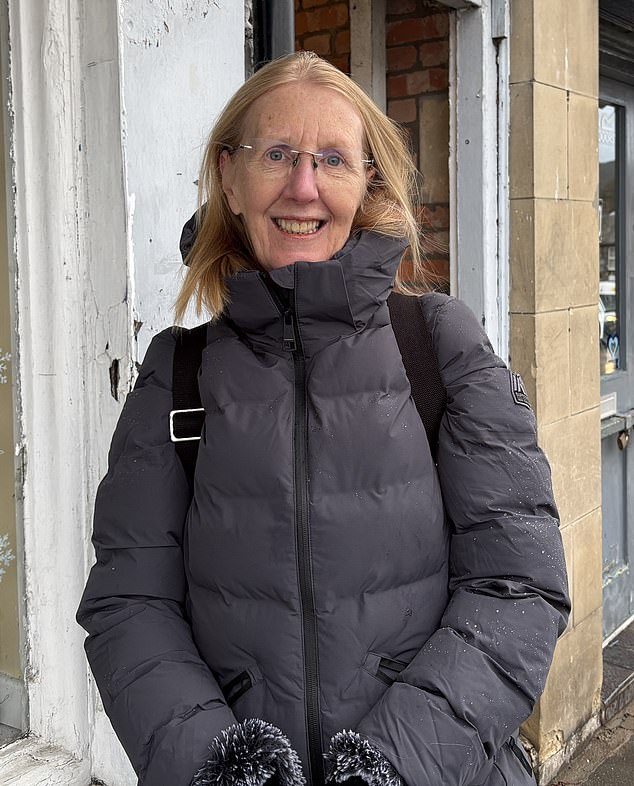
Jane Davis (pictured), 61, who heads the Coquet River Action Group, named for the waters flowing through the county, told the Daily Mail: ‘It’s not unanimous, shall we say!
Northumberland Wildlife Trust has joined other branches of the conservation charity across the UK to try to raise £30million by September next year to buy the estate under a purchase agreement.
The group has already secured part of it, the Simonside Hills – but with only around £10million raised so far, the organisation itself notes: ‘There is a mountain to climb to protect the rest.’
Some locals are delighted about this appeal, seeing it as a reliable way to fend off division of the land into lots, redevelopment efforts or purchase by an enormous, solely profit-driven company.
They also feel it will preserve the highly protected landscape, home to Sites of Special Scientific Interest (SSSI), and their public right of way through it.
But others are worried an inevitable wildlife focus will force unwanted change to farming methods, at the expense of families who have worked the land for generations.
And with a mammoth sum still to raise for the trusts to successfully win the land in time, there is a sense of uncertainty about what would happen if they could not gather the funds.
Ms Davis said: ‘The people that don’t agree with it are concerned because they feel it’s an organisation coming in here and telling people who’ve farmed for years and years how to butter their bread.
‘But I expect that as with most things, over time, when they see that’s not what’s happening, there might be an acceptance of the purchase.
‘From most people’s point of view, the fear was it would be sold to some big offshore landowner after some carbon credits and they would just stick up a load of timber logging forests…
‘At least they’re not going to build that!’
She explained: ‘We’re supportive of it because we’re interested in the health of the river as an organisation and working with farmers and landowners to improve its health.’
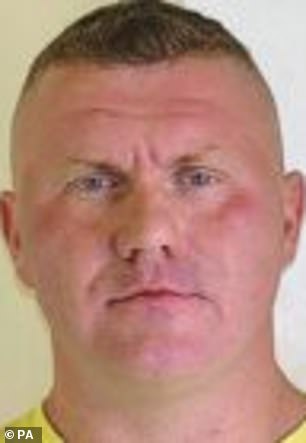
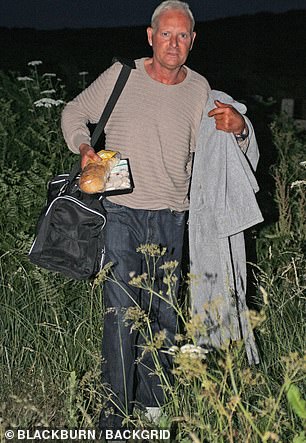
Rothbury became infamous when the largest manhunt in modern British history concluded there 15 years ago. In a bizarre twist, former football star Paul Gascoigne turned up, convinced they were good friends
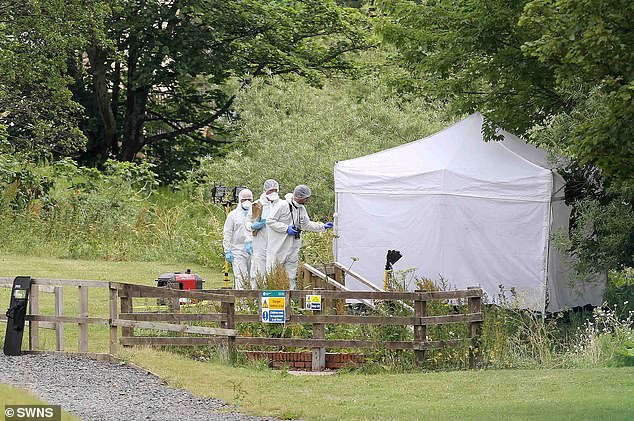
Forensic officers comb the scene where fugitive Raoul Moat shot himself in 2010
And though views are mixed among farmers of the land, one the group has already started work with, in the patch the trusts have now purchased, has been ‘quite positive’ about her organisation’s river testing and cleaning.
If the trusts manage to take charge of it all, she said: ‘They’re hoping to improve the biodiversity of it and just gradually make changes to regenerate it.
‘There’s lots of areas of it like the moors that have been used for shooting, they’re developed for one thing only and it’s not very positive for the biodiversity of it overall…
‘I don’t think they like the phrase ‘rewilding’ because it suggests different things to different people.’
Ms Davis continued: ‘The Wildlife Trust has been just trying to move slowly and take everybody with them because you need that round here because there are mixed views and interests.
‘And actually, at the end of the day, and I can only speak about the river, we find everybody is positive about it and some farmers have different issues and they obviously need to run their business.
‘But if you can talk and make steps towards doing things, you can get a consensus for achieving maybe not all of your aims but most of them.’
One retired tenant farmer, however, was slightly sceptical of what might happen on the estate under the trusts’ care.
George Thompson, 76, used to work the estate of nearby Cragside House, as his family had done for more than a century, before he was forced to give it up in 2009 amid skyrocketing rent.
‘It leaves the tenants in the dark because they don’t know what’s going to happen,’ he said.
‘The Wildlife Trust is all about rewilding whereas the farmers think, ‘Am I going to be able to continue production in the same way?’
‘They’ll be stressed, angry and frustrated. It’s their livelihood.’
He continued: ‘I sympathise with the farmers. The farm had been in my family for 102 years. It was a loss of a family thing as well and a loss of lifestyle.’
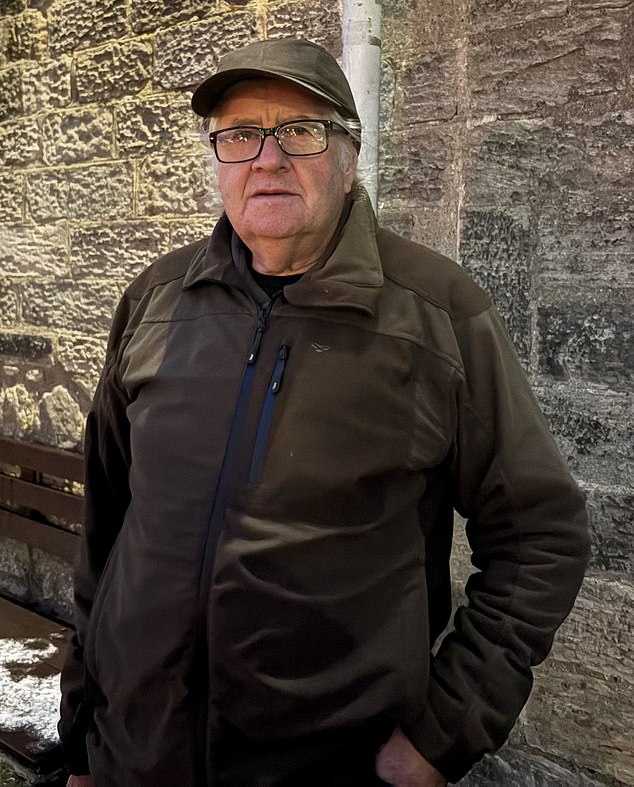
Retired tenant farmer George Thompson (pictured) was slightly sceptical of what might happen on the estate under the trusts’ care.
The trusts’ plans for the land have not been finalised yet, according to Duncan Hutt, director of conservation for Northumberland Wildlife Trust.
He told the Telegraph: ‘First we really need to understand the nuances of the land we’ve got, its habitats and also all the people we’re working with here.’
Wildlife will, of course, be important to the trust, he said, with peat bog restoration, conifers replaced with mixed native tree species and rewilding of some moorland.
Two farms the trust manages directly will also see their number of sheep reduced in favour of cattle to lessen impact on the landscape.
But Mr Hutt was emphatic there was ‘no intention’ to control or change how other farmers of the land work – their methods could remain exactly the same if they wish.
And he said humans would benefit alongside flora and fauna, with ecotourism enriching the area and a disused railway line reopened to walkers and cyclists.
The sale would also give the trust a greater stake, he said, in working with other landowners to make land across the county at large both productive and regenerative.
The wildlife trusts received the near-royal seal of approval from Sir David in a short video released last month, throwing his natural historian heft behind their fundraising appeal.
‘With the communities who live and work at Rothbury, The Wildlife Trusts will create a place where people and nature can thrive side by side,’ he said.
Katie Scott, who coordinates the Rothbury Climate and Nature Group, similarly trusted the vision: ‘From all we have heard, we believe that theirs is a truly pioneering vision, aiming to integrate nature recovery with community, with farming, recreation, education, and tourism.
‘We are so happy that the Wildlife Trust plan to work with local farmers, creating a sustainable future for food production; that they also plan to enhance public access is a bonus.’
And even Northumberland Estates itself, which manages the duke’s assets, has said the focus of discussions of the land should be on the trusts’ plans.
When the Daily Mail visited Rothbury, there was a sense that fervent debate about the sale has engulfed the town ever since the ancient seat hit the market.
Several locals declined to comment out of a reluctance to ‘get involved in all that’ – and many said all their knowledge of the auction comes from a particularly active local Facebook page.
But despite the land dominating the town both physically and in conversation, no one appeared to know exactly why it was being flogged.
Lord Max implied upon putting it up for sale it was too difficult to manage the estate from his home with his wife and children down south.
Among locals, there was a consensus that cash in hand was more appealing to the lord, who lives far away with no country pile on the estate to draw him to visit.
One ventured that the decision was perhaps made on the advice of an agent, who had recommended the sale as a more economical approach.
Either way, the fight to buy it back for the village rages on with the local delicatessen Tully’s of Rothbury, helping to lead the efforts.
The shop sells felted decorations, made by several crafters who shape local wool into charming sheep and toadstools, at £10 a pop to support the Wildlife Trusts’ appeal.
One local boy, who has special needs, contributes beautifully neat robins to the efforts, taking a day to make each one and earning a well-deserved £20 price tag for each.
The ornaments deck a small Christmas tree at the front of the shop – but she joked she might need a larger one, with residents buying them up in their droves.
And there has been a wider fellow feeling around the appeal too, with one former Rothbury resident who now lives in Wales ordering seven from afar.
‘The whole of Northumberland really has got a say in it,’ she said.
‘As far as I am concerned, we’d rather it’s kept as it is than the duke sold it off to lots of different people to build on or whatever they might do…
‘We don’t really want a housing estate on the top of Simonside because you can see the snow and it’s nice.
‘If it’s sold off to various private people, it may be restricted in terms of public right of way. At the minute you can go where you like, I think, within reason.’
She continued: ‘If Brian May had bought it, I presume he was looking at buying the whole thing.
‘And we know his background of being very environmentally friendly so that might be OK. But if it went to half a dozen Brian Mays, you might end up with all sorts of things built on it.
‘As far as I’m concerned, I’d like to keep it in the community.’
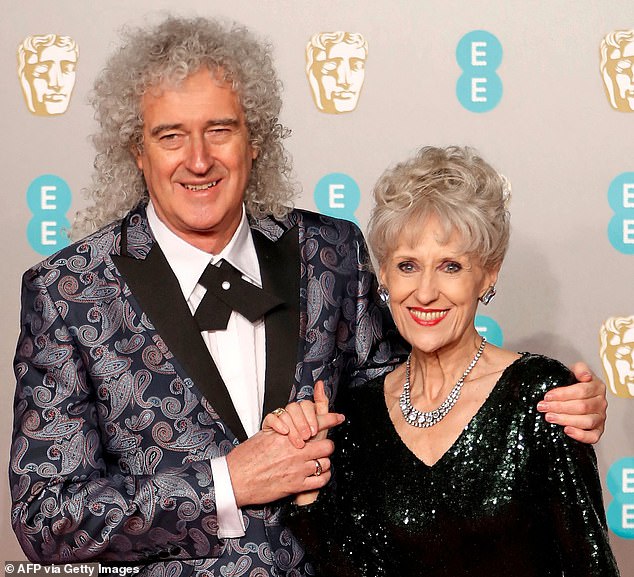
Brian May (pictured with wife Anita Dobson) was tipped as someone who could purchase the land
Adam Adamson, 19, who works at the local butcher, said farmers on the estate have already undergone enormous change in recent years.
The shop used to source all its meat from the land, he said, but now most of it comes from around 60 miles away, in the town of Bishop Auckland, County Durham.
‘We’re just waiting to see what happens now,’ he said.
Diana Paxton, 39, who works as a barmaid at the Newcastle House Hotel, said: ‘[The trust] plans for the future are just going to be horrendous for the local farming community.
‘I get what the Wildlife Trust is about completely, living in the countryside, but the extremes they are planning to go to…
‘People are angry about getting rid of livestock and rewilding. That land has been managed by farmers for a long time, it’s a beautiful place, there’s nothing wrong with it.’
Sean Mann and Ashleigh Hope, both 30, from the nearby town of South Shields, were in Rothbury for a few days’ holiday with their baby.
The musician and customer service adviser love the area and visit often, staying at Mr Mann’s parents’ holiday home – and were aware of the sale even as out-of-towners.
Ms Hope said, ‘It would be a shame if they redeveloped it’, with Mr Mann agreeing: ‘It’s lush around here.’
With the snow falling on the estate’s cliffs and ancient rock carvings, its limestone and medieval deer park, it is easy to see why locals are so keen to protect it – not just as a linchpin of the local economy but as their own back garden, where they, as Sir David put it, ‘walk the ridges and listen for the calls of the curlew’.
A spokesperson from Northumberland Estates told the Daily Mail: ‘The sale and transitional arrangements of the Rothbury Estate to The Wildlife Trusts have been carefully managed, with confidence that they are well placed to safeguard the estate’s long-term interests.
‘The focus now shifts to their future plans, which include strengthening ties with the local community—especially residents and tenants on the estate—and cultivating the many opportunities offered by this diverse rural estate.’
Northumberland Wildlife Trust and the national Wildlife Trust have been approached for comment. Sir Brian May’s representatives said he currently has no plans to purchase the land.