A devoted couple who died when their car hit a huge pool of water on a road with a history of flooding were caught out by ‘monsoon’ conditions, an inquest heard.
Philip Marco, 77, and wife Elaine, 76, accidentally drove into water up to 15ft deep which had gathered beneath a railway bridge.
An inquest in Liverpool today heard that up to 80 mm (1.3ins) of rain had fallen in the Mossley Hill area of the city in the hour before the fatal incident.
The Marcos died days before their 54th wedding anniversary.
Andy Bethell, head of highways management for Liverpool City Council said: ‘This is approaching monsoon intensity.’
He said that even the Meteorological Office failed to predict the expected level of rainfall on the evening of August 26 2023.
It had only issued a yellow weather warning for the area at 9.26pm on the night of the incident.
The Marcos are believed to have driven into the flood more than 10 minutes earlier at 9.15pm.
Mr Bethell accepted there had been four previous flooding incidents at the same place in Queens Drive in the months leading up to the tragedy, although none of them had been judged a ‘threat to life’.

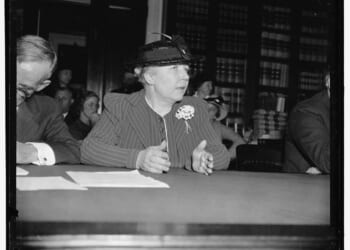
Elaine and Philip Marco, who died in flood days before their 54th wedding anniversary
But Anthony Metzer, KC, for the family, questioned why no action was taken to prevent a fatal accident from happening.
He said: ‘This area has historically had flooding problems for a considerable period.
‘You have said the council did not consider any of the previous incidents before August 26 as representing a risk to life but how do you square that with Met Office Amber and yellow warnings which specifically use that phrase?
‘The flooding a of Queens Drive were frequent, predictable and hazardous.’
Mr Bethell accepted the council had informally decided warning signs should be put up at the scene after the previous floods but had not going around to doing so.
Mr Metzer asked: ‘It took fatalities before the council would do anything?’
Mr Bethell answered: ‘Regretably, yes.’
The highways officer claimed the earlier incidents on May 11, June 10, July 8 and July 23 had all been the result of a ‘surcharge’ of water from a sewer owned but United Utilities water company.
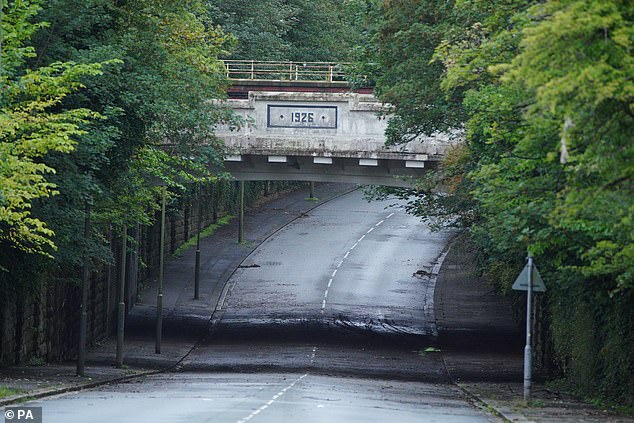
Queens Drive, Mossley Hill, where the Marcos’ car became caught in floodwater 15ft deep
The surcharges had the effect of ‘locking’ the drainage system in the area meaning surface water that ran off into road gullies – which normally drained into a combined sewer at the site – was unable to do so.
He said on every occasion highways staff had checked the gullies and found they were working and the combined sewer was at fault.
The same problem happened on the night of the tragedy even though the council and the water company had had repeated meetings trying to solve the problem in the previous months.
He revealed that UU had spent £15,000 trying to solve the sewerage blockage and had removed 12 tonnes of silt from it before the tragedy occurred.
But, significantly, the company had removed a further 18 tonnes in the days after the tragedy.
Mr Bethell said that all the council’s ‘assets’ including the gullies had been working normally on the night Mr and Mrs Marco died.
He told coroner Andrew Rebello: ‘We were never informed of any on-going problem with the sewer network and that there remained a high risk of flooding.
‘But it is clear to me in my opinion, the intensive rainfall on that day was an unprecedented event during the unfortunate time the Marcos entered that section of the highway.’
Since the tragedy the council has now installed gully sensors, two flood warning signs, two remote barriers, two wall-mounted sensors, CCTV and a rain gauge.
But despite the measures, the road flooded again during heavy rain on Tuesday night – and some drivers and even pedestrians still went under the bridge.
The inquest heard the new sensors would sound an alert when water levels rise to 125 mm which might have been enough to save the Marcos.
Previous evidence heard their Mercedes ClA 180 car had ‘hydrolocked’ – shut down – as it entered the water which experts estimated would have happened in 200mm of water.
Lisa Roberts KC, for United Utilities, accused Mr Bethel of being selective with his evidence and ‘playing the blame game so the finger of suspicion pointed at the water company’.
She said: ‘It was the torrent of water running down your highway, the cascade of water from over the railway bridge and the failure of the sewer that bear the responsibility for this tragedy. It was a combination of factors.’
Mr Bethell, who only joined the council this year, said: ‘I agree.’
When questioned further by San Karim, for the council, the highways boss added: ‘In my opinion this was an unprecedented rainfall of such an intensity that it overwhelmed the system.’
The hearing continues.