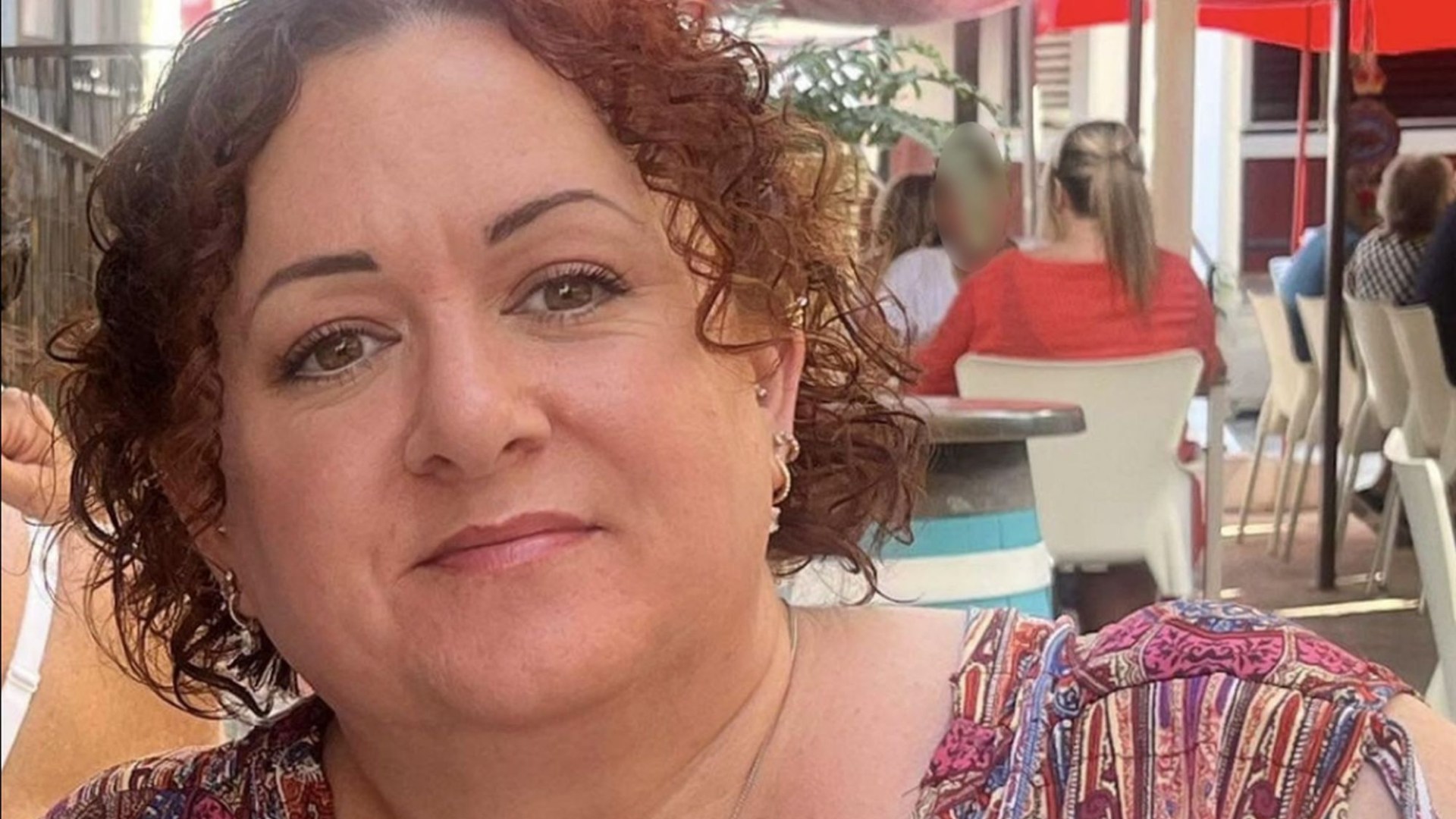
WHEN Rebecca Turner noticed a pale patch of skin and tiny lump on her chest she dismissed it as “just a spot”.
But she ended up needing part of her lung removed when it turned out to be stage four cancer.
Rebecca, 46, first noticed the “spot” in November 2021, and became increasingly concerned when it started to turn black, change colour, and became itchy.
Just a few months later, in June 2022, she received the news she had stage two skin cancer – which later developed into stage four and spread to her lungs.
Rebecca, from Barry, South Wales, was “devastated” when she received the diagnosis of stage two nodular melanoma – one of the most aggressive forms of skin cancer.
She said: “It was like I was watching it happen to someone else.
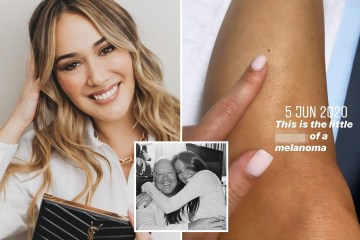
“I was devastated. As soon as I heard that word cancer I thought I was going to die – I thought it was going to be the end.
“That weekend was horrific. I spent most of the weekend crying, trying to hide my upset from my grown-up daughter.
“I was trying to make sure that she didn’t get too anxious and was telling her that they caught it early, it would be fine, but I was constantly crying behind closed doors.”
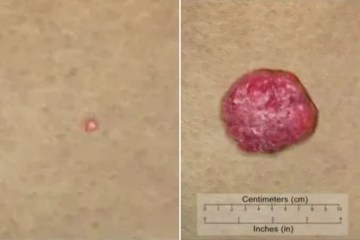
Rebecca, a freelance healthcare trainer, said the patch of skin was 2.5cm in size when she first noticed it, and a lump appeared in it, which was no more than 1cm.
She said: “No matter how much I was trying to squeeze it, nothing was coming out.
“It wasn’t a mole. It wasn’t a usual presentation for melanoma.”
A new abnormal mole, a mole that seems to be growing or changing, or a change to a previously normal patch of skin can be signs of melanoma, according to Cancer Research UK.
Rebecca had three surgeries to remove the melanoma and surrounding skin and lymph nodes, and was then placed on “watch and wait” – which meant she had cancer, but didn’t need urgent treatment.
Every three months, she returned to the hospital for a full body CT scan and full body skin check to ensure that there had been no further changes.
But in July this year, she received the devastating news the cancer was now stage four and had spread to her lungs.
She explained: “In January 2025 my CT scan came back as there being something suspicious – a metastasis in my right lung.
“In July they discovered that the lump wasn’t stable and had tripled in size in that time frame.
“That’s when they confirmed that it was stage four metastatic melanoma.”
A lot of people don’t understand melanoma, they just think that it’s a case of they cut it out and it’s gone, when that’s not the case at all
Rebecca Turner
Early in October, Rebecca had the tumour removed along with a section of her right lung, and is now undergoing immunotherapy treatment.
The mum-of-one believes skin cancer is often “misunderstood” and too many people think that it’s “just something which can be cut out and cured”.
Rebecca said: “I think that a lot of people don’t understand melanoma, they just think that it’s a case of they cut it out and it’s gone, when that’s not the case at all.
“I’m a melanoma support group and all of us have had people say things to us like ‘if I was going to get a cancer, melanoma would be the one that I would want because you just cut it out and it’s done’.
“But it’s not. No cancer is just you cut it out and it’s done. It’s not as if people think this out of malice – I think it’s a lack of awareness and education.”
After speaking with clinicians, Rebecca says it’s likely that her skin cancer developed as a result of her not wearing suncream as a child.
She’s now warning other people of the importance of wearing SPF 30 and above in the sun and is calling for sunbeds to be made illegal.
Rebecca said: “I personally think sunbeds should be made illegal in the UK – they’ve been made illegal in other countries.
“I never used a sunbed much in my life. I had a few sunbed sessions before going on holiday because that was what we would class as the done thing when I was younger.
“We’d do it to prep your skin before you go away when in reality when you actually look at the science behind it, it’s not prepping your skin at all, it’s just damaging it.
“Going on holiday with friends in my 20s they would always take the mick out of me because I was constantly reapplying my suncream.
“Because I didn’t burn easily, factor 30 was the highest that I would use in my 20s and 30s – up until now.


“I would use factor 20 for the first few days of the holiday and then I would go down to 15, 10 and then even two.
“I was reapplying the wrong lotion because what I know now is that we should only be using a factor 30 or above.”
What is melanoma?
Melanoma is a type of skin cancer that can spread to other areas of the body.
The main cause of melanoma is ultraviolet light, which comes from the sun and is used in sunbeds.
A new mole or a change in an existing mole may be a sign of the disease.
Melanomas can appear anywhere on your body, but they’re more common in areas that are often exposed to the sun.
Some rarer types can affect the eyes, soles of the feet, palms of the hands or genitals.
You should check your skin for any unusual changes. Use a mirror or ask a partner or friend to check any areas you cannot see.
Doctors use a checklist which explains some of the signs of melanoma to look out for. It’s called the ABCDE list.
A – asymmetrical
This refers to the shape of the mole or abnormal patch of skin.
Melanomas are likely to have an uneven shape. The two halves may be different shapes or sizes (asymmetrical).
Normal moles usually have a more even shape and the two halves are similar (symmetrical).
B – border
This refers to the edges of the mole or abnormal patch of skin.
Melanomas are more likely to have irregular edges (border) that are blurry or jagged.
Normal moles usually have a smooth, regular border.
C – colour
This refers to the colour of the mole or abnormal patch of skin.
Melanomas are often an uneven colour and contain more than one shade. A melanoma might have different shades of black, brown and pink.
Normal moles usually have an even colour. If they have 2 colours in them, the colours are normally symmetrical across the 2 halves.
D – diameter
This refers to how wide the mole or abnormal patch of skin is.
Most melanomas are more than 6mm wide. But they can be smaller if diagnosed early.
Normal moles are usually about the size of the end of a pencil or smaller.
E – evolving
Evolving means changing.
Melanomas might change in size, shape or colour. Or you might notice other changes such as:
- bleeding
- itching
- a change in sensation to a mole or area of abnormal skin
- a mole becoming crusty
It’s often possible to prevent skin cancer by being careful in the sun and applying sunscreen regularly.
The main treatment for melanoma is surgery, but this also depends on where it is and if it has spread to other areas of your body.
Source: NHS/Cancer Research UK