He drives a £90,000 BMW SUV, wears a flashy gold watch and conducts his business from cafes and a solicitor’s office in West Yorkshire.
While his true identity is unknown, he operates under the names Shaxawan Jamal and Kardos Mateen. To others he is simply referred to as ‘the accountant’.
Last week Shaxawan, who is thought to be in his 30s, was unmasked as the King of the Mini Mart – a ringleader in a shady Kurdish organised crime network which operates in plain sight on Britain’s high streets.
The enterprise oversees a thriving illicit jobs market for asylum seekers with the promise of big profits selling contraband cigarettes and vapes – providing a huge incentive for illegal immigrants to travel to the UK.
The nationwide syndicate – which has set up more than 100 outlets that also include barbershops and car washes – uses sophisticated scams including a system of so-called ‘ghost directors’ to enable businesses to continue to operate despite scrutiny from investigators.
One shopkeeper – a failed Kurdish asylum seeker who runs a mini-mart in Crewe, Cheshire – claimed sales of illegal tobacco brought in takings of up to £3,000-a-week – the prospect of annual revenues of a staggering £150,000.
He boasted of having customers as young as 12 years old and was among a number of traders found to be selling vapes to schoolchildren.
Shaxawan revealed how he and his associates help migrants set up illegal businesses using fake company details when he was secretly filmed by undercover reporters as part of a BBC investigation.
As part of the scam, businesses are frequently dissolved after about a year, and then reopened with small changes to official paperwork.
Now the Daily Mail has uncovered a network of companies set up by Kardos Mateen that control mini marts run by asylum seekers with no right to work in the UK.
Records lodged with Companies House show that he has 20 directorships and claims to be a British citizen aged 37.
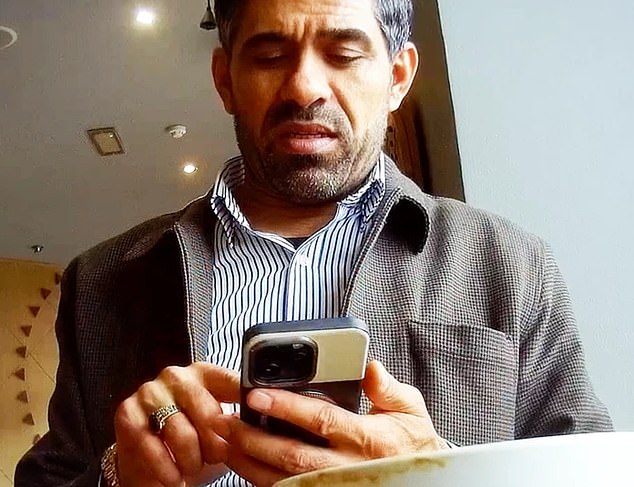
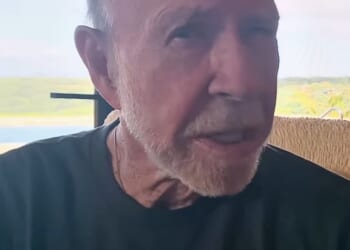
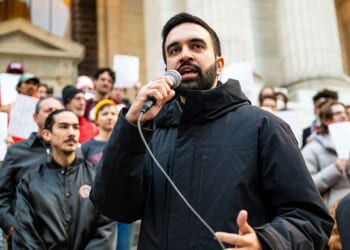
A man named Shaxawan Jamal (pictured, in covert footage) was last week unmasked by undercover BBC reporters as the King of the Mini Mart – a ringleader in a shady Kurdish organised crime network which operates in plain sight on Britain’s high streets
The businesses operate in run down and deprived areas of towns and cities, from Newcastle to Clacton-on-Sea in Essex, with the vast majority based in the north west and Yorkshire and three more in the Midlands.
They are the type of businesses the National Crime Agency has warned operate as fronts for drug-trafficking, people-smuggling, modern slavery and child sexual exploitation.
We visited 20 premises linked to Shaxawan’s criminal empire and found the majority were staffed by men who identified themselves as either Kurdish, Iranian or Iraqi.
Most of them spoke little English and few were able to provide details about who they believed they were working for – with a number claiming they were merely ‘helping out’.
The workers seemed to know very little about the nature of their trade and how their sparsely-stocked shops were run.
And while legitimate trading appeared slow, we found evidence that shops selling contraband goods at knockdown prices were doing a roaring trade.
At one of the outlets – The Spon Minimarket in Coventry – a reporter was offered 50 grams of Amber Leaf rolling tobacco for just £5.
The same pouch at a supermarket retails for more than £43.
The lone shop worker, who gave his name as Lasha, 21, said he was from Iran and had claimed asylum in the UK.
He said he had been working at the shop for a year.
A shop which had been called The Kiddy Mini Market on Kidderminster’s run down main street has now changed its name to Kidderminster Local.
Its shelves were sparse with the main display featuring vapes behind the counter.
The only member of staff on duty gave his name as Ahmed Mahmood who said he was aged 31 and from Turkey.
He said he had only been in the job for a week and was paid the minimum wage.
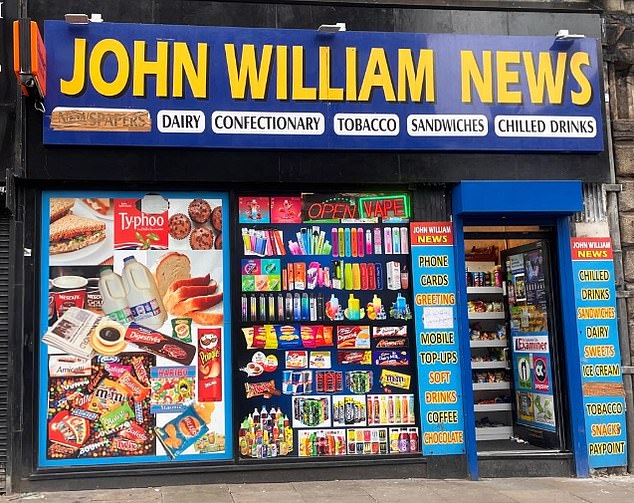
We visited 20 premises linked to Shaxawan’s criminal empire and found the majority were staffed by men who identified themselves as either Kurdish, Iranian or Iraqi. Pictured: One of the shops we visited, John Williams News, in the centre of Huddersfield, West Yorkshire
Meanwhile a kiosk somewhat comically named Del Boy’s Shop at Nuneaton Bus Station was staffed by a man in his 40s, who claimed to have fled Iraq after the 2003 invasion and said he was now a British citizen.
He said he had worked there for six weeks and was paid £8-an-hour. He produced correspondence he believed was for the owner – a Kurdish man called Bryar Zada.
At the Nova International Supermarket in Central Drive, Blackpool, Lancashire, a heavy-set, middle-aged man behind the counter identified himself as an Iraqi Arab but refused to give his name.
He said he was not aware of Shaxawan adding: ‘I know nothing about this being illegal. I only started working here last week.
‘I’m not an illegal immigrant. I have been living here legally for 25 years.’
Waving his hand to point to the neat but mainly empty shelves, he added: ‘This is just an ordinary shop. I do not know what you are talking about.’
Half a mile away at the Blackpool Mini Market on the town’s Ansdell Road, two young Iranian men, aged 27 and 25, were filling shelves when we called.
They said they thought the owner, called Amir, was from Pakistan but were not certain.
One of the men said: ‘This shop has been open three years. We just work here.
‘It’s just a small shop. I am not aware of anything illegal happening here.
‘We get paid £11 an hour and we do six or seven hours a day. We are not illegal immigrants, we are both settled here.
‘I have been here six years and my friend has been here ten years. He’s worked here for over a year and I have been employed for three months. We are just workers.’
A 25-year-old Iranian Kurd called Zamir was working at the Oswaldtwistle Mini Mart convenience store in Oswaldtwistle, Lancashire.
He identified the man he believed to be the shop owner as Kahan Sadat.
Zamir said he had been in England for over two years and was a British citizen. He said he is paid £12.21 an hour and works 16 hours a week.
At the International Store in Westhoughton, Greater Manchester, a man who was behind the counter said he was only ‘helping out’ and the owner was away.
The man, originally from Kurdistan, told us: ‘I don’t get paid because I do it as a favour.
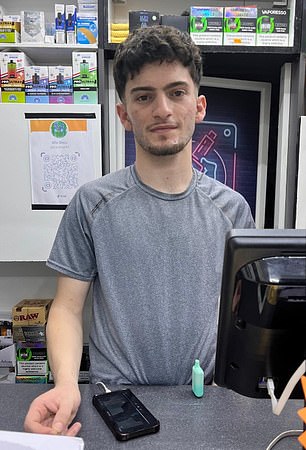
On the outskirts of Huddersfield, West Yorkshire, the Mix Shop mini mart was manned by Chiaqadi Qadre (pictured), 18, from Iraq
‘I don’t know anything about this Shaxawan. I have never heard of him.’
Curiously, the Dale Street Mini Market in Rochdale, Lancashire, was locked when we visited during trading hours – as it is every day.
Customers have to ring a bell to be admitted to the shop which sells vapes, snacks, fizzy drinks and little else.
One of the two bearded men who worked there appeared not to know how to work the card machine and was in no mood to answer questions about the business.
Asked who the shop was owned by he simply replied: ‘That is personal. Why you ask me that?’
At the Central Market in Oldham we found two shop workers in their 30s who were only able to say that they were Turkish.
A young Iranian man was working alone at the City Mini Mart in central Manchester, which is close to the city’s Oxford Road station and recently changed its name from the City Convenience Store.
Across the Pennines, on the outskirts of Huddersfield, West Yorkshire, the Mix Shop mini mart was manned by Chiaqadi Qadre, 18, from Iraq.
He said: ‘I have worked at the shop here for a year, I only work about four hours two days a week. I am paid okay for the work I do.’
At John Williams News, in the centre of Huddersfield, a man in his 40s, who was working in the shop on his own, said in broken English that he was just ‘manning the shop for somebody’ and insisted that he didn’t normally work there.
It was a similar story at the 7Ten Mini Market in Halifax city centre where a 27-year-old man who identified himself as ‘a local’ said he was ‘not normally’ there and was just looking after the store.
Rawa Sabir, 30, was on duty at another of Shaxawan’s premises called Wisla Supermarket in Hull when we visited.
He told how he ‘generally’ worked at the shop in the city’s gritty Orchard Park estate when ‘covering’ for his cousin.
Meanwhile at the DM DM Mini market, also in Hull, a 19-year-old called Ibrahim was only able to shrug his shoulders when asked about the business.
Four men were working at the Varo Car Wash in Northwich, Cheshire, one of whom identified himself as Kurdish, while at the Recardo Car Wash in Rochdale there were eight workers who are believed to be Romanian.
Another business we visited was the European Shop in Benwell, Newcastle, which had closed down suddenly around a month ago.
One local said: ‘It wasn’t there very long, it was operated by a couple of Asian guys and was just an ordinary general dealers with fairly cheap stock.
‘One morning they just didn’t turn up and it’s been locked up ever since, there was no warning that it was going to close down.’
Asylum seekers do not have the right to work in the UK while their claim is being processed.
But facing lengthy delays in applications being processed, organised gangs have been quick to profit from a seemingly unlimited workforce recruited from asylum seeker hotels.
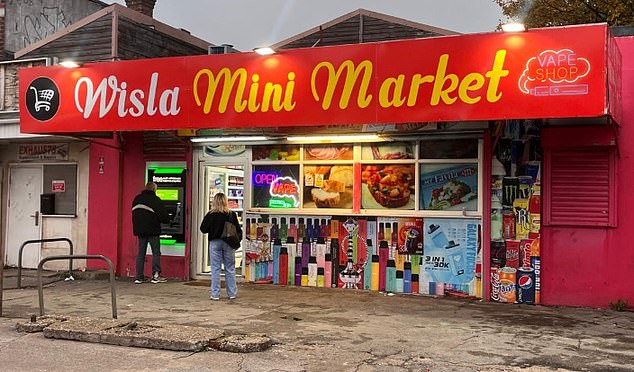
While some migrants are being offered the chance to run stores, other asylum seekers were found to be working 14-hour shifts for as little as £4-an-hour. Pictured: Another of Shaxawan’s premises we visited, called Wisla Supermarket, in Hull
While some migrants are being offered the chance to run stores, other asylum seekers were found to be working 14-hour shifts for as little as £4-an-hour.
The network has set up Facebook groups brazenly advertising mini marts for sale while another group featured Kurdish builders offering to construct hidden compartments to conceal contraband during police raids and avoid detection by sniffer dogs.
In the BBC’s expose, Shaxawan boasts to an undercover reporter posing as a Kurdish asylum seeker: ‘We have customers in every city.’
He explained how easy it was for asylum seekers to take over the running of a shop and the rewards of thousands of pounds a week selling illegal tobacco.
The businesses are operated under the protection of fake directors paid to register mini-marts under their own names.
He also said he could set up a company and provide bank cards and a card machine to accept payments from customers.
Shaxawan was recorded saying: ‘I will get someone with status, set up your company, provide the (card) machine, get you electricity, speak to your landlord. I’ll make sure you have no issues.’
He claimed to be working with a group who could remove immigration fines for a set fee saying: ‘In Huddersfield we have an English woman who deals with electricity, gas and bailiffs.
‘When immigration raids a shop and gives a £45,000 fine, she makes it zero. My job is accounting. To erase an immigration fine it will cost £3,500.’
Shaxawan explained the fines would be ‘transferred to ghost names like Hungarians’ who would ‘take the risk’ if the shop was raided by law enforcement and fines imposed.
He said: ‘We give them the £2,000-£3,000 to use their names and transfer it, and it will be their liability. And you’ll get a clean letter.’
Operating out of a registered solicitors office in Huddersfield he put reporters in touch with a paralegal who offered to ‘make documents’ including ‘business agreements’, to avoid fines.
The Kurdish asylum seeker in Crewe, who gave his name as Surchi and runs a mini-mart called Top Store, offered to sell the shop to the BBC’s undercover reporter for £18,000.
Describing how the business worked he said that to avoid scrutiny by the authorities, he paid someone called ‘Hadi’ about £250 a month to be named on official papers.
He explained: ‘That’s his job, and he probably has 40 to 50 shops under his name. There’s no problem, he doesn’t mind what you sell.’
Surchi, who claimed he never paid any council tax, said the arrangement allowed him to go under the radar of immigration enforcement.
He added that Trading Standards had raided the shop once and he had been given a fine of just £200 for selling illegal cigarettes and vapes.
HMRC estimates the trade in illegal cigarettes and vapes costs the UK at least £2.2billion in lost revenue annually.
When confronted by the BBC, Shaxawan categorically denied ‘every allegation, insinuation and claim made’.
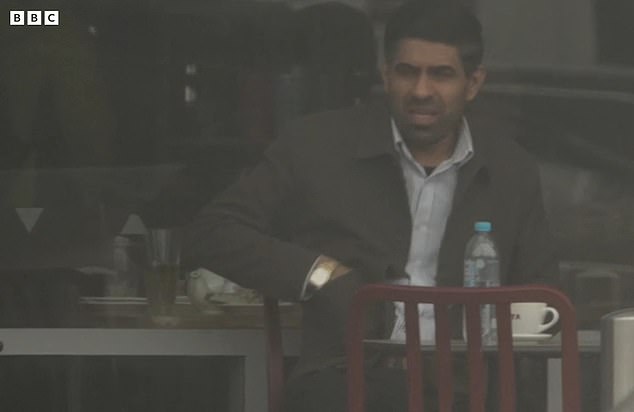
In the BBC’s expose, Shaxawan (pictured, in the BBC’s coverage) boasts to an undercover reporter posing as a Kurdish asylum seeker: ‘We have customers in every city’
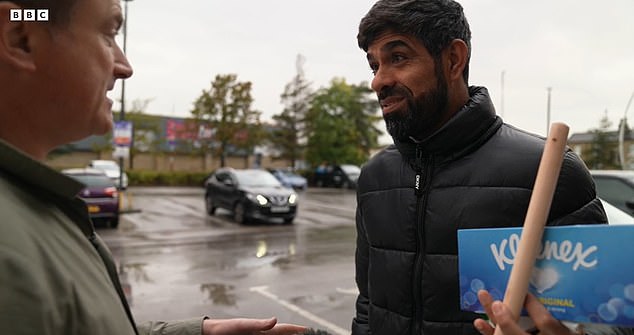
When confronted by the BBC, Shaxawan (pictured, in the BBC’s coverage) categorically denied ‘every allegation, insinuation and claim made’
In the wake of the revelations the Home Office said it would launch an investigation.
Home Secretary Shabana Mahmood said: ‘Illegal working and linked organised criminality creates an incentive for people to come here illegally. We will not stand for it.’
Ms Mahmood said the Government had increased raids by 51 per cent, and this year raised the fines for businesses to £60,000 per person found working illegally.
She added that the Government had seized millions of pounds worth of unlicensed goods, ‘banned dodgy directors and removed more than 35,000 people with no right to be in the UK’.