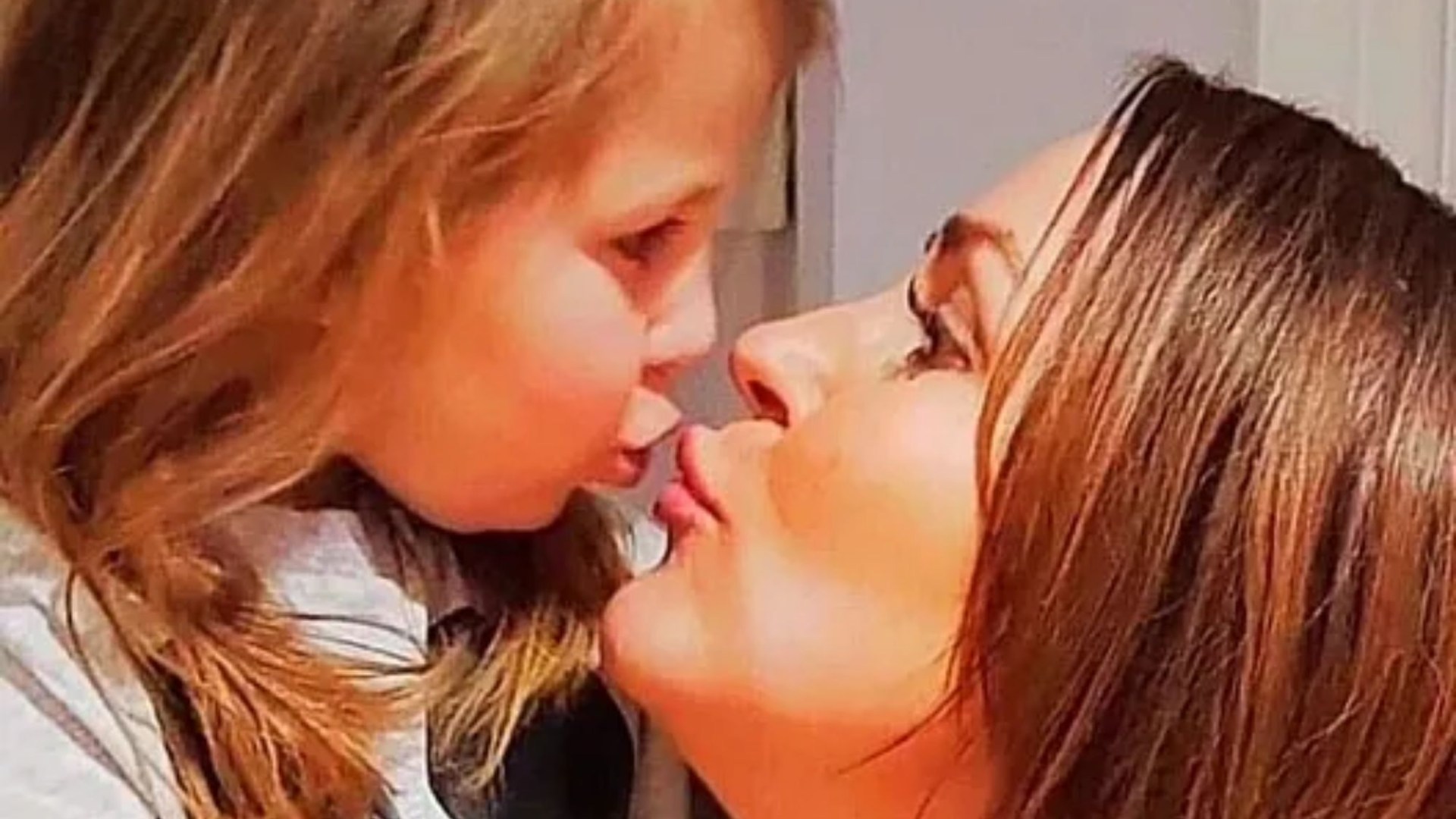
FREYA Bevan was just nine years old when she took her last breath and died in her mum’s arms.
The family’s nightmare had started seven years earlier, when Freya began vomiting frequently with a suspected dairy intolerance. The truth, however, was much more deadly.
Two months later, tests revealed the real cause of her vomiting was a brain tumour which, over the next seven years, would return twice more.
As Freya endured gruelling surgery and chemo, Katherine exhausted every avenue to save her daughter – even raising more than £100,000 for her to fly to Oklahoma, United States, for proton beam radiation to destroy the cancerous cells.
Tragically, it was in vain, and in December 2021, Freya passed away.
“Half of my heart went with her that day,” says mum-of-three Katherine, 52, from Neath, South Wales.
“When she took her last breath, I felt her soul leave her body.
“The pain of losing her is indescribable. It hurt so much. Everything became a blur.”
Freya was just 20 months old when the vomiting began.
Katherine wasn’t overly concerned at first, assuming her daughter might simply have a milk intolerance or allergy.
“I took her to the GP but doctors didn’t seem to be able to find an answer for why Freya was being sick all the time,” she says.
“It took months of testing and hospital stays to find out what was wrong.”
Devastatingly, tests in 2014 confirmed that 22-month-old Freya had a stage 4 PNET brain tumour the size of a golf ball and needed urgent surgery to remove it.
“I remember that day so clearly,” Katherine, who is also mum to Olivia, 27, and William, 21, says.
“Freya was sitting on my lap and the doctor told me she had a brain tumour. I thought, ‘How can this be happening?’
“In that moment, I was terrified.”
Around 420 children are diagnosed with brain tumours every year in the UK.
Symptoms vary depending on their position, but can include headaches, nausea, double vision, weakness on one side of the body, seizures, behaviour changes and problems with posture.
Some of Freya’s tumour was successfully removed, but surgeons couldn’t get it all due to its dangerous position, so Freya underwent chemotherapy followed by the proton beam therapy in the US.
“In spite of her suffering, Freya was never without a smile,” Katherine says.
“The treatment was so hard on her tiny body but she got through it.
“After the proton beam therapy, the cancer, it seemed, had all but disappeared.
“Freya turned back into the bubbly girl she was. We took her on wonderful holidays and days out and she then began nursery.
“She was such a happy little girl. She loved life.”
All I could do was hold her as she took her last breath. I would have died for her there and then but I couldn’t
Katherine Bevan
By age seven, Freya was thriving. She was enjoying school, loved learning TikTok dances and winning the board game Guess Who?
“All parents love their children but she really was a ray of sunshine wherever she went,” Katherine says.
But in October 2020, a routine scan revealed Freya had a shadow on her brain.
Tests later confirmed her tumour was back, and it had doubled in size.
Freya underwent nine hours of surgery to remove it, only for it to grow back again by the time radiation was due to start for the second time.
The radiation went ahead and reduced the tumour, but devastatingly, it returned a third time.
This time, doctors couldn’t operate.
“I refused to give up,” Katherine says.
“After lots of research I found tablets from Germany and a personalised vaccine from Mexico to target her tumour.
“Freya took everything without complaint.
“I just couldn’t give up on trying to save her. She had her whole life ahead of her.
“But I watched her become weaker and she just couldn’t fight anymore.
“All I could do was hold her in my arms as she took her last breath.
“I would have died for her there and then, but I couldn’t.”
The most common symptoms of a brain tumour
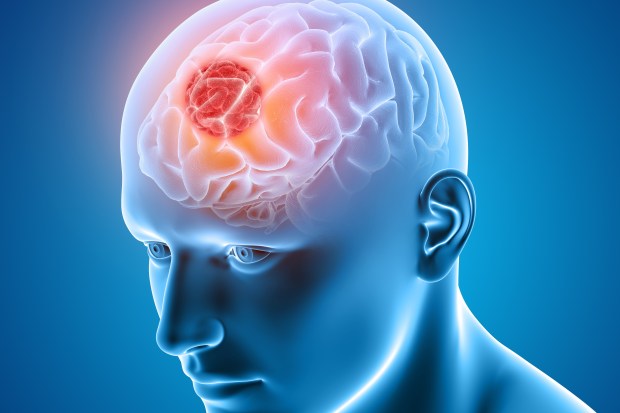
More than 12,000 Brits are diagnosed with a primary brain tumour every year — of which around half are cancerous — with 5,300 losing their lives.
The disease is the most deadly cancer in children and adults aged under 40, according to the Brain Tumour Charity.
Brain tumours reduce life expectancies by an average of 27 years, with just 12 per cent of adults surviving five years after diagnosis.
There are two main types, with non-cancerous benign tumours growing more slowly and being less likely to return after treatment.
Cancerous malignant brain tumours can either start in the brain or spread there from elsewhere in the body and are more likely to return.
Brain tumours can cause headaches, seizures, nausea, vomiting and memory problems, according to the NHS.
They can also lead to changes in personality weakness or paralysis on one side of the problem and problems with speech or vision.
The nine most common symptoms are:
- Headaches
- Seizures
- Feeling sick
- Being sick
- Memory problems
- Change in personality
- Weakness or paralysis on one side of the body
- Vision problems
- Speech problems
If you are suffering any of these symptoms, particularly a headache that feels different from the ones you normally get, you should visit your GP.
Source: NHS
Now, Katherine says her daughter lives on through her work.
In 2022, a year after Freya died, she qualified as a counsellor, specialising in bereavement.
“My work has been borne out of unimaginable pain but I know Freya is with me,” Katherine, who now runs Freya’s Freedom of Mind Counselling Services, says.
“Losing a child can be the loneliest place in the world. It’s all-consuming.
“I want to help other people who are grieving to feel less alone.
“For me, doing this work keeps Freya’s memory alive.”
She adds: “I know that my address book certainly changed when Freya died.
“Sometimes the people you think will show up simply don’t or can’t.
“Sitting with other people’s pain is incredibly difficult.
“I know Freya is with me every moment of each day. This work is for her.
“I know by doing it, my beautiful daughter didn’t die in vain.
“Her memory will always be alive within me and I know one day I will see her beautiful face again.
“It gives me the strength to go on.”