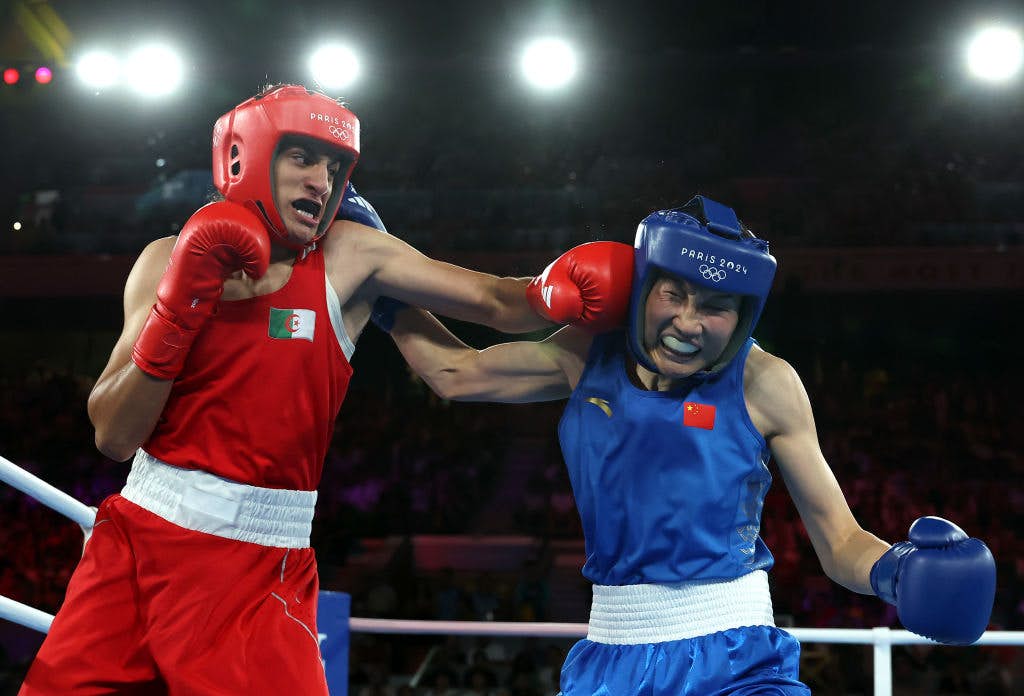
The spectacle of men punching women in the face in Paris in 2024 may have been the final straw for the International Olympic Committee. Not because of its sense of fair play, or even concern about safety, but because of its instinct for self-preservation.
Public opinion has long opposed admitting men who identify as women into women’s sport. The backlash after the boxing debacle was humiliating for IOC officials who had to defend it at press conferences during the Games.
In 2003 a working group recommended to the IOC that men who “fully transitioned” to live as women — that is, had their genitals removed — should be allowed to participate in women’s sport. It thought such men would be very rare and past their sporting prime. Since televised elite competitions would be unaffected and only older women would lose out, sporting officials didn’t think it mattered.
But in 2015, after trans-identifying men had won human rights lawsuits in France and Canada, the IOC relaxed the eligibility criteria to admit trans-identifying men to compete in female events as long as they took drugs to lower their testosterone. Joanna Harper, a trans-identifying recreational runner, said that he and a handful of others had found these drugs slowed them right down, so it would be fair. Female athletes were not consulted.
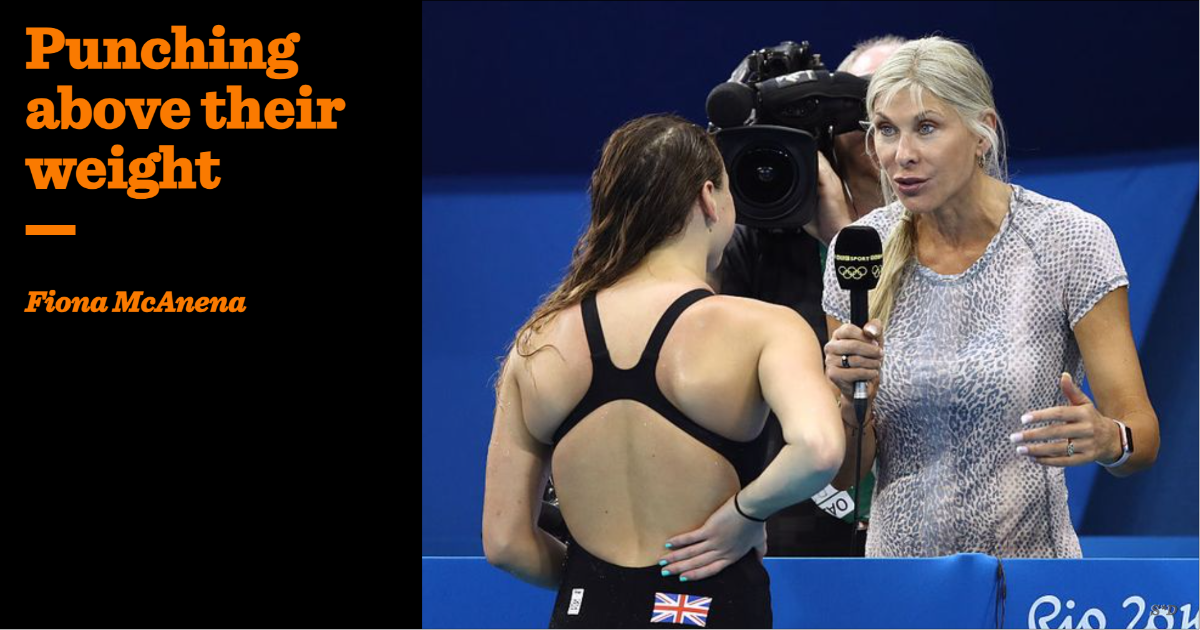
In 2019 the British Olympian Sharron Davies, together with the campaign group Fair Play For Women, mobilised some 70 elite athletes, both female and male, to write to the IOC board asking it to consider the evidence and restore fairness for female competitors. Those who signed mostly wanted their names kept out of the media, for fear of losing sponsorship deals, coaching roles or commercial opportunities, as Davies had done. The IOC board did not respond.
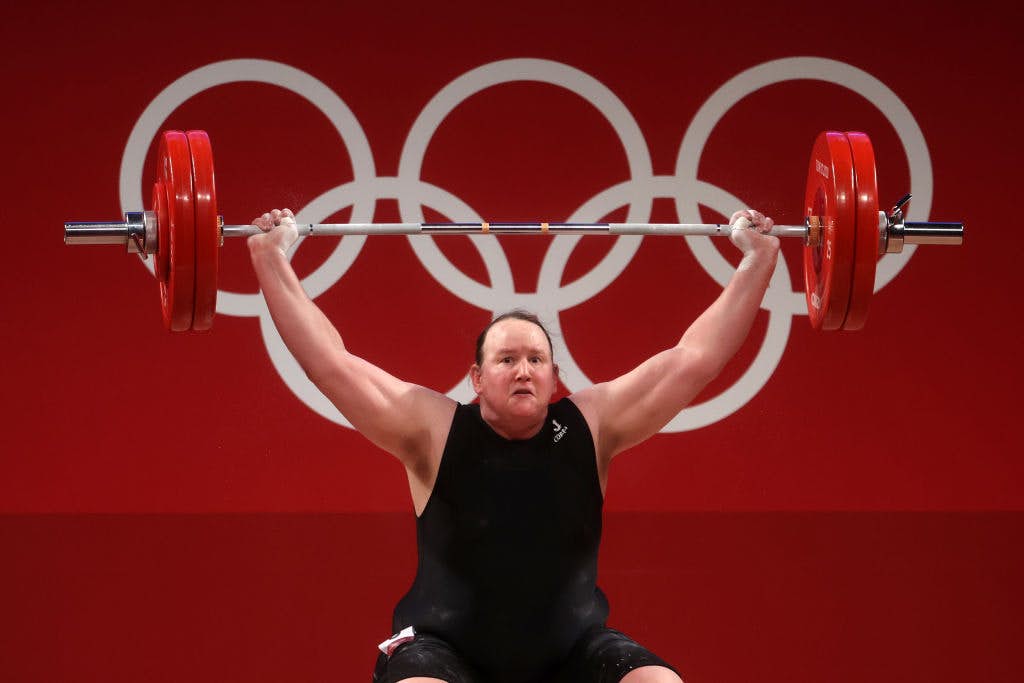
At the Tokyo Games in 2021 Laurel Hubbard, a weightlifter from New Zealand, took one of the eight places in the women’s +87kg final, having never been world class competing among men. At 43, he was twenty years older than the rest of the field. The BBC’s gushing profile was headlined, “the reluctant history-maker”. It quoted the IOC medical and scientific director, who said, “Laurel Hubbard is a woman and is competing under the rules of her federation.”
By then, public opinion was shifting. Polls found that most people instinctively understood the unfairness to women and girls. The IOC’s medical and scientific director, a British doctor and Olympic rowing gold medallist called Richard Budgett, was charged with reviewing the approach. Davies was one of those he consulted, along with Nic Williams of Fair Play For Women, though they kept this private as he had requested.
Other consultees did not. Veronica Ivy, formerly Rachel McKinnon, a male cyclist who had won a world masters women’s event, posted online about advising the IOC. Ivy’s work promoting male inclusion in female sport included arguing with tennis legend Martina Navratilova on Twitter (as it then was), pointing out that people do not play sport with their genitals. Indeed.
Even though it had created the problem, the IOC seemed unwilling to resolve it
The outcome of this consultation, published in November 2021 to widespread astonishment, was the Framework on Fairness, Inclusion and Non-Discrimination. Its most startling recommendation was that there should be “no presumption of advantage” when considering trans-identifying athletes, or those with a disorder of sex development (DSD). Put another way, if a man says he is a woman, assume that his inclusion in women’s sport is fair.
The word was that the IOC medical and scientific team had been overruled by the human rights and public affairs people, who had insisted that recognising gender identity was a human right. Behind this move was an Australian academic sociologist, Madeleine Pape. When not writing IOC “inclusion” policy, Pape spent her academic career denouncing “biofeminists” — people who thought biology was essential to being a woman.
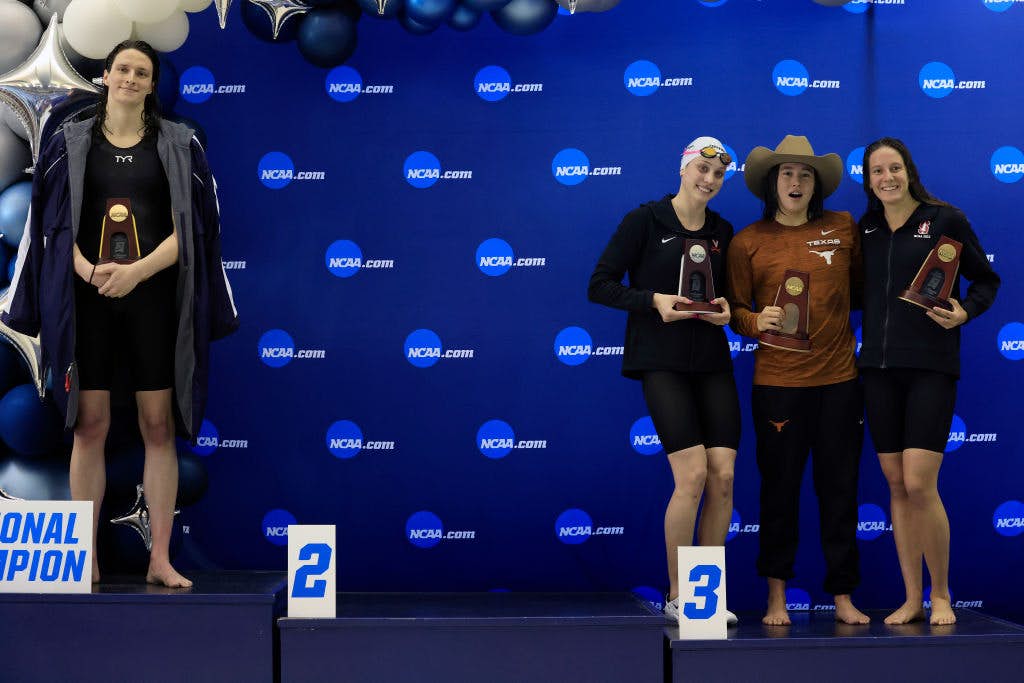
Meanwhile, resistance was growing elsewhere. Widely publicised cases like American swimmer Lia Thomas and Welsh cyclist Emily Bridges, males who discovered a female identity after reaching the limits of their sporting potential in men’s teams, prompted their sports’ world federations to return to sex-based eligibility in 2022. The biggest Olympic sport, athletics, had been battling male runners with DSDs for many years; South African Olympic champion in Rio 2016 Caster Semenya was the best known and most litigious. In 2023 World Athletics announced that DSD and transgender males would be excluded from all women’s events.
Once three big Olympic sports — athletics, swimming, cycling — had returned to protecting women’s category on the basis of biology, the IOC position seemed to be that each sport could make its own rules. Even though it had created the problem in the first place, it seemed unwilling to take a stand to resolve it.
Then came the 2024 Paris boxing, which was run directly by the IOC because of allegations of corruption within the sport’s international federation. So when IOC representatives were asked in front of the cameras about the inclusion of Imane Khelif and Lin Yu Ting, both of whom won gold, it was their own choice to accept “passport sex” as adequate that they had to defend. In one memorable conference, Thomas Bach, the IOC’s president, claimed that determining who was male or female was beyond the IOC, and that any scientist who could assist with this perplexing challenge would be welcome.
In March this year Kirsty Coventry, a Zimbabwean Olympic swimmer, was elected as the new IOC president. Six months earlier, Richard Budgett had retired and been replaced as head of the Science and Medicine Commission by another Olympic rower, Jane Thornton of Canada. Thornton set up a commission — presumably with Coventry’s blessing — to advise on DSD and trans athletes. She invited evidence from chief medical officers from international federations including World Rugby, the first to revert to sex-based sport in 2020.
Last week came reports of the commission’s findings. Suddenly it wasn’t so complex after all: the evidence shows that men retain sporting advantage even if they suppress their testosterone. While no policy has yet been announced, Olympic sport is clearly moving back towards objective reality.
What now?
This is a pivotal moment. The IOC’s approach twenty years ago cascaded down through international federations and national governing bodies all the way to grassroots sport. If anyone along the way queried “trans inclusion”, policy-makers would point back at the IOC.
In time, most sports will again follow its lead, this time back to sanity. But don’t expect any apologies or recompense for the stolen medals, lost places, injured bodies and humiliation experienced by thousands of female athletes. So far at least, the IOC hasn’t acknowledged its own fault in allowing women to be punched in the face by men.
Football, the biggest sporting holdout, remains a huge problem. Denied easy success in women’s athletics, DSD males will flock to women’s football, which has only recently become a viable career option. The star players in the USA national women’s soccer league are Zambians suspected by some, including JK Rowling, of being males with the same DSD as Semenya. One of them, Barbra Banda, was the BBC Women’s footballer of the year in 2024.