This article is taken from the November 2025 issue of The Critic. To get the full magazine why not subscribe? Get five issues for just £25.
The history of “English Studies” — defined as the teaching of English Literature in schools, universities and colleges of further education — is usually done in broad brush strokes, and on a canvas so brightly coloured that personality tends to crowd out curricula. And so F.R. Leavis stands in his Downing College lecture room loudly disparaging the belles-lettristes. Over in Birmingham, Professor de Selincourt is busy denouncing T.S. Eliot as a malign influence on the impressionable young. Meanwhile in hidebound Oxford a gang of evil old philologists is hard at work ensuring that “English” doesn’t manifest itself as what one grand Oxonian eminence called, with maximum condescension, “chatter about Shelley”.
This, essentially, is the world of such introductions to the subject as Stephen Potter’s The Muse in Chains (1937) and the academic sections of John Gross’s The Rise and Fall of the Man of Letters (1969).
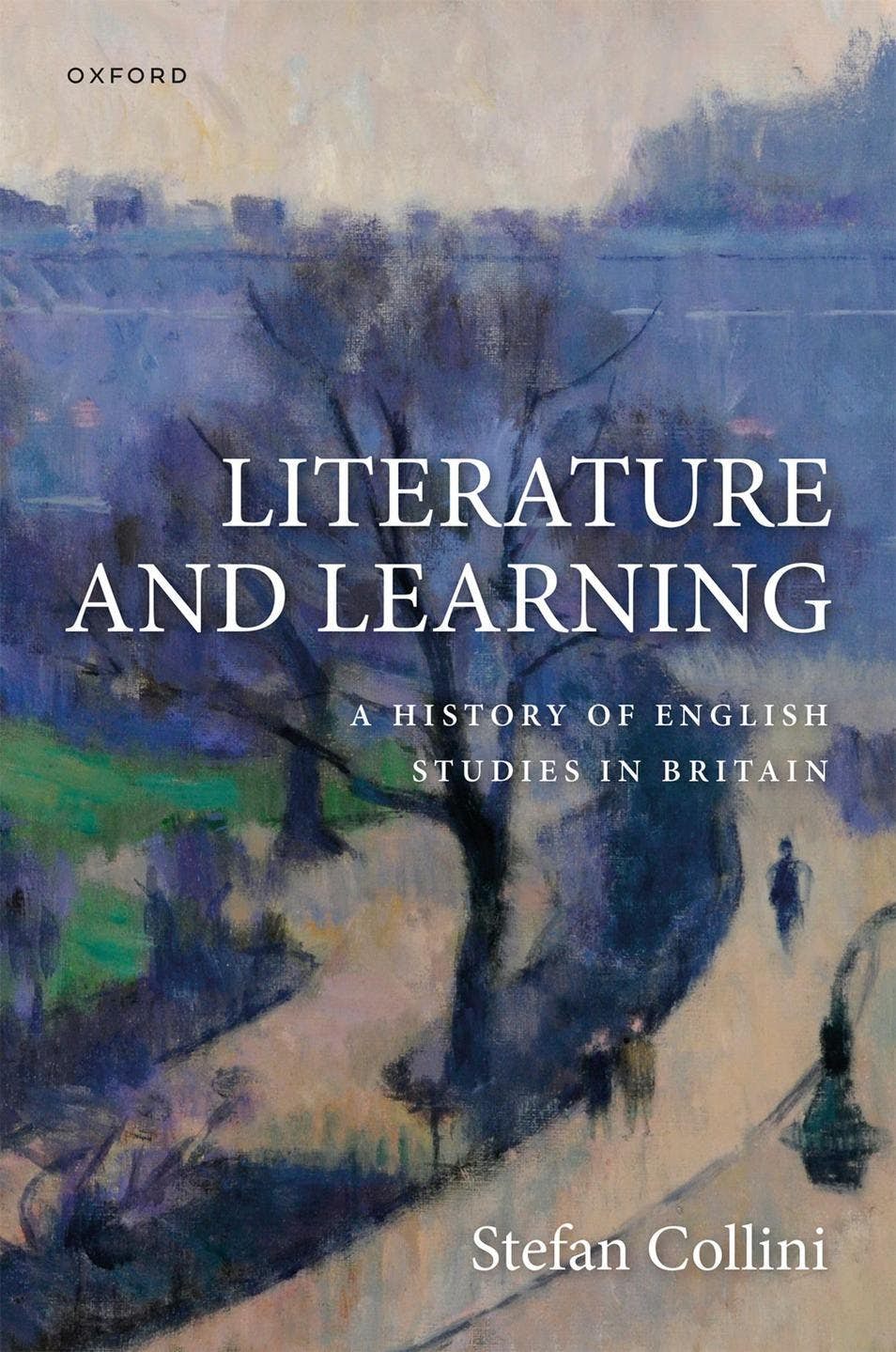
Neither of them is exactly wrong in their accounts of how English came to be taught in Great Britain from the mid-19th century onwards, but both were the work of one-time university lecturers who had quit the profession for freelance journalism and each had, if not scores to settle, then points to make beyond straightforward historicising. Stefan Collini, by contrast, is a career don, an emeritus Cambridge professor of Intellectual History and English Literature, and the keynote of this mammoth endeavour is its attention to detail.
In Professor Collini’s hands all is nuance and fine shading. Alleged revolutions in taste and scholarship are crisply redefined as incremental adjustments. Dramatic shifts in teaching practice are ransacked for elements of continuity.
I.A. Richards, long seen as a figure of paralysing importance in inter-war-era Cambridge English, is pronounced a “mythological creature” credited with far more influence than he actually possessed, and James Joyce can be found asking that a copy of Ulysses be sent to the deeply conservative professor George Saintsbury on the grounds that “I am old-fashioned enough to admire him though he may not return the compliment”.
Even the Oxford philologists are seen as reasonable men, trying to preserve a bedrock of seriousness in a newfangled discipline that at all times had threatened to get out of hand.
All this takes us back to first principles, a topic to which Collini pays particular, if not remorseless, attention. If “English” had to be taught in universities — and by the 1860s it was generally accepted that it should be — then how did you teach it and by whom should it be taught? The Scottish Universities offered a template, but many Scottish students arrived in their mid-teens and standards were not high.
There had been a Rawlinson Professor of Anglo-Saxon at Oxford since 1795, but this did not mean that Oxford had ever shown much enthusiasm for its national language and the literature that followed in its wake.
When an English faculty was finally established at the end of the 19th century, in the teeth of internal opposition, its distinguishing mark was how little it resembled a modern university English department: the inaugural Merton Professor was a deeply obscure specialist from the University of Göttingen, and the curriculum had clearly been designed on the model of the long-established Classics course.
As Collini demonstrates, such caution was entirely foreseeable. Professor Napier might have been mocked for “delivering lectures on subjects which very few people could understand in a voice nobody could hear” (Potter), but most of the other applicants were literary journalists with no scholarly track records.
As for his keenness on “interestingly abstruse problems of Anglo-Saxon accidence” (Potter, again), philology was the fashionable academic discipline of the Victorian age, esteemed for its Teutonic rigour and distinct lack of greenery-yallery camouflage (J.R.R. Tolkien, who succeeded to the Rawlinson chair in 1925, described himself as a “scientist of language”). The difficulty, apparent even when Napier delivered his first lecture, was that of personnel. Which is to say that hardly anybody, then or now, could be made to take an interest in the pre-Chaucerian literature that so many English departments, taking their cue from Oxford, delighted in offering students.
As might be expected from a work that roams unappeasably beyond its 600th page, Literature and Learning addresses its subject in the widest terms. The introduction of English as a subject for Civil Service examinations; the rise of red brick universities; the diffusion of what was taught in higher education into school syllabi; the emergence of career structures and new opportunities for women academics — all this is catnip to Professor Collini.
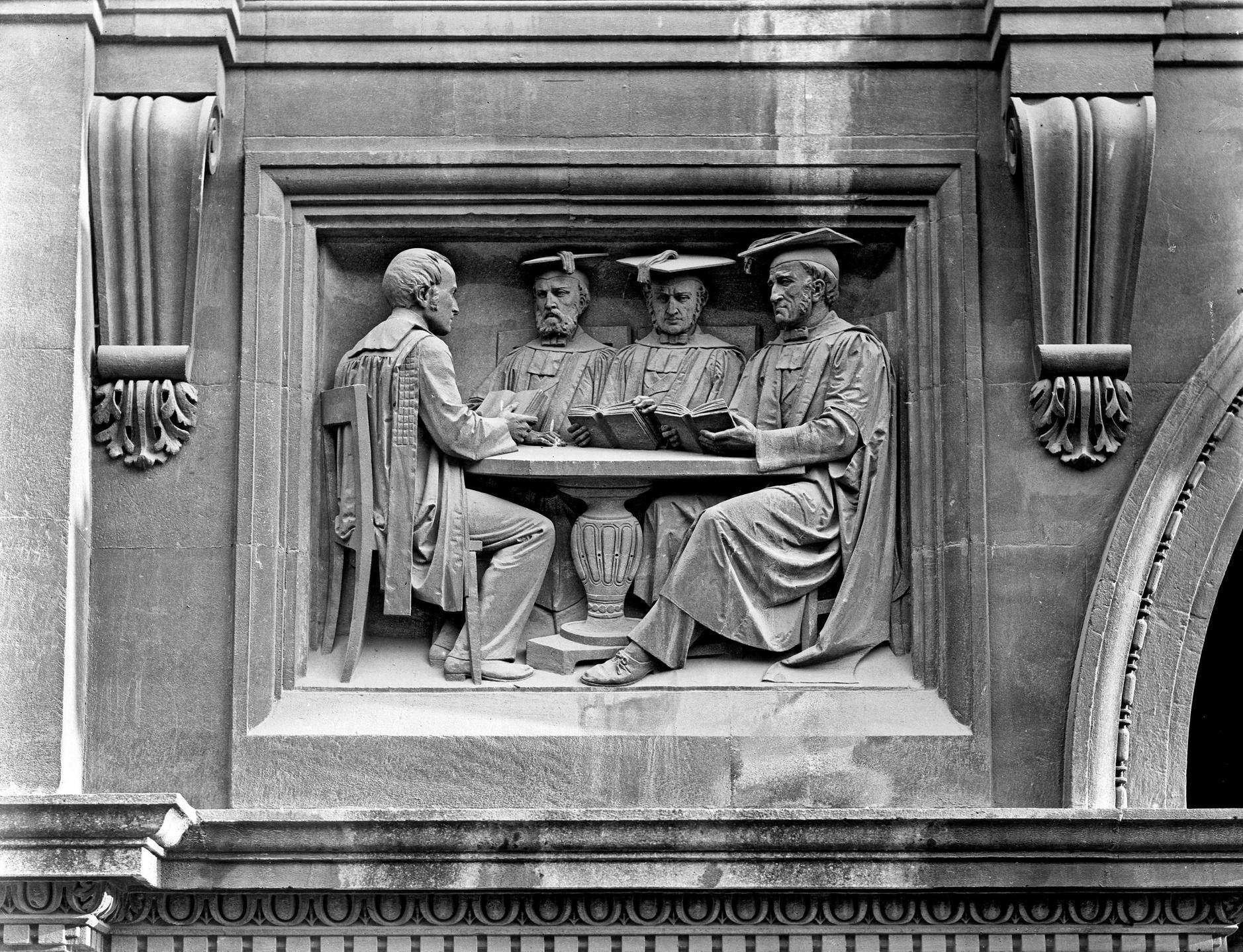
a student (photo credit: English Heritage/Heritage Images/Getty Images)
But one of his broader themes, it turns out, is how long the forces of reaction managed to hang on. Compulsory Anglo-Saxon clung limpet-like to the Oxford English course until the 1960s, and pre-O-Level School Certificate set texts were a riot of selections from Addison, Goldsmith and Dryden until the post-war era.
Gradually, in the post-1945 era, another theme starts to make its presence felt. This is the influence of “English” on culture per se, and the extent to which the teaching of literature may be thought to have affected the world beyond the seminar-room window. Collini’s view is that, come the 1960s, English Studies had reached a high point of self-confidence and esteem, after which there was nowhere to go but down.
To set against this are the many disillusioned testimonies of English dons from the mid-1950s onwards — Professor Treece, for example, in Malcolm Bradbury’s Eating People is Wrong (1959), who in his bleaker moments wonders what the point is of welcoming onto campus each autumn a new group of students who won’t read the books, will spend three years idling and will go on to acquire jobs in advertising.
Bradbury, by the way, rates a single index reference. His friend and fellow-academic David Lodge gets the same. If Literature and Learning lacks anything, it is a survey of the post-1960s era in which writer-academics of the Bradbury-Lodge school offered a bridge between the academy and newspaper journalism and chill ideological winds began to blow in from Paris and Yale. Presumably, Collini feared to expand his book to an unmanageable length, but I should have enjoyed hearing what he had to say about structuralism, deconstruction, Lacan, Derrida and the institutional capitulations of which so much academic English Lit has lately consisted.
On the other hand, he is very funny on the subject of Terry Eagleton’s After Theory (1983), with its “curious twists”, its “awkwardnesses and infelicities” and its “reductive pastiche”. No doubt Professor Eagleton will want to get his own back somewhere, but he will be wasting his time. This is a terrific book, which deserves the widest possible circulation.