This article is taken from the November 2025 issue of The Critic. To get the full magazine why not subscribe? Get five issues for just £25.
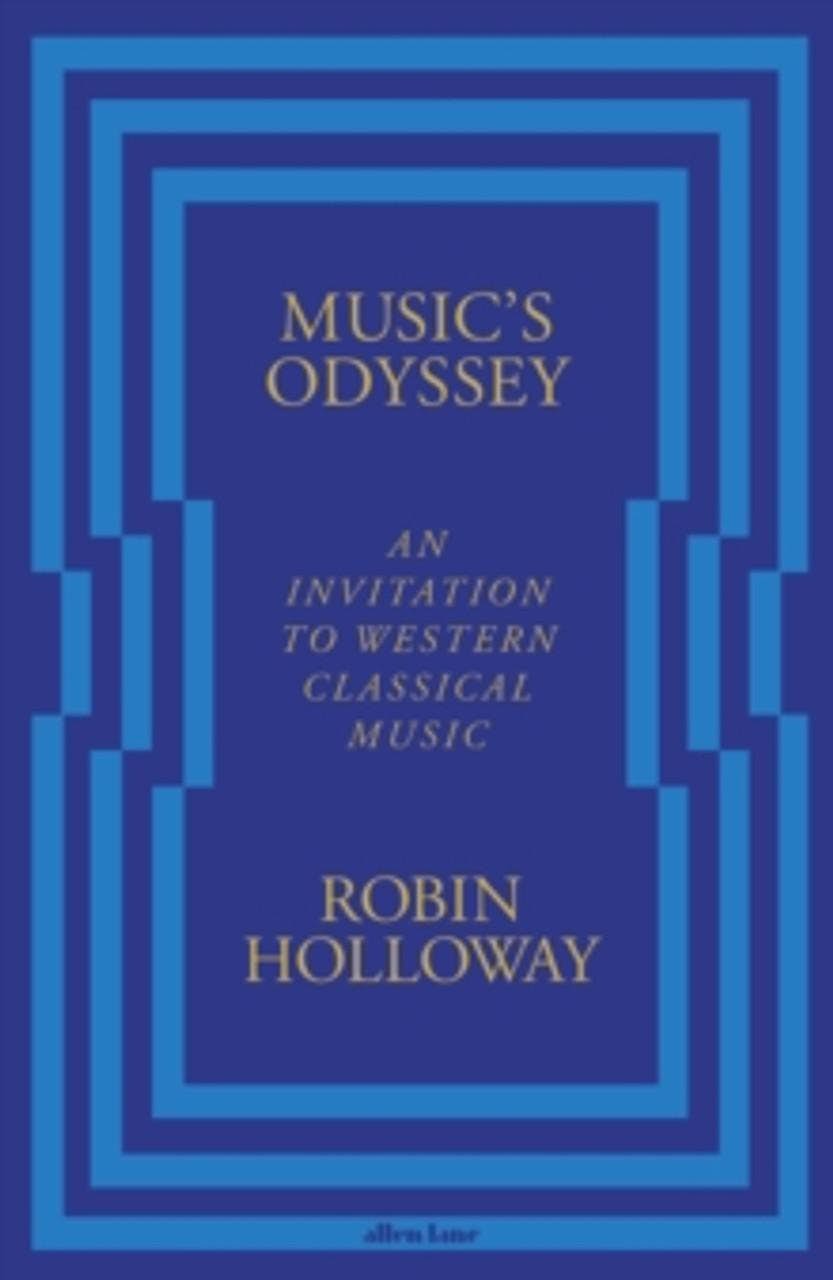
A descriptive voyage through the whole of classical music, on which Robin Holloway ventures in his new book, Music’s Odyssey, takes in the most sublime, complex and multi-faceted abstract achievement of Western culture — of any culture. It emerged from religious chant and folksong, after centuries of gestation, at the point when unison finally gave way to polyphony.
It then took wing in the Renaissance, where the displacement of God by man as the proper study of mankind was mirrored by the establishment of a tonic or home key which music could leave and return to. This was a critical development; for the first time, individual pieces of music became memorable. The conventions of modern harmony were born, bringing with them the possibility of new depths of expression, exploited in the increasingly secular 17th century by Monteverdi and Purcell. Opera and oratorio were invented.
The ensuing golden age represents the cultural highpoint of the German-speaking world, whose patchwork of princedoms and city states, paradoxically fertilised by the blood of the Thirty Years’ War, encouraged patronage and competition.
It is here that, for Holloway, the story really gets going. The Old Testament was the epoch of Handel and Bach, the complexity and intensity of whose music are scarcely captured by the term Baroque. The New Testament — the classical heart of classical music — was impelled by the rise of the sonata-form principle, whose supreme practitioners, Haydn, Mozart, Beethoven and Schubert, are composers in a league of their own (Bach being hors concours).
There followed the increasingly self-conscious Romantic era with productions loaded with ever more explicit emotion, but at a cost: music began to expend its own capital. The process culminated with Wagner, a nuclear explosion from which music never fully recovered. The long 20th century has witnessed an unprecedented Babel of radically inconsistent ways in which composers, none of whom approaches the stature of the predecessors identified, have picked through the wreckage in an attempt either to reconstitute the fragments or (misguidedly) to make a new start.
Music’s vast dismembered brocade absorbs and enchants practitioners and listeners alike. Let those who do not care for it pursue other arts or none. For the rest, Rachmaninov’s dictum applies: “Music is enough for a lifetime, but a lifetime is not enough for music.”
Enthusiasts picking up this book — no small feat; it runs to 1,150 pages — will straightaway recognise a companion for life. They will be inexhaustibly educated, provoked and amused by the absoluteness of its commitment and the sharpness of its judgements. This is no bird’s-eye view. Himself a composer and teacher, Holloway abjures “scholarship” and dives into countless individual works, of which many are subjected to ball-by-ball commentary in a coruscating if sometimes eccentric effort to cajole language into explaining what each composer’s music sounds like, and how it captures the aural imagination.
Holloway’s assessments are perceptive yet uncoercive, almost always hitting the bull’s-eye. Warm-hearted, leavening its frequently outspoken criticisms with humility — even regret; the book’s endearing loquacity, humour and energy bring to mind the literary fecundity of a Burgess or a Joyce. It is hard to believe that one person possesses and has been able to put on paper such an accumulation of knowledge. Above all, it succeeds in irresistibly conveying the author’s love of his topic.
One senses that the length of Music’s Odyssey has been more problematical for the writer than it is for the reader, who is encouraged to dip rather than wade. The acknowledgements section refers to publishing constraints dictating a “Procrustean” process of shortening. Holloway does not always help himself, especially by embarking on lengthy and unnecessary digressions into the plots and extramusical merits of operas, which occasionally put the reader in mind of Monty Python’s “All England Summarise Proust Competition”.
It is perhaps the need to compress which entails many passages written in breathless, quasi-note form; dots and dashes abound; some sentences are unburdened by main verbs. This is part of the book’s appealing character, but the author’s urge to communicate and share, from which the reader so benefits, cannot have assisted the production process.
To what readership, then, is Music’s Odyssey addressed? Holloway says of Richard Taruskin’s Oxford History of Western Music that it is “only open in full to a reader who already possesses the necessary basics”. The same applies here. Holloway calls the book an invitation; an introduction it certainly isn’t. Its “allusive style” (his phrase) means that it is unlikely to make many converts. Several passages — some of the choicest as regards the initiated — are barely comprehensible without pre-existing familiarity. Yet what the non-music-lover cannot fail to derive from the book is the sheer richness of experience conferred by a detailed acquaintance with the domain.
Any undertaking of this ambition raises questions of balance. These arise not merely from the need for “drastic selectivity”, which Holloway acknowledges and which he manages by focusing on “perceived supremacy within the oeuvre” of each composer. The issue is a broader one, resembling that distortion which enlarges the relative size of people on the edge of amateur photographs. Some peripheral figures receive more attention than is deserved. This is not necessarily a shortcoming; the fact that cognoscenti spend more time listening to half-a-dozen nonpareil composers than the rest put together does not mandate the same treatment in a book.
Even so, there persists a concern that too much attention is lavished on minor characters. Ives and other US composers are given many times the space accorded to Chopin and Liszt. The latter may be a justified blind spot (whom Holloway excoriates for the “sheerly awful slag and debris” that comprise much of his output), but the former is a master, and both are, as he concedes, of the first importance.
Baroque and Classical composers occupy barely a quarter of the book. Bach in particular is short-changed. An exhilarating tour d’horizon of his life and legacy proceeds to a detailed discussion of a few cantatas — and that is pretty much it. Haydn receives only 16 pages, an allowance the more regrettable because there is superbly penetrating writing here, as Holloway muses on how this composer above all raises the question of whether the essence of music is form or emotion.
He can be rather tough on Mozart (“I await execution”), crediting him with infinite resourcefulness of ideas, rather than in structures or processes. Some may blanch at his adoption of Glenn Gould’s remark that “on an off day [he is] as dull as an interdepartmental communication”. In his treatment of Beethoven there is an element of contrarianism. We know what he means about the gargantuan Missa Solemnis (“on one’s knees in awe — a position where one can see the feet of clay and even pull the leg”), but it is hard, for example, to accept his description of the end of the Op. 111 piano sonata as a “clockwork paradise”.
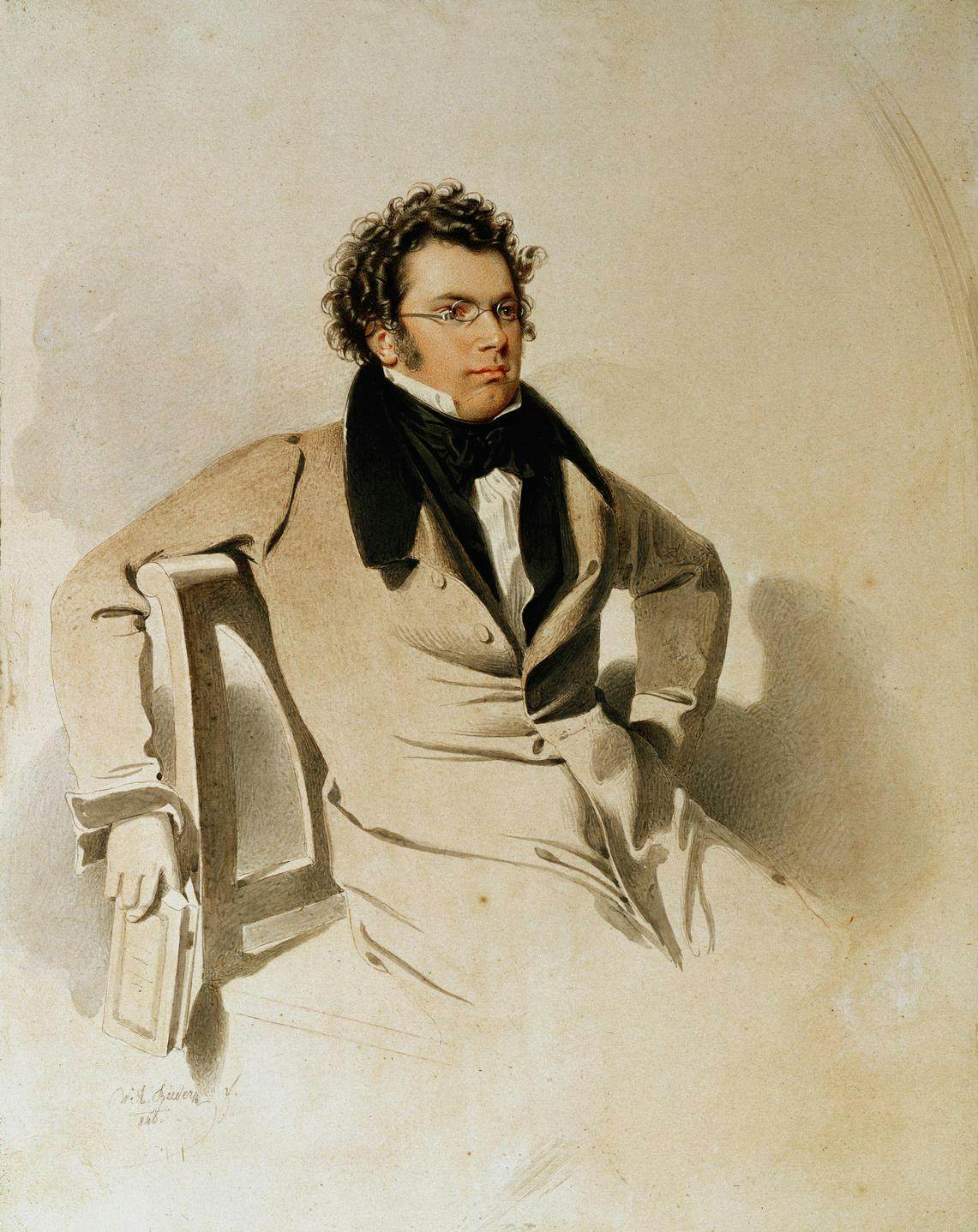
He is more protective of the “Apollonian” Schubert, confessing that to hear him vacuously criticised leaves “a spiritual contusion” and concluding that “no other composer has added so largely to what music, in its innate nature, not foisted on it [presumably a dig at Beethoven and Wagner] can say”. Holloway’s emphases probably reflect his own predilections. Although he identifies Bach and Schubert as the sun and moon of his musical universe, the period he gravitates towards most naturally begins with the late Romantics.
Those whose interests lie in French music from Fauré onwards, the English after Elgar and the cul-de-sac of the second Viennese school will enjoy lengthy chapters on each. Readers will decide for themselves whether Stravinsky deserves more space than Beethoven. Ligeti is examined in depth, but it is regrettable that there is not much on Kurtág and nothing on Adès (Holloway’s own pupil).
Yet occasional criticisms of balance or tone in this stupendous achievement are cavils only. Here is not a dull page — scarcely a sentence that does not resonate. The book’s aphoristic acuity compels agreement time and again, as with Holloway’s precise identification of the nature of Wagner’s crime in the eyes of his detractors — that in compelling music to attempt matters that it intrinsically cannot do, he succeeds in “musicali[sing] the extra-musical”.
He is brilliant at articulating the grounds of both our worship of and our secret reservations about the masters. He collects myriad glorious one-liners: Liszt’s orchestral music, according to Stravinsky, is “only kept alive by perpetually renewed neglect”; Poulenc’s tongue was “always in his cheek — except when it was in somebody else’s”. Music’s Odyssey is a limitless treasure store, which will enlarge your knowledge and confirm your passion. Buy it and revel.