This article is taken from the November 2025 issue of The Critic. To get the full magazine why not subscribe? Get five issues for just £25.
There is an empty restaurant in central Oxford gathering dust. Through the windows one can see the bar still decorated with green tiles arranged in a geometric pattern which was fashionable — and dare I say cutting-edge for Oxford — in the early 2010s. It has been shut for a few years, likely another victim of the pandemic and its after-effects which have wreaked destruction on Britain’s restaurants.
Crowds of students and tourists bustle around outside, looking through the lodge of Exeter College and gazing at the curves of the nearby Radcliffe Camera, but this particular premises has always struggled. My godmother — a native of Oxford and Witney — told me soon after it opened that it wouldn’t last long. She had seen so many ventures come and go, from shops to curry houses, in the handsome stone building, over the years.
The restaurant in question was the Turl Street Kitchen. For a short period of time it was the food talk of Oxford, earning a positive review in The Times from Giles Coren — who praised the density and richness of its smoky sausages — and bringing to the city echoes of Fergus Henderson’s nose-to-tail eating ethos, which was undergoing a revival in London at the time.
Oxford remains a reasonable place to eat in. The Magdalen Arms off Iffley Road keeps the nose-to-tail fires burning, serving wobbly cuts of meat, offal and game — my brother and I once shared a whole hare there. But the absence of the Turl Street Kitchen in the city’s centre still feels sore.

Despite Oxford’s true uniqueness as a city, at times the centre can feel like a mishmash of Canterbury, York, Bath or Cambridge: touristy medievalism overshadowed by branches of Zara, Pret and Itsu, surrounded by street performers and chalk pavement artists.
Dozens, possibly hundreds, of people earned a modest living in the Turl Street Kitchen, over the decade or so it was open. One of those people, for a short while, was me.
Before politics and writing articles in these pages came cooking. After finishing my final exams for my history degree, I sent an email to the restaurant asking for a job. With thoughts of the Peasants’ Revolt, revolutionary France’s military mobilisation tactics and Lollardy fading from my mind, I felt it was time to look at some sort of employment. After a couple of half-hearted job applications to shiny organisations ended up in the bin — the sheer value I could have offered to ad agency WPP will never be known — I realised that the kitchen called.
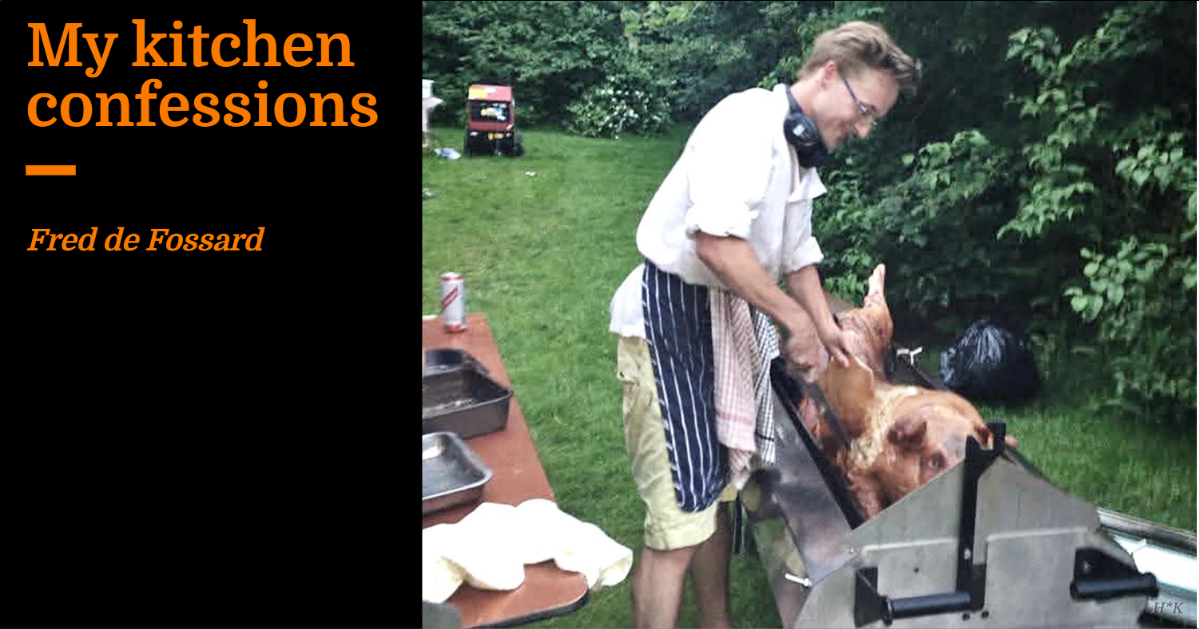
I had spent much of my spare time at university cooking. I ran my college’s parties for most of my time there. Along with a similarly gastronomic friend — who pursued a more sensible line of work after graduation — we cooked whole pigs, sides of beef and lamb, and made five-gallon vats of potato salad, coleslaw or tzatziki for the college’s garden parties.
On bonfire night we would simmer vats of mulled wine and mulled cider. When our college would play its Cambridge namesake for the annual grudge match, we would cart barbecues half a mile or so to the playing field to cook sausages for everyone on miserable November mornings. For my 21st birthday, I was given half a pig and instead of writing an essay on English priests’ sermons responding to the Black Death, that day I devoted my time to some amateur butchery.
Upon arriving at the Turl Street Kitchen for a trial shift, I was directed to a sink at the back of the kitchen and told to peel around a hundred boiled eggs, which were sitting in cold water. After that I would be given my next task. I was a relatively novel sight in a professional kitchen, but I certainly wasn’t the first history graduate with pretensions they had taken a chance on.
Though being a chef is a legitimate “profession” — with centuries of skill, craftsmanship and iteration of processes underpinning it — I always like the fact that restaurants also have the capacity to bring enthusiastic amateurs on board if they have the aptitude and minerals for the task ahead.
I was surrounded by people who made up each archetype of a professional kitchen. The head chef was a shaven-headed Oxford local with the energy and build of a whippet. He was ruthless during service and operated with terrifying efficiency, seemingly able to simultaneously plate up first courses of sliced ham-hock terrine, sauté a plaice in butter, and start shredding boiled pig’s heads for the next batch of terrine.
Our sous chefs were two wild, ponytailed brothers who lived and breathed every stereotype of chef excess, inhaling pints of lager at the end of our shift, but also teaching me how to emulsify butter sauces for fish and the intricacies of lamb butchery.
Washing the dishes was a rotating cast of characters: sometimes East Timorese refugees (a group of whom curiously lived in a house together in Oxford) of variable reliability, a Liverpudlian who lived in a bedsit above a Yardie pub in Blackbird Leys estate, and a former hand in the merchant navy. All men, of course. Whilst the décor at the front of the restaurant was fashionable, the kitchen was a strictly traditional affair.
Whilst these characters grafted diligently, I tried to join in, with mixed results. After peeling eggs, I was thrown into all sorts of jobs. It was a small kitchen where we all had to muck in. Once, after collecting a huge delivery of crayfish and staggering to the back of the kitchen with them, I was told to pour them all into a deep steel dish, cover them in slices of fennel, lemon and heaps of salt, and then kill them all by hammering them with a rolling pin.
This confused me. I didn’t expect the large boxes in my arms to be teeming with crustacean life, but so they were. Before I opened them up, they were already charging around the kitchen, trying to escape my rolling pin, and pinching my hands and wrists with their vicious little claws.
I scurried around the kitchen collecting rogue crayfish, boiling with embarrassment as I tried to retrieve them before one of the porters trod on them. I made an undignified spectacle of myself. Eventually the creatures were caught and deposited into their steel coffin. Crunch. Crunch. Crunch. Into the oven they went. Off I went again.
Cooking is a constant succession of five minute tasks. This framing was a helpful way of approaching each day, and it made the days in front of me less daunting. The days spent butchering lambs, brining pigs’ heads, triple-cooking chips, making endless fishcakes, baking a never-ending succession of loaves of bread (thankfully with yeast, as this was a couple of years before the Age of Sourdough began), and whisking up various fruity puddings: fools, possets, parfaits.
I was lucky that the style of cooking was relatively homely. Whilst I am an enthusiastic cook, I am not a precise one. This certainly bit me a few times, as diners returned an occasional steak and ale pie that I had burnt to a crisp. I always thought I was too clever to use a timer and an alarm, having been naturally good at timekeeping. It turns out that an innate ability to be punctual doesn’t translate to being able to marshal two portions of fish and chips, two pork chops, a slice of frittata and a mushroom tart simultaneously. It also turns out that cooking is a messy business. Animal fat, cleaning chemicals and hot pans pose quite a threat to one’s hands and arms. I have the scars to prove it.

I worked throughout the summer of 2014, my shifts punctuated by moments of despair — standing in the walk-in fridge trying to cool off burns, sweat and stress — but alleviated by adrenaline-powered thrills. It might be a well-worn point, but the camaraderie of a restaurant kitchen is life-affirming. It certainly was one evening when our mysterious and erratic kitchen porters failed to turn up for work, and I had only one chef with me to serve dinner to around a hundred people.
Sadly, the Turl Street Kitchen wasn’t destined for longevity. I knew it was a bad sign when I saw that its menu had pivoted to serving only pies for lunch — pointless when Oxford’s Pieminister was only a few minutes’ walk away. The menus which, in my time, we had changed not just once, but twice, a day were no longer. It was absorbed into the generic tourist economy of Oxford.
The restaurant’s final tweet was sent on 17 March 2020. It urged followers to keep calm, and assured us that their closure was only temporary. Few businesses are as ephemeral as restaurants, but it is sad to see the last words of a business that expected it would reopen after the Covid lockdown but actually never traded again.
My time cooking in Oxford was brief, but the adventure continued, as did my association with short-lived restaurants. In my hometown, Bath, I ran a small kitchen with a Cornish imp in a café known for specialty coffee and craft beer. Bath fancies itself a cultured city but in 2015 flat whites, batch-brew filter coffee — served black, no exceptions — and a beer selection with no lagers was still a little outré for the spa town.
I busied myself in the kitchen with beef briskets, confit duck, pulled pork and braised lamb belly. I once made a dozen portions of rabbit and mustard stew, but subsequently ate them all myself after the people of Bath gave it short shrift at the ballot box. A lesson learned.
In an act of hubristic misadventure, I decided to cater a hunt ball for around 200 people. With a motley crew of three others, I cooked 100 pigs’ cheeks and braised some 20 large red cabbages and boiled innumerate potatoes. All served to a raucous gang of beaglers who acknowledged the food with claret-stained smiles. It took days to rid myself of the film of pork fat.
After we had carted every-thing from Bath to a deconsecrated church in Stockwell — known for hosting hunt balls and Torture Garden parties — and back again, I reflected on whether this was the future for me. By early 2017 I decided it was not.
For now, it is politics and policy that call to me. Alas, it is restaurants, chefs and all their suppliers — butchers, greengrocers, brewers — who are facing politics at the sharp end. Food prices are rocketing in a way that British people have not been accustomed to for a very long time. Beef, for example, increased in cost by more than 25 per cent over the last year as Britain’s beef production declined. It is nearly impossible to buy a steak in a restaurant for under £30 these days.
Energy costs are prohibitively high, nearly double what they were for small hospitality businesses at the start of the pandemic. Taxes and wages and labour market regulations are approaching levels of absurdity, defying all logic. Last year’s increase to employers’ National Insurance and hikes to both the minimum and living wages for all age groups have hammered restaurants.
These have had terrible outcomes: more expensive food, fewer employees and fewer hours worked. Licensing is a nightmare. Heaven forbid one’s customers make too much noise whilst they enjoy their food, or the bar manager plays the music a little too loudly on a Friday evening. The council is ready to take action following any kind of noise complaint.
Everything involved in the production, preparation and consumption of food in Britain is under siege on all sides politically. More than a thousand pubs and restaurants have closed in the year since Rachel Reeves’s first budget. Hospitality is the bedrock of civilisation, and Britain does it in a different way to anyone else. I hope I can play a role in making life easier for the beleaguered restaurateur, and any other bright-eyed Oxonians with culinary pretensions in the future. Politicos should do a tour of duty behind the stove. The burns are more than worth it.