This article is taken from the November 2025 issue of The Critic. To get the full magazine why not subscribe? Get five issues for just £25.
You don’t need to be Jeremy Clarkson’s former farm hand and sage, Kaleb Cooper, to have gleaned the Starmer government is on a par with potato blight, bird flu and drought in the hearts and minds of British agrarians. In a survey carried out this August by the Country Land and Business Association, 490 British farmers were asked which political party they would vote for if a general election was called tomorrow: Labour polled 0 per cent.
Since winning the 2024 general election, Labour’s tax assaults on British agriculture have left the sector reeling. The timing could hardly be worse. This year’s woeful harvest may be the worst in over 50 years.
The distrust of Labour’s motives is such that there is a widespread belief that Rachel Reeves’s decision to remove Inheritance Tax (IHT) relief from farmland was fuelled by an ideological animosity towards landowners, rather than any considered masterplan to swell the nation’s coffers. It was certainly inept.
In October last year, Treasury officials postulated that imposing IHT on farm businesses would raise £1.8 billion in tax revenue by 2030. This figure has proved to be manure. CBI Economics has since calculated that the “family farm tax” will in fact lead to a net fiscal loss of £1.9 billion. Similarly, the Office for Budget Responsibility predicts that the government’s Business Property Relief and IHT changes will speed up active tax planning across family farms, resulting in £200–300 million in lost tax revenue each year.
Obviously, it is not only the farmers themselves who are feeling the pinch and the punch. The extended agricultural service sector is now in dire straits. Sales of tractors, worth annually over £2.5 billion to the economy, hit a 25-year low in March this year. Unconfirmed reports are circulating that one major agricultural machinery giant has sold just three combine harvesters into the domestic market in the past 12 months. Agri-engineering companies are reducing workforce numbers, apprenticeships across the sector have halved.
Ongoing redundancies throughout the sector seem inevitable, with 41 per cent of farmers surveyed by the finance and mortgage advisory firm Ashbridge Partners saying they will have to sell off at least half their farm business due to IHT changes. The study also reveals those buying up this newly available land are rarely neighbouring family farms, but in over 80 per cent of cases are either “lifestyle” purchasers or corporate land-bankers with an eye on green energy opportunities.
The mood is one of disgruntlement, not only with Labour, but also the previous Tory administration. If the topic of politics comes up in a village pub, and it is an increasingly common occurrence, the words heard most often in the public bar of the Four Horseshoes, the lounge in The Fox and the smoking area outside the White Horse are Reform, Reform and Reform.
Any future government will need to heal the growing gulf between Westminster and farmers
Unless the opinion polls are widely inaccurate, it feels a given that the 114 Labour MPs, who unexpectedly stumbled into rural seats at the last general election, will be calling recruitment consultants in a little over three years.
These single-term out-of-place souls look set to be replaced in eastern and northern England by Reform candidates, and in some parts of central southern and the southwest regions by resurgent Liberal Democrats, returning to their pastoral stamping grounds of yore. The Conservatives, for whom most rural constituencies so reliably voted for generations, look set for annihilation.
In rural Wales the outlook is equally binary. There, polling reveals west Wales favours the combination of nationalism and socialism offered up by Plaid Cymru whilst central Wales and the borders are leaning strongly towards Reform.
Labour may retain a scant toehold in the Welsh valleys, but even that is not a given. It is of course foolhardy to predict the result of any election, but the local, mayoral and Senedd elections in May 2026 will surely signpost the direction of intent.
Yet whilst so many rural constituents appear wedded to the notion of turning their backs on establishment parties, the same cannot be said for the farmers themselves. This group remains largely undecided. Although relatively small in number (there are an estimated 97,000 farmers and a further 460,000 individuals directly employed in primary UK agriculture) they are an influential lobby.
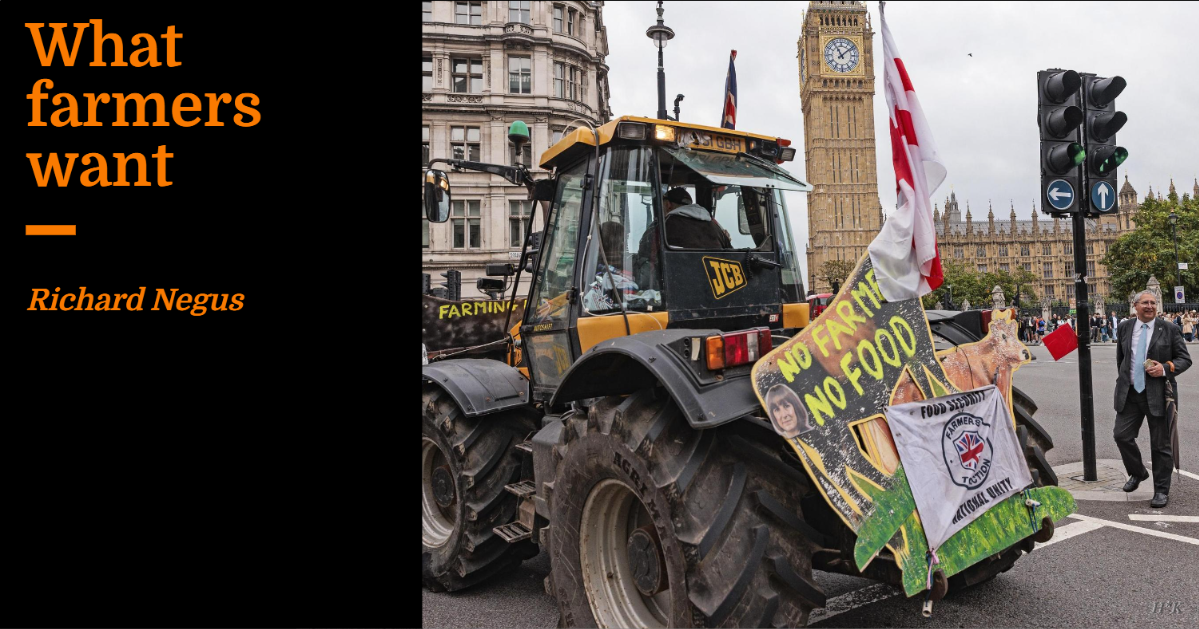
The ongoing farmers’ protests, lobbying and threats of interruptions to food supply chains have dogged the Starmer administration since its inception. Any future government will need to address and heal the growing gulf that exists between Westminster and the growing fields of Britain.
❈
What is it then that the farmers want from government? A given is the immediate abandonment of IHT on farmland. There are current mutterings that Rachel Reeves is considering raising the threshold of relief from £1 million to £5 million per person (£10 million per couple) where farmland or business assets make up at least 60 per cent of the estate.
Whilst this may mollify smaller farmers, for many growers, particularly in central and eastern England, this simply won’t work. Therefore IHT, they demand, must go in the bin.
Secondly, British growers and producers need an unambiguous strategy of what government wants from them. Over the past 20 years, successive administrations have pulled farmers in multiple directions, with agri-environment policy changing like the wind. Under the Conservatives, ambitious carbon and biodiversity targets were heaped upon farmers.
Public money no longer subsidised the costs of food production and instead funded farmland habitat creation, tree and hedge planting and more environmentally friendly agricultural methods. All this went on with the expectation that the farmers would maintain a level of national self-sufficiency despite squeezed profit margins — for example the real value of UK wheat has declined overall since 1980, with current prices struggling to cover rising input costs.
Upon taking office, Labour played the reverse ferret, largely abandoning the notion of farmers being conservationists. Farmland, according to the unfathomably influential Ed Miliband, was better used for green energy production. Wildlife habitat creation, funded under the Tory’s Environmental Land Management Scheme has been scaled back and de-funded in real terms.
The trade deals currently being conducted by the Prime Minister provide clear indications that food security is not high on his priority list, certainly not if compared with the drive for domestic de-carbonisation. The lack of long-term strategy and vision from this, or indeed any government over the past 20 years, has led to the entire agricultural sector being left in a state of limbo, unable to plan and invest for the future.
Another policy at the top of the farmers’ wish list is a root and branch review of planning laws. Many see this as the major obstacle to sustainability and then growth within the food supply chain. Planning restrictions have admittedly been relaxed on farms themselves, in order to facilitate expansion and modernisation. This is not the case further along the chain.
Planning requests to construct or expand abattoirs, feed mills, distribution hubs, bio-gas plants and other food infrastructure assets are repeatedly halted by local authorities and activist-led campaigns. Farmers want to see central government give a caveated relaxation to planning applications, if they are deemed essential to food security, essentially placing food on a par with energy and water.
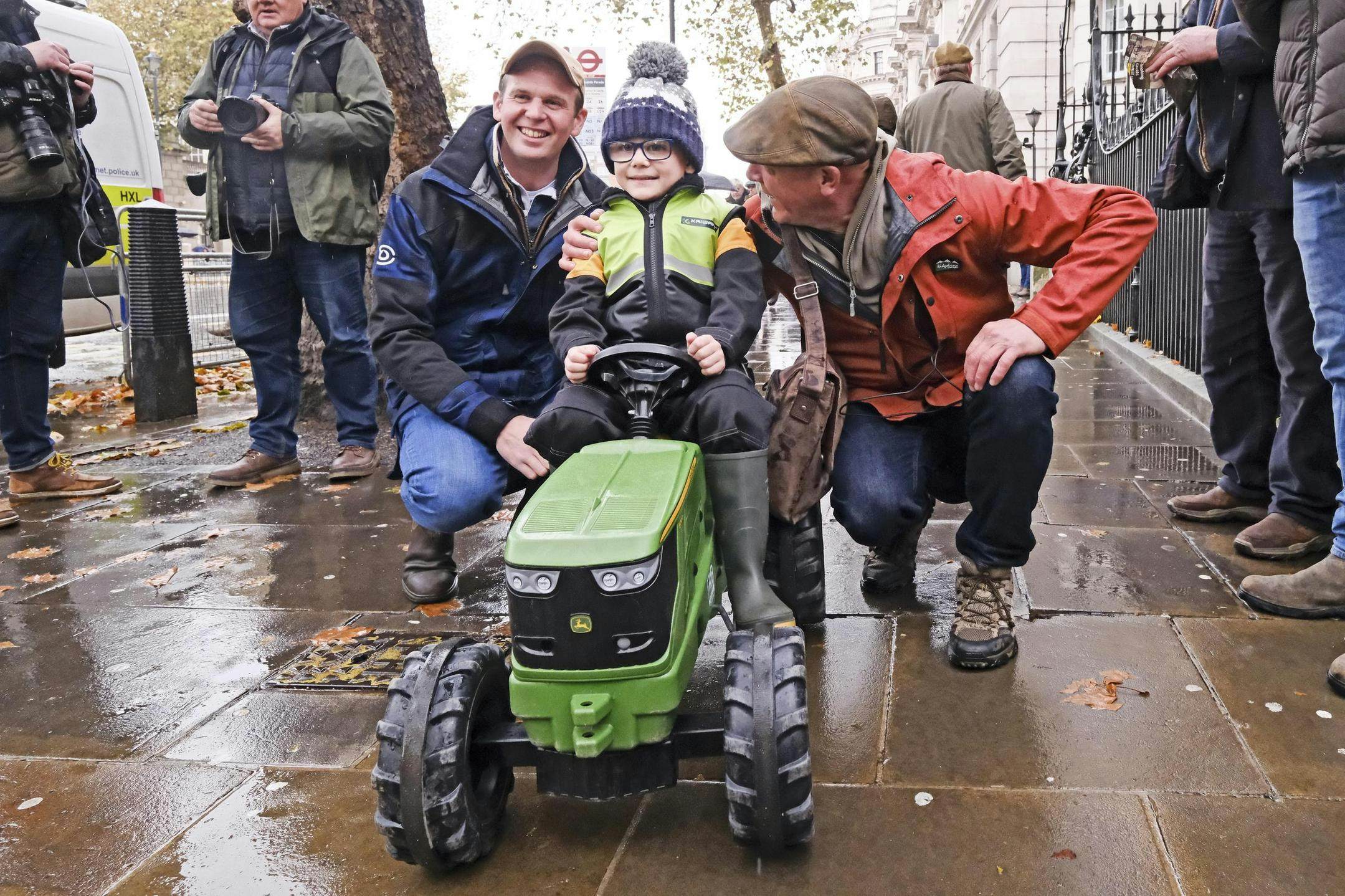
Any party that financially rewards farmers who inwardly invest in their own businesses will receive a glow of approval from the entire agricultural sector. Labour’s imposition of IHT has dissuaded farmers from investing in their own business infrastructure, and little wonder. Why would we, they ask, increase the value of our asset if the only result of that investment is to heap debt on your family after your death?
Farmers need tax policies that incentivise on-farm investment, be that in research and development, energy saving, modernisation or diversification. This, it is thought, would not only lead to increased profitability on the farms themselves, but would provide trickle-down financial benefits to the wider rural economy and agri-support sector.
This latter point has seemed largely missed by government for decades. Agricultural policies have become overwhelmingly farmer focused, with the impact those policies make on the wider agri-supply chain largely ignored. For any government to effectively de-silo agricultural policy, it will require a clear understanding of the entire food business.
There are more granular policies that farmers would like to see from the next government. A return to pre-Brexit area-based payments for productive land would certainly be a vote winner. So would restrictions or tariffs on imported food from countries with lower welfare and environmental standards than our own.
Another repeated request from farmers is a greater level of interdepartmental connection in Westminster. There remains a great disconnect between the consumer, their food and the wider benefits to health and well-being from eating a balanced, seasonal and locally grown diet. Those who grow that food want to see the secretaries of state for DEFRA, Health and Education working closer together.
Finally, British farmers are fed up with off-the-cuff policies based around soundbites. Being told that you are beloved and valued does not help the bottom line.
Whether the farmers will back Nigel Farage, or flock back to the Tories is as yet undecided. What is clear is that after the mauling they have had from Labour, platitudes and vicissitudes will no longer cut it. Farmers want business-led policy decisions that can and will be stuck to.