This article is taken from the November 2025 issue of The Critic. To get the full magazine why not subscribe? Get five issues for just £25.
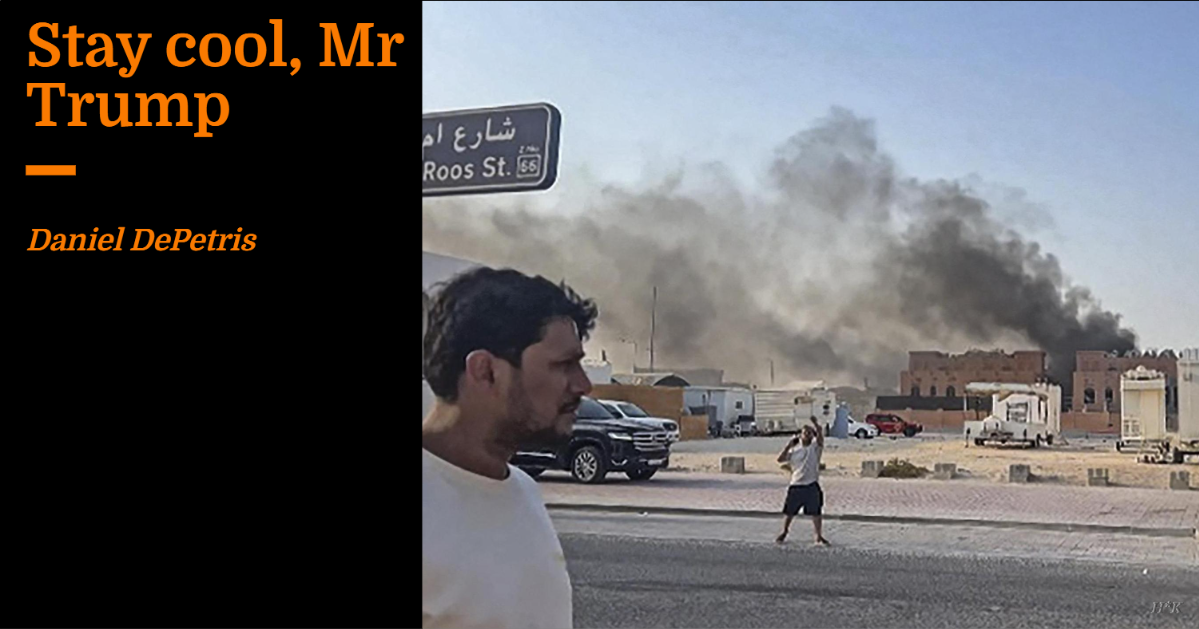
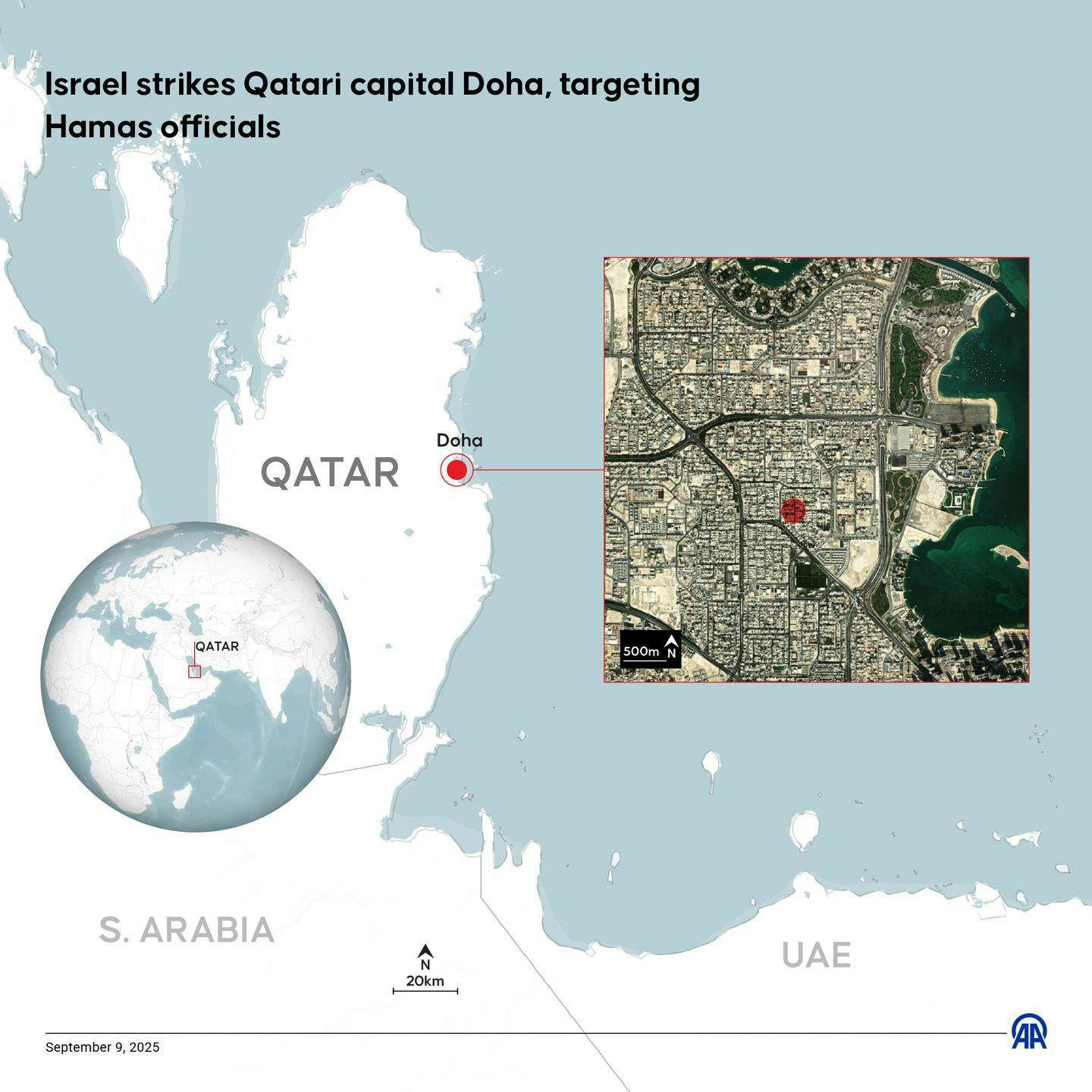
Israel’s decision on September 9th to bomb Hamas’s political leadership in Doha, Qatar, was a shock not only to the country on the receiving end but also to the Middle East as a whole. That the operation occurred whilst Hamas officials were meeting to discuss a United States-drafted ceasefire proposal for the war in Gaza only added to the sense of indignation in Washington and the region’s capitals.
Qatar, a country tasked with mediating a diplomatic solution to a war now in its third year, was livid and called Israel’s bombing operation a betrayal of the diplomatic process. Saudi Arabia and the United Arab Emirates quickly offered their support.
Arab leaders scheduled an emergency session on September 15th to provide Qatar political cover, where they called on Washington to hold Israeli Prime Minister Benjamin Netanyahu accountable. Even President Trump, who has supported Netanyahu’s war strategy since returning to the White House in January, condemned Israel and forced Netanyahu to apologise to the Qatari emir when he traveled to the White House on September 29th.
Israel’s attack in Qatar confirmed suspicions that Netanyahu was more interested at the time in dragging out the war to maintain his political position than he was in negotiating a permanent end to the war. But the strike also generated a wave of analysis about what it means for the durability of US security commitments in the Persian Gulf.
If Israel could attack a country like Qatar, which the United States has dubbed a non-NATO ally and in which it has stationed approximately 10,000 of its troops, could Doha or any of its neighbours trust US security assurances ever again? Was Washington’s security umbrella real to begin with?
To many, the answer is no. To the primacists and liberal internationalists who still populate the US foreign policy establishment even under the age of Trump, this scenario is nothing short of a geopolitical nightmare.
Indeed, if the US security umbrella in the Gulf is losing its lustre, the Gulf states who were content with hiding behind Washington’s armour may conclude that new arrangements need to be made with other great powers. The United States, the logic goes, would then lose a significant extent of its power and influence in the Middle East. Saudi Arabia’s decision to sign a mutual defence pact with Pakistan on September 17th only heightened that fever.
✪
Yet, what if this entire discussion is too premature and simplistic? Is the United States really in danger of losing its paramount position in the Middle East? Even if it is, should we care? First, it’s important to understand the difference between security assurances and security guarantees. There is a prevailing generalisation that in the Middle East, the United States signed up for the first arrangement, whereby Washington agreed to come to the Persian Gulf’s defence in the event of a crisis. Such a response could range from the institution of US sanctions and the sale of American defence systems to the Gulf states up to, presumably, the use of US military force.
The Gulf monarchies seem to carry this interpretation on their sleeves; after all, there’s a reason why Saudi Arabia, Qatar, the United Arab Emirates and Kuwait have all permitted the United States to establish, maintain and in some cases expand military bases in their countries. Each expects that thousands of US troops operating on their soil will buy it a certain degree of protection from threats foreign and domestic.
This, however, isn’t necessarily the case, even if the Gulfies wish otherwise. Unlike Washington’s relationships with its European allies in NATO, the United States does not have similar treaty commitments in the Middle East. Although a number of bilateral defence agreements with the Gulf states have been signed over the years — in September, Trump issued an executive order stating that any attack on Qatar would be considered a threat to US national security — none of them include an explicit, binding, irreversible Washington pledge to come to their defence.
Even the so-called Carter Doctrine, which continues to influence US policy in the Middle East 45 years later, was driven by the need to prevent a great power peer from taking control of the Persian Gulf’s oil supply — a highly improbable scenario in any event — rather than a blanket US commitment to defend Arab governments from every threat that happens to emerge.
The United States isn’t exactly a nation in tune with its own history. The nuts-and-bolts of diplomatic concepts get lost, twisted and replaced with a habitual tendency to treat partners and allies as one and the same. This is not a hyperbolic statement; if you were to run into an American lawmaker on Capitol Hill and tell him that the United States technically does not have any allies in the Middle East at all — not even Israel is a US treaty ally — you would be liable to receive wide eyes and blank stares.
For the Gulf states, however, this confusion serves them perfectly well, and they’ve taken full advantage of the situation to perpetrate a narrative in US policy circles that Saudi Arabia, Qatar and the like are instrumental force multipliers for American power projection.
You can’t fault Gulf leaders for this strategy. Given the region’s trials and tribulations, up to and including an Israel who has flexed its military muscle consistently since the Hamas attacks of October 7th in 2023 and treated the Middle East as its own personal playground, these states have reason to be concerned.
Even so, the Trump administration need not rush into allaying those fears. This would be the precise opposite of what so many US administrations have done in the past, guided by the belief that the Middle East is in a tailspin; its natural resources are at risk; and that China and Russia, Washington’s major rivals, are itching to fill the breach if the United States doesn’t demonstrate the right amount of leadership.
Instead, the smart play would be to encourage the Gulf states to diversify their security relationships and coordinate more amongst themselves, which would not only have the benefit of enhancing regional stability but lessen the massive security burdens the US military would otherwise carry.
✪
The United States should consider another possibility as it deals with the Middle East’s latest diplomatic mess: that whilst Gulf leaders are no doubt worried about their predicament in light of a more aggressive Israel, they may also be exaggerating their troubles to extract additional US security concessions.
In other words, by questioning the credibility of American security commitments and flirting with the option of establishing alternative security agreements with other great powers, the Gulf is deliberately aiming to pressure Washington into overcompensating lest it lose ground to a strategic competitor. This is less conspiratorial than it seems; small and middle powers are experts at hedging, or the practice of seeking positive relationships with as many great powers as possible in a bid to preserve geopolitical flexibility and minimise their dependence on a single state.
Smaller states, particularly in regions viewed as strategically significant, try to play off the fears, hubris and aspirations of larger states who are desperate to preserve their leverage. It’s an entirely self-serving and rational strategy, and one that can hold powerful dividends if executed properly.
The Gulf states aren’t immune to employing this playbook if it’s in their interest to do so. Saudi Arabia may have one of the oldest security partnerships with the United States in the region, but it has also expanded its economic dealings with China to a notable extent for more than a decade — Beijing’s trade with Riyadh is now exponentially larger than Riyadh’s trade with Washington, and Saudi Crown Prince Mohammed Bin Salman increasingly values China as the primary external source of investment as he works to transform the oil-rich kingdom into one of the Middle East’s dynamic economies.
Being a hegemon risks turning the security problems of other states into your own.
This, combined with past reports of the Saudis manufacturing ballistic missiles with China’s help, stirred a panic in Washington that the Arab world’s most significant power was drifting closer to Beijing. Saudi Arabia wanted to get America’s attention, and they got it — the Biden administration was willing to go so far as to formalise a US security guarantee to the Saudis, partly in exchange for the Saudi leadership distancing itself from the Chinese and limiting, if not reducing, Chinese investment in the kingdom. The gambit ultimately failed after the war in Gaza erupted, but it nevertheless underscored Saudi Arabia’s ability to exploit Washington’s systemic paranoia to its own benefit.
✪
Why so many US policymakers and experts would willingly fall into this trap is a mystery. The United States doesn’t need to worry too much about a near-peer rival such as China or Russia stepping into a hypothetical vacuum in the Persian Gulf, especially now. This remains true even if Washington decided to eventually withdraw some of the 40,000 or so troops it currently bases in the region, close down a few of the 19 US bases located there or deprioritise the Middle East in the country’s grand strategy in general.
China, the one power that could conceivably replace the United States in such a scenario, has shown very little interest in mimicking the strategically inept, over-burdensome strategy the United States has implemented in the region since the conclusion of the 1991 Gulf War; it has no intention of saddling itself with the Middle East’s security woes.
This should not be a surprise: being a hegemon is an extremely resource-intensive proposition and risks turning the security problems of other states into your own. When the Houthis in Yemen were attacking civilian ships in the Red Sea and Bab el-Mandeb strait at a frenetic pace in 2023 and 2024, it was the United States, not China, who organised a multilateral coalition to enforce freedom of navigation.
It was also the United States, not China, that took it upon itself to engage in a months-long air campaign to degrade the Houthis’ military infrastructure and deter further attacks, with mixed results. To the extent Beijing was involved, it centred on engaging in back-channel diplomacy with the Houthis to protect Chinese vessels transiting the waters off Yemen’s coast.
✪
Russia, meanwhile, is even further away from regional hegemony in the Middle East than is China. Russia’s entire military apparatus remains bogged down in Ukraine, where hundreds of thousands of Russian troops, thousands of artillery pieces and hundreds of tanks have been sacrificed for the sake of marginal territorial gains in the Donbas.
Iran, Moscow’s key partner in the region, is arguably at its weakest point since the end of the 1980–88 war with Iraq after Israel devastated its proxy network and took aim at Tehran’s defence industry during a 12-day war in June 2025. Russia’s strategic position in Syria is in shambles now that Bashar al-Assad’s regime has been replaced with a new government in Damascus whose relations with Moscow are at best frosty. At this stage, Vladimir Putin couldn’t rebuild Russian power in the Middle East even if he wanted to.
Why does any of this matter for the United States? Because it means President Trump can proceed with a cool head. His face-to-face meeting with Qatari Prime Minister Sheikh Mohammed bin Abdulrahman Al Thani in New York a few days before the annual UN General Assembly meetings was a worthwhile attempt at damage control.
But fears and embellishments of the commentariat aside, the United States still holds most of the cards in its relationship with the Gulf states and is able to meet its core policy objectives in the region without gifting more security goodies to its partners as some sort of consolation prize. The sooner Trump or any other United States president realises this, the better off American policy will be.