Asserting that Christians in Nigeria face an “existential threat,” President Donald Trump signaled over the weekend that the United States military might go into Africa’s most populous country with “guns-a-blazing.” While his depiction of the situation is highly simplified, it could at least draw attention to the political and economic issues that have driven extremist insurgencies in Nigeria as well as in nearby nations.
One issue is that the violence committed by militant groups, many of which operate in the name of Islam, has hit people of different faiths.
“Terror groups … have attacked mosques and churches alike, killing both imams and pastors, Muslims and Christians, without distinction,” noted The Punch, a Nigerian news daily. “Portraying these conflicts as a one-sided religious debate and advocacy ignores the broader socio-economic and environmental pressures … that drive violence.”
Across West Africa, unstable governments have allowed insurgencies – and apolitical “banditry” – to take hold. In addition, the climate crisis has sparked clashes between settled, agrarian villagers (often Christian) and itinerant herders (mainly Muslim). And economies have not matched growth in population or expectations.
Just last week, The Wall Street Journal reported that mineral-rich Mali is “on the brink” of a takeover by Al Qaeda-affiliated militants. Neighboring Niger and Chad also face insurgencies linked to Al Qaeda or the Islamic State. Military efforts by these countries to root out extremism have had limited success. Civilian casualties caused by national armies spur resentment and seed recruitment by extremists.
What’s needed is a “soft power approach that incorporates political, social and even religious strategies,” according to Nigerian researcher David Villah Dan-Azumi, who has urged engaging with “traditional and religious leaders, already instrumental in conflict mediation, intelligence gathering, and intercommunal dialogue.”
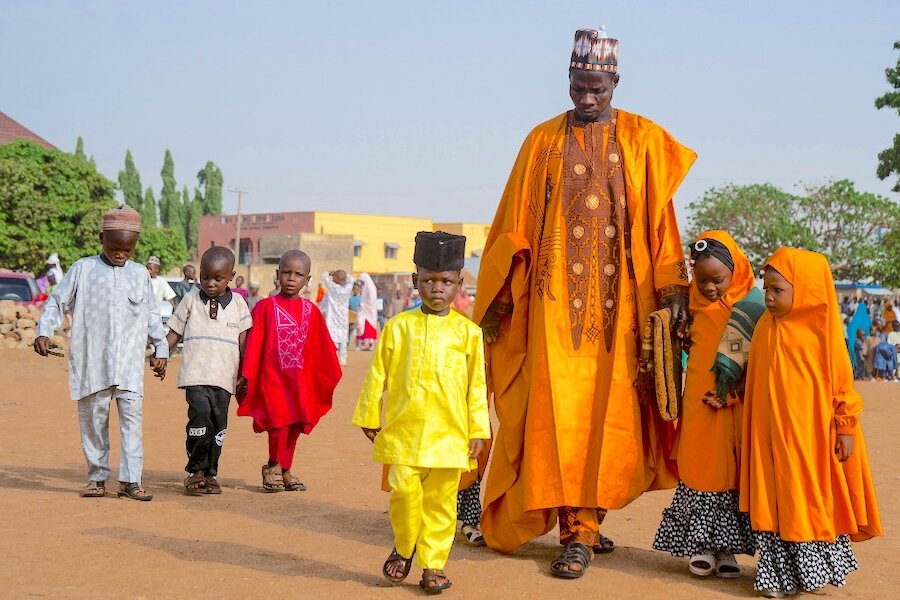
In fact, Nigerians have long supported such efforts, both structured and spontaneous. Kaduna state, centrally located amid the unrest, offers examples. A group of Muslim residents took up a community collection to pay ransom for Christians who had been kidnapped from a Sunday church service in 2023. Previously, Muslims had guarded a church during a Christmas carol service.
Guided by Yohanna Buru, who heads the Peace Revival and Reconciliation Foundation, Kaduna’s Christians distribute food to poor Muslims during Ramadan. In 2023, militants attacked Christian communities and Muslim places of worship. But in 2024, according to the Kaduna State Peace Commission, there were no recorded conflicts.
“I dedicate my life to preaching calm, peace, and unity in the region,” Pastor Buru stated last year. This approach builds communication and trust that can transform viewpoints and possibilities.
“My perception changed,” said university student Joseph Uloko, who participated in interfaith workshops in Kaduna some years ago. By understanding and respecting each other’s traditions, he said, we “let peace reign.”