- Do YOU have a story? Email Sam.Lawley@dailymail.co.uk
A series of solar panel rooftop fires have put Ed Miliband’s green energy plans under scrutiny.
Blazes involving the renewable energy devices and their batteries rose faster than the rate of installations in 2024, soaring by 60 per cent over the last two years.
UK fire services responded to a solar panel fire once every two days, according to information collected by insurance company QBE.
Energy and Net Zero Secretary Mr Miliband is aiming to expand the UK’s solar capacity to as much as 85 gigawatts by 2035 – a near fivefold increase from the current 18 gigawatts capacity.
The project mainly involves installing ground-mounted panels in vast solar farms in countryside across counties including Devon, Cornwall, Lincolnshire, Norfolk and Suffolk.
But Mr Miliband’s Solar Roadmap has also drawn up plans to fit panels on rooftops, adding to the 1.5 million already in place.
And the new data has cast doubt on their safety with 171 fires involving the equipment in 2024, up from 107 two years prior.
During the same period, the number of panels on UK rooftops has increased from 1.3 million to 1.7 million.
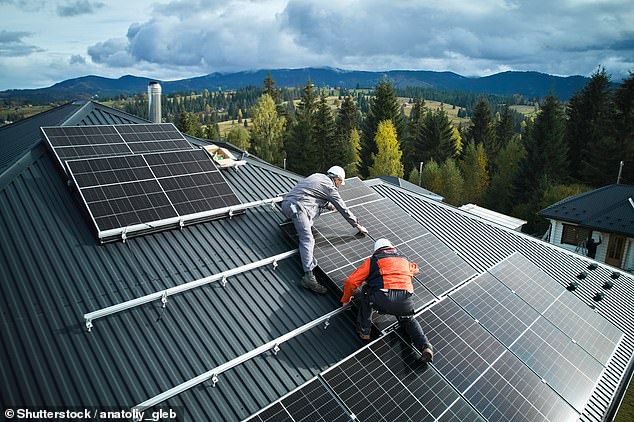
A series of solar panel rooftop fires have put Ed Miliband’s green energy plans under scrutiny (Stock photo)

Energy and Net Zero Secretary Mr Miliband is aiming to expand the UK’s solar capacity to as much as 85 gigawatts by 2035 – a near fivefold increase from the current capacity
Adrian Simmonds, a senior risk manager at QBE, told The Telegraph: ‘Solar is essential to the UK’s clean energy transition but the rapid pace of deployment is raising risk concerns.
‘Our analysis shows fires involving solar panels have risen at twice the rate of new installations over the past two years. Safe solar panel installation and maintenance are essential to reducing fires.’
Faults were most commonly caused by inverters, electronic devices that turn the direct current emitted by the panels into the alternating current used by the electricity grid.
These devices must be well ventilated and kept away from obstructions because they create high levels of heat.
If they are wrongly placed in a loft or cupboard, they can get too hot and a blaze can start spreading quickly.
Modern solar systems also often use lithium-ion batteries, another fire risk which caused a blaze in Wickford, Essex, in August.
Fires can be particularly dangerous when they are allowed to spread from the roof down into the house itself.
The biggest risk is when panels are fitted close to or above rooftop windows or skylights.
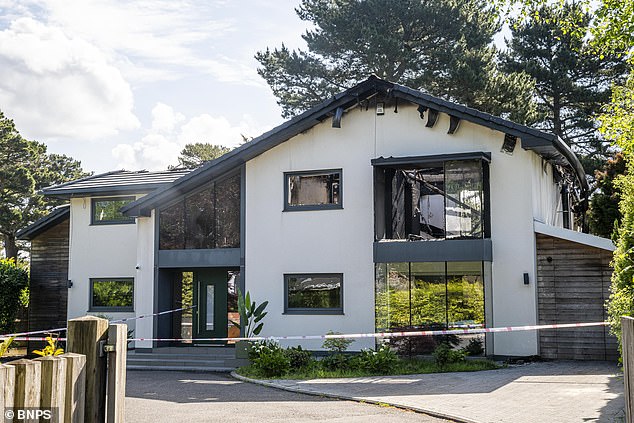
A £1.5m mansion is seen in ruins after being destroyed by a huge fire thought to have been started by newly installed solar panels
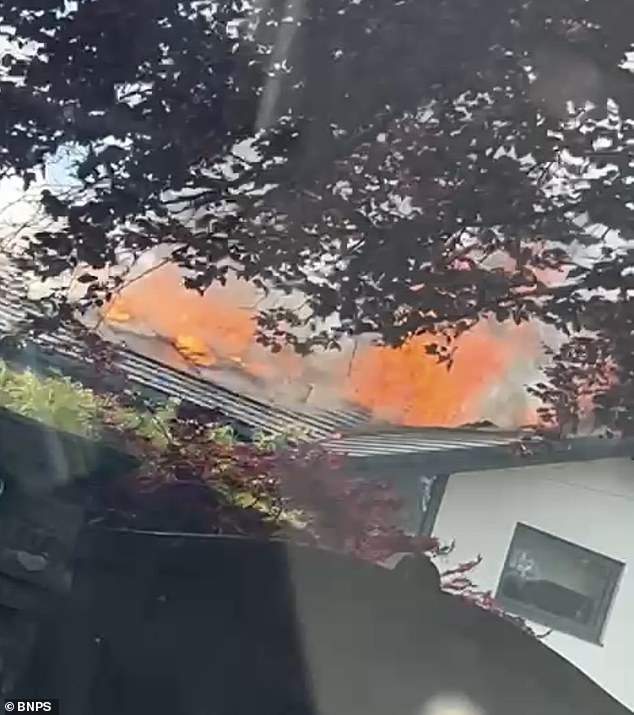
Footage of the incident shows bright orange flames leaping 20ft into the air as it tore through the large detached property in Dorset
Mr Simmonds suggested that tighter regulations, better training and contracts stipulating that the panels must be regularly checked could all mitigate the risk of fire.
There have been several notable blazes believed to have been caused by solar panels in the last year, including a fire at a £1.5m mansion Ferndown, Dorset in May.
Firefighters were able to eventually douse the blaze, but not before it had completely destroyed the entire first floor and the roof of the mansion.
Solar Energy UK, the industry trade body, told The Telegraph: ‘If properly installed and maintained, the risk of fire is exceptionally low and rooftop solar is, of course, one of the very best ways to slash energy bills. The relatively few incidents of fire should be viewed in that context.’
A Department for Energy Security and Net Zero spokesman told The Telegraph: ‘The risk of fire from solar panels is very low. Solar panels should always be fitted by a certified installer, and can help families save around £500 a year on their energy bills.’
The National Fire Chiefs Council was contacted for comment.