‘I had to hide my newborn baby from the Russian soldiers lining the streets outside the maternity hospital,’ Anastasiia Serha recalls.
The 31-year-old is one of the dozens of Ukrainian women who had to give birth during the siege of Kherson – with even more forced to endure pregnancy and labour during the last three years of the Russian full-scale invasion.
Buried beneath the headlines about Putin and Trump, Ukrainian mothers have been quietly soldiering on.
Five mothers spoke to the Daily Mail about their experience of pregnancy and giving birth during a warzone – from carrying their newborns down unlit flights of stairs to makeshift bomb shelters in their maternity hospital, to being unable to produce breastmilk due to the stress of living in a siege.
But Ukraine‘s unsung heroes have also helped to change the culture around breastfeeding in Ukraine, too. Women’s power as life givers in a country which has lost tens of thousands in a relentless conflict has never been more apparent.
The birth rate decline in Ukraine was present before the war, and has only worsened since the conflict.
Official statistics suggest the war has caused the country’s birth rate to fall by 28%.
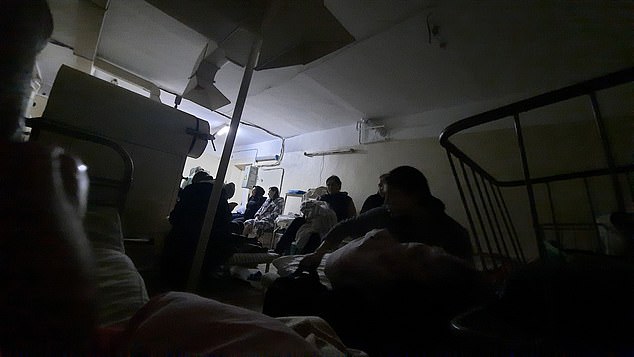
Pictured: Pregnant Ukrainian women and mothers with their newborn babies hiding in the basement of a maternity hospital as bombings continue overhead
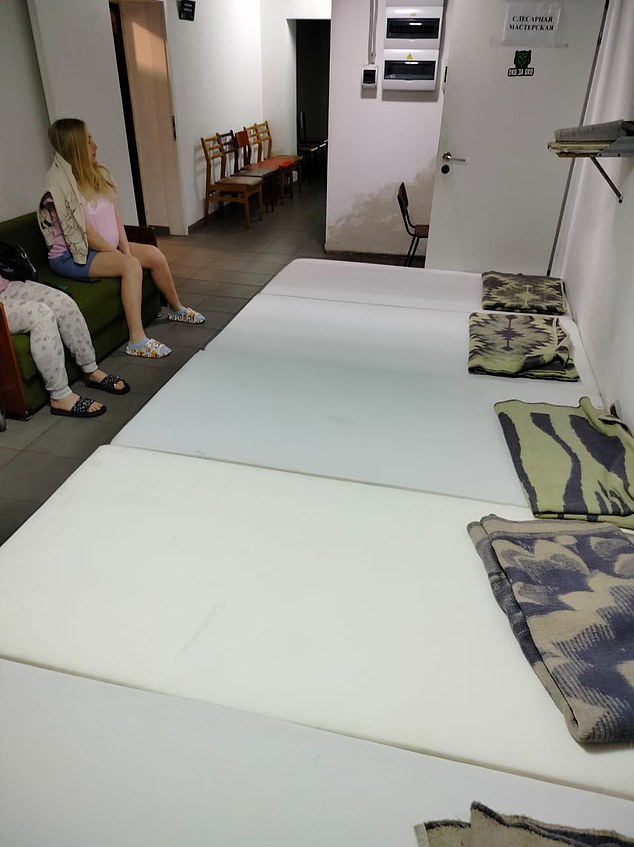
Pictured: A makeshift maternity ward with pregnant women queuing patiently for a bed in Zaporizhia, southeastern Ukraine, and where one mother gave birth to twins
In the first six months of 2023, 96,755 children were born there, compared with 135,079 in the first half of 2021.
Mothers are being fiercely protected in Ukraine, as they tell us they ‘are not scared’ and ‘won’t change their plans to start a family’ – despite the uncertainty, lack of proper medical equipment, and even of food at times.
They have instead made do by giving birth in makeshift bomb shelters or having planned c-sections – going into labour in a city under siege is a highly dangerous business that requires careful planning.
From Kyiv to Kherson, the women the Mail spoke to offered out a strong message of hope, as they say bringing up the next generation of Ukrainians has never been more important.
Natalia Oshmarina, 42
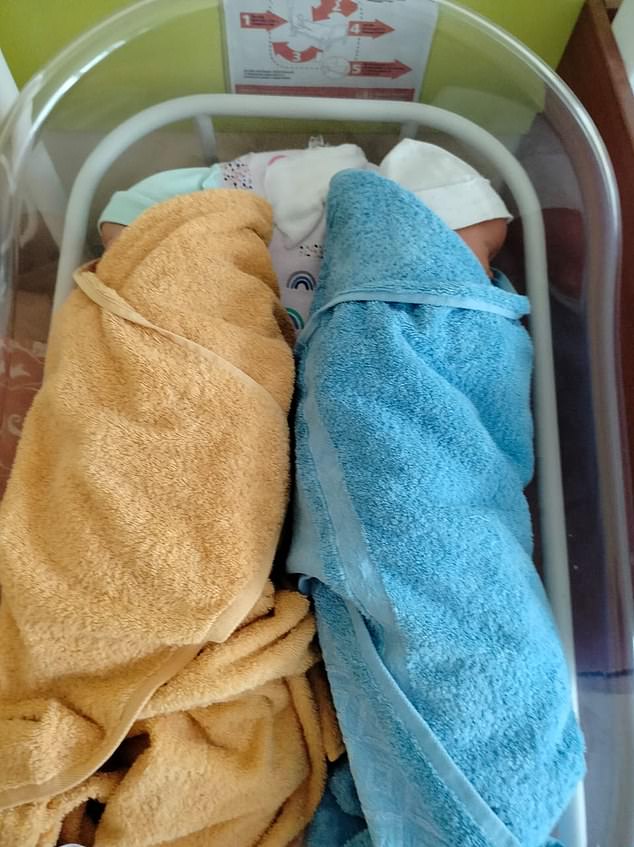
Natalia Oshmarina gave birth to twins (pictured) during an air raid in southeastern Ukraine. She said: ‘children of war, even at birth in patriotic towels’
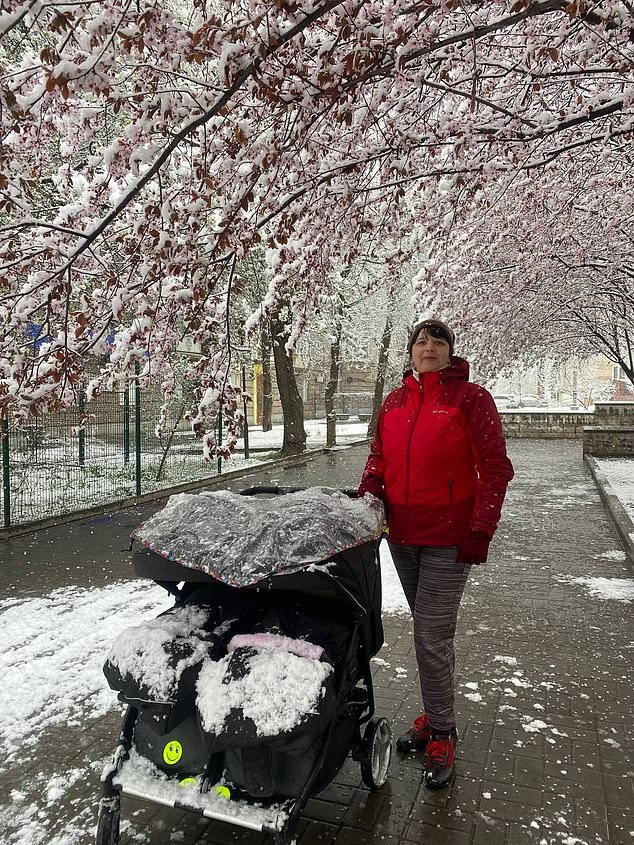
Natalia (pictured with her newborn twins) said that ‘having children overshadowed all the hardships’ that the war imposed
Natalia Oshmarina, 42, lives about 15 miles from the front line in Zaporizhzhia, southeastern Ukraine.
She found out that she was pregnant with twins two years into the war, but says ‘the question of whether to give birth didn’t even arise’.
‘In our country, the population has nearly halved – from 52 million in 1991 to 30 million in 2025.
‘In the city of Zaporizhzhia, the birth rate has dropped nearly threefold.
‘That’s why we need to give birth – to rebuild the nation and ensure that our children live in a free and happy country’, she said.
The mother-of-three described giving birth in a maternity hospital whilst an air raid was going on as ‘both difficult and beautiful’.
In the last months of her pregnancy, Natalia had to hide between two walls in her house for safety during the daily shellings that occurred. Despite choosing to take such a ‘risky path’, she felt ‘no fear at all’.
‘My city is 25km from the frontline in the south, so I understood that carrying children under such stress would be extremely difficult.
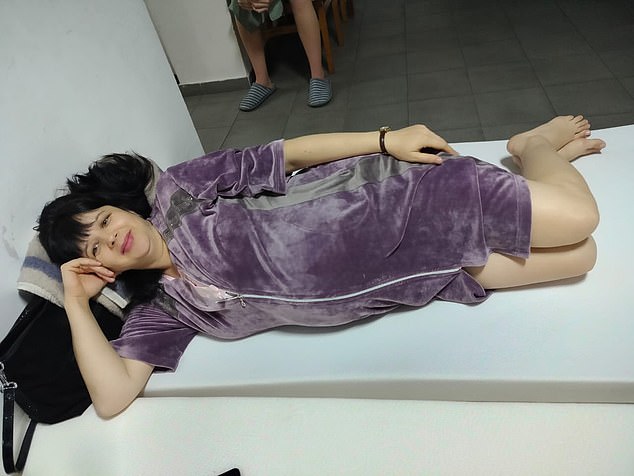
For the first week after giving birth, Natalia (pictured) was on the third floor of the maternity hospital. During every air raid alert, she had to carry both babies in her arms down to the basement
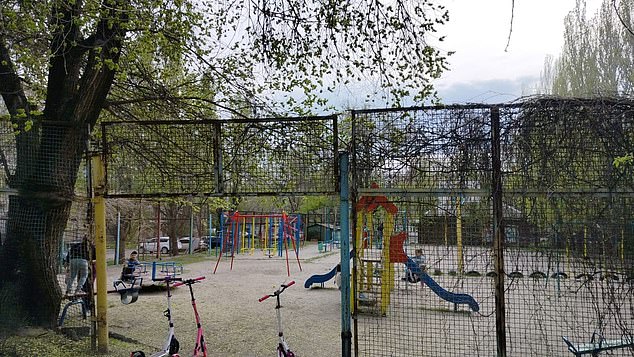
Before the war, Natalia said that playgrounds like this one would be full. Now, they lie empty
‘After every shelling attack, I had to hide between two walls, which was very hard during the seventh, eighth, and ninth months of pregnancy.
‘I had all kinds of worries. In the last two months, I had serious problems sleeping.
‘There was a risk of the babies being born with disabilities. On top of that, one of the babies had turned and the doctors said I would have to deliver via c-section,’ Natalia said.
But the doctors, working in turbulent conditions and having to constantly move due to air raids, were ‘excellent’.
At Zaporizhzhia’s maternity hospital, Natalia said all expectant mothers went down to the shelter day and night.
‘We were hiding in the basement when the air raid alarm started.
‘We were given mattresses on the floor, water, chairs, and were always accompanied by a nurse.
‘The first week after giving birth, I was on the third floor of the hospital.
‘Every air raid alert, I had to go down to the basement with both babies in my arms – there was no lift because safety regulations prohibited their use during alarms.
‘In the basement we had everything we needed – cuvettes, diapers, hygiene – there was even a room for childbirth.’
The Russian attacks in Natalia’s home city intensified the autumn after she gave birth, targeting energy infrastructure so that at times she had to sit without light or heat with her newborns and 7-year-old son.
But she said: ‘The main thing is to survive and wait for victory, and everything else will work out.
‘As a mother, I’m excited for my children to go to kindergarten and school and study in person, not online.’
She added: ‘In my opinion, women who gave birth during the war should be granted status (Children of War).
‘This will provide benefits in the future when educating children who have been so impacted by this war.’
Anastasiia Serha, 31
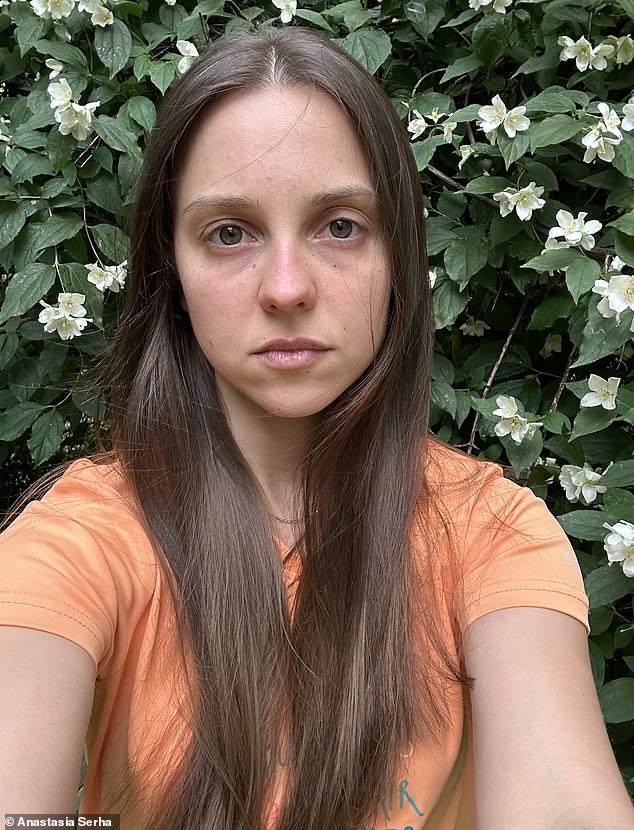
Anastasiia Serha was eight months pregnant when the Russians occupied Kherson, the city that she and her family were living in
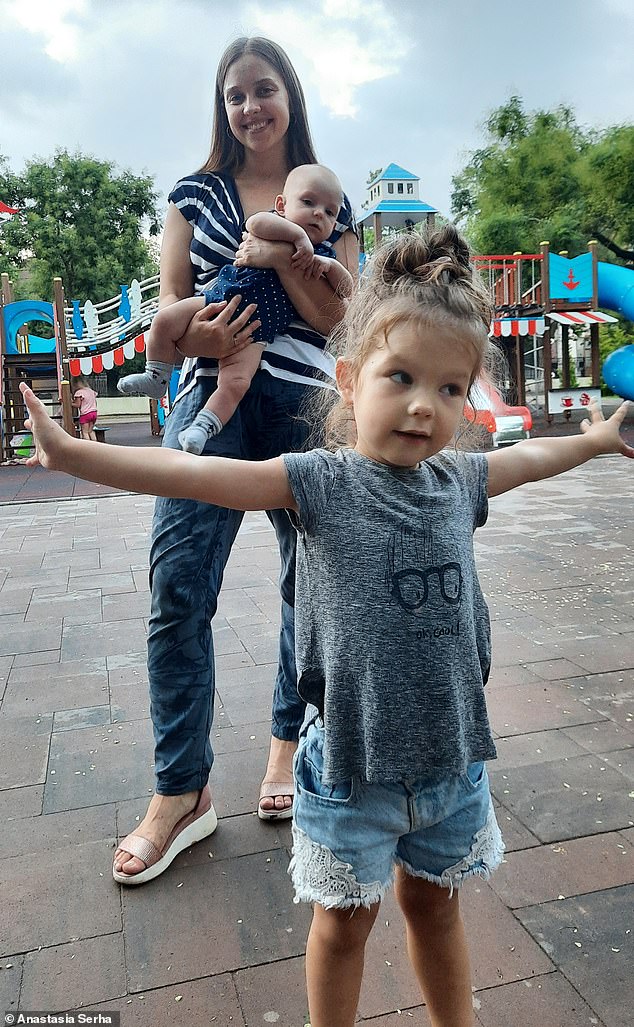
She gave birth via c-section during the occupation amid food shortages, a lack of medical supplies and Russian soldiers and tanks lining the streets
Anastasiia Serha was heavily pregnant with her second child when the full-scale invasion began in February 2022.
At first, she says, no one thought the conflict would last for long.
But when the Russians occupied the strategic city of Kherson, where she was living with her husband and then-three-year-old daughter, Anastasiia made the decision to stay and have a planned c-section – while armed soldiers and Russian tanks were patrolling the streets outside.
‘I didn’t feel like it would be a wise decision to leave – we heard about people being shot in the convoys, so I was scared about this.
‘My husband also didn’t want to leave and I couldn’t imagine myself going alone with my big belly and a three-year-old. I was scared about going into labour on the road so we decided to stay.’
Anastasiia gave birth via c-section in April – one month after Russia had occupied Kherson on March 2 and after the horrific bombing of the Mariupol Hospital on March 9, which left three dead and injured 17 more – including women in labour.
‘After the Mariupol bombing, they made changes to my hospital in Kherson – before it had five floors, but now all the birth and surgeries were only on the first floor and they made an extra operation room in the temporary shelter, which had previously just been a basement.
‘After my surgery it was hard for me to walk and for everyone else to get changed and go down to the basement during the constant battles in the region.
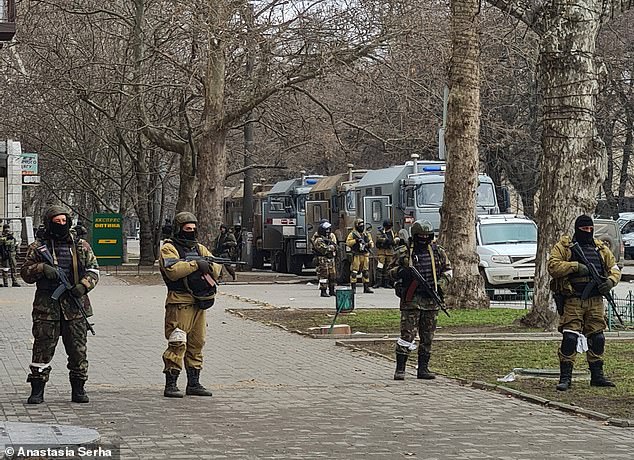
Pictured: Anastasiia photographed the armed Russian soldiers lining the streets of Kherson during the occupation at the beginning of the war in 2022
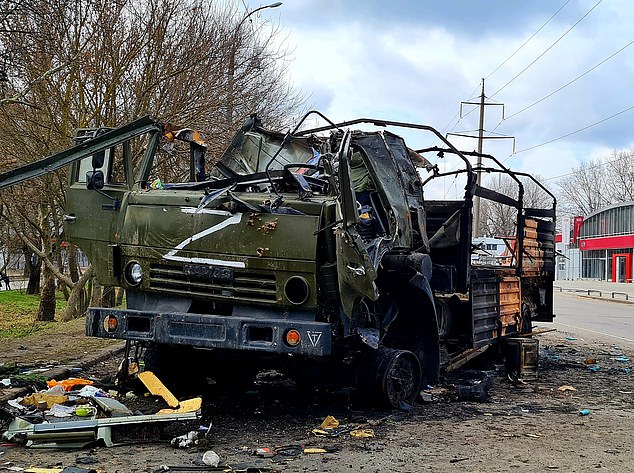
A destroyed vehicle after Russian shelling attacks in Kherson. Anastasiia gave birth soon after the Russian bombing of Mariupol’s maternity hospital, which left three dead and 17 injured – including women in labour
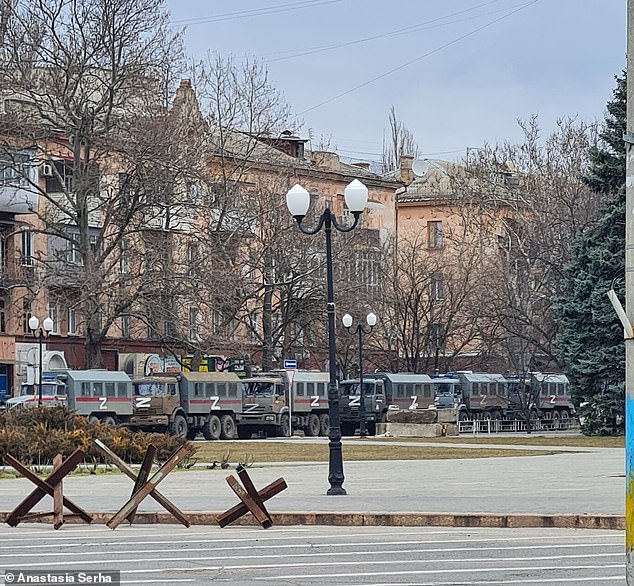
Pictured: Russian tanks and military vehicles rolling into Kherson – as witnessed by Anastasiia when she was heavily pregnant and had to decide whether to stay in Kherson or leave
‘The basement was cold and not nice, and there were around 20 new mothers with babies in one room. We were all worried that one baby would cry and wake up the others.’
But the dangers the war posed did not stop after Anastasiia had given birth.
She and other new mothers then faced food shortages, a lack of medical equipment, and the unsettling threat of drunk Russian soldiers on street corners during the occupation.
‘There was a curfew in the city – no one could go outside after 4pm.
‘It was also dangerous because the Russian soldiers present in the town could be drunk or aggressive. They were everywhere and they had guns on them.
‘The thing is – they are unpredictable – you can’t say if it’s just a guy who will speak with you in the same language and he doesn’t want war, or if it’s a person who really hates every Ukrainian.’
There were cases too, Anastasiia says, where military vehicles deliberately crashed into civilian cars.
‘When I left the maternity hospital, I hid my baby away from them. Every time I saw Russian soldiers when I was out with my children after that, I would cross the road and make them walk the other side of me [further away from them].’
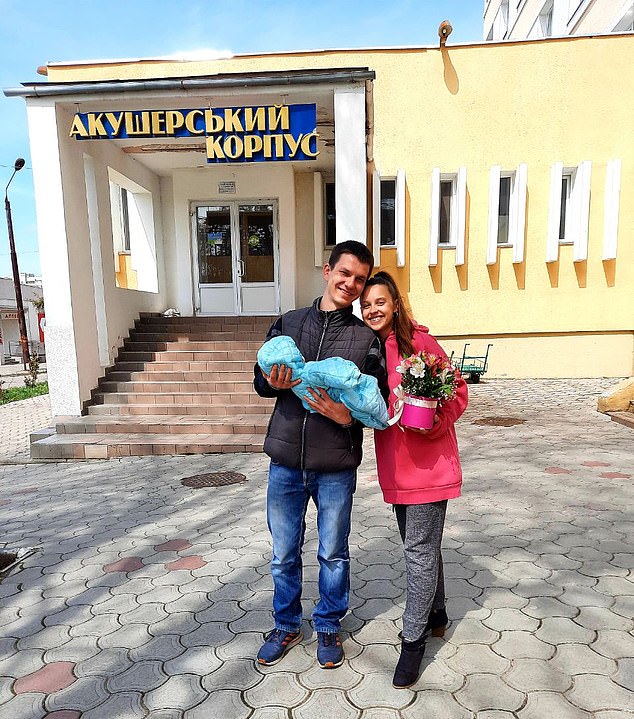
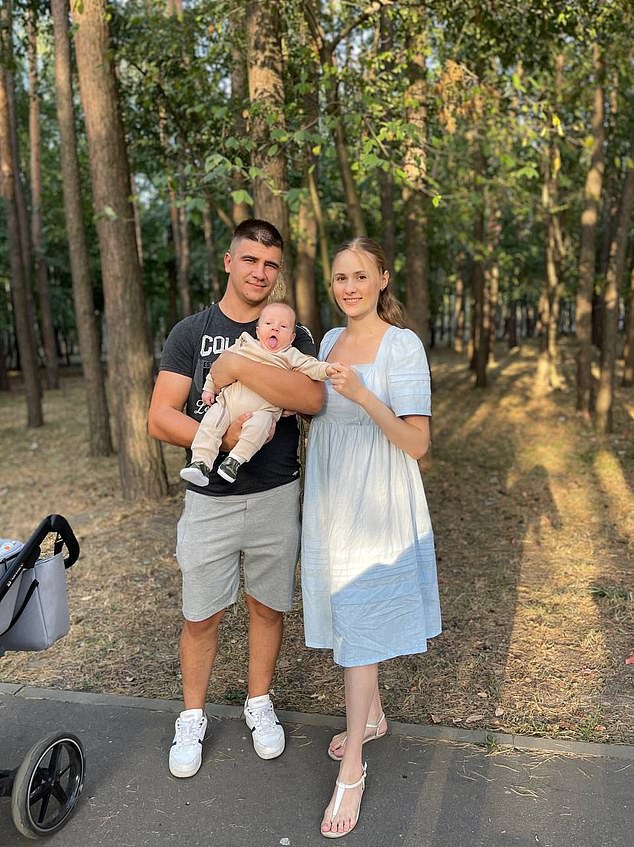
Anastasiia with her husband and their newborn baby outside a maternity hospital in Ukraine
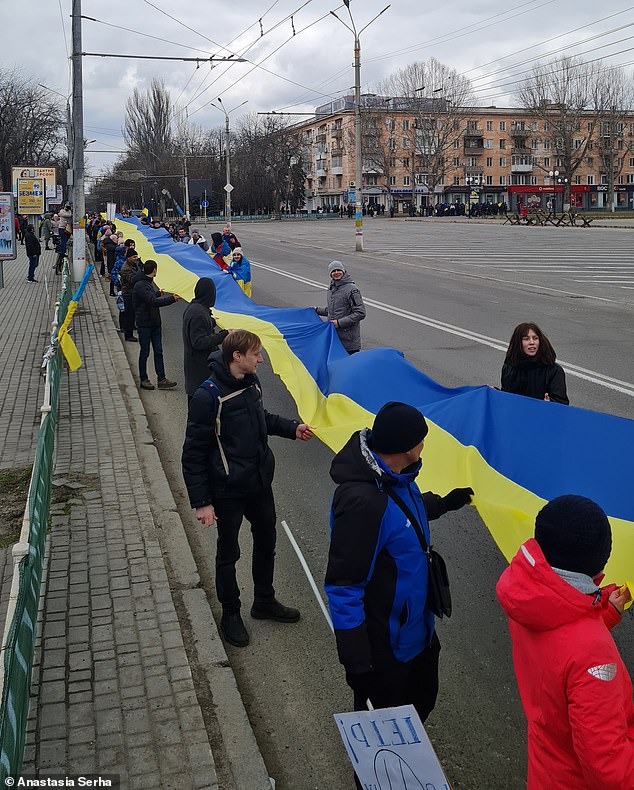
Anastasiia recorded a protest by brave Ukrainian activists and locals in Kherson against the Russian occupation of their city
Anastasiia explains how traditionally in Ukraine a mother would have a hearty ‘birth broth’ after her child was born, or other soft foods like yoghurt.
But she and other new mothers faced food shortages in Kherson in April – as well as a lack of some medical supplies.
‘Because of the food problems, my mum had saved a small chicken weeks before to make a birth broth for me, and the same thing with the yoghurt – it was not possible to buy in the store at the time, so my mother helped me by making it herself.’
Nutrition sources for newborns in Ukraine at this time were also stretched.
Anastasiia recalls how many mothers struggled to produce breastmilk because of the stress, while milk donation banks were hard to come by.
‘At the start of the war, doctors started giving advice online about what to do without breastmilk or formula.
‘Later, milk started to come to Kherson from Crimea, but it was expensive and not good quality.’
‘I believe stress really impacted women trying to breastfeed. I have a friend who was so afraid of losing lactation because of stress that she over-pumped and some days would produce two litres or more, so she decided to keep her own milk in a fridge.’
Anastasiia and her husband both work for charities helping the war effort and have been able to stay together as a family throughout the war, which Anastasiia says makes them very fortunate.
While her husband helps to build shelters in the areas worst affected by the war, Anastasiia works for Nova Ukraine, a humanitarian non-profit organisation that provides aid and raises awareness about Ukraine globally.
She says that before the war they spoke Russian as a family, but now they only speak Ukrainian: ‘My son is the first in my family to speak Ukrainian from birth.’
But Anastasiia’s experience has not left her war-weary but only, she says, stronger.
‘As for being a mum in Ukraine in this period, I think for me it means to act strong even if I don’t feel strong and to be a real adult – to keep documents in order, to have money saved and not to let the gas tank empty.
‘Yes, there is emotional stress – everyday we hear news about people dying and now if I want to hug my kids, I do it right away, I don’t wait.’
Yevheniia
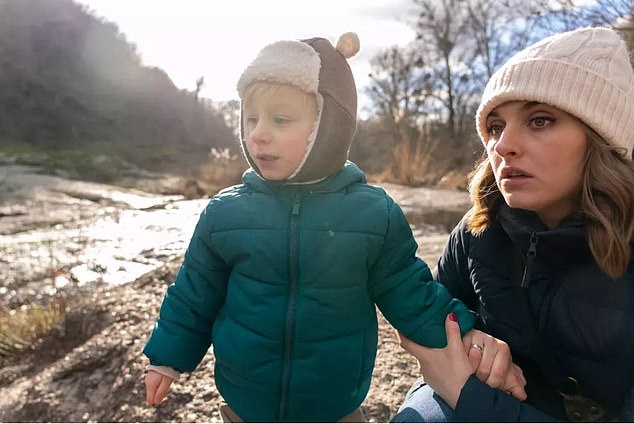
Yevheniia’s son, Yehor, was born at the very beginning of the war in Mariupol. Image provided by UNICEF
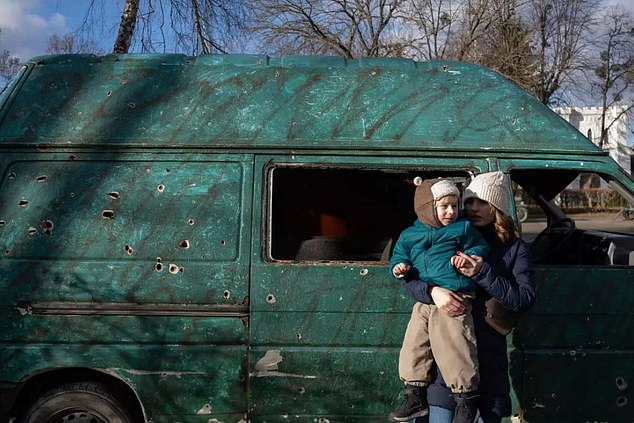
Yevheniia and her son Yehor in front of a van stricken with bullet holes. Reminders of the ongoing conflict are everywhere. Image provided by UNICEF
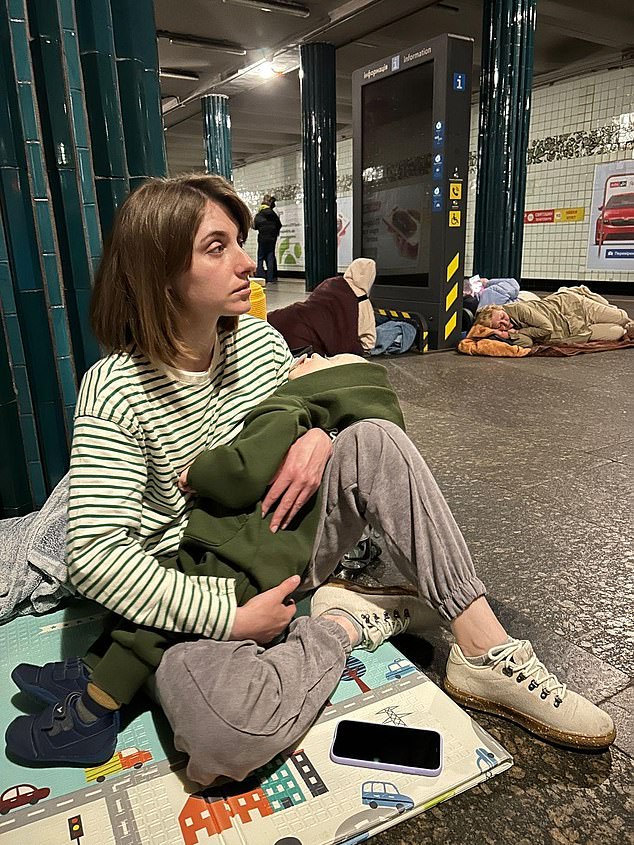
Yevheniia, pictured sheltering with her son
Yevheniia’s son Yehor was less than two months old when the war broke out.
She made the quick decision to leave Mariupol and escape to Ypres with her newborn son, where Yevheniia says she was able to create a temporary ‘bubble’ for him from the Russian invasion.
But the conflict separated the young family.
They initially returned to Ukraine and moved to Kyiv, before the worry and anxiety from living in the capital eventually pushed Yevheniia to decide to move to a small town in the Cherkasy Oblast with Yehor, while her husband stayed behind in Kyiv to work.
‘It’s much more comfortable and secure to live [in Cherkasy],’ Yevheniia said.
‘I really want to move back to Kyiv once the security situation is better, because it’s definitely better for Yehor to be raised by both of [his parents].
‘My husband comes to visit the town to meet us when he can. He has to stay there to provide for us, but I also want to return to Kyiv in order to get back on my career path too, once it’s safer,’ Yevheniia added.
Yevheniia worked as a journalist before the war, while her husband works for the French press as a videographer.
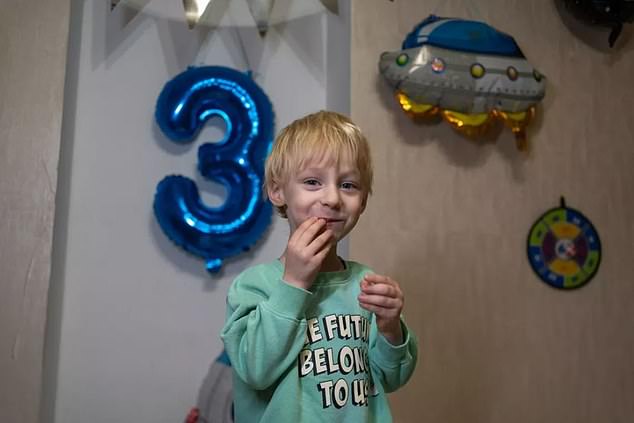
Aged three, Yehor has never known a Ukraine in peacetime. Yevheniia worries about the impact of the conflict on the next generation. Image provided by UNICEF
For both of their careers, the capital is the ideal location, but Yevheniia tells me firmly that ‘safety for Yehor’ comes first – and they will likely have to stay in Cherkasy until that changes.
Yevheniia had to make stops along the way to breastfeed Yehor in a safe areas, saying ‘it was the only way to make him comfortable in this stressful atmosphere’.
Now, further away from the front line, Yevheniia says she is able to protect her son better.
But the war still creeps into their everyday lives, and Yehor is so young that he only remembers his nation being at war – the conflict is his ‘normal’.
‘Yehor can hear updates on the radio about what is happening outside of our bubble, but he doesn’t really understand it still,’ Yevheniia says.
‘He’s used to the sound of the conflict in the background, but I try my best to protect him from everything that’s going on.
‘It’s going to be challenging for children born during the war to adapt. They will definitely have in the future some issues relating to their mental health.
‘I don’t understand how it’s possible to stay with children on the front line area. It’s shellings, bombardments, etcetera, constantly.’
Despite the stressful and, at many points, difficult journey that Yevheniia has been through having a child during a war, she tells me that Yehor probably saved her and her husband’s lives.
‘If we hadn’t had Yehor, we very likely would not have left Mariupol in the first hours that the conflict began.
‘Without him, we would have spent more time there and might have ended up being killed,’ Yevheniia reflects.
The city of Mariupol has suffered some of the worst destruction and casualties in the whole of Ukraine.
Just a week after the Russias began their full-scale invasion, Kremlin forces started their siege of the city, causing many families to flee.
By April, occupying forces had seized control of most of the city and declared victory on April 21. Thousands of Ukrainians were killed, and mass graves and damaged infrastructure are all that now remain.
The war has bitterly tainted Yevheniia’s first experiences of motherhood.
‘Instead of enjoying this period in the first two months after my first child was born, I have been watching the news, watching videos, and so on.
‘It has blurred a lot of the bright memories in my mind.’
But, Yevheniia says, Yehor has brought her ‘light’ in what is otherwise a very dark time.
‘Thanks to the fact that Yehor himself is an absolutely positive child it has helped me so much. Without him I would have gone crazy.’
Alyona
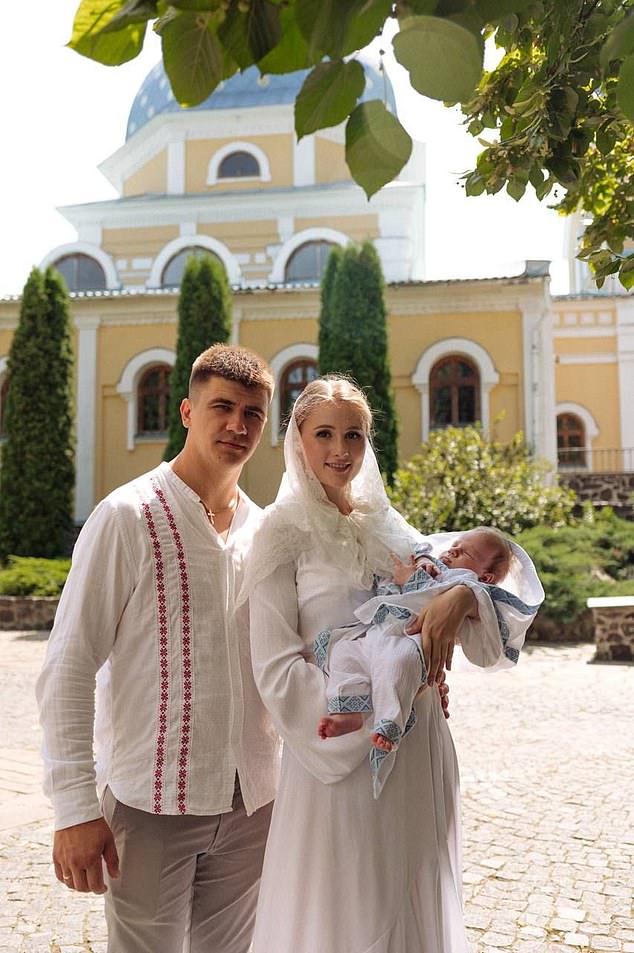
Alyona (pictured right) with her husband (pictured left) and newborn son, who she gave birth to in Kyiv in 2024
Alyona’s son was born during the war. He has never known a Ukraine in peacetime and is younger than the conflict itself
Alyona was in Kyiv when she gave birth to her first child.
The capital was then – as it is now – under constant threat from Russian shellings, drone attacks and missiles.
Several air raids went off while Alyona was in labour at the maternity hospital, but she says that despite everything that was going on around them, she and her husband didn’t want to postpone their plans to start a family.
‘My husband was very worried and stressed for me and the baby when I was pregnant – there was constant news popping up detailing shellings, bombardments, and war updates.
‘But I repeated to myself throughout the pregnancy that my child needed me during this period and I had to be resilient.’
Alyona planned the birth with UNICEF nurses who regularly checked in on her and worked as part of the Home Visiting Programme led by the Ministry of Health.
Two days before the birth, Alyona checked into a hospital that had an emergency air raid shelter – which she had to hide in with other mothers and nurses several times over the next 48 hours, and returned to again in the early stages of labour.
After initially struggling to breastfeed and resorting to a pump, Alyona managed to nurse her son directly after two months.
She says her son still goes to feed now as he sees it as something safe and reassuring amidst the chaos of the ongoing war.
But other mothers or women trying to conceive a child or breastfeed their newborn had difficulty.
‘A lot of women in my community tried to have a baby (and couldn’t), and a lot of mothers also experienced issues with breastfeeding,’ she said.
‘It takes time to establish the process to provide enough breastmilk for your child that many mothers unfortunately don’t have right now.’
Alyona added that mothers have always been held highly in Ukraine – now more so than ever.
‘Mothers have always been valued in Ukraine – but the current circumstances are very tough for some.
‘I have a friend who is a mother of two children and whose husband is currently in Russian captivity. She is now having to raise their two children alone.’
While her husband works full-time Monday to Friday to provide for their family, Alyona cares for their son and at weekends has a part-time job in a beauty salon.
She is grateful for the help that her own parents have given her too.
Alyona and her husband say they are simply trying to create as much stability as possible for their young family in the situation they are in, and spend any spare time they do have together.
Even now, Alyona’s constant worry for her son’s safety is not over.
‘He goes to nursery on a regular basis and when the air raids are on, they are supposed to proceed to the shelter with the children.
‘But when the air raids are on for three or four hours of course you start thinking: ‘how is my kid doing? Are they in the shelter?’
‘They obviously have everything they need there from the professionals who work in nurseries, but of course I’m a mother and I’m concerned for my child.’