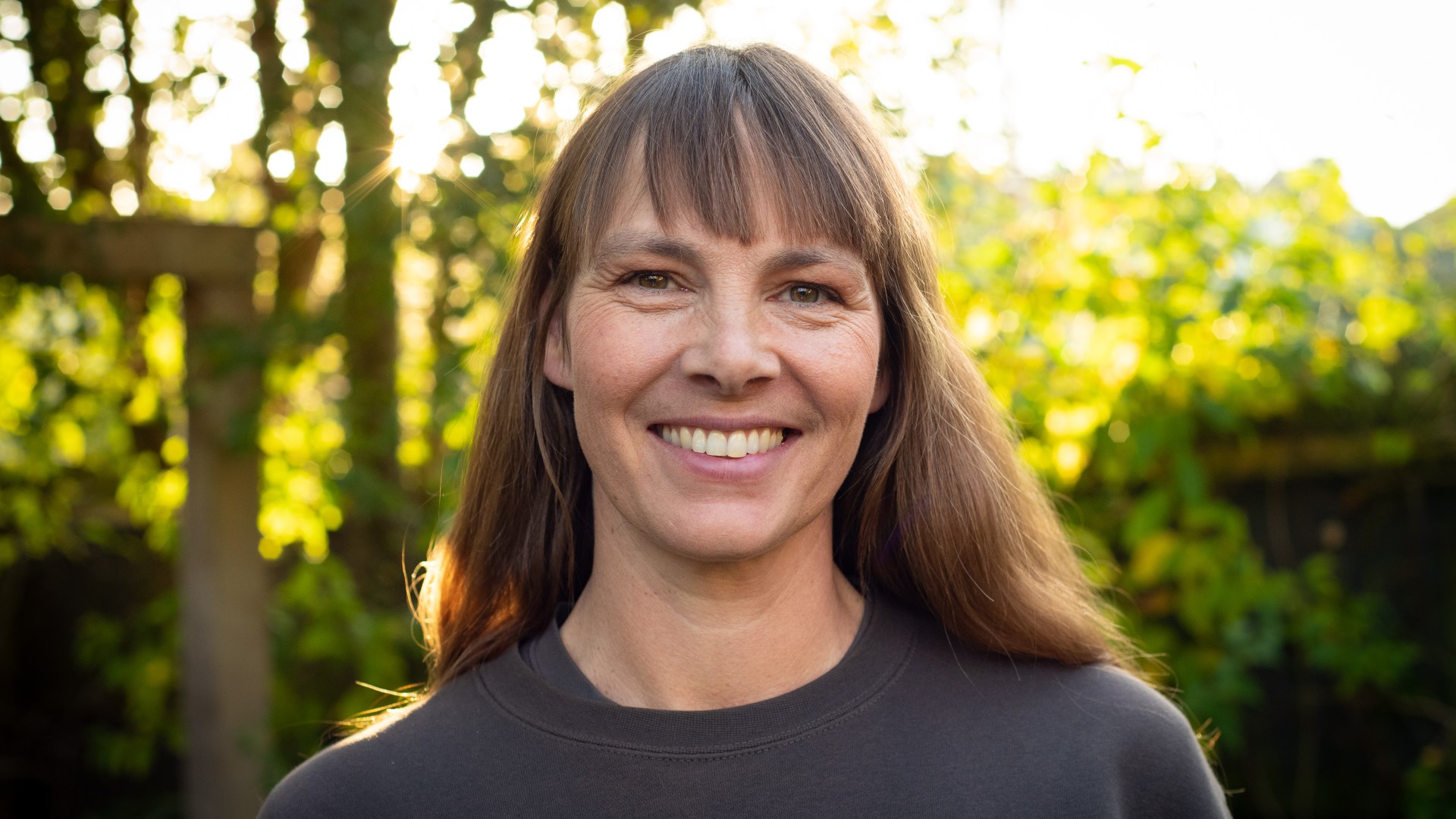
SEONAID Royall’s heart dropped when she was told that she was being made redundant from her job as a production manager at the BBC while pregnant with her first child.
Thoughts raced through her mind, including how she would provide for her family – but ten years later, the 48-year-old now runs her own gardening business, which has DOUBLED her income to £70,000 and allows her to spend more time with her kids. She explains how she did it and shares her tips to help you do it too.
Seonaid started her career as a TV runner and worked her way up to become a production manager.
During her time at the BBC, she worked on popular shows including Top Gear and EastEnders.
Seonaid, who lives in Streatham, South London, said: “I loved it, I felt really lucky to have the job I did and I was really good at it.”
But she was sadly made redundant, and despite Seonaid applying for jobs and having several interviews, when she revealed she was 21 weeks pregnant, she never heard back.


Working as a production manager meant she needed to be available to work at all hours, which she also worried would be hard to manage while being a mum.
Seonaid, who now has a son, 14, and an 11-year-old daughter, said: “I started to think that going back into TV with a newborn baby wasn’t going to give me the flexibility I would need.
“I wanted to be good at what I did, and if I couldn’t put the hours in, I knew I wasn’t going to be able to be the best at it anymore.”
As the weeks went by, losing her job took its toll on Seonaid’s mental health as she started to think about what to do next.
She says: “I felt very lost and sad, especially at a time when I should’ve only had the anxiety of becoming a new mum to worry about.
“It should’ve been a happy time.”
As a way to help, Seonaid decided to write a list of the things could make her feel in control again.
One of the items on the list was gardening.
The mum-of-two explains: “I grew up on a self-sufficient smallholding in the Peak District and we lived off what we grew.”
Over the years, Seonaid had turned every garden she had into a beautiful space, with landlords asking her to maintain them after she left.
But with a busy full-time job, it was never an option.
However, when she was skint at the end of the month, she’d tend to her friends’ gardens in exchange for dinners and drinks out.
So, when Seonaid shared her list with her husband, he encouraged her to pursue gardening.
She said: “I had to consult my husband; I didn’t entirely trust my own judgement, and whatever decision I came to would impact us as a family.
“Looking back now, it was a no-brainer, but I felt like I had lost my life and mentally I wasn’t ok.”
But every time she was gardening, Seonaid felt connected and valued.
The real cost of business

It can be hard to know how much setting up your own business will cost.
Business Consultant Becky Stevenson shares the most common costs to watch out for and her tips to help you build your business.
Go part-time
If you don’t want to go all in, then consider cutting your hours at work or go part-time.
This can help you to maintain a steady income, as it can often take a couple of months for your business to make a profit.
Build your savings
Make sure you have around three to six months’ worth of savings to cover all your bills for your home and business.
This can help to take the financial pressure off and give you some breathing room.
Understand the costs
Starting a business can be expensive, so make sure you understand the start-up costs, as this can vary depending on the business.
Generally, you will need to pay for:
- Insurance, which can start from £200 a year.
- Registration with the Information Commissioner’s Office, which costs around £52 a year.
- Website domain, which can start from as little as £5 but the first year is always cheaper.
Open a business account
When starting a business, it’s a good idea to open a specialist account.
These accounts are free and can keep your business and personal finances separate.
They usually also offer you free access to software such as FreeAgent, which will help you with invoicing and accounts.
You can open a business account with high street banks such as HSBC and NatWest.
Use free tools
Tap into free versions of programmes such as Canva, a design platform, ChatGPT for AI, and Trello, a workflow management tool.
But avoid jumping into a subscription straight away to avoid signing up for a service you don’t need.
Get a grant
You could get help to start your business with support or a grant from your local council.
Most councils have a Business Support Team that offers help including start-up sessions, advice and sometimes grants.
Sign up for their newsletter and make an appointment with an advisor for free support and advice.
Tax
Start saving for your tax bill from your first job or client.
You don’t pay tax until you’ve earned over £12,500, but it’s good practice to start putting 20% of each transaction away.
Insurance
Although insurance may seem costly at first, it could save you hundreds of pounds if something goes wrong.
But don’t wait until you have a problem to take out a policy.
Some insurance companies, including With Jack, offer access to legal templates as part of the policy.
The ideal format would be bespoke T&Cs, but they are costly, so this option is a good stepping stone.
She explained: “When I garden, I feel safe, I know what I’m doing, and seeing the difference you can make in an hour is uplifting.”
Seonaid’s start-up costs were minimal as she already had a shed full of tools, but she bought a printer to print out flyers and took out public liability insurance.
Meanwhile, her friend gifted her a domain name and designed the website.
Just a few weeks after her son was born, she nervously left flyers in local cafés.
She said: “I was suffering from postnatal depression, which I believe was a knock-on effect of being made redundant.
“I had so much self-doubt, and I hated the thought of even trying to sell myself.”
It wasn’t long before her first customer got in touch, and Seonaid took her baby son along in his pram.
One customer turned into two, then three, and she got busier and busier.
Before she knew it, Seonaid had ten clients.
Seonaid said: “I always undercharged; I think that’s because I was just so unsure of myself.
“At first I was charging £16 per hour; over the next couple of years, that increased to £20 an hour.”
By this time, she and another mum friend had come to an arrangement of looking after each other’s babies one day a week, so the other could work on setting up the business.
And while the baby napped, Seonaid would read gardening business books to learn as much as she could about taking her hobby and turning it into a career – as she was still only earning pocket money.
The mum gained customers through word of mouth and leaflets, but every now and then she would take up part of a community stall for free at her local market.
Top side hustles that YOU could start now
A side hustle can help you to make a bit of extra cash. But exactly how much can you earn from each one?
Ruth Jackson-Kirby reveals the top five side hustles that could earn you up to £500,000 a year.
Create an e-course – £500,000
Online learning is incredibly popular, and you can profit from it by teaching an online course.
Simply make a video teaching a skill, such as how to play a guitar or coding.
You can then upload your video onto a site such as Udemy or Skillshare.
Udemy’s most successful teachers have earned up to £500,000.
Sell your crafts – £35,000
If you have a talent for making things then you could turn it into a valuable side hustle selling your products on sites such as Etsy.
Jewellery, furniture and personalised gifts are the most popular products.
The average Etsy business makes £35,000 a year, according to Sale Samurai.
Childcare – up to £28,000 a year
There’s a childcare shortage in the UK, step in to help and earn some extra cash at the same time.
Childminders earn an average £28,000 a year, but you’ll need to register with Ofsted or a childminder agency if the children will be under 8 and you’ll look after them for more than two hours a day.
But you can earn around £10 an hour as a babysitter and, if you only look after children between 6pm and 2am you don’t have to register.
Report potential store locations – up to £22,500
You can also make money from reporting potential store locations to retailers including Aldi and Lidl.
Check their websites for details of cities where they want to open stores, then, if you see a suitable location, let them know.
Lidl and Aldi pay a finder’s fee of either 1.5% of the total freehold purchase price or 10% of the first year’s rent for leaseholds.
On a £1.5million site purchase, that would be £22,500.
Open your home to international students – £13,000 a year
Foreign students studying in the UK are always looking for places to stay.
You can provide it if you have a spare room with a bed, wardrobe and desk and are prepared to provide meals.
Many language schools pay host families up to £250 a week, according to English UK, the national association of English language centres.
This income also falls under the Rent a Room Scheme, offering tax-free earnings up to £7,500 a year.
She offered seed-sowing workshops for children and charged nothing in order to promote her business cheaply.
Blossoming business
In 2014, Seonaid had a second child.
When she got back to work, her customers started to ask her opinion on patios and planting design.
Before she knew it, she was designing and delivering structural makeovers.
Seonaid said: “I loved it; it was really exciting and challenging. I had no idea it was going to go in this direction.
“I had done some design work before going to the BBC, so I sort of knew what I was doing, but a lot of the time I felt like I was making it up as I went along.”
Seonaid wanted to make sure she was creating design drawings that contractors could easily understand, so she decided to go back to college to do a diploma in garden design.
With her knowledge, skill, and eye for design, Seonaid put her prices up, and in 2019, she was turning over £58,000 with two gardeners, an assistant designer, and an office manager.
The same year, the entrepreneur decided to do an RHS show garden and won a prestigious Silver-gilt medal.
She said: “It was a vanity project, as it cost me a lot in resources and time.
“I knew I wouldn’t get any work out of it from talking to previous entrants, but I’m glad I did it.
“It was a huge challenge, and I feel very proud that my work won an accolade.”
Six years on, Seonaid’s business has grown and now turns over £250,000.
She earns £70,000 a year – double her £35,000 BBC salary.
Seonaid and her team now look after more than 100 gardens in South London and design 70 gardens a year.
Seonaid’s team is made up of ten gardening mums, who all work flexibly around their families.
Seonaid said: “I feel incredibly lucky that I’ve had two careers that I love. Gardening helped me to find my self-worth and value again.
“Add to that the fact that I have doubled my production manager’s salary, and I work flexibly around my children.
“I’m able to do drop-off and pick-up for my children, I’ve never missed a sports day, achievement assembly or doctor’s appointment.


“Working in TV, the children would have gone into wraparound care, and we would have had snatched time in the mornings and evenings.
“I feel grateful that I’ve been able to create the best of both worlds for myself.”
How to pay less tax if you’re self-employed
Being self-employed has many advantages but it can mean handing a big chunk of your hard-earned money to the taxman.
That’s why knowing how to slash your tax bill is essential. Here are three key ways to cut yours.
Top up your pension
One way you can reduce your tax bill if you are self-employed is by paying into your pension.
For example, if you were to have a successful year, then increasing your income could drag you into a higher tax band.
But putting the extra income you earn into your pension means you would pay no tax on it.
When you pay into your pension, you also benefit from tax relief, which is when the Government boosts your pension savings.
The relief is provided at your marginal tax rate, so if you pay income tax at 20%, then you will get the relief at this rate too.
Working from home allowance
If you work from home all or part of the time, then you could be missing out on working from home allowance.
You can make a claim for costs that come with your work, such as business phone calls, gas and electricity when you work from home.
You can claim up to £26 a month – or £312 a year.
For more information, visit gov.uk/tax-relief-for-employees/working-at-home.
Claim for your car
If you drive a car or van for work, then you could be missing out on tax relief on your mileage.
You can claim 45p tax relief on every mile you do for the first 10,000 miles a year of business journeys.
Plus, you can get an additional 5p per mile in relief if you carry a passenger.
You can log the number of miles you do and add reminders to report your mileage using apps including Fuelio.
Don’t claim for any personal mileage that you do, even if you use the same vehicle for your business.
Do you have a money problem that needs sorting? Get in touch by emailing money-sm@news.co.uk.
Plus, you can join our Sun Money Chats and Tips Facebook group to share your tips and stories