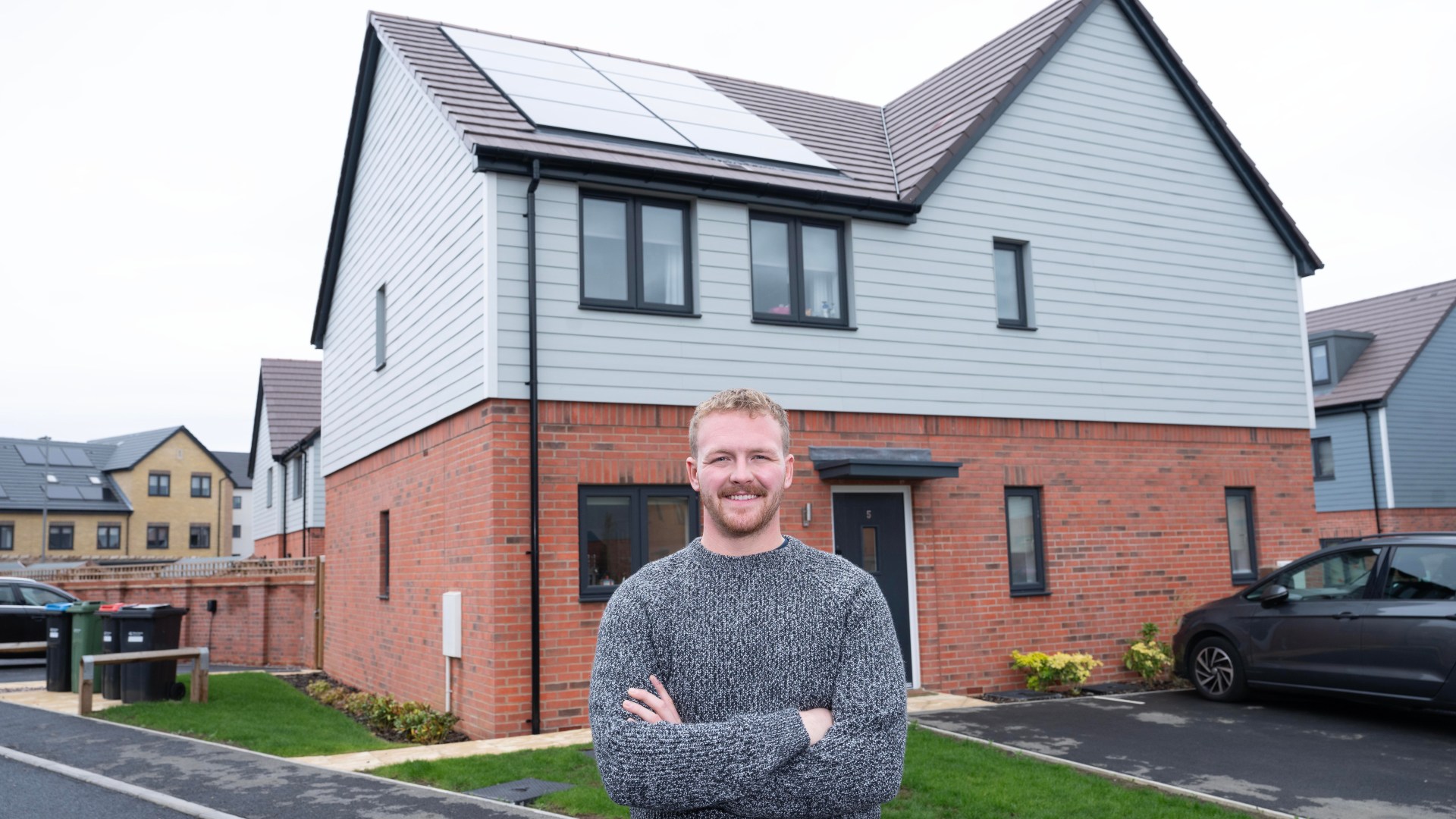
IT’S a chilly 12 degrees outside but I feel so hot that I need to take off my jacket as soon as I step inside Elliott Wood’s one-bed house in Milton Keynes.
The heating is on full blast inside the 26-year-olds home where he lives with girlfriend, Hannah, 25 – and they pay £0 every month in energy bills.
That’s because the couple live in a ‘zero bills home’ run by Octopus Energy.
Hundreds of people across the UK are living in zero bills homes that charge their occupiers nothing for energy.
The homes are built by Octopus and are fitted with good insulation, solar panels, a heat pump and home battery.
The energy firm currently has zero bills homes in Bristol, Devon, Essex, Exeter, Somerset, Newport and Sussex.

It wants to build 100,000 of the properties by 2030, and estimates the average home is saving over £1,800 a year.
Motorsport mechanic Elliott, 26, and his girlfriend Hannah, 25, who works in the NHS, moved into their zero bills home in Milton Keynes seven months ago.
They reckon they save about £250 a month on their energy bills – adding up to a huge £3,000 a year.
“It’s taken away the stress of not knowing what your bill is going to be each month,” Elliott told The Sun.
Now when his energy bill comes through, the charge is always £0.
Residents living in zero bills homes don’t have to pay a penny for their energy and there are also no standing charges.
Octopus says it’s able to guarantee this for at least five – but usually 10 – years at each property.
The homes work by storing up cheap energy in the home battery whenever the sun is shining or the wind is blowing.
Later, when demand on the energy grid is high, that energy can be used in the home or even sold back to the grid.
Our heating is always on at 21 degrees – but we don’t have to worry about it
The best part for Elliott and Hannah is they barely need to think about the energy they’re using.
“Before I had a little one bedroom flat no bigger than the downstairs living room here,” Elliott said.
“I wasn’t there half the time because I was away with work and I was still paying £150 a month for the electricity.”
He’d find himself sacrificing putting the heating on to save money and wearing big jumpers around the home to keep warm.
Now, his heating is on constantly at a toasty 21C and he never has to worry about waking up freezing cold in the morning.
The couple own two cats, Betty and Bertie, and they know their pets will always be warm at home too.
Octopus does have a ‘fair use allowance’ which is the maximum amount of energy each home can use.
But this is usually about twice what the average consumption of that home would be, and so far no zero bills customers have come close to the allowance.
Elliott says he can track his usage through the Octopus app, but he doesn’t worry too much about the allowance.
Their home is frequently empty during the day as he’s often away working at motorsports events, while Hannah doesn’t work from home.
We can spend on holidays and weekends away instead of our energy bills
So far they haven’t had to sort any maintenance for the heat pump, solar panels or home battery.
The couple pay £1,750 a month in rent for their home.
They’d originally budgeted about £1,500 to £1,600, but when their estate agent told them about the zero bills property they realised it could save them money even with the higher rent.
The average rent for a semi-detached property in Milton Keynes is currently £1,366, according to Government data.
Elliott said he “couldn’t quite believe” when he was first told he could rent a home where the energy is free and had “loads of questions” about it.
But now it’s enabling the couple to put roughly £250 a month of their income straight into savings.
Elliott said they want to use the money for weekends away, holidays and ultimately a deposit to buy a house.
The couple are planning to stay in the home for the next four years and know they’ll be able to keep saving each month.


And when they come to buy, they’ll be looking for another zero bills home if possible.
“It’s definitely on our radar,” Elliott said. “It would be great to have another zero bills home just for peace of mind.”
How you can cut down on your energy bills
YOU might not be living in a zero bills home like Elliott, but there are still ways you can cut down on your energy costs.
Use outside peak hours
Some energy companies including British Gas and EDF give you discounts or free energy if you shift your energy use to times when there’s less demand.
British Gas customers can sign up to the PeakSave scheme, which gives you half-price energy every Sunday.
Meanwhile EDF’s Sunday Saver initiative gives free electricity to customers who cut down on their energy usage during the week.
Unplug vampire devices
If you leave items plugged in or on standby when you’re not using them, they still drain power and waste you money.
According to the Energy Saving Trust, unplugging these devices could save you an average of £45 a year.
The appliances that suck the most electricity when left on standby include smart speakers and smart home devices, set top boxes and recorders, TVs, microwaves and electronic devices left on charge.
Swap lightbulbs
According to the Energy Saving Trust, if you make the simple swap to energy-saving lightbulbs, you could save up to £4 per bulb per year.
LEDS are by far the most efficient type of bulb, as they are as powerful as halogen bulbs, but use 80% less electricity.
Plus, they last up to 20x longer, so you shouldn’t need to replace them for many years.
Wash clothes at 30 degrees
Washing clothes at 30 degrees instead of 40 degrees is an easy way to lower your energy consumption.
According to MoneySupermarket, if you combine lower temperatures with doing one less wash a week, you could save £22 a year.
Making sure to fill your machine completely and doing shorter wash cycles also helps to reduce energy use.