
MILLIONS risk overpaying on their electricity bill by making a simple mistake.
As the temperatures drop, many will be looking at ways to stay warm without turning on their central heating.
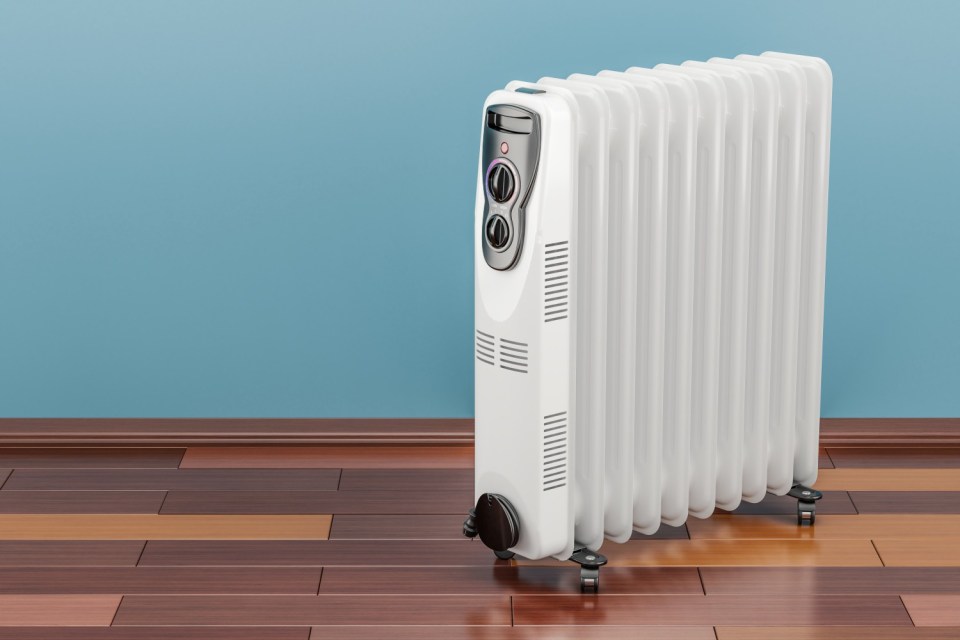
Gadgets such as oil-filled radiators or plug-in heaters can be an easy way to do this.
In fact, a national energy study from Utilita revealed that 25% of UK households with gas central heating are opting to use plug-in electric heaters this winter.
But many are unaware that doing so could see them pay up to four times more to heat their homes.
Utilita’s Energy Saving experts explained: “Electric heaters are attractive to households as they can be moved from room to room and often, they provide instant heat.
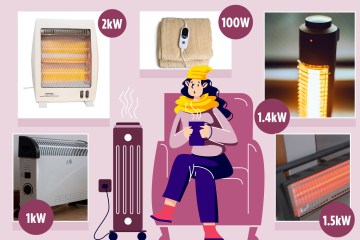

“But consumers will pay four times as much compared to heating a room to the same temperature using gas central heating.
“A gas central heating radiator bringing the average-sized lounge up to 18-21 degrees Celsius costs around 90p a day, compared to £3 for an electric heater. “
How YOU can heat your house for less
A good way to save on your heating is to heat just one room instead of the whole house.
This especially makes sense if you spend most of your time in one room, such as a home office or sitting room.
The Sun, with the help of Utilita, has crunched the numbers to reveal the cheapest way to do this.
The cost of using your central heating
A gas-powered central heating system can be the most economical way to heat an entire property as modern gas boilers are very efficient.
Under the current Ofgem energy price cap, electricity costs a maximum of 25.73 pence per kWh while gas is capped at 6.22 pence per kWh.
If you have a gas boiler and you’re looking to heat a single room for a period of time, the best method will depend on whether you can control the temperature in your home on a per-room basis.
Using Thermostatic Radiator Valves (TRVs) – a product which can be found at most DIY stores – can be an easy way to do this.
These are a special type of radiator valve that help control the flow of water to your radiators.
When the room reaches the set temperature, it stops radiators from getting any hotter.
This is compared to manual radiators valves which only switch radiators on or off.
These handy gadgets have even been recommend by a British Gas engineer.
Using a smart heating system which automates controlling the temperature of different radiators – can also help you achieve this.
The cost of using a standalone heater
If you don’t have access to a smart heating system, using an oil-filled radiator or a standalone heater can also be an option.
These devices are portable and compact in size, so you can move it from room to room with ease.
But they can be very pricey to run. Figures show that the average oil-filled radiator and plug-in heater both cost £4.22 to run over eight hours.
And if you did this every day for a month you would add an extra £126.48 to your electricity bill.
In comparison, the average household spends £2.58 when they run their central heating for the same amount of time, taking their monthly bill to £77.57.
If you are set on using a plug-in heater, there are cheaper options to choose from.
For example, an infra-red heater costs just £3.16 to run for eight hours a day and this would work out at £97.96 a month.
Or a halogen heater- which uses a high-intensity bulb filled with halogen gas to generate heat – costs £2.95 to run for eight hours a day.
This would take your total cost per month to £88.50.
Ben Gallizzi, energy expert at Uswitch.com, said: “There’s no hard and fast rule about whether it’s cheaper to use an electric heater or your central heating.
“The cost will vary for every household, as it depends on so many factors, such as the size and structure of the home, how well insulated the home is and how many rooms you are heating.”


Using heating gadgets such as electric blankets can also be an easy way to stay warm for less.
The average electric blanket costs just 21p to run for eight hours overnight.
How to stay warm for less
Ben Gallizzi, energy expert at Uswitch.com, shares his top tips with sun readers
It’s a common misconception that keeping your heating on constantly is more efficient, and the reality is that this usually results in higher energy use.
Keeping the heating on constantly means your home is warmer, which causes it to lose heat faster. If your heating system is continuously topping up the temperature, this heat loss continues through the day.
Modern heating systems can get your home up to temperature quickly, so there’s no need to keep the boiler running all day long.
There are times when having the heating on is unnecessary, such as when you’re asleep at night and cosy under the duvet.
Using a timer means you’re only putting on the heating when you need it, and pairing this with a thermostat keeps your home at the right temperature.
You can also consider cost-effective ways of staying warm at home. Electric blankets are a good way to keep warm, and cost a lot less to run than heaters.
You should also make sure you’re not paying more for your energy than you should by seeing what fixed deals are available.
Run a comparison at Uswitch.com to see available tariffs with personalised costs based on your household consumption.