If you thought last year’s Budget was toxic enough, with its devastating multi-billion-pound tax raid on businesses, our pensions and the beleaguered farming community, I have some daunting news for you. Prepare for far worse.
The Budget on November 26 (already dubbed ‘Financial Doomsday’) is going to be poisonous: a vile attack on wealth and aspiration, which will chase some of the biggest tax payers from the country and could prove ruinous to an already faltering housing market.
Not that it will trouble Chancellor Rachel Reeves, who is seeking to save her own skin (and Keir Starmer’s) by plugging a gaping £40 billion-plus hole in the nation’s finances which is of her own making.
By the way, blaming the wretched state of the public’s coffers on Brexit – as Ms Reeves will ludicrously say in the Budget – is like pointing the finger at Ukraine for Russia’s murderous assault on its sovereignty. One almighty lie.
Ms Reeves’ coming Budget, masterminded by diehard socialist Torsten Bell (Parliamentary Secretary to the Treasury) will be an act of class warfare on a scale I have not seen in my working lifetime.
For the record, I’ve been diligently earning a crust as a money journalist since the late 1980s and reported on Budgets both austere and growth enhancing. Never have I felt so nervous about what is coming our way.
Am I spouting Conservative party propaganda, as no doubt the Left-wing Press will say? The answer is a big fat ‘No’.
According to strong smoke signals bellowing from the Treasury’s furnaces, the Chancellor is planning an assault on wealth makers to end all assaults.
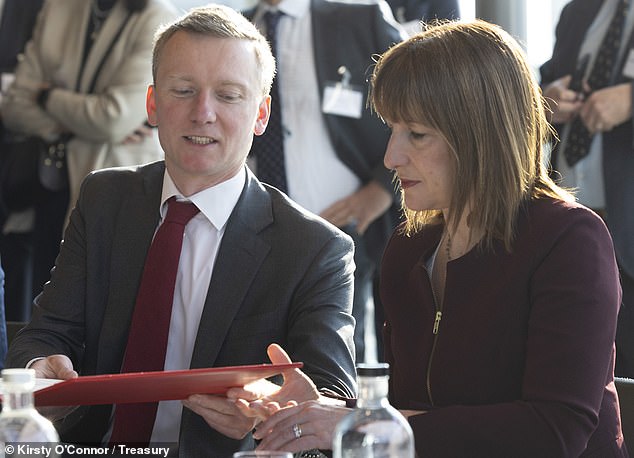
Chancellor Rachel Reeves’ upcoming Budget has been masterminded by Parliamentary Secretary to the Treasury Torsten Bell
At the centre of this attack will be an annual wealth tax on high-value properties. Some will know it as a ‘mansion tax’.
Although it is likely that around 100,000 homeowners will be initially impacted, there is every chance its trawling net will reach far wider if Labour remains in power. That is the way with most taxes: they target a minority to begin but their tentacles soon begin to spread.
Think about the absurd growth in the number of higher rate taxpayers in recent years as a result of frozen tax thresholds. Think about the increasing number of financially challenged pensioners now unfairly paying tax on their meagre mix of private and state pension.
Sources have told The Mail on Sunday the annual wealth tax will be levied at 1 per cent on properties worth £2 million or more. If introduced on the entire value of a property, back of the envelope calculations suggest it could yield the Chancellor upwards of £2 billion each year. A home valued at £2 million would face an annual wealth tax of £20,000, for example.
If applied on just the value above £2 million, as sources suggest the Chancellor is leaning towards, the tax take would obviously be far less. On a £3million home, it would be £10,000 instead of £30,000.
Affordable sums, you could argue with justification, for some of the most asset-rich who live among us. But after the Government’s decision to impose VAT on private school fees, it would be another signal to the wealthy (the financiers, bankers, entrepreneurs and heads of successful businesses creating jobs and growth) that Labour doesn’t value them.
They may as well take their skills somewhere else (the US, for example) where they would be properly appreciated and not taxed to the hilt.
To put the take from such a wealth tax into perspective, a 1 per cent rise in income tax rates – or National Insurance rates – would yield the Chancellor in excess of £8 billion in the tax year starting next April.
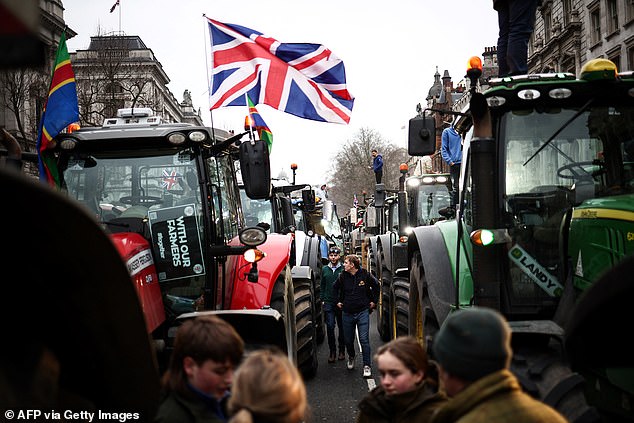
Last year’s Budget was disastrous for the farming community, who protested along Whitehall over changes to inheritance tax rules
So this property levy is going to be small beer in the grand scheme of the Budget. But that’s not the point. It’s the signal that it would send to Labour’s rank and file: We’re after the privileged. Treasury sources, as I report in today’s Wealth & Personal Finance section (on Page 57), say the Chancellor has not yet ruled out a rise in income tax rates. But any decision on breaking Labour’s manifesto not to increase income, National Insurance and VAT rates would not derail the introduction of a wealth tax. Far from it.
Indeed, you could argue that attacking the wealthy with a mansion tax could be used by Ms Reeves as a distraction tactic along the lines of: ‘We all need to play a part in making good the nation’s finances left bare by the Tories and Brexit, but it’s the super wealthy who must bear the biggest burden, and we’re targeting them.’
As a further sweetener, she could also lift the two-child benefit cap, which irks so many Labour MPs. I would say that’s already a given.
We shouldn’t be surprised that Labour is marching ahead with a wealth tax.
Looking back on recent times, Labour in opposition long argued for such a levy. Eleven years ago, the then Labour leader Ed Miliband stood up at the party’s conference in Manchester to call for a similar tax.
As with the current plan, the tax would hit properties worth £2 million or more. But this would be on their whole value, not the surplus above £2 million.
At the time, Mr Miliband said the tax would deliver annual revenue of £1.2 billion. It would then be used to fund the NHS.
Perhaps it’s no surprise the policy proposal was very much based on work done by Ms Reeves’ Budget partner in crime (Mr Bell), who at the time was head of Left-wing think-tank, the Resolution Foundation.
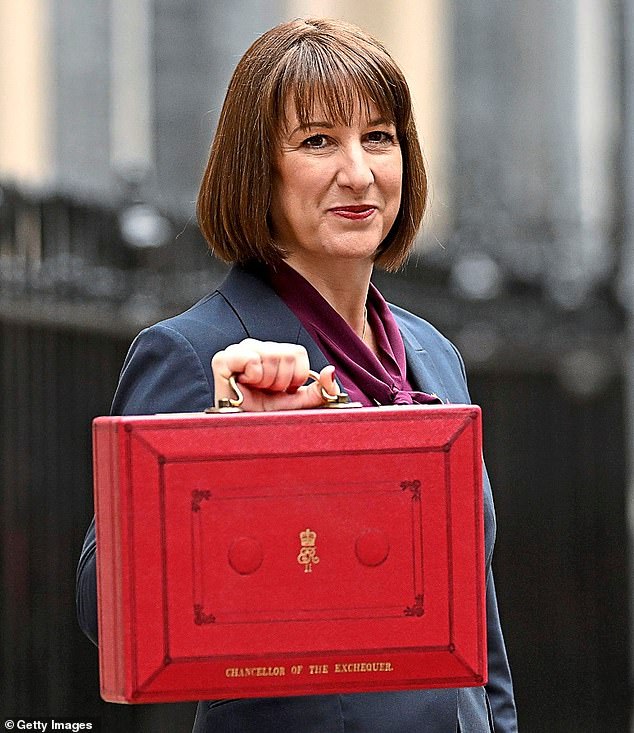
Jeff Prestridge says the Chancellor’s coming Budget will be ‘a disaster for us all’
And their handiwork will not only chase away wealth creators. It could have serious consequences for the housing market, especially in high-value London and the South East.
Estate agent Knight Frank last month downgraded its forecasts for house prices amid pre-Budget ‘nerves’ and fears of more draconian property taxes.
For ‘prime’ properties in central London, it predicted that prices would fall 4 per cent this year followed by zero per cent growth in 2026. This is gloomier than its previous predictions for zero growth this year and 2.5 per cent price rises next year. It also forecast that ‘prime’ country house prices would fall 5 per cent this year.
Although Knight Frank says house prices across the UK will still rise on average by 1 and 3 per cent this year and next, that could all change if markets are unsettled by Ms Reeves’ and Mr Bell’s antics.
The anticipated Budget cut in the annual cash Isa allowance from £20,000 to £10,000 is not helping matters. It has stoked fears that mortgage finance could dry up as lenders struggle to secure funds from savers to lend on to homebuyers.
Higher mortgage costs, and fewer available home loans, together with rising unemployment and persistent inflation could well make Knight Frank’s predictions look absurdly optimistic if a wealth tax is added.
Next month’s class-driven Budget will be a disaster for us all. Brace yourself for Financial Doomsday.