A Grand Designs eco-creation built by a couple who famously ran out of money halfway through construction – and which was written off by show host Kevin McCloud as a ‘mud hut in Benin’ – is on the market with a £2million price tag.
The daring cob-and-timber home near Honiton, East Devon, was one of the most talked-about projects in the Channel 4 programme’s history when it aired in 2016.
Food writer Mark Diacono and his wife Candida took on what presenter Mr McCloud described as a ‘cathedral of cob’.
The couple’s ambitious dream was to build not just a sustainable family home with swooping plough-shaped grass roofs and walls insulated with old newspapers, but also a cookery school on the banks of the River Otter.
The build, however, descended into chaos when the couple admitted they did not have enough money to finish the £650,000 construction – and relied on the goodwill of a crowdfunding campaign to rise the final £60,000 needed to complete the eco-home, named Otter Farm.
Initially, Mr McCLoud joked that the structure looked like ‘some mud hut in New Mexico or Benin’.
Now renamed Heron Farm, the vast estate is on the market with a guide price of £2 million – nearly six times what it sold for in 2004 (£378,000).
The Diaconos decided to move on in 2018, selling the 15.63-acre site for £1.35m to current owners Christine and Peter Helliwell.
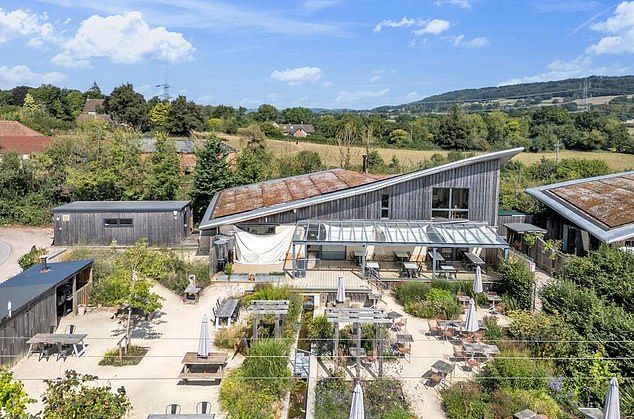
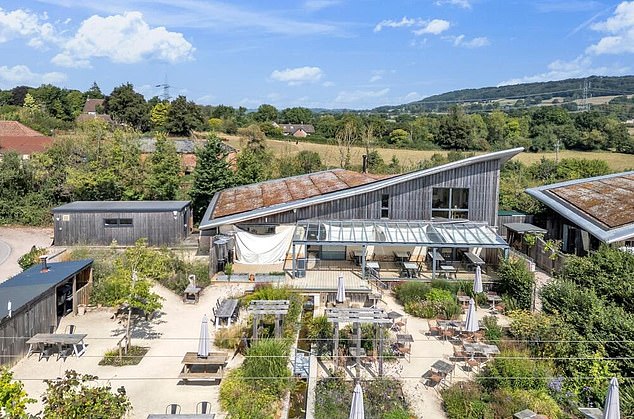
The design of the building was based on the shape of a plough
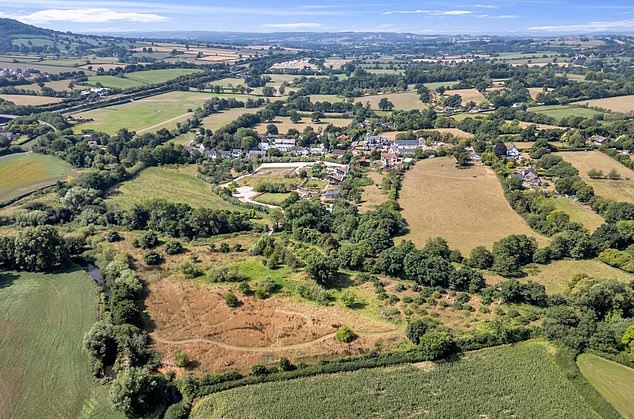
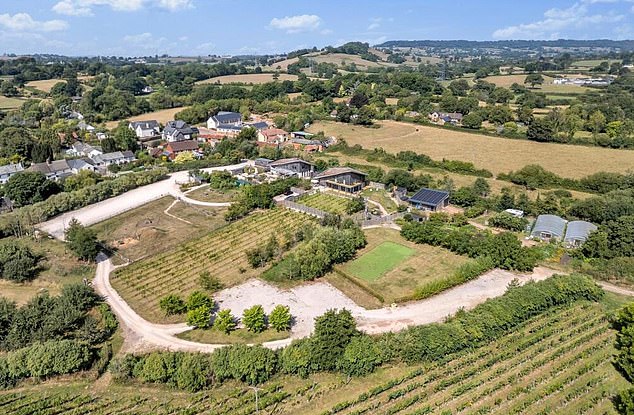
The property includes almost 16 acres of land, three and a half of which are a vineyard
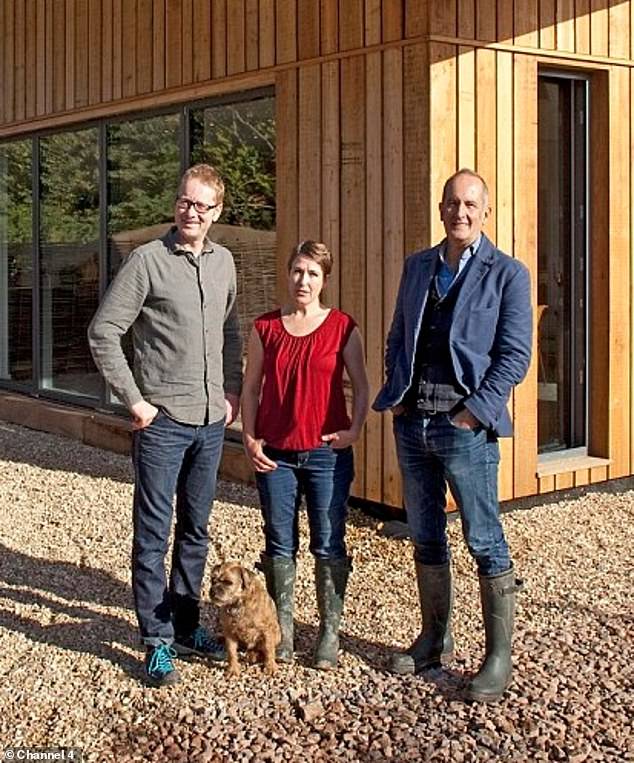
Former owners of the property Mark, left, and Candida with presenter Kevin McCloud
The couple moved from South Queensferry in Scotland to take over the property and transformed it into a thriving rural business – complete with a farm shop cafe, vineyard, orchards and landscaped gardens.
A listing on Rightmove now tells of the opportunity to acquire a ‘unique riverside business and lifestyle property’.
It reads: ‘Originally known as Otter Farm and featured on Channel 4’s Grand Designs in 2016, Heron Farm has evolved into a vibrant and multifaceted rural enterprise.
‘The property spans approximately 15.63 acres (6.33 ha) and includes a contemporary architect-designed home, a thriving cafe and farmshop, productive vineyard and orchards, landscaped gardens, and event spaces.
‘It is a rare opportunity to acquire a lifestyle property that combines modern living, income generation, and natural beauty in one compelling package.’
The timber-framed four-bedroom house, heated by thermodynamic panels, is clad in cedar and has a 500 sq ft double-height kitchen overlooked by a mezzanine floor.
The Rightmove listing continues: ‘Recently operated as a high-end holiday let, the house has proven appeal for short-term stays, offering guests a luxurious and peaceful retreat.
‘The accommodation includes multiple bedrooms, generous entertaining areas, and stunning views over the vineyard and river meadow. It is equally suited to family living or continued use as a premium holiday rental.’
In a blog on the Heron Farm website from 2019, Mrs Helliwell told how she had ‘no regrets’ with moving to Devon from her home outside Edinburgh.
She wrote: ‘I won’t pretend the last six months have been easy. It was undeniably hard and stressful saying goodbye to our comfortable lives in Scotland, especially to friends and family.
‘Moving somewhere that you know nobody, especially when you aren’t going out to work, is tough. And we have put ourselves under a huge amount of pressure to build up a business, in a sector we know nothing about, from virtually nothing.’
Perhaps the most remarkable transformation since the estate’s TV fame is what has happened to the former cookery school, which also featured a sloping plough-shaped roof and led to Mr McCloud describing the buildings as a splayed ‘stack of playing cards’.
Today, it houses a stylish cafe hat serves garden-to-table food sourced from the estate’s own produce, paired with wine from its two-acre vineyards.
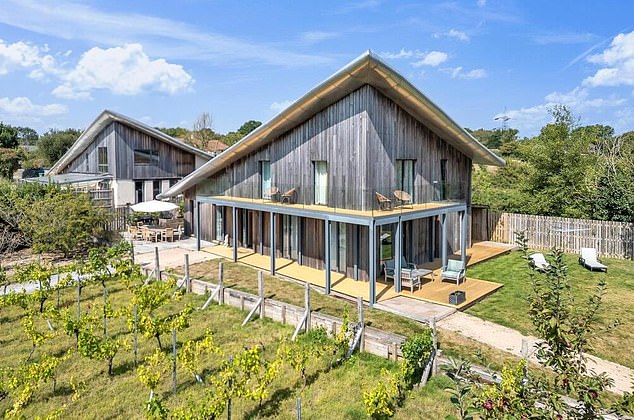
Now renamed Heron Farm, the vast estate is on the market with a guide price of £2 million – nearly six times what it sold for in 2004 (£378,000)
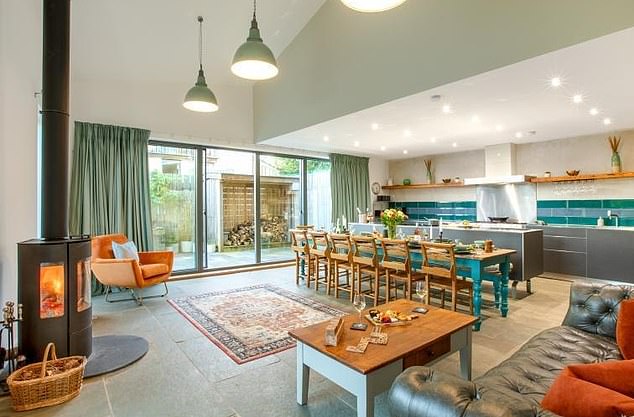
Today, it houses a stylish cafe hat serves garden-to-table food sourced from the estate’s own produce, paired with wine from its two-acre vineyards
The Rightmove listing states: ‘Recently operated as a high-end holiday let, the house has proven appeal for short-term stays, offering guests a luxurious and peaceful retreat’
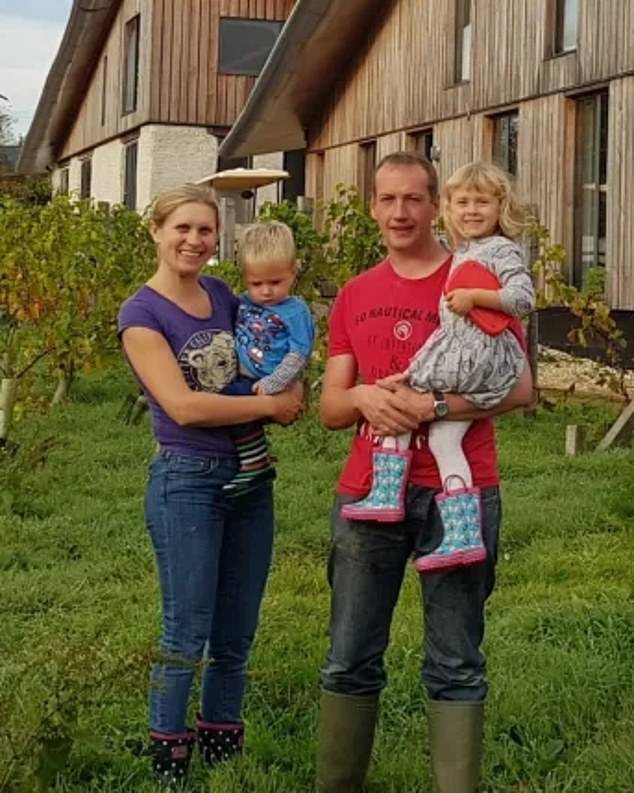
Current owners Peter and Christine Helliwell, pictured, with their children
Estate agents Stags state in the sales literature: ‘The estate is currently operated as a business-rated freehold and has become a popular destination for locals and visitors alike.
‘With Instavolt car charging facilities, a play park, and riverside walks, Heron Farm is well-equipped to cater to a wide range of guests and events.’
When the project first aired, the Diaconos had sold their village home and gave themselves just five months to finish the build – hoping to start running courses by spring and resume planting the crops that provided their livelihood.
However, miserable winter weather ground work to a halt and the couple began to run out of money. Undeterred, Mr Diacomo decided to try to raise £60,000 in a crowdfunding drive in exchange for free cider and signed books.
Abandoning his initial scepticism, Mr McCloud described the finished project as a ‘Shangri-La of sustainable smallholdings’ and concluded: ‘Mark and Candida are an irresistible force of nature…the prospect is wonderful.’
Mrs Diacomo now runs an herbalist and essential therapies studio in Sidmouth, Devon.
Her husband, a published author and newspaper columnist, is an honorary professor at Liverpool university.
He admitted on his website in 2023: ‘We left the farm over five years ago and while I’m ok with that – you have to live looking forwards more than back – there are a few little things that bob to the surface now and again.’