It is one of the most hotly debated ingredients in Britain’s kitchens.
Whether you’re sautéing, deep-frying or drizzling over a salad, oil is a cooking staple – but choosing the right one has become increasingly confusing.
While some are hailed as heart-healthy superfoods said to boost brain power, others are blamed for fuelling inflammation in the body and heart disease.
Some even turn rancid if left too long in the cupboard, while others should never be used for certain cooking methods, as heat can cause changes that make them a risk to health.
As a result, many health-conscious cooks are shunning traditional sunflower and rapeseed oils for trendier alternatives such as coconut oil.
But are these fashionable choices really any better for you – and how do they compare with kitchen classics like olive oil or butter?
Now experts have weighed in, revealing which oils you should be using – and which to avoid.
According to nutritionist Rob Hobson, author of Unprocess Your Family Life, one oil often criticised for its fat content isn’t nearly as bad as you might think.

While some oils promise the health conscious endless benefits such as boosting heart and brain health, others increase the your risk of heart disease
Olive Oil
Many people reach for olive oil believing it’s the healthiest choice for cooking – but experts say that’s not always the case.
Mr Hobson says that while extra virgin olive oil is packed with heart-friendly monounsaturated fats and antioxidants, it’s not ideal for very high temperatures.
‘It’s rich in monounsaturated fats and antioxidants, which are great for heart health,’ he said.
Extra virgin olive oil also contains relatively little saturated fat – about 2g per tablespoon – and is rich in polyphenols, plant-based compounds that support blood vessel and brain health.
The problem, he explains, is that extra virgin olive oil begins to break down when overheated. Its smoke point – the temperature at which it starts to burn and release smoke – can be as low as 160°C, rising to around 190°C for higher-quality oils. Beyond that, it starts to lose its beneficial compounds and produce harmful molecules called free radicals, which can damage cells and may raise the risk of heart disease.
That means while it’s fine for gentle sautéing, the pricier ‘extra virgin’ varieties are best reserved for salad dressings, drizzling over cooked dishes or dipping bread.
For cooking at higher temperatures – such as roasting or frying – refined olive oil (often sold simply as ‘olive oil’ or ‘light olive oil’) is a better choice. It has a higher smoke point of around 220°C, making it more stable under heat. However, the refining process strips away many of the natural polyphenols and antioxidants that give extra virgin olive oil its unique health benefits.
‘Extra virgin olive oils are best used as finishing oils to preserve their flavour and aroma,’ adds Tracy Parker, senior dietitian at the British Heart Foundation.
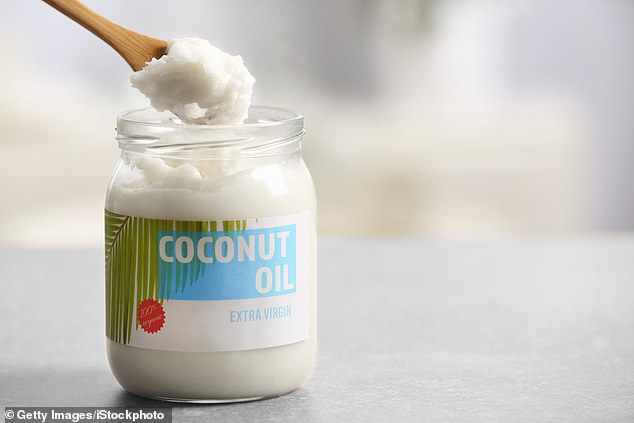
Coconut oil is high in saturated fats with 12.99g per serving — almost half the recommended portion of 30g of saturated fat per day
Coconut Oil
Coconut oil is often touted as a healthier option – but experts are undecided.
It’s high in saturated fats with around 13g per 15ml serving — almost half the recommended portion of 30g of saturated fat per day.
Rhiannon Lambert, Harley Street nutritionist and author of The Science of Nutrition, says: ‘Approximately 90 per cent of its fat is saturated, which is a higher proportion than in butter.
‘Diets high in saturated fat can increase blood cholesterol levels which can raise the risk of heart disease.’
It’s supposed benefits are said to be due to the fact it contains lauric acid, a saturated fat, which some studies suggest may not be as harmful as other saturated fats.
Some research has suggested lauric acid raises HDL or ‘good’ cholesterol levels, which may lower overall heart disease risk.
But Mr Hobson stresses that the ‘jury is still out on coconut oil’s cardiovascular impacts’.
He adds: ‘It can raise your total cholesterol level, which is bad news for heart health. So it’s best used sparingly. Also you don’t always want everything to taste if coconut.’
‘While it’s great in stir fries, baking and curries, it’s not something I would fry my eggs in.’
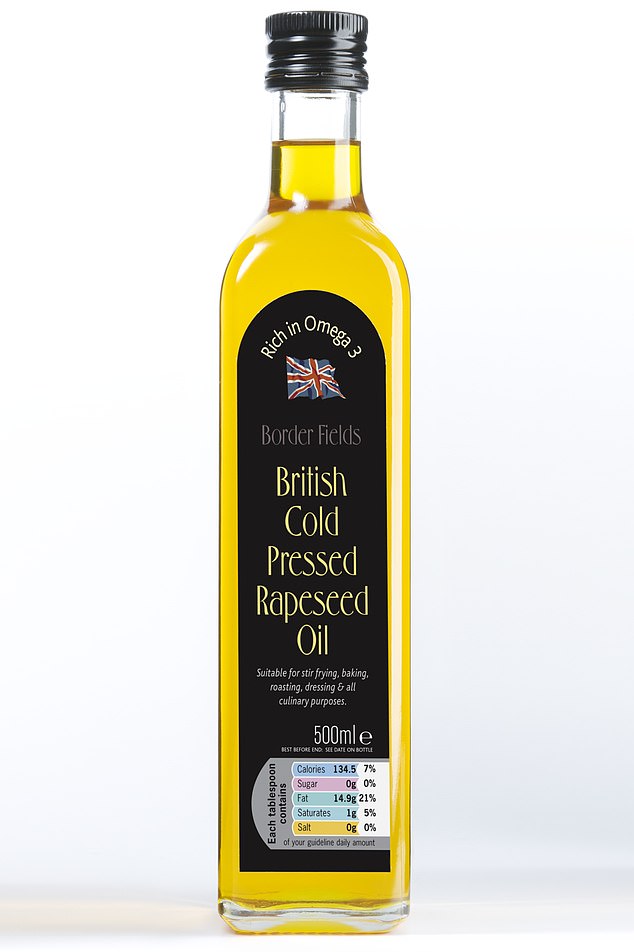
Rapeseed oil stands out because it contains alpha-linolenic acid (ALA) which is an omega-3 fatty acid, a type of fat found in fish and essential for heart and brain health
Rapeseed and Flaxseed
One contender to olive oil, however, is rapeseed oil.
At £3.50 it is half the price and is also high in healthy monounsaturated fats, potentially reducing cardiovascular risk.
It’s also lower than olive oil in saturated fat with 1.1g per serving.
This particular oil stands out, Mr Hobson says, because it contains alpha-linolenic acid (ALA) which is an omega-3 fatty acid, a type of fat found in fish and essential for heart and brain health.
‘Omega-3s are often lacking in our diets, so incorporating oils like this can help to improve overall fatty acid intake,’ he said.
Flaxseed oil, which contains 1.65g of saturated fat, also has similar benefits to rapeseed oil.
Both contain omega-3 and omega-6 — but rapeseed oil has a more favourable omega-3 to omega-6 ratio than most other seed oils.
Omega-6 fatty acids are a type of fat that are essential for human health and are found in plant oils, nuts, and seeds, but some people argue too much may contribute to inflammation.
But Mr Hobson suggests these negative claims are ‘overblown’ and argues rapeseed oil can be a healthy addition to a balanced diet.
‘Rapeseed oil sometimes gets a bad rap because of its association with omega-6 and the perception that it’s a ‘processed’ oil,’ he says.
‘I think a lot of this criticism is overblown and fuelled by social media.’
One 2019 study published in the journal Circulation, found no association between moderate omega-6 intake and increased cardiovascular disease.
However, seed oils including flaxseed have lower smoke points, meaning they break down at a lower temperature and are more likely to release free radicals.
For this reason Hobson suggests just using flaxseed oil for dressings or drizzling.
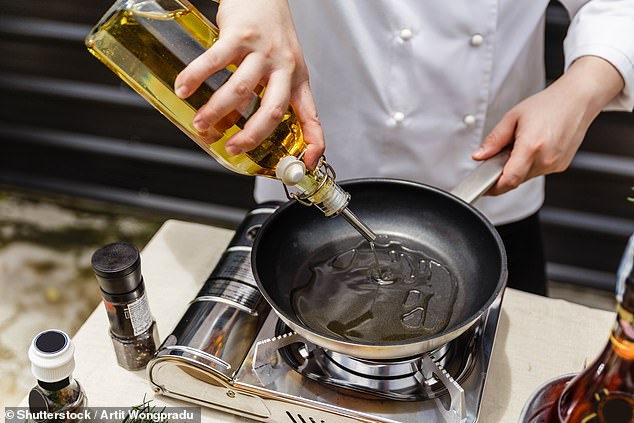
It’s not just about the level of healthy fats if you are using these oils to cook with rather than drizzle on salads, you might want to consider their smoke points — the point at which the oil breaks down
Sunflower Oil
In recent years, seed oils have become the target of countless social media posts, with people claiming that they are ‘toxic’, ‘poisonous’ and, ultimately, are damaging our health.
Critics have nicknamed some seed oils the ‘hateful eight’ — canola, corn, cottonseed, grapeseed, soy, rice bran, sunflower and safflower — and blame them for causing heart disease and type 2 diabetes.
Sunflower oil, in particular, has a bad reputation due to its particularly high levels of omega-6 fatty acids.
If this fatty acid is consumed in excess without sufficient omega-3, it can contribute to an imbalance that promotes inflammation.
But there is no need to throw out your sunflower oil just yet, according to Mr Hobson, as it’s perfectly healthy to use in moderation.
It is also lower in saturated fat than olive oil and coconut oil at around 1.5g per serving.
And sunflower oil has a much higher smoke point at 232 degrees, making it great for frying, he says.