A haul of up to 15,000 Roman coins buried in two clay pots has been found in a Welsh field by a dumbfounded metal detectorist.
The trove, unearthed by David Moss, 36, from Cheshire, could be the biggest hoard ever discovered in Wales.
Before taking the coins to experts at the National Museum Cardiff, Mr Moss slept with them in his car for three days over fears they could be stolen.
He made the discovery while metal detecting in a field in North Wales with a friend.
The pair were set to give up after a dreary day in the rain when a bright rainbow appeared.
‘It truly felt like a sign,’ Mr Moss said. ‘Persistence paid off and what we uncovered was beyond anything I ever dreamed.’
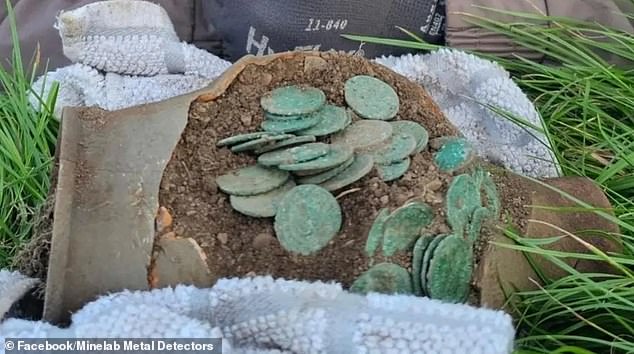
A haul of up to 15,000 Roman coins buried in two clay pots has been found in a Welsh field by a dumbfounded metal detectorist. The trove, unearthed by David Moss, 36, from Cheshire, could be the biggest hoard ever discovered in Wales
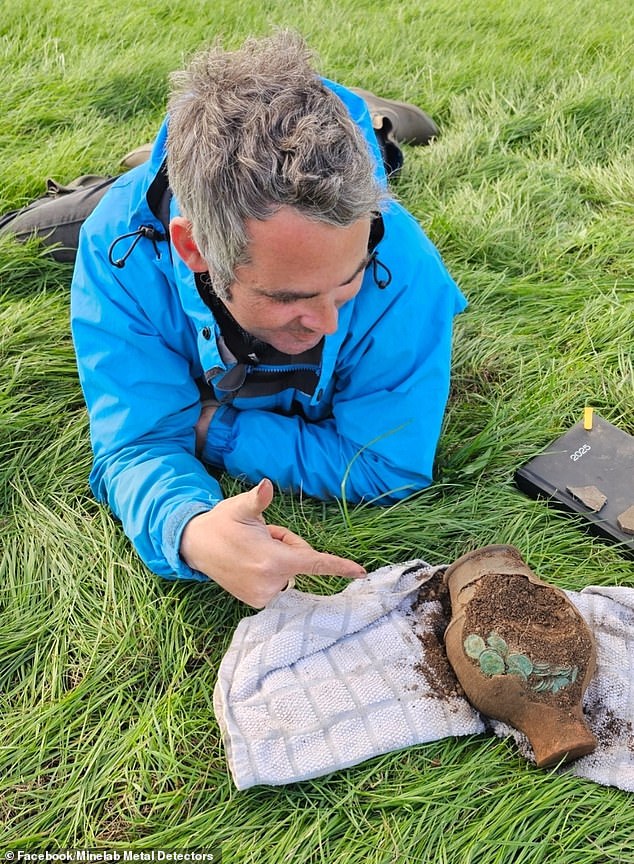
Before taking the coins to experts at the National Museum Cardiff, Mr Moss slept with them in his car for three days over fears they could be stolen
Mr Moss and his friend, Ian Nicholson, initially found one pot containing coins just over 20inches (55cm) below the surface.
After notifying the landowner, the pair found another filled pot in the same field.
Mr Moss and his friend, Ian Nicholson, were given expert guidance to carefully excavate the 2,000-year-old clay pots over the course of six hours.
Mr Moss then guarded the coins closely before making a four-hour drive to Cardiff to leave them with experts.
The coins collectively weigh more than 130 pounds (60kg).
Anthony Halse, chairman of the South Wales and Monmouthshire Numismatic Society, told the BBC that the hoard could be the biggest discovery in Wales.
Mr Moss, who was using a metal detector bought for him as a birthday present, is set for a windfall in the coming months.
Under the 1996 Treasure Act, any object that is declared treasure becomes the property of the Crown and is kept safe so that museums or galleries in England can buy it.
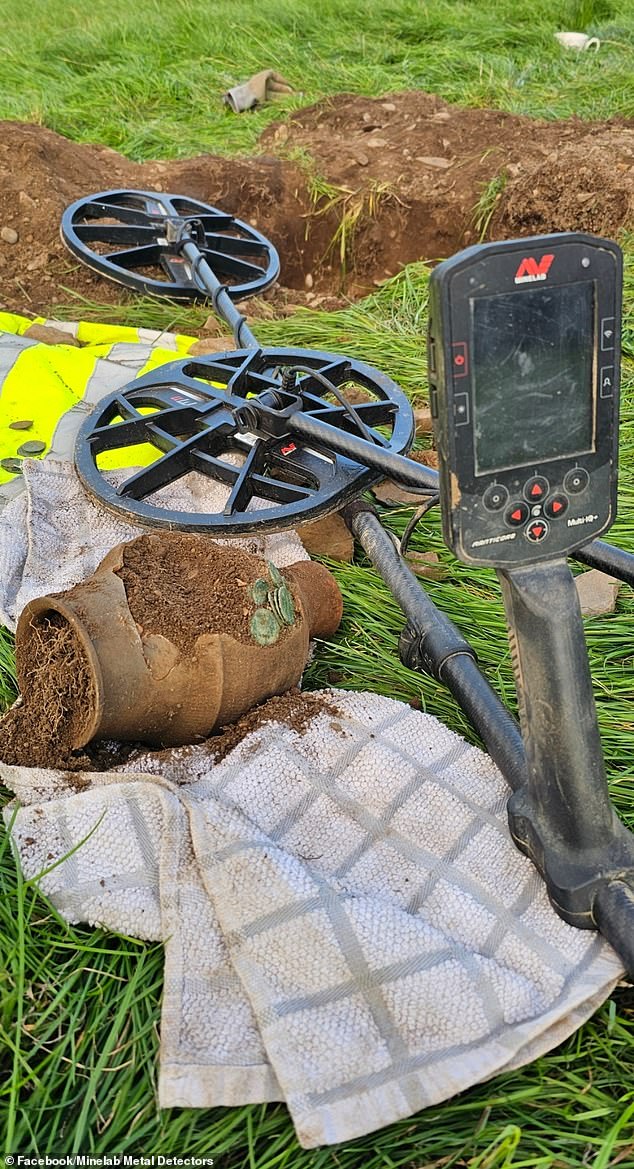
After immediately reporting the find and notifying the landowner, Mr Moss and his friend, Ian Nicholson, were given expert guidance to carefully excavate the 2,000-year-old clay pots over the course of six hours
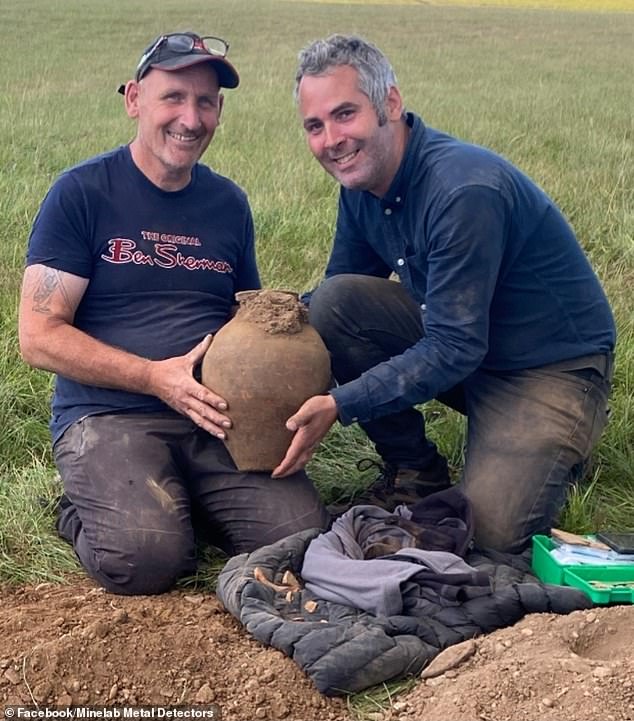
Mr Moss (right) with his friend Ian holding one of the clay pots
The proceeds of the purchase are typically shared with the person who found it and the landowner.
If no institution opts to buy the coins, they can be purchased by a private buyer.
Mr Moss took up metal detecting nearly a decade ago. He found his first cache of coins in 2018.
His latest find comes after nearly 6,000 coins were found buried in two pots at Sully in the Vale of Glamorgan in 2008.
And, in the 1990s, a hoard of 10,000 coins were found near the Welsh town of Chepstow in the 1990s.
The largest ever find in Britain was the Cunetio Hoard, discovered in Wiltshire in 1978.